





 Portuguese
  English
  Spanish
  4 min of reading
  0 comments


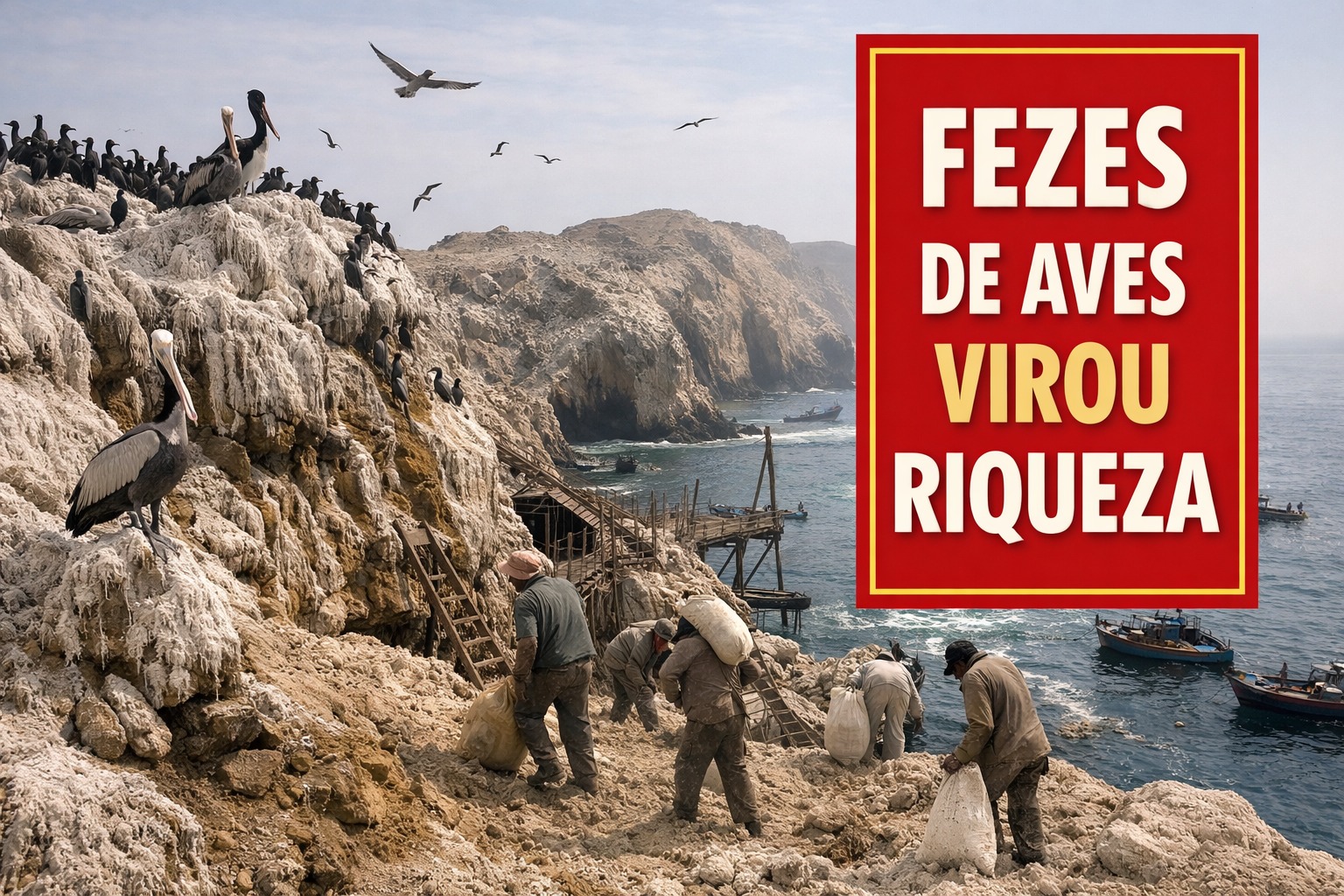
Study Published In PLOS One Shows That Natural Fertilizer Accumulated On The Chincha Islands Boosted Agricultural Production, Regional Trade And Strategic Influence Of The Chincha Society Within The Inca Empire
What may today seem like merely a detail of the coastal landscape was, centuries ago, one of the pillars of a prosperous society. The Kingdom of Chincha, a culture that predated the Incas and the arrival of the colonizers, flourished on the southern coast of Peru between 1000 and 1400 and built much of its wealth and political influence from an unlikely resource: seabird guano.
A Fertilizer That Changed Fates
The research published last Wednesday (11) in the journal PLOS One indicates that the accumulation of droppings on the Chincha Islands played a decisive role in agricultural production and trade networks.
In an environment marked by a dry climate and nearly no rain, the guano did not decompose. On the contrary, it continued to accumulate over the centuries.
-
The government requests the Federal Revenue Service for a new system to automate the income tax declaration, reducing errors, time, and bureaucracy for millions of Brazilians.

-
Pix in installments, international Pix, and contactless payment without internet: the Central Bank revealed the new features coming to the tool that is already used by almost every adult in Brazil.

-
Mercado Livre has just started selling medications with delivery in up to three hours to your door, and this move could completely change the way Brazilians buy medicines on a daily basis.

-
In Dubai, rising tensions from the war in the Middle East are causing super-rich individuals to leave the Gulf and direct their fortunes to a new financial refuge in Asia.


“Thanks to the dry climate and almost no rain, seabird guano does not decompose, but continues to accumulate until it reaches several meters in height,” explained three of the authors in a statement released on the website The Conversation.
This natural characteristic transformed the islands into true reservoirs of fertility.
What may today seem like merely a detail of the coastal landscape was, centuries ago, one of the pillars of a prosperous society.
The Kingdom of Chincha, a culture that predated the Incas and the arrival of the colonizers, flourished on the southern coast of Peru between 1000 and 1400 and built much of its wealth and political influence from an unlikely resource: seabird guano.
A Fertilizer That Changed Fates
The research published last Wednesday (11) in the journal PLOS One indicates that the accumulation of droppings on the Chincha Islands played a decisive role in agricultural production and trade networks.
In an environment marked by a dry climate and nearly no rain, the guano did not decompose. On the contrary, it continued to accumulate over the centuries.
“Thanks to the dry climate and almost no rain, seabird guano does not decompose, but continues to accumulate until it reaches several meters in height,” explained three of the authors in a statement released on the website The Conversation.
This natural characteristic transformed the islands into true reservoirs of fertility.
Power Sustained By An Unexpected Resource
Historical accounts reinforce the political weight of the Chincha culture. Documents attributed to Francisco Pizarro’s brother describe the chincha lord being transported in a litter, a sign of exceptional status within the Inca Empire.
According to Jacob Bongers from the University of Sydney, control of guano was a strategic differential. “Privileged access to a crucial resource is a pathway to power, something the Kingdom of Chincha possessed, and the Inca Empire did not,” he stated to the New Scientist portal.
He suggested that profound social changes may have arisen from a surprising source: bird droppings.
Agriculture Strengthened Over 800 Years
Archaeologists gathered historical records, iconography, and biochemical analyses of 35 maize samples found in graves.
The evidence indicated continuous use of fertilization with guano in the region for at least 800 years.
According to the researchers interviewed by The Conversation, guano was highly effective. Compared to terrestrial manure, it contained more nitrogen and phosphorus, essential nutrients for plant growth.
This factor would have contributed to sustaining agricultural productivity and expanding commercial exchanges.
Integration And Ecological Legacy
With an estimated population of around 100,000 people in the Chincha valley, the society combined farmers, fishermen, and merchants.
Scientists suggest that fishermen sailed to the islands to collect the guano, which was later distributed among farmers and merchants.
Dominance of this resource likely spurred demographic growth, economic development, and facilitated integration into the Inca Empire in the 15th century.
The authors also recall that the Incas tightly controlled access to the guano islands and punished with death anyone who killed seabirds, especially during nesting seasons.
In addition to the economic dimension, researchers highlight that the chinchas deeply understood the ecological cycle.
Images of seabirds, fish, waves, and germinating maize frequently appeared in textiles, ceramics, architectural friezes, and metal objects, revealing a worldview in which land, sea, and sky were closely connected.
With information from Folha de São Paulo.








Seja o primeiro a reagir!