





 Portuguese
  English
  Spanish
  5 min of reading
  1 comment





CLT Rule on Intrajornada Break Allows Additional Payment When Minimum Break Is Not Granted, According to Work Hours and Collective Norms, Based on Article 71 of Labor Legislation and Consolidated Understandings of Labor Justice.
Workers with formal contracts may be entitled to payment of 30 additional minutes when the meal and rest break is not granted as determined by the Consolidation of Labor Laws (CLT).
The legislation does not create a specific group of employees automatically benefiting, but establishes rules regarding intrajornada breaks and defines financial consequences when the minimum time provided is not respected by the employer.
Under current regulations, for continuous shifts longer than six hours, the break for rest or meals must be at least one hour, and, as a general rule, cannot exceed two hours.
-
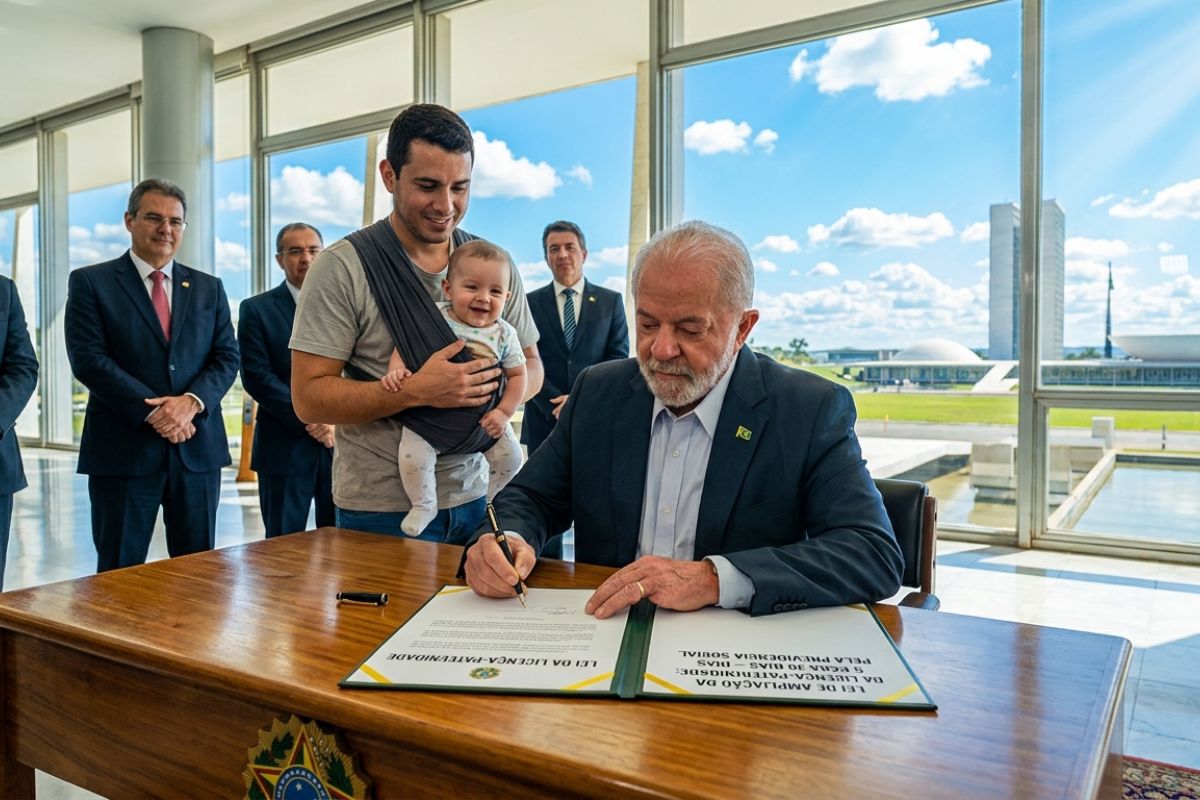
Government enacts new law: paternity leave increases from 5 to 20 days with gradual increases until 2029, and Social Security pays the paternity salary; companies no longer bear the absence cost, estimated at R$ 5.4 billion.
-
End of the 1-hour lunch break in the CLT? Current labor law maintains the break, allows for negotiated reductions, and defines rules for working hours and home office in Brazil.

-
Employee Fired After Accumulating 114 Days of Medical Leave in One Year, Labor Court Upholds Company’s Decision

-
Employee Fired While Treating Depression Wins in Court and Vale Is Required to Rehire Him Following Decision Based on the CLT and INSS Benefits


For shifts between four and six hours, the CLT provides for a mandatory 15-minute break.
These provisions are outlined in Article 71 of the CLT and are frequently mentioned in technical guidance from labor judiciary bodies and in informational materials about labor rights.
Intrajornada Break: What the Law Defines
The intrajornada break corresponds to the pause granted during the workday for meals and rest.
In practice, it is the period designated for lunch or another main meal, as well as any breaks provided for in collective norms or internal regulations of companies.
According to consolidated understandings in Labor Justice, this break is not discretionary.
It is treated as a measure of protection for the health and safety of the worker and must occur within the workday, not being able to be shifted to the beginning or end of the workday.
The Superior Labor Court often reinforces this interpretation in decisions and institutional communications when analyzing cases involving the granting of breaks.
Reduction of Break and Payment for Time Omitted
One of the situations that generates the most confusion occurs when the minimum break of one hour is effectively reduced to 30 minutes.
In these cases, the ungranted time may result in additional payment to the worker.
According to the current wording of Article 71 of the CLT, when the minimum break is not granted in full, the employer must pay only for the omitted period, with an additional of at least 50% on the normal hourly rate.
After the labor reform, jurisprudence began to adopt, in a predominant manner, the understanding that this payment has indemnity nature and is limited to the time effectively not granted.
This understanding differs from interpretations that prevailed in previous periods.
Thus, if the worker was supposed to enjoy one hour of break and was only able to stop for 30 minutes, the difference of half an hour is the period that may be subject to additional payment.
This verification depends on the determination of noncompliance with the legal rule or the applicable collective norm.
The assessment usually considers time records, internal controls, and other elements analyzed in inspections or legal proceedings.
30-Minute Break and Collective Negotiation
It is necessary to differentiate the formal reduction of the break, provided in collective agreements or conventions, from the reduction applied without legal backing.
Labor legislation allows collective norms to address the intrajornada break, provided that the minimum limit of 30 minutes is respected for shifts longer than six hours.
This possibility was expressly incorporated after the labor reform, which included the intrajornada break among the topics subject to collective negotiation.
In practice, this means that some professional categories adopt the 30-minute break regularly, because this condition is provided for in a valid collective agreement or convention.
In these cases, the reduced time becomes the legal standard for that category.
On the other hand, when there is no collective negotiation authorizing the reduction, the general rule of Article 71 of the CLT prevails, which establishes the minimum break of one hour for shifts longer than six hours.
The verification of the right to additional payment depends, therefore, on the hours worked and the existence or absence of a specific collective norm.
Difference Between Intrajornada and Interjornada Breaks
Despite the similarity in terminology, the concepts of intrajornada and interjornada refer to distinct periods provided for in labor legislation.
The intrajornada break occurs within the daily work period.
In contrast, the interjornada break corresponds to the rest between the end of one shift and the beginning of the next.
The CLT determines that the interjornada break must be at least 11 consecutive hours.
This rule is applied, for example, in shift schedules, overtime regimes, and situations where the end of work occurs at later hours.
The eventual noncompliance with this break may have its own labor repercussions, distinct from those related to meal breaks.
Breaks in the CLT and Other Labor Rights
The break for meals and rest is part of the set of rights guaranteed to workers governed by the CLT.
Among them are registration in the employment record, daily and weekly work hour limits, payment for overtime, paid weekly rest, vacations with an additional one-third of the salary, the 13th salary, and FGTS deposits.
Also included in this set are rules concerning additional payments, such as the night shift bonus, as well as maternity and paternity leaves and health-related absences, provided that legal requirements are met.
Within this context, the intrajornada break is treated as a right related to the organization of work time throughout the day.
To verify whether the break is being correctly granted, labor law specialists usually point out the need to analyze the effectively worked hours, the existence of an applicable collective agreement, and time records.
Discrepancies between the recorded break and the break actually taken are among the most recurring issues in inspections and labor lawsuits.
If the intrajornada break is legally provided as part of the minimum guarantees for workers during the workday, why does noncompliance with this rule still frequently occur in different sectors?







Isso vai valer pra escala 12×36?