





 English
  Francês
  Alemão
  Italiano
  Japonês
  Norueguês
  Portuguese
  Spanish
  5 min of reading
  1 comment


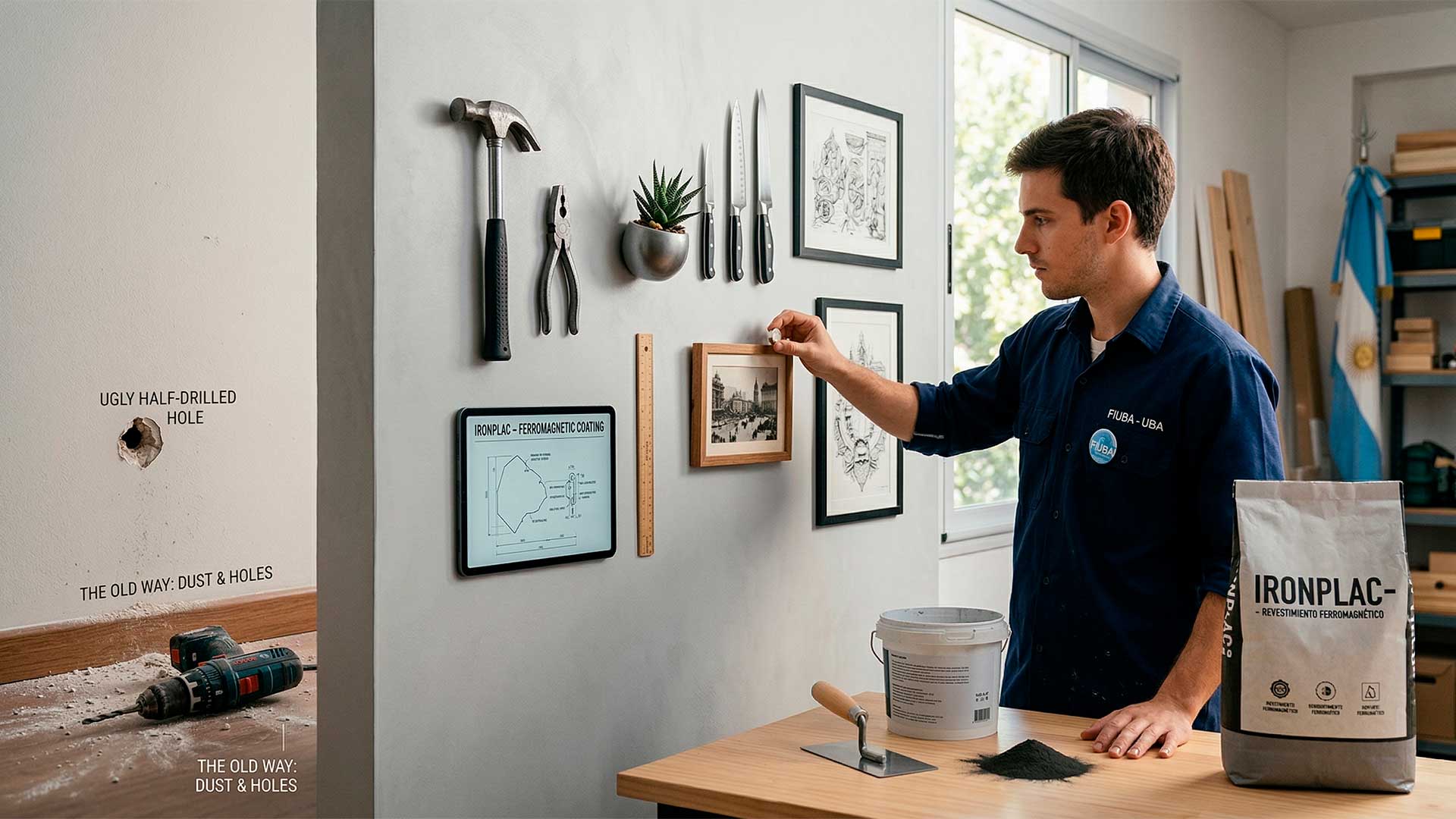


Coating Transforms Wall Into Magnetic Surface and Promises to Hang Objects Without Drill, Dust, or Marks. Idea Aims for Practicality in Daily Life and Could Become Standard in Homes and Offices.
A 29-year-old Argentinian student developed a ferromagnetic coating that promises to retire the drill in various situations. Marco Agustín Secchi, an industrial engineering student, named the technology Ironplac and claims it transforms any ordinary wall into a magnetic wall, capable of holding objects using magnets.
The proposal is simple yet ambitious. By mixing the product powder with water and applying it like modern plaster, the dried surface attracts magnets and holds pictures, tools, and utensils without screws, plugs, or mess.
In an interview published by the Argentine newspaper La Nación, Secchi explained that the idea arose from the question many people ask when facing the drill and plaster dust: why do we need to drill every time we want to hang something? From there, he delved into research to combine construction materials and magnetic principles into a single product.
-
Seen from space, a colossal ‘Y’ cuts through the largest desert in China, blending a jade-filled river, red and white mountains, and revealing the absurd scale of the transformation of the Taklamakan surrounded by a green wall with billions of trees.

-
The Pacific Ocean reveals what the cliffs of Big Sur have hidden for millennia: Pfeiffer Beach, in California, features swirling purple sand formed by garnet crystals and displays a stone arch that is illuminated by the sun in winter for just a few days each year.

-
Aursjøvegen in Norway is a 100-kilometer gravel road that crosses chasms and dark tunnels carved into the rock at an altitude of 947 meters in the fjords and is only open for four months a year.

-
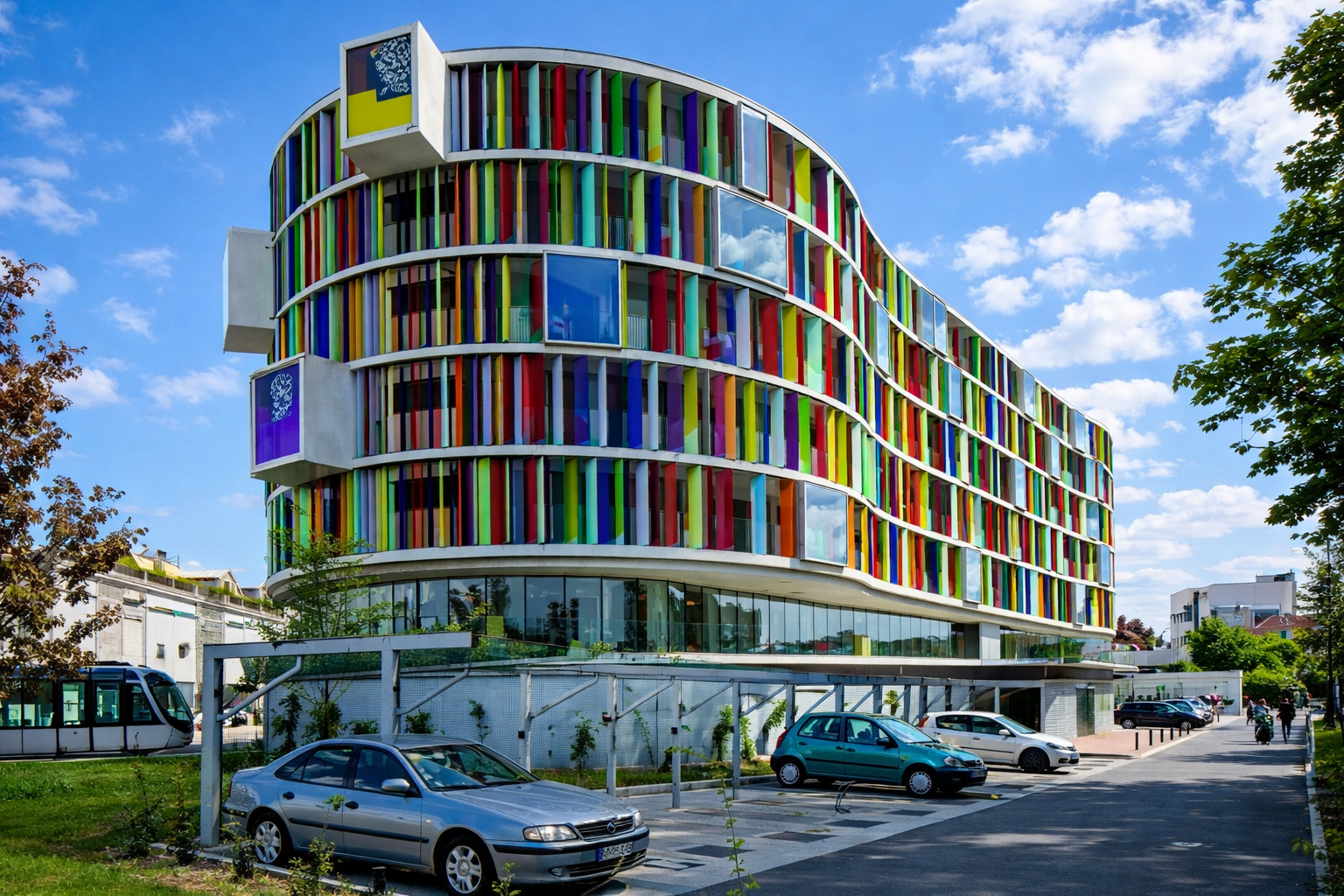
With about 4,000 m², the building constructed in a traditional neighborhood in France looks like a rainbow, has a colorful facade, mixes vibrant glass, and creates one of the most unusual visuals in Bordeaux.

The project has already attracted attention for offering mobility and quick reorganization of spaces, with no damage to the masonry. Although promising, it is still in the stage of technical and market validation, with prototypes installed and testing underway.
How the Idea Came About and Why Drilling Walls Became a Problem
According to Secchi, the motivation came from everyday frustration with nails, plugs, and screws that leave marks and require frequent repairs. Each time a picture, lamp, or accessory is changed, noise, dust, and time spent cleaning are repeated.
He reports that he sought a clean, reversible, and silent solution that could accommodate those who enjoy decorating and reorganizing their homes and offices. In statements to La Nación, the student emphasized that the technology needed to be easy to apply, like traditional finishes, and reliable for daily use.
What Is Ironplac and How Does the Wall Become Magnetic
Ironplac is a powder coating that is prepared with water and applied to the wall like plaster. Once cured, the finish incorporates mineral and ferrous particles that make the surface ferromagnetic, allowing fixation by magnets positioned on the objects.
In practice, the user places a small magnet—preferably neodymium, which is stronger—on the back of the picture, light shelf, or tool, touches it to the wall, and the item stays attached. The advantage is that there are no holes, no dust, and the position can be changed at any time, as many times as necessary.
According to the Encyclopaedia Britannica, ferromagnetic materials do not generate a relevant own field but strongly interact with external magnetic fields through the alignment of internal domains. In simple terms, the wall prepared with the compound starts to attract magnets without the need for electricity.
The inventor claims to have already tested the solution with pictures, boards, tools, and larger utensils, adjusting the size and strength of the magnets according to weight.
The final performance, however, depends on variables such as the thickness of the coating, type of magnet, and quality of the substrate.
Understand the Magnetic Principle and the Difference from Magnets
The wall does not become a permanent magnet but a plane of attraction capable of receiving the force of the magnet placed on the object. This provides layout freedom and reduces the risk of structural damage caused by repeated drilling.
For heavier items, the general recommendation is to increase the area and power of the set of magnets, better distributing the load. Safe performance requires practical testing and certifications that define clear usage limits.
Immediate Applications and Practical Benefits in Homes and Work
Secchi targets versatile environments like workshops, classrooms, laboratories, offices, and preschool, where constant reorganization is valuable.
In homes, the proposal favors corridors of pictures, light shelves, kitchen utensils, and home office accessories.
The gains include quick installation, the possibility to move things around, less waste, and a longer wall lifespan. In creative spaces, an entire panel can become a prototyping and exhibition area without the logistics of plugs and screws.
What Needs to Be Proven to Reach the Market and Gain Scale
Despite the progress, Ironplac is not yet for sale. There are prototypes in real works, but the validation stage needs to address essential issues of safety and performance over time, such as resistance to thermal cycles and humidity.
It is also necessary to verify how much weight the wall can support continuously and under repeated use, as well as conducting standardized shear and pull-out tests. Experts remind that technical construction standards—such as those of ABNT in Brazil and IRAM in Argentina—often require laboratory validation and performance criteria before large-scale adoption.
Another point is the economic viability, comparing the cost of materials and labor with popular alternatives. Durability, ease of repair, and compatibility with paints and finishes also factor into the equation.
How Ironplac Compares to Adhesive Tapes, Hooks, and Metal Panels
Adhesive tapes and hooks are cheap and practical but can fail with humidity, specific paints, and higher loads. Meanwhile, metal panels deliver strength but require visible sheets, profiles, and fixtures, as well as high cost and weight.
The ferromagnetic coating positions itself in between, offering a continuous and discreet finish that accepts magnets at any point on the surface. If tests confirm good load capacity and durability, the cost-effectiveness could surpass adhesive solutions for frequent uses.
On the other hand, for very high loads or structural needs, traditional mechanical fastening systems remain indispensable. The challenge for Ironplac is to delineate its safe application range and clearly communicate where it is the best choice.
Next Steps, Patents, and Seeking Investment
Patents are in process, and the creator is seeking investors to scale production, certify the product, and expand independent testing. The strategy is to treat Ironplac as a building platform, capable of integrating with other materials and different construction methods.
With technical validation, certifications, and competitive pricing, the technology has the potential to become a new standard in residential and corporate interiors. Until then, the path involves reliable testing, formula adjustments, and pilots in various environments.
And you, would you install a ferromagnetic coating at home to retire the holes and dust from drilling?
Do you believe that the magnetic wall is a practical solution, or do you see safety and cost risks in the long term? Leave your comment, share your experiences with magnets and hole-free fixings, and tell us where this type of technology would make the biggest difference in your daily life.








Nice concept!
MagScapes are the innovators for magnetic wallcoverings – which leans in to the same philosophy.
https://magscapes.com/