





 Portuguese
  English
  Spanish
  3 min of reading
  0 comments


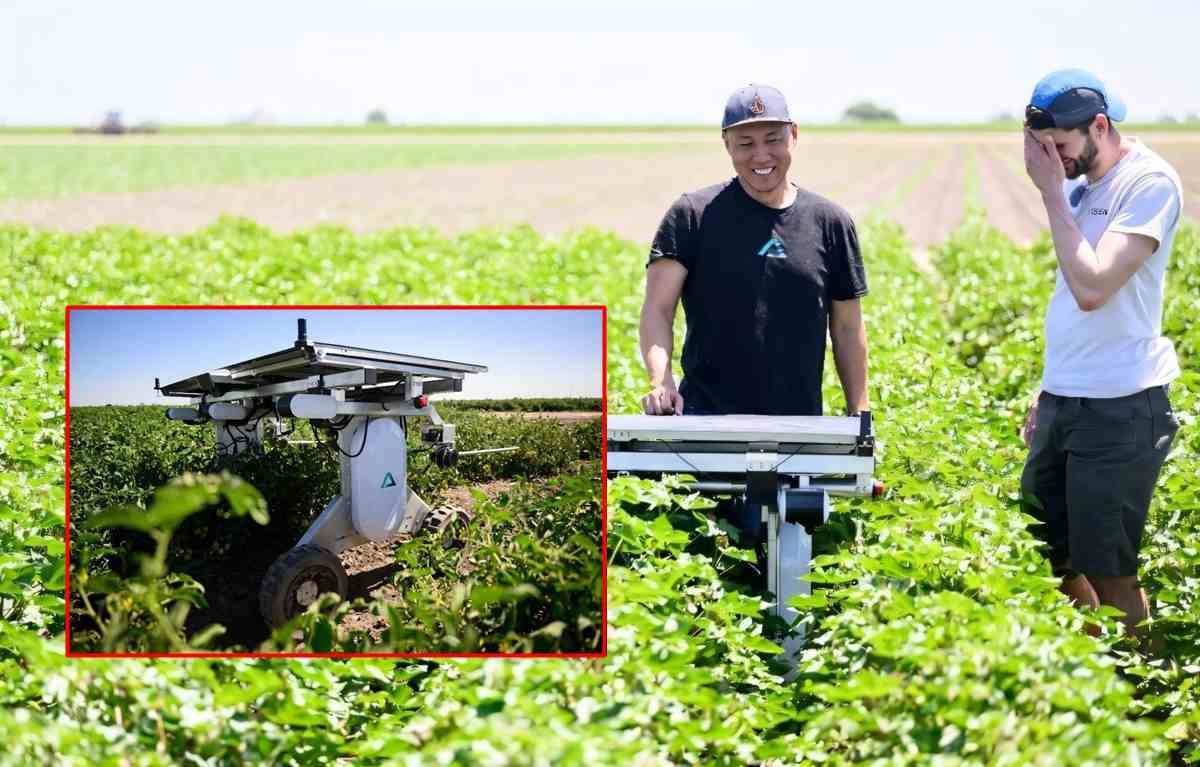
A New Generation of Robot With Artificial Intelligence Is Changing the Way Agriculture Works in the United States. Powered by Solar Energy and Equipped With Artificial Intelligence, These Machines Are Replacing Human Workers and Eliminating the Use of Chemicals in Crop Production.
A solar-powered robot advances through the cotton field in California, immune to the midday heat. It Removes Weeds Relentlessly.
This scene shows a quiet revolution happening on American farms.
Technology to Tackle Two Crises
Farms in the United States face two challenges: labor shortages and herbicide-resistant weeds. The startup Aigen believes it has a solution.
-
The water that almost everyone throws away after cooking potatoes carries nutrients released during the preparation and can be reused to help in the development of plants when used correctly at the base of gardens and pots, at no additional cost and without changing the routine.

-
The sea water temperature rose from 28 to 34 degrees in Santa Catarina and killed up to 90% of the oysters: producers who planted over 1 million seeds lost practically everything and say that if it happens again, production is doomed to end.

-
An Indian tree that grows in the Brazilian Northeast produces an oil capable of acting against more than 200 species of pests and interrupting the insect cycle, gaining ground as a natural alternative in soybean, cotton, and vegetable crops.

-
The rise in oil prices in the Middle East is already affecting Brazilian sugar: mills in the Central-South are seeing their margins shrink just as ethanol gains strength.


Its autonomous robot, called Element, promises to reduce costs, protect the environment, and eliminate the use of hazardous chemicals in food.
The company’s chief technology officer, Richard Wurden, claims the robot could be one of the greatest contributions to human health. “Everyone Is Eating Food Sprayed With Chemicals,” he told AFP.
From Tesla to the Field
Wurden worked at Tesla for five years. The idea for the robot arose when farmer relatives in Minnesota complained about the high cost of manual weeding.
The solution would be to automate the service, doing away with herbicides.
The technology also aims to relieve the burden on workers. “If You Think This Is a Job We Want Humans to Do, Just Spend Two Hours in the Field Weeding,” Wurden stated.
No Passion for Chemicals
Aigen’s CEO, Kenny Lee, has a background in software. According to him, producers do not like using chemicals but resort to them due to a lack of viable alternatives. “No Farmer We Spoke to Said, ‘I’m Passionate About Chemicals’,” Lee said.
The Element robot offers a new tool.
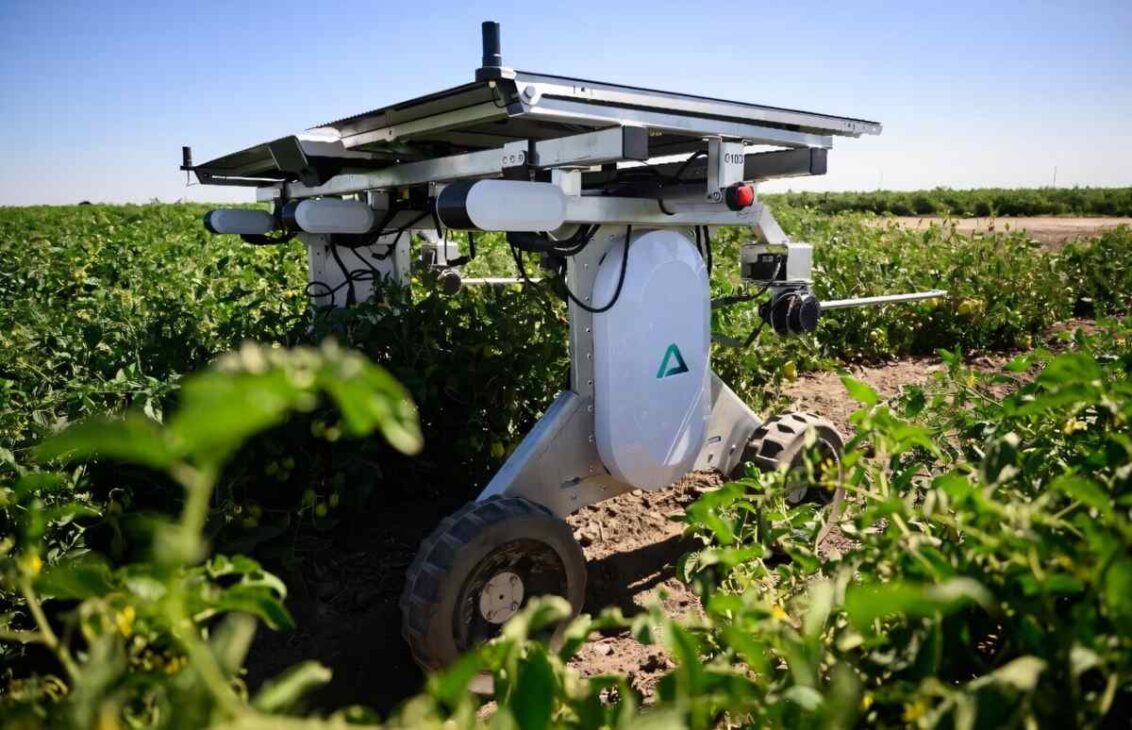
Shaped like a large table on wheels, it is covered with solar panels and has metal arms with blades that move between the plants to cut the weeds.
Clean Energy and Smart Operation
The AI installed in the robots allows them to use cameras to follow the crop rows and accurately identify weeds. Moreover, they operate autonomously. “When the Sun Sets, It Simply Turns Off and Sleeps; Then, in the Morning, It Springs Back to Life and Starts Working Again,” explained Lee.
The robot communicates with control centers via wireless connection and alerts operators to any issues during operation.
The idea is to train former agricultural workers to supervise these new machines.
Tested in Different Crops
Aigen’s robots are already being used in cotton, tomato, and beet fields. The company claims its technology removes weeds without damaging the plants.
According to Lee, five robot units are sufficient to care for an area of 160 acres, equivalent to 65 hectares.
Each robot costs about US$ 50,000. Despite the price, Aigen bets that long-term savings and environmental benefits will attract farmers.
Eye on Conservative Farmers and the Future
Based in Redmond, just outside Seattle, the startup consists of only 25 people. Even so, it has big ambitions.
The current focus is on attracting more conservative producers, who typically reject eco-friendly solutions. To do this, the company avoids ideological rhetoric and focuses on practical arguments. “Farmers Care About Their Land,” says Lee.
The proposal has also attracted attention beyond the field. Amazon Web Services (AWS) selected Aigen for its “Compute for Climate” program. The initiative provides technical support, energy for data centers, and AI tools for startups focused on environmental issues.
Lisbeth Kaufman from AWS believes in Aigen’s potential. “Aigen Will Be One of the Giants in the Industry in the Future,” she stated. According to her, the company can achieve historic feats. “I Think of Ford and the Model T, or Edison and the Light Bulb — These Are Kenny, Rich, and Aigen.”










Seja o primeiro a reagir!