





 Portuguese
  English
  Spanish
  6 min of reading
  0 comments


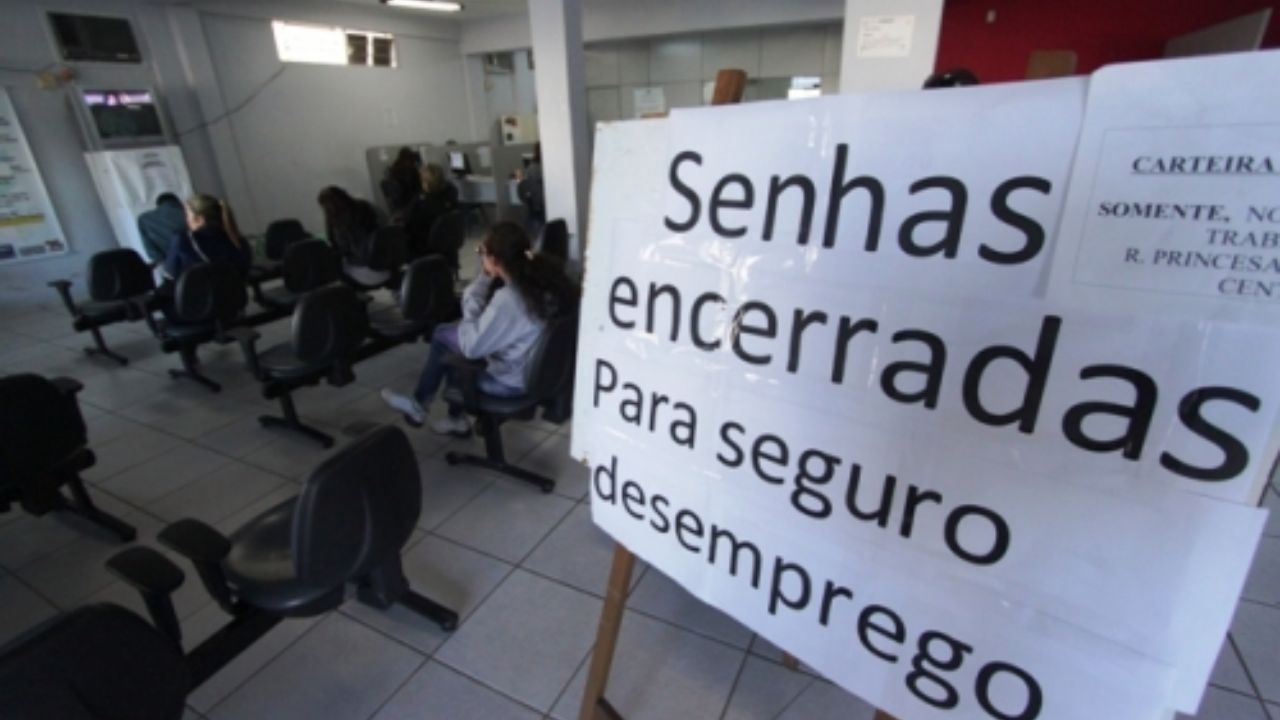
Worker Desperation With New Unemployment Insurance Law Under Discussion: To Reduce Spending, Government Tightens Rules, Reduces Benefits, and Limits by Salary Range.
The government is about to implement a new law that may transform the rules of unemployment insurance, directly impacting wages and workers’ rights in Brazil. In an effort to contain spending and balance the public accounts, the proposed changes promise to deeply impact access to the benefit, raising questions about how the new legislation might affect millions of families.
Do these changes represent progress or a challenge for workers?
Government Analyzes Changes to Unemployment Insurance to Contain Public Spending
With the goal of balancing the public accounts, the federal government is evaluating significant adjustments to the rules of unemployment insurance. The proposals under analysis include changes in the funding structure of the benefit, as well as unlinking it from the minimum wage, in addition to other measures aimed at containing the increasing costs of this aid for workers.
-
A new Brazilian shopping center worth R$ 400 million will be built in an area equivalent to more than 4 football fields, featuring 90 stores, 5 cinemas, a supermarket, a college, and parking for 1,700 cars, potentially generating 3,000 jobs.

-
Larger than entire cities in Brazil: BYD is building a 4.6 km² complex in Bahia with a capacity for 600,000 vehicles per year, but the discovery of 163 workers in conditions analogous to slavery has shaken the entire project.

-
With an investment of R$ 612 million, a capacity to process 1.2 million liters of milk per day, Piracanjuba inaugurates a mega cheese factory that increases national production, reduces dependence on imports, and repositions Brazil on the global dairy map.

-
Brazilian city gains industrial hub for 85 companies that is equivalent to 55 football fields.


The Worker Support Fund (FAT), which currently supports the benefit, has faced increasing pressure due to rising expenses, prompting the economic team to seek solutions that ensure greater fiscal sustainability. While recognizing the social impact of unemployment insurance, experts argue that changes are inevitable to mitigate the federal deficit in the medium and long term.
Attorney Márcia Cleide Ribeiro, a labor law specialist, emphasizes that reviewing the benefit is a necessary step: “In a time of fiscal adjustments, a careful approach to unemployment insurance is essential, balancing the needs of workers with the government’s urgency to contain public spending.” This analysis reflects a point of consensus among economists and political analysts.
Proposals Under Study for Unemployment Insurance: Government Tightens Rules, Reduces Benefits, and Limits by Salary Range.
Among the ideas discussed by the government is the implementation of a more detailed audit of beneficiary registrations. The goal is to combat fraud, such as granting more payments than allowed or the recurrent use of the benefit by workers from certain companies. This initiative could significantly reduce the program’s costs and ensure that resources reach truly eligible workers.
Another proposal would involve changing the number of benefit installments, linking it to the 40% fine on the FGTS balance paid to workers dismissed without cause. Thus, the rules would be adjusted to better reflect the conditions for job termination.
Additionally, the government is considering raising the PIS/Cofins tax rate for sectors with high employee turnover, which are seen as significant users of unemployment insurance. Part of the revenue generated from these taxes goes to the FAT, which would make the funding model more proportional to the demands created.
Impact of the Minimum Wage and Fiscal Tensions
The relationship between unemployment insurance and the minimum wage is also a sensitive point. The policy of real increases in the minimum wage, resumed by President Lula in 2023, has a direct impact on the costs of the benefit. For every real increase in the minimum wage, the government spends approximately R$ 12.4 million more on unemployment insurance. Therefore, one of the proposals is to unlink the benefit from the minimum wage, maintaining only the adjustment for inflation.
This idea, however, is controversial, as it clashes with the social discourse that is the foundation of the government. According to the director of the Independent Fiscal Institution (IFI), Vilma Pinto, increasing the minimum wage directly impacts public spending, but unlinking unemployment insurance from the wage floor could provide fiscal relief without compromising workers’ purchasing power.
The 2024 Budget Already Foresees R$ 50.5 Billion for the Benefit, and the Expectation is That the Value Reaches R$ 56.8 Billion in 2025, an Increase of 12.5% in Two Years
The growth of unemployment insurance expenses over the years highlights the need for adjustments. In 2023, the benefit cost R$ 47.8 billion to public coffers, an increase of 18% compared to the previous year. Since 2009, when the expenditure was R$ 19.6 billion, there has been a 144% increase. Although the total currently represents 0.4% of GDP – lower than the 0.6% recorded at the beginning of the historical series – the forecast increase for 2024 and 2025 is concerning.
The 2024 budget already anticipates R$ 50.5 billion for the benefit, and the expectation is that the value will reach R$ 56.8 billion in 2025, an increase of 12.5% in two years. These figures reflect the combined impact of minimum wage increases and annual adjustments based on the INPC.
Vilma Pinto highlights that a reduction in the unemployment rate does not always result in lower spending on unemployment insurance. Even with a strong labor market, the volume of layoffs and hiring can increase benefit requests, keeping costs high for the government.
New Law of Unemployment Insurance Occurs Amid an Internal Dispute in the Government About the Conduction of Economic Policy
The analysis of unemployment insurance occurs amid an internal dispute in the government over the conduction of economic policy. On one side, ministers Fernando Haddad (Finance) and Simone Tebet (Planning) advocate for structural adjustments to contain the fiscal deficit. On the other side, the more heterodox wing of the Workers’ Party government continues to advocate for increased spending as a tool to stimulate economic development.
Professor Paulo Kramer from the University of Brasília classifies this approach as a “heterodox mishmash,” which includes state interventions and increased public spending. He argues that while Haddad and Tebet’s proposals are coherent, they face strong political resistance within the government.
According to Kramer, current economic policies recall the times of Dilma Rousseff’s administration, marked by controversial fiscal interventions that culminated in her removal from the presidency. “Public debt is rapidly approaching dangerous levels, and the financial market has lost confidence in the government’s fiscal framework,” warns the political scientist.
Beyond Unemployment Insurance, the Government Evaluates Changes to Other Social and Tax Benefits
Beyond unemployment insurance, the government is assessing changes to other social and tax benefits. One of the proposals involves reducing the ceiling of the Simples Nacional, a program that simplifies taxation for small businesses. Another idea would be to restrict the payment of the salary bonus to workers earning the minimum wage, generating savings of up to R$ 256 billion over a decade.
There are also discussions about using extraordinary revenues to alleviate the fiscal deficit. Among them are the incorporation of forgotten amounts in bank accounts and the resumption of unredeemed precatórios.
Despite the initiatives under study, the government has avoided officially positioning itself on potential changes to unemployment insurance. When questioned, the Ministries of Finance and Labor declined to comment on the subject. The Ministry of Planning stated that discussions are in preliminary stages and focus on reducing inefficiencies and inequalities.
Impact on the Worker and the Political Scenario
Possible changes to unemployment insurance divide opinions. On one hand, economists warn of the urgency of aligning the benefit with the fiscal reality of the country. On the other hand, unions and worker representatives fear that reforms may harm the most vulnerable.
While the government seeks alternatives to meet its fiscal targets, unemployment insurance remains a sensitive topic, involving not only financial issues but also the social commitment to protect workers in times of hardship.
With projected spending for the coming years, it is clear that adjustments are inevitable. It remains to be seen whether the measures will be able to balance the impact on the public budget without compromising the rights and dignity of Brazilian workers.










Seja o primeiro a reagir!