





 Português
  Inglês
  Espanhol
  4 min de leitura
  20 comentários


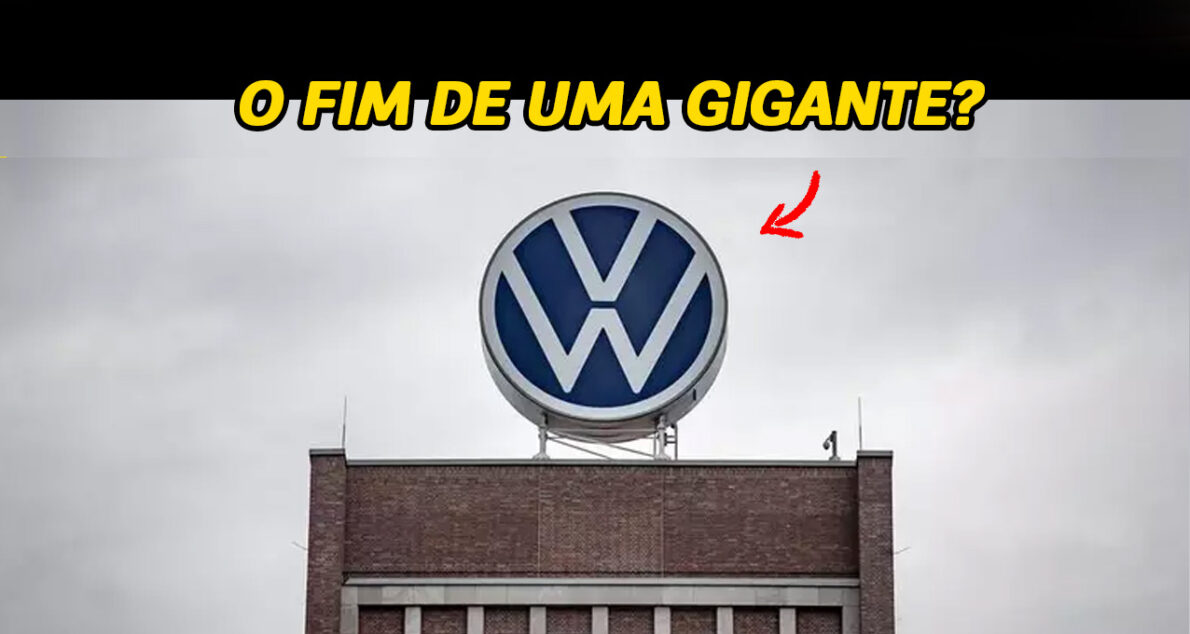

The Automotive Giant Volkswagen Is In Trouble. In An Unprecedented Situation In Its History, The Company Reaffirmed That It Will Close Factories, Potentially Impacting Up To 120 Thousand Jobs.
The internal crisis at the automaker puts at risk not only the jobs of thousands of workers, but also raises a larger question: what could this change mean for the global automotive market?
The Tension Between Workers And Executives Is Rising, and the survival of the iconic brand is at stake. But how does this impact Brazil?
Volkswagen, which has been one of the pillars of the global automotive industry for decades, announced that its main brand is facing severe challenges and needs to act quickly to avoid collapse.
-
Brazilian city gains industrial hub for 85 companies that is equivalent to 55 football fields.

-
Peugeot and Citroën factory in Argentina cuts production by half and opens a layoff program for more than 2,000 employees after Brazil drastically reduced purchases of Argentine vehicles.

-
A Brazilian city gains a factory worth R$ 300 million with the capacity to process 200 thousand tons of wheat per year, a mill of 660 tons/day, silos for 42 thousand tons, and an industrial area of 276 thousand m².
-
OMODA & JAECOO grows in Europe in 2026 with an integrated strategy of sales, innovation, local production, and technological advancement in the United Kingdom, Italy, and Spain.

Cuts May Be Necessary To Handle The Transition To Electric Cars, a change that has affected various automakers, and Brazil is not immune to this transformation.
The Dilemma Of Volkswagen And The German Crisis
The crisis became evident when Arno Antlitz, CFO of Volkswagen, declared that the company has “one, maybe two” years to reverse the critical situation.
According to him, the European market shrank drastically after the pandemic, resulting in a drop in demand of 500 thousand vehicles — equivalent to the production of two factories.
Antlitz was interrupted by shouts of “Auf Wiedersehen” (goodbye, in German) from workers who fear losing their jobs.
The meeting in Wolfsburg, headquarters of Volkswagen, on Wednesday (04), was marked by a tense atmosphere, with unions threatening strikes and promising a fierce fight against factory closures, something that would be unprecedented in the company’s 87-year history.
As CEO Oliver Blume highlighted, “there are no more checks coming from China”, which was for a long time Volkswagen’s main market. Now, the company faces high production costs, fierce competition from Asian manufacturers, and a weakened European economy.
Impact On Brazil: How Does It Affect The National Market?
But what does this have to do with Brazil? The Brazilian automotive market is largely influenced by Volkswagen’s operations.
The automaker, which has maintained factories and thousands of employees in Brazil for years, may see the effects of this crisis reach the country. If the crisis persists in Germany, vehicle production, job availability, and even prices in the Brazilian market could suffer direct impacts.
Furthermore, Brazil is at a crucial point in adapting to electric vehicles, an area where the country is still moving slowly.
The transition to a more sustainable fleet aligned with new global trends depends not only on government incentives but also on the ability of automakers, like Volkswagen, to absorb this change without major losses.
If the scenario of layoffs and production cuts is confirmed in Germany, Brazil may face an uncertain future in terms of innovation and automotive production.
Union At War: Workers Take A Stand
In Germany, the situation has taken on dramatic contours. Daniela Cavallo, head of the workers’ council at Volkswagen, stated that the company “massively damaged the trust” of employees, and the union IG Metall does not rule out the possibility of even greater strikes and protests.
“Management has significantly broken a taboo, and workers are ready to act when called upon,” said Cavallo.
The union harshly criticized the company’s decision to invest about 5 billion euros (R$ 31.1 billion) in a partnership with the American startup Rivian, prioritizing a software project at the expense of job security in Germany.
For Cavallo and the workers, the company should focus on protecting its employees before betting on risky innovations.
In Brazil, although the situation has not reached the same level of tension, Volkswagen workers have already shown concern over the possible consequences of drastic cuts in the German headquarters.
Factory shutdowns or even reduced investments could directly affect the Brazilian job market, which significantly depends on the operations of foreign automakers.
Can The Brazilian Government Act?
If in Germany Chancellor Olaf Scholz has already talked to Volkswagen management to try to calm things down, in Brazil, the government will also need to take a firm stance.
With the national automotive market weakened in recent years, it is likely that the Ministry of Economy and BNDES will have to formulate incentive policies to avoid a large-scale crisis in the Brazilian automotive sector.
According to experts, tax cuts or new incentives for the production of electric vehicles may be the way to stimulate the market, but everything will depend on how the crisis is managed in Europe.
Global Reflections: End Of An Era?
Meanwhile, the climate of uncertainty persists. With 120 thousand of the 200 thousand Volkswagen workers located in Germany, the possibility of mass layoffs and factory closures puts not only the German economy, but also the global automotive market on alert.
According to Moritz Kronenberger from Union Investment, “one cannot rule out the possibility that Volkswagen will reach some of its objectives,” such as eliminating job guarantees and reducing salary increases. However, unionist Thomas Knabel stated that “there will be no dialogue as long as Volkswagen does not take the idea of closing factories off the table.”
What To Expect?
With the worsening of the crisis and the challenges imposed by the transition to electric vehicles, the future of Volkswagen, both in Germany and in Brazil, is at stake.
The automaker, which has always been synonymous with innovation and robustness, now faces its greatest test. The global automotive market is watching closely, and workers — whether in Germany or Brazil — are eagerly awaiting the company’s next decisions.
Do you think the Brazilian automotive market is prepared to face a crisis like the one happening in Germany? Share your opinion in the comments!








A VW sempre produziu carros de péssimos acabamentos, os Chineses aprenderam como fazer carros bons, as tradicionais fábricas no Brasil, no entanto, continuam a empurraram de goela abaixo seus carros caros, feios e fracos, a China vai dominar com seus carros bons, bonitos e baratos. E não adianta espenear, ou eles baixam as margens, fazendo carros simples de acordo com o bolso do povo, ou já era!
É o caso clássico de empresário ambicioso apostando no pangaré errado. O chinês com seu olho fechado e esperteza aberta passou a indústria mundial para trás, oferecendo um mercado de produção barata e muitos compradores a estrangeiros ávidos por lucro fácil. O chinês aprendeu, copiou tecnologia e financiou suas próprias empresas e fez isso em todas as áreas, criando um parque industrial sólido e imbatível.
Exatamente, a ganância e falta de escrúpulos fez da indústria europeia a maior vítima da gula chinesa, agora não tem mais volta.
O mercado europeu que é mais estável, com uma economia mais acertada e com metas, se está passando essa dificuldade…imagine um país de corruptos, incerto, juros altos etc vai ser impactado!?