





 Portuguese
  English
  Spanish
  3 min of reading
  5 comments


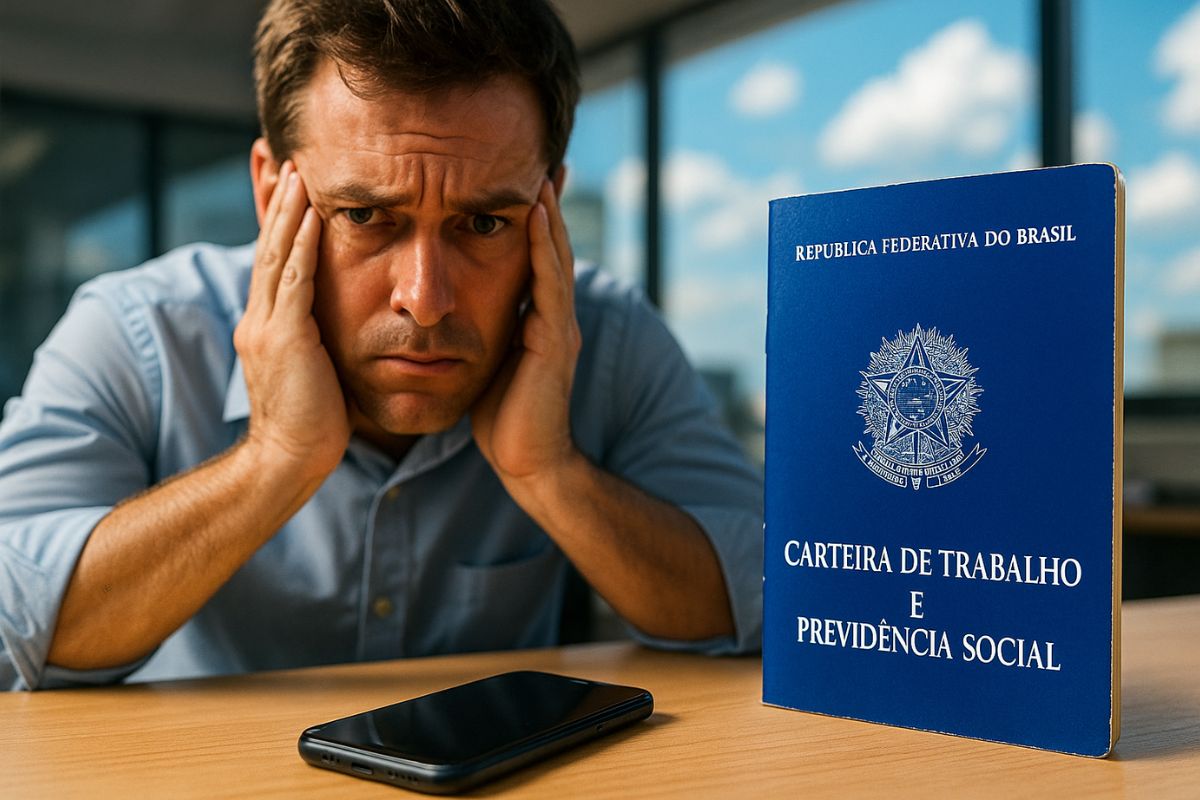


Lawyer João Paulo Leite Warns: Common Attitudes Can Lead to Dismissal for Just Cause. Labor Law Specialist Explains Which Conducts Foreseen in CLT Can Result in Dismissal for Just Cause and Warns Workers and Companies.
The dismissal for just cause is one of the biggest concerns for employees and employers in Brazil. According to lawyer João Paulo Leite, creator of the Blind Company project and with over 224,000 followers on TikTok, many seemingly trivial attitudes can result in this type of immediate termination, which removes various rights from the worker.
Based on Article 482 of the Consolidation of Labor Laws (CLT), Leite listed examples of behaviors that can compromise the employment relationship, such as improper use of corporate cell phones, leakage of confidential information, and consumption of alcohol during working hours. Knowing which conducts fall into this category is essential to avoid conflicts and protect both companies and employees.
What Can Cause Dismissal for Just Cause
According to Article 482 of the CLT, there are 14 situations that justify the immediate termination of the employment contract. Among them are:
-
Brazilian city bets on the business environment to generate jobs and attract investments in the energy sector — secretary reveals strategy at Macaé Energy 2026.

-
50 viaducts, 4 tunnels, 28 bridges, and 40 kilometers of bike paths: BR-262 in Espírito Santo will receive 8.6 billion reais for the largest engineering project in the state’s history, inspired by the Immigrant Highway in São Paulo.

-
Brazil produces too much clean energy and doesn’t know what to do with it: over 20% of solar and wind capacity was wasted in 2025 while investors flee and 509 renewable generation projects were abandoned in the last year.

-
Piauí will produce a new fuel that replaces diesel without needing to change anything in the truck’s engine and reduces pollutant gas emissions by half: truck drivers from all over the Northeast are already celebrating the news that will arrive later this decade.


- Act of dishonesty (fraud or dishonesty);
- Misconduct or inappropriate behavior;
- Habitual negligence (idleness);
- Violation of company secret;
- Drunkenness at work;
- Indiscipline or insubordination;
- Abandonment of job;
- Physical or verbal offenses in the workplace;
- Gambling;
- Loss of necessary professional licensing (such as a driver’s license in the case of drivers).
These hypotheses are detailed on the Planalto Portal, the official source of labor legislation.
Practical Examples That Generate Controversy
According to Leite, many workers do not realize the seriousness of certain actions. Sending inappropriate content via the company cell phone, for example, can be classified as misconduct. Likewise, sharing client lists with competitors constitutes a violation of company secrets.
The lawyer warns that dismissal for just cause cannot be applied arbitrarily. It is necessary for the company to prove the serious misconduct with witnesses, records, or internal documents. Otherwise, the worker can appeal to the Labor Court and reverse the penalty.
What Rights Does the Worker Lose
When dismissal for just cause occurs, the employee loses important benefits, such as:
- Prior notice;
- Proportional vacation + 1/3;
- Proportional 13th salary;
- 40% fine on FGTS;
- Withdrawal from FGTS;
- Unemployment insurance.
The worker retains only the salary balance and any accrued vacation, if any. This information is confirmed by official bodies such as the Ministry of Labor and Employment.
How to Prevent Dismissal for Just Cause
The main recommendation is simple: maintain a professional posture and comply with company rules. Avoiding frequent lateness, acting ethically, not sharing confidential data, and respecting hierarchy reduce the chances of issues arising.
For employers, it is ideal to document warnings, apply suspensions when necessary, and maintain clear communication with employees. These measures ensure greater legal security and reduce the likelihood of labor lawsuits.
Reliable Sources for Consultation
In addition to the content produced by João Paulo Leite on his TikTok profile (@_joaopauloleite), it is possible to directly consult the official sites of the Ministry of Labor (www.gov.br/trabalho) and Planalto (www.planalto.gov.br) to verify the updated legislation.
Dismissing for just cause is a legal mechanism provided for in the CLT that should only be applied in serious and proven situations. For workers, it means losing important rights; for companies, it represents a decision that needs to be substantiated and proportional.
And you, do you believe that companies apply just cause correctly or do you think that there is often exaggeration? Have you ever experienced a similar situation? Share your opinion in the comments.










Hoje em dia patrão querem aproveitar dos funcionários e nem justiça faz nada o plenário tá só ajuda patrão ois trabalhadores só leva ferro não concordo não
Uma parcela das empresas para escapar de pagar indenização “cria” uma justa causa, empregados tem que ficar espertos, alguns juízes já tem percebido essa ” tramóia” e reverte e em alguns casos ainda coloca um dano moral.
Sim tive uma falta nem chegaram a falar comigo me deram direito uma advertência mas mesmo tendo avisado antes de faltar depois tive duas faltas mas sem justificativa me trouxeram a advertência direto ao já me deram suspensão de 2 dias só que não sabia que no outro dia era meu de trabalhar fui mandado justa causa no dia 16 e ainda trabalhei no dia 18/08/25