





 Portuguese
  English
  Spanish
  3 min of reading


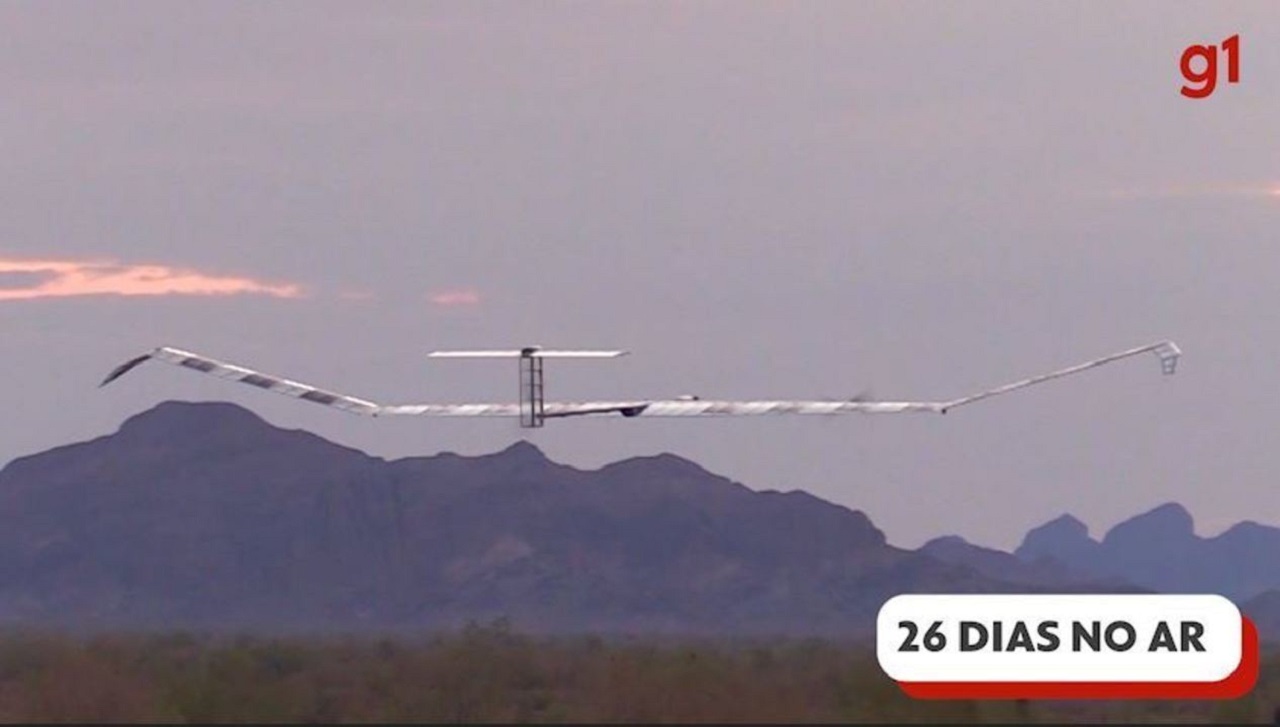
Airbus Breaks Record for Longest Unmanned Flight in History; See How Long the Aircraft Was in the Air.
As solar energy is a form of clean and renewable energy production, it has been advocated by many experts around the globe. However, its limits have been questioned by specialists, with doubts about the application of solar energy in various fields. Is it possible to apply solar energy to an aircraft, allowing it to fly solely using this power? Airbus proved this is possible by setting a new record of 26 days in the air with the Zephyr aircraft.
Airbus Solar-Powered Aircraft


The European aerospace and defense company Airbus set the record for the longest unmanned flight, according to flight data from the company itself. The Airbus Zephyr aircraft is fully powered by solar energy and spent 26 consecutive days in the air, thus breaking the previous record set in 2018.
The unmanned aircraft flies over vast distances and at high altitudes to avoid commercial air traffic and adverse weather conditions. It has batteries that sustain it in the air during the night, so it does not need to stop for fuel.
-
Motorola launched the Signature with a gold seal from DxOMark, tying with the iPhone 17 Pro in camera performance, Snapdragon 8 Gen 5 that surpassed 3 million in benchmarks, and a zoom that impresses even at night.

-
Satellites reveal beneath the Sahara a giant river buried for thousands of kilometers: study shows that the largest hot desert on the planet was once traversed by a river system comparable to the largest on Earth.

-
Scientists have captured something never seen in space: newly born stars are creating gigantic rings of light a thousand times larger than the distance between the Earth and the Sun, and this changes everything we knew about stellar birth.

-
Geologists find traces of a continent that disappeared 155 million years ago after separating from Australia and reveal that it did not sink, but broke into fragments scattered across Southeast Asia.
Flight data shows that the Airbus aircraft flew from a test field in Arizona to Belize, a country located in Central America, and then made the return trip.
Airbus Talks About the Zephyr Aircraft in More Detail During Exclusive Interview
In an interview, Airbus told the BBC that it could not comment on the flight. According to a spokesperson from a U.S. Army department, the recent flights are intended to “test the energy storage capability of the UAV, battery longevity, solar power panel efficiency, and route maintenance capabilities.”
The editor-in-chief of Aerospace magazine, Tim Robinson, told the BBC that such a distance covered by the Airbus Zephyr model is a milestone in the aircraft’s ability to travel long distances away from its controller.
“They surpassed the distance of 2018, which was the previous record,” he said. “I think it’s an important demonstration of how you could use this in reality.” According to Tim, the achievement opens many doors for both military applications and disaster relief.
Discover the Innovation Behind the Airbus Zephyr
Tim made the comparison between the solar-powered aircraft and a satellite, suggesting it can provide images like a satellite but without the limitation of having to orbit the Earth, meaning it can remain in position and provide constantly updated information.
Another advantage of the aircraft is its comparability to satellites that cannot return to Earth once launched. “You can upgrade sensors on it, you can change payloads, you can update it with new technology,” Robinson said.
The Zephyr was conceived by inventor Chris Kelleher, who died in 2015. Three years after the incident, Airbus opened the first facilities for mass production of this aircraft model at its factory in Farnborough, thus honoring the name of inventor Kelleher.








Seja o primeiro a reagir!