





 Portuguese
  English
  Spanish
  3 min of reading
  0 comments


Discovery of the warship Dannebroge in Copenhagen reveals remains of the battle and draws attention for its historical and archaeological impact
The discovery of the Danish warship Dannebroge, after 225 years, brought new information about one of the most significant battles in Europe. The wreckage was located in the port of Copenhagen during studies for the construction of a neighborhood.
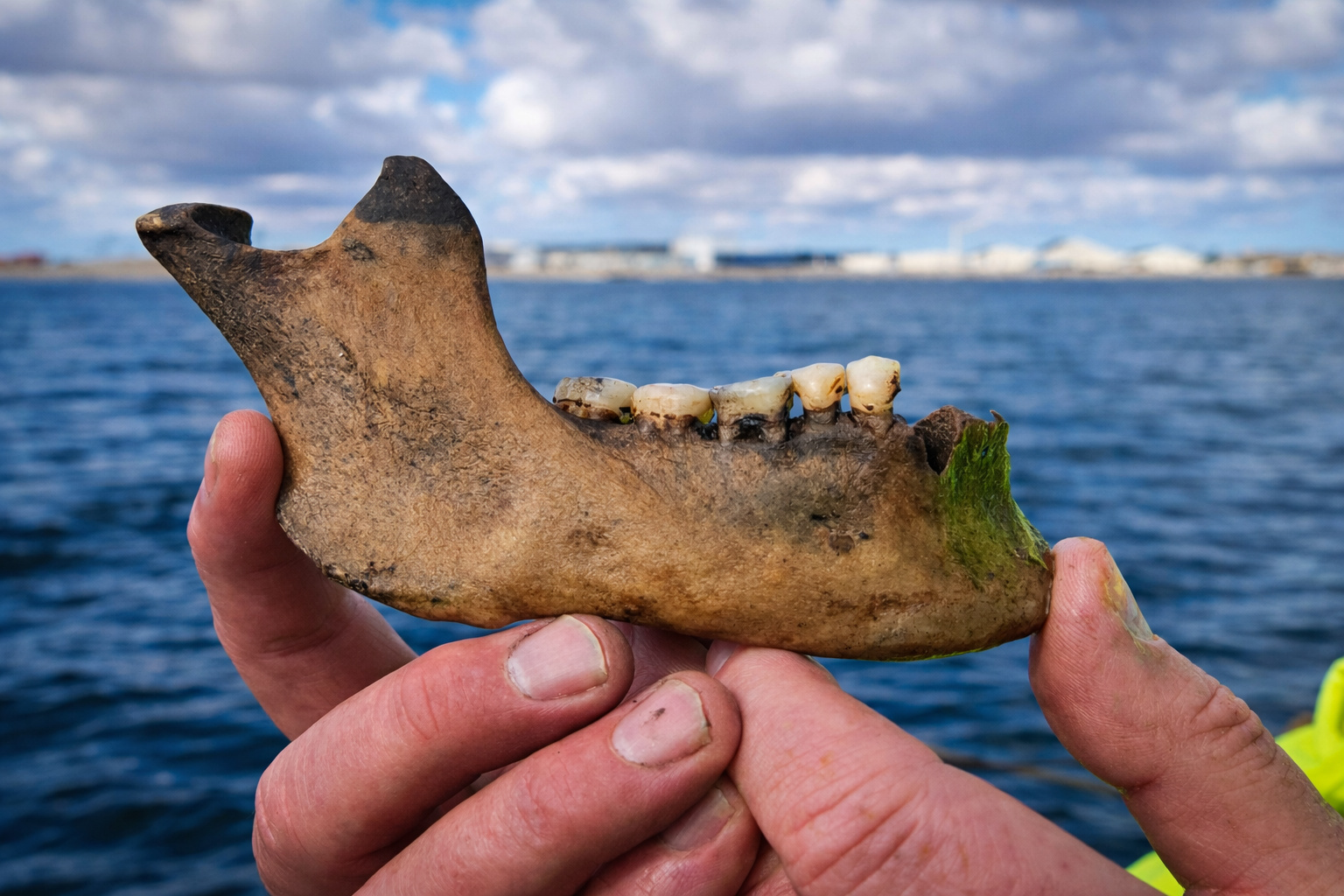
The find draws attention because the ship exploded during a violent battle in 1801, leaving strong marks of war. Ancient objects and even a human jawbone were found among the remains, showing the intensity of the conflict.
Battle of Copenhagen marked direct confrontation between Denmark and Great Britain
The Dannebroge played a central role in the Battle of Copenhagen on April 2, 1801, one of the most important episodes in Danish history.
-
At 2,300 meters below sea level and with a length of 316 meters, the platform in the pre-salt separates gas and water, stores 234 million liters of oil, and operates like a maritime city, housing more than 150 people in 14-day shifts.

-
With over 51,000 years and hidden in a cave in Indonesia, rock paintings force scientists to rewrite the history of human art.
-
Lava river flows down the volcano on Reunion Island, crosses the road, enters the sea, and creates a new strip of land; the longest and most intense eruption of 2026 is already reshaping the coast before our eyes.

-
More than 400 geoglyphs up to 350 meters long were excavated over 2,000 years ago in Acre and remained hidden under the forest for centuries. These giant structures, now visible in satellite images, still challenge science regarding their origin and function.


Great Britain attacked the country to prevent an alliance between Denmark, Sweden, Prussia, and Russia. This group wanted to secure trade routes with France, which threatened British interests.
During the confrontation, the Danish warship remained anchored and served as a defensive center in the port. The vessel was ultimately destroyed after being heavily hit by enemy attacks.
Discovery happened during construction and revealed preserved objects
The wreckage of the Dannebroge was found by archaeologists while conducting studies for construction in the port area.
The information was released by DW, an international news outlet with global coverage, which detailed the importance of the discovery for European history.
Even after more than two centuries, parts of the warship were preserved. Objects such as bottles, ceramics, and baskets were found, along with human remains, reinforcing the scene of destruction experienced at the time.
Combat was intense and turned the sea into a scene of destruction
The battle was extremely violent and took place in a matter of hours. The area was filled with smoke, fire, and cannon fire.
Reports indicate that the impacts were so strong that pieces of wood were launched like dangerous shrapnel. Being aboard a ship at that moment was considered a desperate situation.
The British Navy had more firepower but faced resistance. The Danish forces managed to sink 12 British ships, showing that the confrontation was balanced at times.
Admiral Nelson became famous for ignoring retreat order
The British commander, Admiral Horatio Nelson, stood out during the battle for an attitude that went down in history.
He ignored the order to retreat given by his superior. History tells that Nelson, who had already lost the sight in one eye, said he did not see the signal to stop.
This episode became well-known and gave rise to the expression turning a blind eye, still used today.
Study of the wreckage is unique and expands historical knowledge
The analysis of the Dannebroge marks an important moment for archaeology. A study of this type had never been conducted on a ship from this battle.
DW, an international news outlet with global coverage, highlighted that this is the first time scientists have been able to closely investigate the remains of a vessel involved in the confrontation.
The discovery allows for a better understanding of how the battle unfolded and how ships were constructed and used at the time.
Findings reinforce historical importance of the battle for Denmark
The Battle of Copenhagen remains one of the most important events in Danish history. The Dannebroge became a symbol of this moment.
Even destroyed, the ship helps tell the story of a confrontation marked by courage, losses, and military strategies.
The rediscovery reinforces the value of preserving and studying the past to better understand how these events shaped the current world.
What do you think of this impressive historical discovery? Leave your comment and share with those who love history!








Seja o primeiro a reagir!