





 Portuguese
  English
  Spanish
  5 min of reading
  0 comments


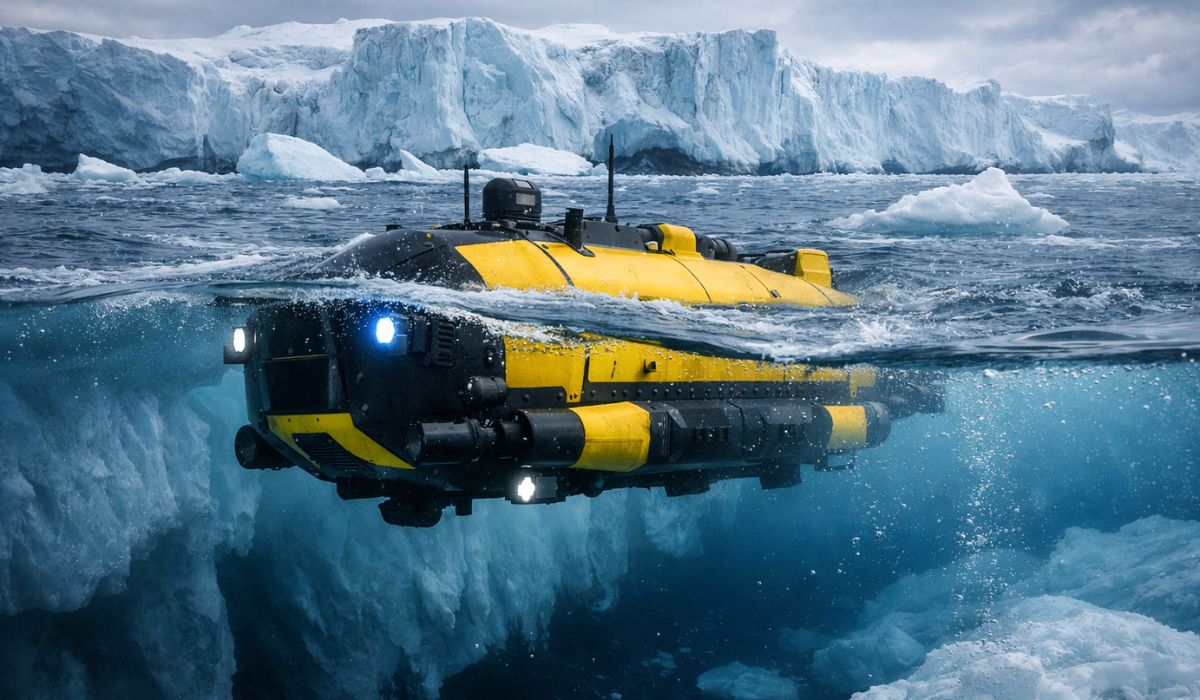
A new submarine will be sent to Antarctica after the loss of equipment in a crucial area for studies on ice, ocean, and sea level, a topic that remains at the center of international climate research.
The University of Gothenburg, in Sweden, announced the purchase of the Ran II, a new autonomous underwater vehicle that will replace the robotic submarine Ran, lost under the ice of Antarctica during a scientific mission.
The equipment will be used in research on the Thwaites Glacier, partly referred to in international coverage as the “Doomsday Glacier”, and is expected to be delivered in the winter of 2026/2027 in the Northern Hemisphere.
The order was placed with the Norwegian company Kongsberg Discovery.
-
NASA has set a date for the beginning of the end of Earth, and it won’t be an asteroid or an explosion: the planet will slowly lose its oxygen over the course of 1 billion years because the Sun is getting hotter every day.

-
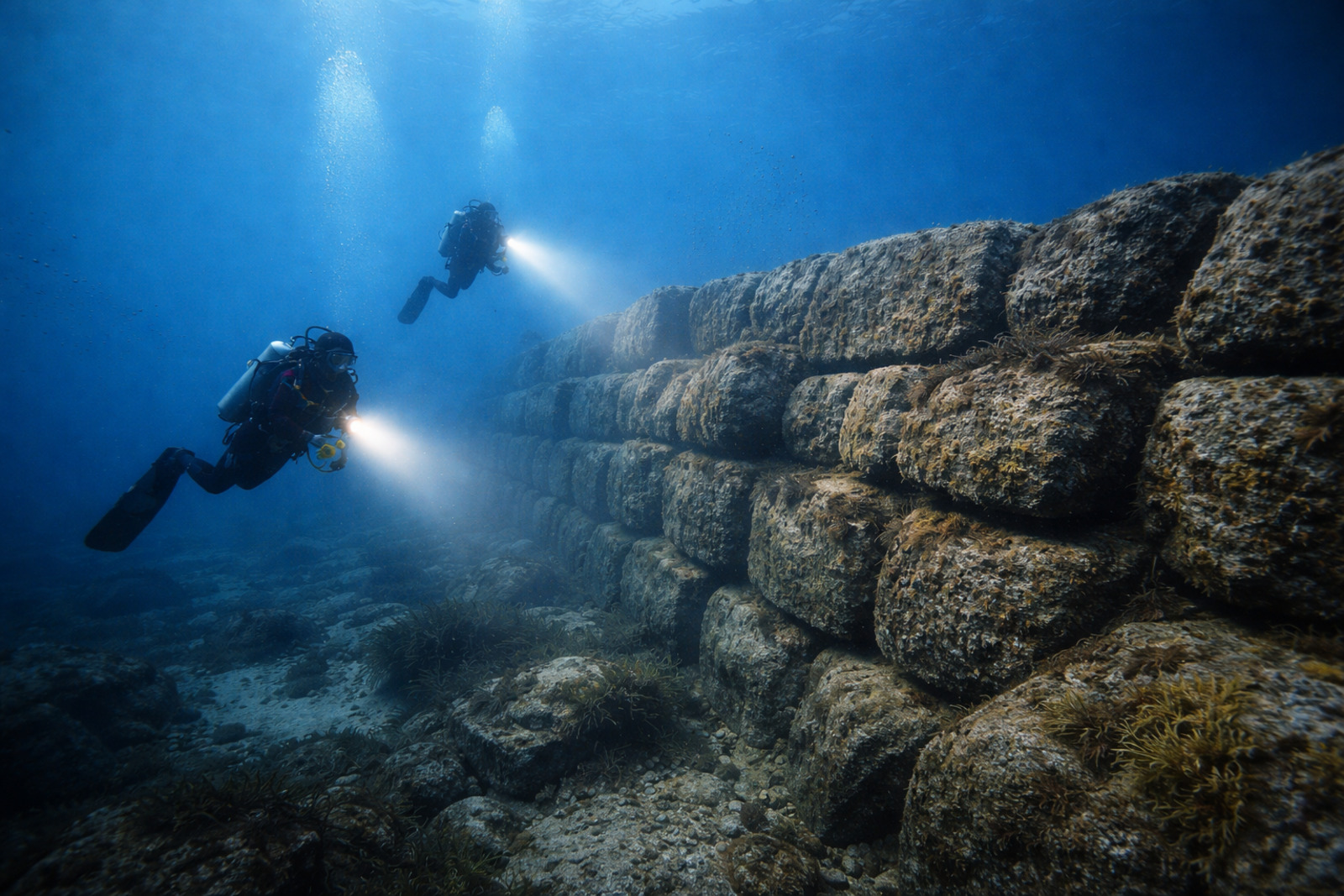
Archaeologists have discovered a colossal submerged wall in the Atlantic, dating back 7,000 years and weighing 3,300 tons, regarded as the largest prehistoric submerged structure ever found in France.
-
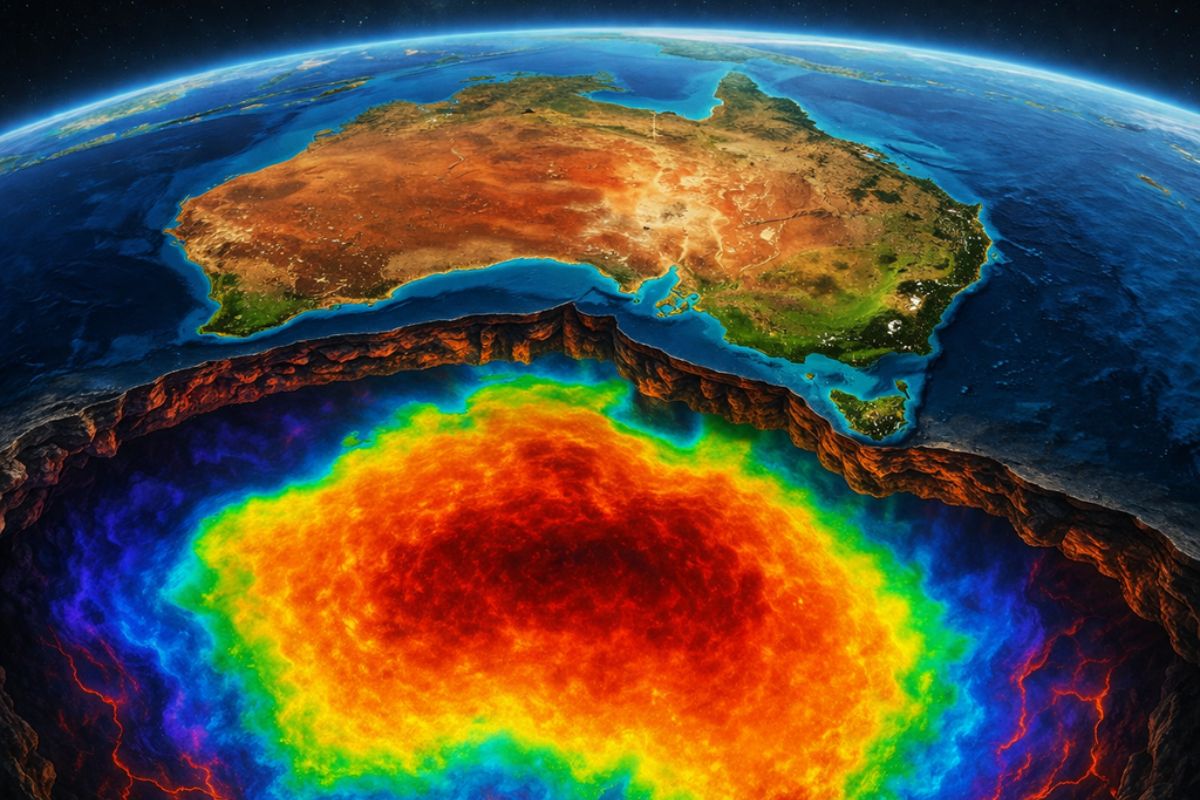
Scientists have discovered a gigantic magnetic anomaly hidden beneath the soil of Australia that mirrors the shape of the entire continent and holds geological records of two and a half billion years that could change what we know about the Earth.
-
The heatwave that has been affecting Brazil in recent weeks is coming to an end: a cyclonic vortex is moving in during Holy Week with heavy rains, and a cold air mass is already threatening to lower temperatures in the South starting in April.


According to the university and the manufacturer, the new vehicle will maintain the function of the previous model, with adaptations aimed at navigation and operation in extreme environments under the ice.
The goal is to enhance data collection capacity in an area monitored by researchers studying the interaction between the ocean and the bases of Antarctic glaciers.
Submarine Ran disappeared during mission in Antarctica
The original submarine disappeared in early 2024, during an expedition with the South Korean icebreaker RV/IB Araon.
Information released by the University of Gothenburg and the International Thwaites Glacier Collaboration indicates that the vehicle did not return to the scheduled point at the end of the last mission of the campaign.
The search mobilized acoustic instruments, helicopters, and drones, but the equipment was not located.
At the time, researcher Anna Wåhlin, a professor of oceanography at the university and responsible for the expedition, reported that the team had to end the search without recovering the submarine.

According to researchers, the hypothesis considered at the time was that the Ran remained under the ice shelf, in an area of difficult access.
The case interrupted a mission aimed at obtaining data on ocean water circulation under the glacier and on the points where melting at the base of the ice is most intense.
Research under the Thwaites Glacier gained scientific importance
Before its disappearance, the Ran was used in a research front that sought direct observations under the glacier.
This type of operation allows access to regions where ships and other instruments have limited reach, especially in areas covered by ice platforms.
In previous missions, the vehicle produced high-resolution images and maps of the underside of the ice and the underwater topography.
The data helped researchers analyze where water circulates, in which sectors melting is more pronounced, and how the structure of the glacier responds to these changes.
With the loss of the equipment, part of this operational capacity was interrupted.
The replacement, therefore, was treated by the university as a necessary step to maintain research in a region considered strategic by scientific groups monitoring West Antarctica.
Thwaites Glacier raises concern due to impact on sea level
The Thwaites glacier, in West Antarctica, is at the center of studies on sea level rise.
According to scientific organizations monitoring the region, a complete collapse of the glacier could directly contribute about 65 centimeters to global sea level rise.
Researchers also note that the importance of Thwaites is not limited to the ice mass itself.
Changes in its structure can affect neighboring areas of the West Antarctic ice sheet, which explains the ongoing interest of international teams in the region.

Furthermore, data gathered in recent studies indicate ice mass loss, retreat in sectors of the glacier, and the entry of relatively warmer ocean water under floating platforms.
In this scenario, autonomous vehicles like the Ran have become relevant as they reach areas where the interaction between ocean and ice occurs outside the reach of direct observation by conventional methods.
It was in this context that the submarine gained importance for polar research.
By operating under the ice, the equipment allowed the collection of information that complements satellite measurements, scientific models, and indirect surveys.
Ran II will have enhanced navigation and more sensors
In announcing the Ran II, the University of Gothenburg stated that the new vehicle will have the same main purpose as the previous model, with enhancements in areas considered critical after the 2024 incident.
Among the changes announced are improvements in the navigation system and a more robust support for decision-making in emergency situations.
According to Kongsberg, the new vehicle will have a range of up to 3,000 meters and will be able to operate with different sensors on the same mission.
The proposal, according to the manufacturer, is to increase the accuracy of navigation in confined environments and enhance operational safety in areas covered by thick ice and close to the seabed.
Still, expeditions of this type remain subject to technical and environmental limitations.


Operations under ice platforms require detailed planning because the robot travels long distances without direct manual control, in regions where physical obstacles, route failures, or technical problems can compromise the return to the recovery point.
In this sense, the disappearance of the first Ran led the university to review operational and system safety points.
The design of the Ran II, according to the institution, responds to this need by preserving the capacity to access remote areas while incorporating features aimed at risk reduction.
The purchase of the new submarine was made possible by donation and insurance
The acquisition of the new submarine progressed after the influx of new resources.
The University of Gothenburg reported that the purchase was made possible by a large donation from the Voice of the Ocean foundation and funds received from the insurance of the lost equipment.
With this, the institution resumed planning for future expeditions and indicated that it will continue to invest in marine and polar research.
Operations of this scale involve not only the purchase of the vehicle but also technical teams, support vessels, short windows for fieldwork, and infrastructure to transform the collected data into scientific results.
The announcement of the Ran II comes at a time when the Thwaites Glacier continues to be monitored by researchers from different countries.
The university’s expectation is to use the new equipment in missions under glaciers and under sea ice, focusing on increasing data collection in regions where there are still observation gaps.






Seja o primeiro a reagir!