





 Portuguese
  English
  Spanish
  7 min of reading
  0 comments


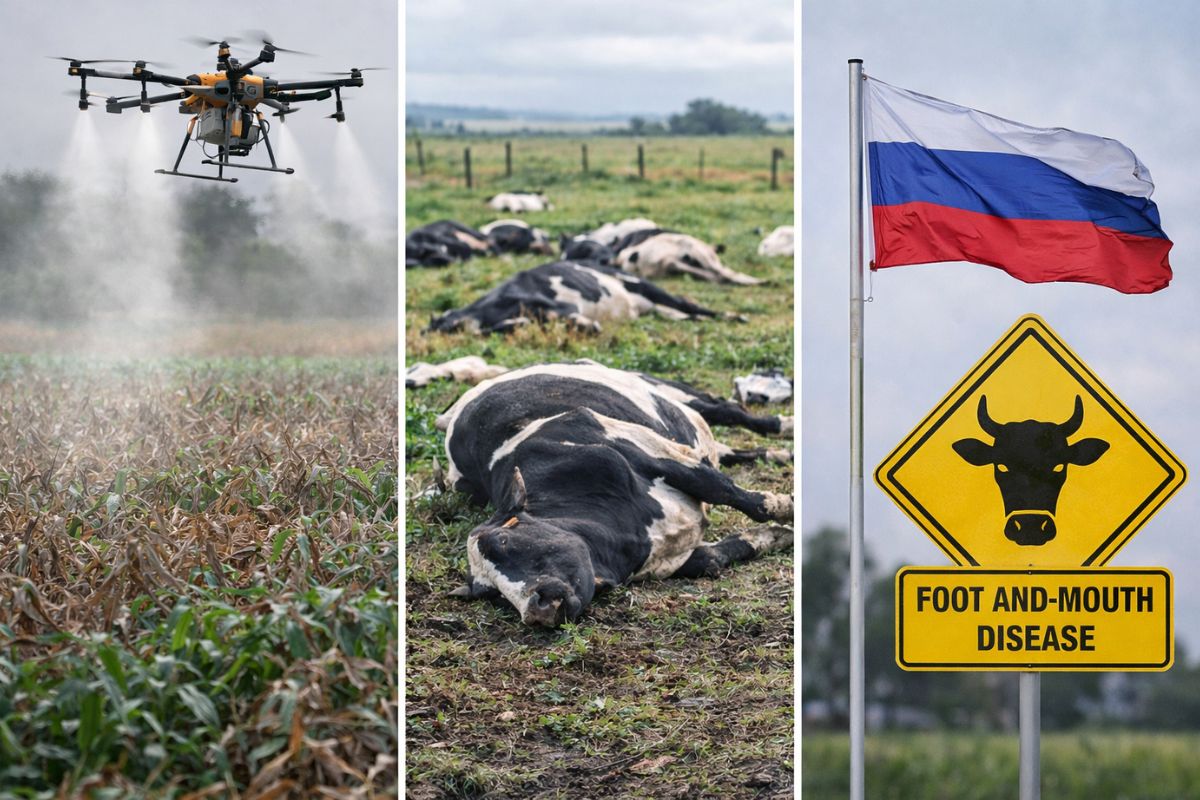
An agricultural drone applied herbicide that drifted through the air and destroyed 10 hectares of eucalyptus and 8 hectares of the neighbor’s chayote in Goiás, causing R$ 1 million in losses, 48 dairy cows died from nitrite poisoning in the pasture in Rio Grande do Sul, and Russia faces suspicion of foot-and-mouth disease with mass slaughter of cattle—three facts that shook the rural community this week.
The week was especially tough for those living in the rural community. In Leopoldo de Bulhões, Goiás, an agricultural drone used to apply herbicide on a farmer’s property spread the product through the air and affected the neighboring farm, destroying eucalyptus and chayote crops and causing an estimated loss of R$ 1 million. In Rio Grande do Sul, a family that lost 48 dairy cows at once due to food poisoning is trying to restart production with the help of donations. And in Russia, the mass slaughter of cattle raises suspicion that the country is hiding an outbreak of foot-and-mouth disease, one of the most feared diseases in global livestock.
These are three different stories that share a common point: how rural activity is exposed to risks that can turn months of work into losses overnight. Each case brings lessons about negligence, climate vulnerability, and sanitary threats that affect producers on completely different scales from the small farmer in Goiás to the international beef market.
Agricultural drone spreads herbicide through the air and causes R$ 1 million in losses to the neighbor
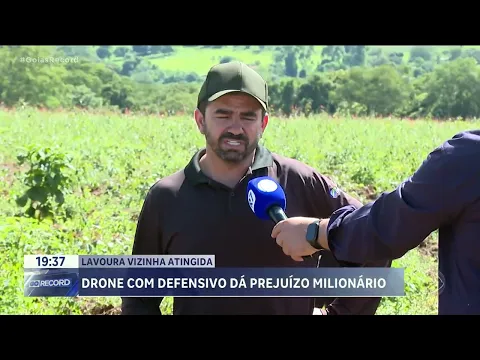

The incident occurred in Leopoldo de Bulhões, in the interior of Goiás. A farmer used an agricultural drone to apply pesticides in his pasture area to control pests. The problem is that the herbicide did not stay where it should: the mist from the product spread through the air and affected the neighboring property, destroying two crops at different stages of production.
-
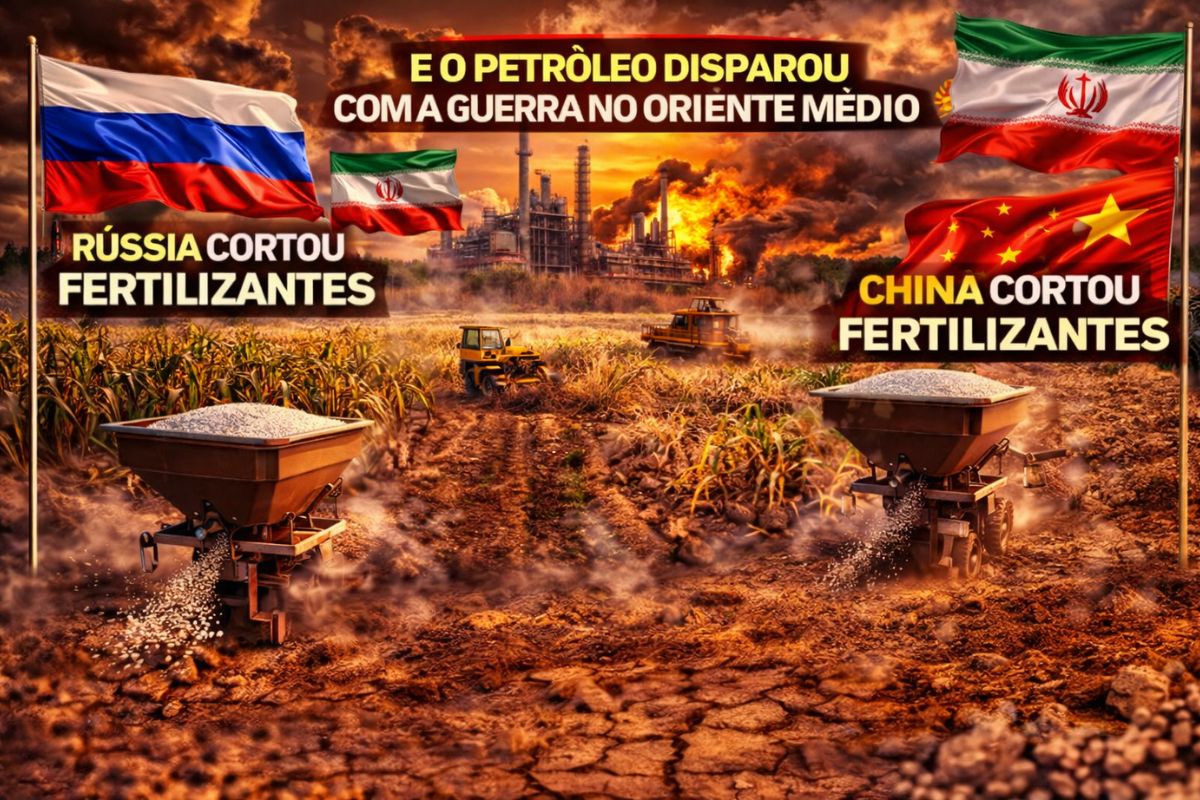
Russia cut fertilizers, China cut fertilizers, and oil prices soared with the war in the Middle East: sugarcane producers in the interior of São Paulo are seeing costs explode from all sides and warn that the effects will take months to be absorbed.
-
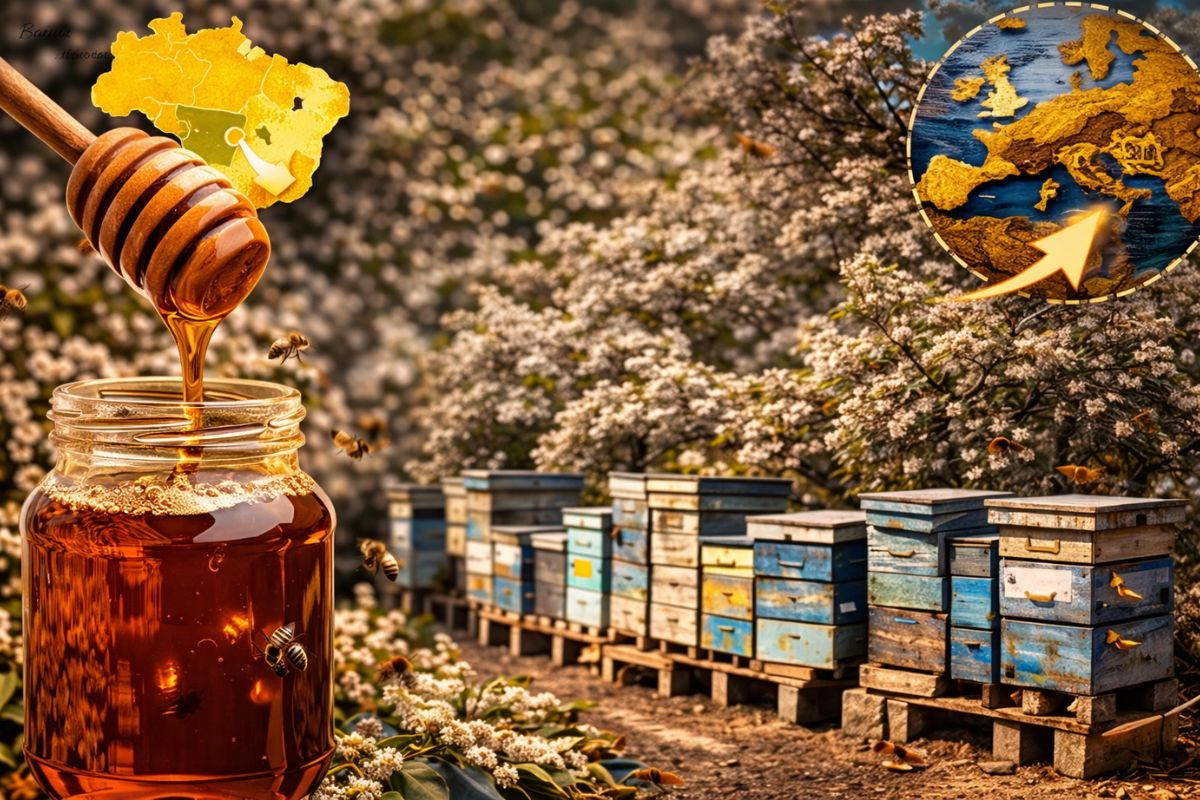
It does not come from flowers, is produced only every two years, and more than 90% goes straight to Europe: meet the bracatinga honeydew honey from Santa Catarina, considered one of the rarest in the world and overlooked by Brazil itself.
-
They said no to 26 million dollars and would do it all over again: mother and daughter from Kentucky reject a million-dollar offer from a mysterious company that wants to build the largest data center in the state on more than 2,000 acres of rural land.

-
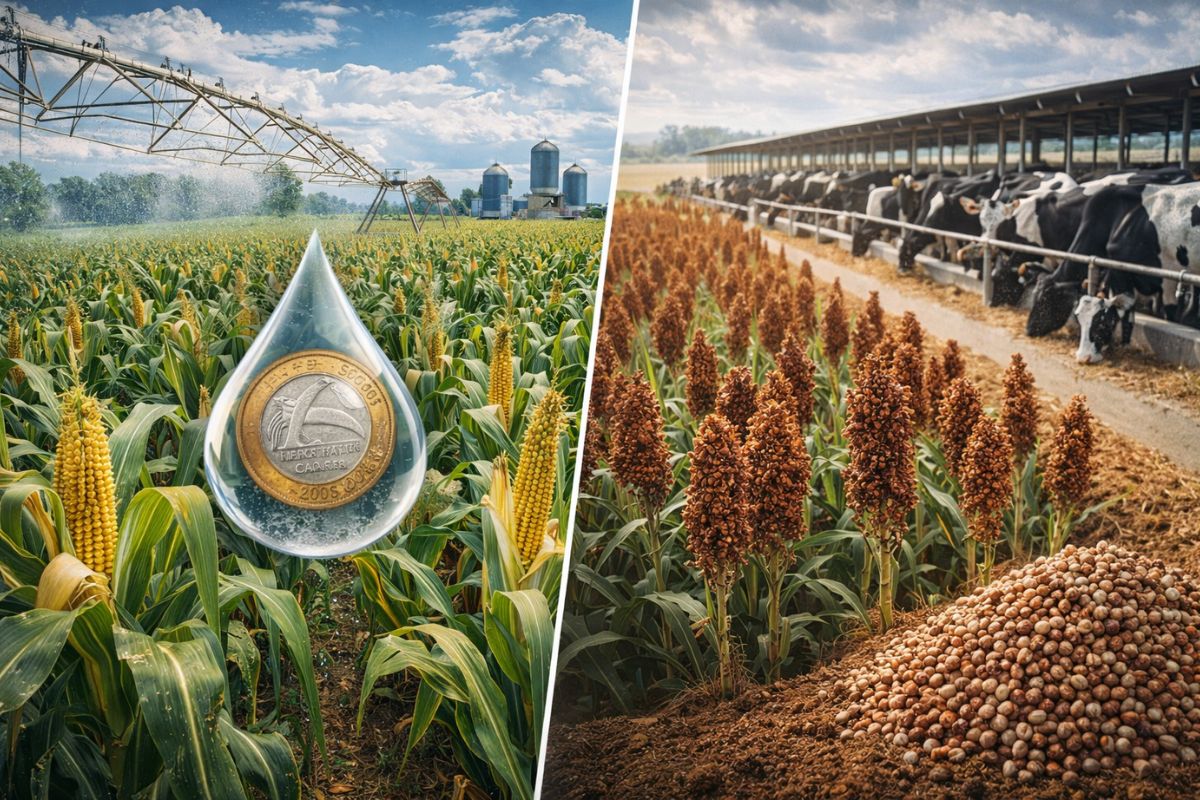
While corn requires rain and is expensive, sorghum produces almost the same volume per hectare at a cost up to 80% lower and uses less water, and it is revolutionizing dairy farming in the Triângulo Mineiro, where producers save hundreds of reais per hectare.

The affected producer reports that the drift of the poison affected about 10 hectares of eucalyptus with approximately 40,000 trees, of which some are already showing signs of death. The estimated loss just from the eucalyptus is about R$ 200,000.
Additionally, an 8-hectare chayote crop that was in full harvest was practically lost, potentially generating a loss of up to R$ 800,000 in the coming months. Adding the two crops, the total damage could reach R$ 1 million.
In light of the situation, the producer filed a police report. The scientific police collected samples to identify which product was used by the agricultural drone and whether there was any irregularity in the application. The investigation will determine whether there was negligence or responsibility for assuming the risk of causing damage to the neighboring property.
The case raises an important alert about the use of drones for spraying: without strict safety protocols, the same equipment that increases efficiency can cause million-dollar losses to those nearby.
What the agricultural drone case teaches about herbicide drift
Drift, when the applied product spreads beyond the intended area, is one of the most well-known risks of aerial spraying, whether by plane or agricultural drone.
Factors such as wind speed, flight altitude, droplet size, and nozzle type directly influence the chance of the product reaching unintended areas. In the case of Leopoldo de Bulhões, the mist from the herbicide traveled enough to devastate two entire crops on the neighboring property.
The loss of R$ 1 million is not just financial. The affected producer now needs to restart chayote production from scratch, a process that takes months until the first harvest, and wait to see if the surviving eucalyptus trees recover or if the loss will be total. Meanwhile, the income that would come from these crops has simply disappeared.
For those working in the rural sector with drones, the case is a reminder that technology requires responsibility proportional to its power. An improperly operated agricultural drone is no different from a careless agricultural plane: the potential damage is enormous, and civil and criminal liability falls on those who authorized and executed the application. Regulations from Anac and Mapa govern the use of drones for spraying, but field oversight is still insufficient.
48 cows died at once and family tries to restart with donations

In the north of Rio Grande do Sul, in the municipality of Novo Xingu, a family of rural producers experienced a tragedy that shocked the rural community. Between January 2 and 4, 48 dairy cows died showing the same symptoms: they drooled, had difficulty breathing, lay down, and did not get up again. The estimated loss was R$ 600,000—practically the entire dairy herd of the property, eliminated in less than 72 hours.
After various analyses of organs, water, feed, silage, and pasture, reports from the University of Passo Fundo confirmed the main suspicion: food poisoning due to excess nitrite. The accumulation of the substance likely occurred due to a sequence of rainy and cloudy days that hindered the photosynthesis of the pasture. When the plant does not photosynthesize properly, nitrate accumulates in the tissues, and when ingested by cows, it converts to nitrite, a highly toxic substance.
About 80 days after the tragedy, the family is trying to resume milk production with the help of a solidarity campaign. 23 animals were donated, including 17 lactating cows. Production now reaches between 450 and 500 liters per day—less than half of the 1,000 liters per day that the property achieved before the loss. The expectation is to recover the mark of one thousand liters by May.
What killed the cows and how producers can protect themselves
Nitrite poisoning is a silent and little-publicized risk in the rural community. It occurs when climatic conditions—specifically prolonged periods of rain and low light—cause the pasture to accumulate dangerous levels of nitrate. The cattle consume the pasture without noticing the difference, and the nitrate is converted into nitrite in the rumen, causing a crisis that can kill the animal within hours.
The case of Novo Xingu is a warning for producers throughout Brazil. The tragedy was not caused by negligence; it was the result of a climatic combination that turned the pasture into poison. The recommendation from specialists is to monitor pasture conditions after prolonged rainy periods and, when possible, conduct laboratory analyses before releasing cattle to pasture.
For the family from Rio Grande do Sul, recovery is slow. Each donated dairy cow represents not only production but the chance to rebuild an activity that sustained the entire property. The loss of R$ 600,000 cannot be erased with donations, but the solidarity of the rural community shows that the community mobilizes when one of its own is affected.
Russia raises suspicion of foot-and-mouth disease and global livestock remains on alert
On the other side of the world, a sanitary crisis in Russia has put the international beef market on high alert. What began as an outbreak attributed to pasteurellosis—a severe bacterial pneumonia and rabies—quickly evolved into a situation marked by mass slaughter of animals, movement restrictions, and suspension of exports.
The case gained international attention because external sources raised suspicions that Russia may be dealing, in practice, with an outbreak of foot-and-mouth disease—one of the most feared diseases in global livestock.
Foot-and-mouth disease is highly contagious, affects cattle, pigs, sheep, and goats, and a confirmed outbreak in a major producer like Russia would have ripple effects on global meat trade.
For Brazil, which is the world’s largest exporter of beef, the situation in Russia is being closely monitored. A confirmed outbreak of foot-and-mouth disease in any major producer opens commercial opportunities for countries free of the disease, but also raises the alert about the need to maintain strict sanitary surveillance protocols in the Brazilian rural sector.
The status of being a foot-and-mouth disease-free country with vaccination, achieved by Brazil over decades, is a commercial asset worth billions.
A week that summarizes the risks of those living from the land
An agricultural drone causing million-dollar losses due to negligence in application, cows dying from poisoning due to pasture that turned toxic after days of rain, and an entire country under suspicion of hiding foot-and-mouth disease. These are three facts that, together, illustrate the breadth of risks that the rural community faces from the farm gate to the international market.
The producer from Goiás now depends on a police investigation to try to recover what he lost. The family from Rio Grande do Sul is rebuilding the herd liter by liter, with the help of those who understand what it means to lose everything at once. And the world watches Russia to see if the next sanitary crisis in livestock has already begun. The rural community does not stop, but weeks like this remind us that the price of producing food is extremely high for those on the front lines.
Which of these stories caught your attention the most? Have you ever suffered losses due to agricultural drone drift or lost animals due to pasture poisoning? Share in the comments; the exchange of experiences among rural producers strengthens the community.










Seja o primeiro a reagir!