





 Português
  Inglês
  Espanhol
  4 min de leitura
  0 comentários


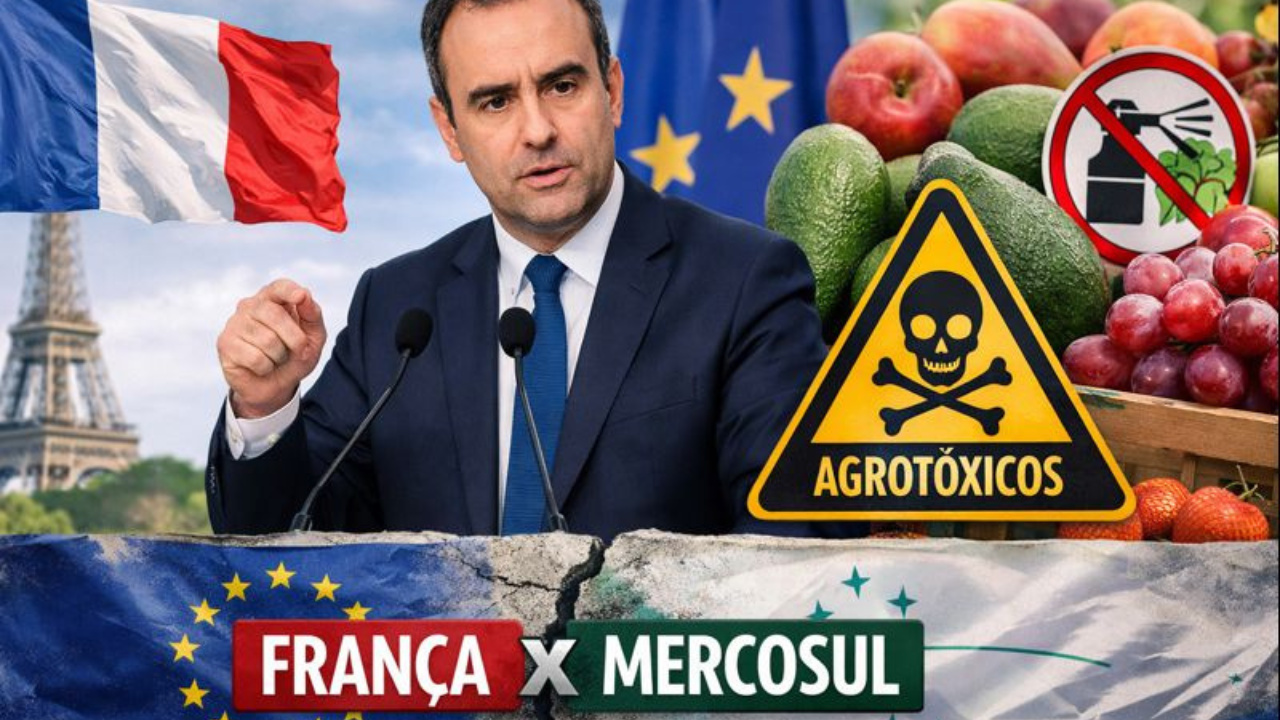
France Suspends Agricultural Imports From South America Due to Pesticides and Reinforces Opposition to Trade Agreement With Mercosur.
The France decided to tighten its agricultural import policy by announcing the suspension of the entry of fruits from South America that contain prohibited pesticides in the European market.
The move comes during the final negotiations of the trade agreement between the European Union and Mercosur, raising diplomatic and commercial tensions between the blocs.
According to the French government, the decision will be implemented through regulations that will take effect later this week.
-
Middle East War Hits Fertilizers and Transportation and May Strain Brazilian Wallets
-
Russia Considers Suspending Gas to Europe After Surge in Energy Prices
-
How A War Thousands of Miles From Brazil Started Disrupting Global Shipping Routes, Raising Container Costs, and Putting Up to 40% of Brazilian Beef Exports at Risk
-
Iran-U.S. War Drives Up Oil Prices and Pressures Global Financial Markets
The stated aim is to strengthen sanitary controls at the borders and protect European producers from external competition.
However, the initiative also has a direct impact on South American exporters, especially Brazil, the largest economy in Mercosur.
Measure Targets Fruits With Residues of Prohibited Pesticides
In an “open letter to farmers in France,” Lecornu detailed the scope of the decision.
“Regulations will be adopted by the government this week to suspend the import of food products from South American countries, such as avocados and apples, containing residues of five substances that are already prohibited in Europe,” he stated.
Later, in a post on the social media platform X, the Prime Minister specified which pesticides prompted the restriction.
Among them are mancozeb, glufosinate, methyl thiophanate, and carbendazim.
In addition to avocado and apple, the list of affected products includes mango, guava, citrus fruits, and grapes — items relevant to the European agricultural imports agenda.
France Promises Stricter Border Inspections
In addition to the suspension of imports, the French government announced a significant enhancement of inspection mechanisms.
According to Lecornu, “controls over imports will be massively reinforced, at the borders and within the [French] territory.”
“I have just tightened the instructions regarding this matter. It is now up to the European Union to quickly amplify these actions at the scale of the entire European market,” he declared, indicating that the European Union may adopt similar measures.
French Opposition to Trade Agreement Is Not New
The position of France against the trade agreement with Mercosur is not recent.
The country leads the resistance within the European Union, driven by strong lobbying from French farmers, who fear competition from South American products, generally cheaper and produced under different environmental regulations than those in Europe.
In December, just days before the final signing of the treaty between the two blocs, Paris succeeded in rallying Italy’s support to delay the process.
The central argument was the need for additional safeguards and stricter sanitary controls, especially in the agricultural imports sector.
Delay Triggers Reaction in Brazil and Increases Diplomatic Pressure
The new delay caused irritation at the Planalto Palace.
President Luiz Inácio Lula da Silva planned to conclude his six-month term as the rotating president of Mercosur with the signing of the agreement, considered strategic to expand the bloc’s access to the European market.
After a conversation with Italy’s Prime Minister, Giorgia Meloni, Lula agreed to postpone the ceremony to the beginning of this year.
Despite this, the Brazilian government has started signaling that it may abandon the negotiations if there is another delay.
Behind the Scenes Indicate France’s Ongoing Resistance
Even with the signing expected, the entry into force of the trade agreement still depends on the approval of the European Parliament.
In this scenario, France continues to act behind the scenes to try to block or at least limit the effects of the treaty.
Analysts assess that the tightening of the rules against pesticides serves as a political tool to strengthen the French position in the negotiations.
At the same time, the decision increases uncertainty for Mercosur exporters, who see agricultural imports as one of the main gains from the agreement with Europe.
Impacts May Go Beyond Food Trade
International trade experts warn that the French initiative may set a precedent for new non-tariff barriers within the European Union.
Although justified by sanitary criteria, these measures tend to directly influence the balance of the trade agreement with Mercosur.
Meanwhile, South American producers are following the progress of the negotiations with caution.
The outcome of the impasse will determine not only the future of the treaty but also the access of various agricultural products to the demanding European market.









Seja o primeiro a reagir!