Portuguese
  Spanish


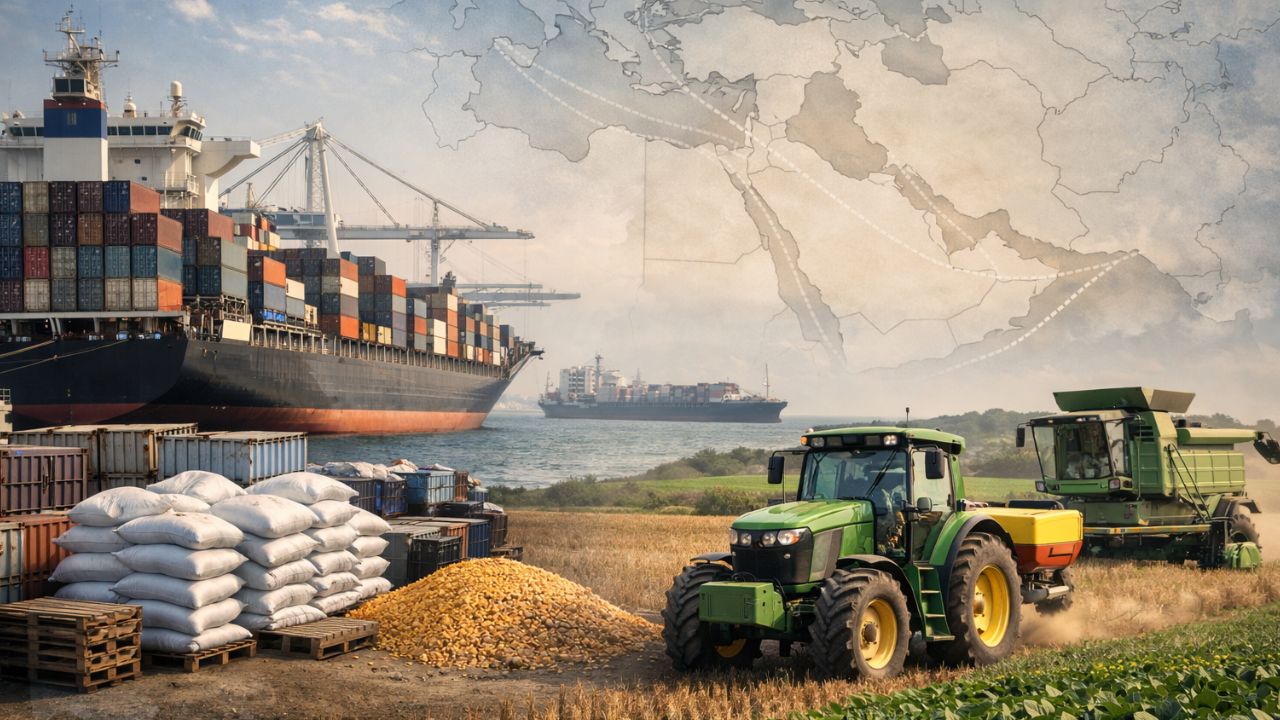

War In The Middle East Pressures Import Of Fertilizer, Transport And Diesel, May Increase Food Prices In Brazil.
The war in the Middle East involving Iran, the United States, and allies could have a direct impact on the consumer’s pocket in Brazil in the coming months. The conflict, recently intensified in the region, affects strategic trade routes, raises import costs of fertilizer, increases diesel prices, and makes global sea transport more expensive.
Economists and agribusiness analysts warn that these changes may pressure agricultural production costs and consequently raise food prices in the country.
This effect occurs because Brazil relies heavily on the import of fertilizers and fuels. Furthermore, a significant portion of these commodities passes through strategic trade routes in the Middle East, which currently face geopolitical instability.
-
Global Race for Rare Earths Intensifies as U.S. and China Compete, Putting Brazil’s Vast Reserves in the Spotlight

-
Not even the end of the ‘roller coaster’ described by the price of Brent crude oil (the main global benchmark) – which jumped from a price of $72 to $120, then dropped to $76 per barrel – due to the recent peace agreement between the US and Iran, was enough to relieve the Brazilian economy from inflationary pressures.

-
European Union looks again at Brazilian seafood after a nearly 8-year ban and may unlock a coveted market for lobster, tuna, tilapia, and shrimp.

-
Japanese retro sneakers become a sales phenomenon, help Asics achieve record profits, and gain their own operation to target Los Angeles, Milan, and Seoul.




Although the impact for producers is already being felt, experts say that consumers may perceive the effects mainly in the coming months.
See also: Strait Of Hormuz: Hundreds Of Ships And Tankers Are Stranded After Attacks In The Middle East
See also: Oil Price Shoots Up With Middle East Crisis And Pressures Stock Market
War In The Middle East Already Pressures Fertilizer Prices In Brazil
One of the first effects of the war in the Middle East was the rapid rise in international fertilizer prices, an essential input for Brazilian agriculture.
The Brazil is highly dependent on the import of these products. A significant portion of the raw material used in agricultural production comes precisely from Middle Eastern countries.
According to data from the Ministry of Development, Industry, Commerce and Services (Mdic), the region is the fourth largest supplier of chemical fertilizers to the country.
Although not the main trading partner of Brazil, the Middle East exerts strong influence in the global market of the input.
This occurs because the region accounts for about:
- 40% of global urea exports
- 28% of global ammonia exports
According to analyst Tomás Rigoletto Pernías from StoneX Brazil, the impact on prices was immediate.
“The impact on prices was instant and severe, with increases of about 10% to 12% in just one day, in markets such as Brazil and the Middle East.”
Additionally, fertilizer sellers temporarily suspended negotiations to better understand market behavior.
“With the outbreak of the conflict, fertilizer sellers from the Middle East and other regions suspended their sales to try to understand what the real value of the product they have in hand is.”
International Transport More Expensive After War In The Middle East
Another critical factor is maritime transport, which was also affected by the war in the Middle East.
Iran closed the Strait Of Hormuz, one of the most important trade routes on the planet. Through this passage circulates a large portion of the world’s oil and various industrial products.
Without this route, ships must alter their paths, significantly increasing logistical costs.
This means:
- more expensive sea freight
- higher cargo insurance
- increased container costs
- delays in supply chains
According to specialists, this effect impacts global trade and not just goods linked to the Middle East.
Professor Felippe Serigati from FGV Agro explains that the international market is fully interconnected.
Even if a supplier stops delivering products, demand remains, raising global prices.
More Expensive Diesel Could Increase Food Transport Costs
In addition to the rise in fertilizer prices, the war in the Middle East also pressures oil prices.
The region is home to some of the largest oil producers in the world, such as Saudi Arabia, Iran, and the United Arab Emirates.
With the instability, the Brent barrel—an international benchmark—rose by about 4%, approaching US$ 81.
This increase could directly impact transport in Brazil, since diesel is essential for:
- operating agricultural machinery
- transporting the harvest
- distributing food
With more expensive diesel, freight costs increase and are eventually passed on to the final consumer.
Inflation strategist Andréa Angelo highlights that this effect is broad.
“When the price of gasoline rises, prices of other fuels probably go up too […] and you have an entire indirect pass-through of these costs.”
Impacts Of The War In The Middle East May Reach Brazilian Exports
The conflict may also affect Brazilian exports to Middle Eastern countries.
In the region, Brazil primarily sells:
- chicken
- beef
- sugar
- corn
According to the president of the Brazilian Animal Protein Association (ABPA), Ricardo Santin, the sector is already facing logistical difficulties.
“There is a lot of meat in the water. Only the Emirates purchased, in January, 44 thousand tons. Arabia [Saudi] bought 33 thousand. So, there are containers in the water, and they are being redirected.”
In addition, shipping companies have already created a“war tax” to compensate for logistical risks.
“The new routes are longer and more expensive. The shipowners have already implemented a ‘war tax’.”
When The Effects Of The War In The Middle East May Reach Consumers
Although costs are already rising, experts say the total impact still depends on the duration of the war in the Middle East.
Researcher Leandro Gilio from Insper Agro Global states that the impact in the field is immediate, but takes longer to reach consumers.
“The question is how much the conflict will impact production and how long this war will last. It probably won’t be a quick resolution.”
Furthermore, other factors may help reduce pressure on prices.
Among them are:
- falling dollar
- favorable weather for agricultural production
- fuel stocks
Still, economists warn that the combination of fertilizer imports, increased transportation, and rising fuel prices may pressure food inflation in Brazil if the conflict prolongs.