





 Portuguese
  English
  Spanish
  4 min of reading
  0 comments


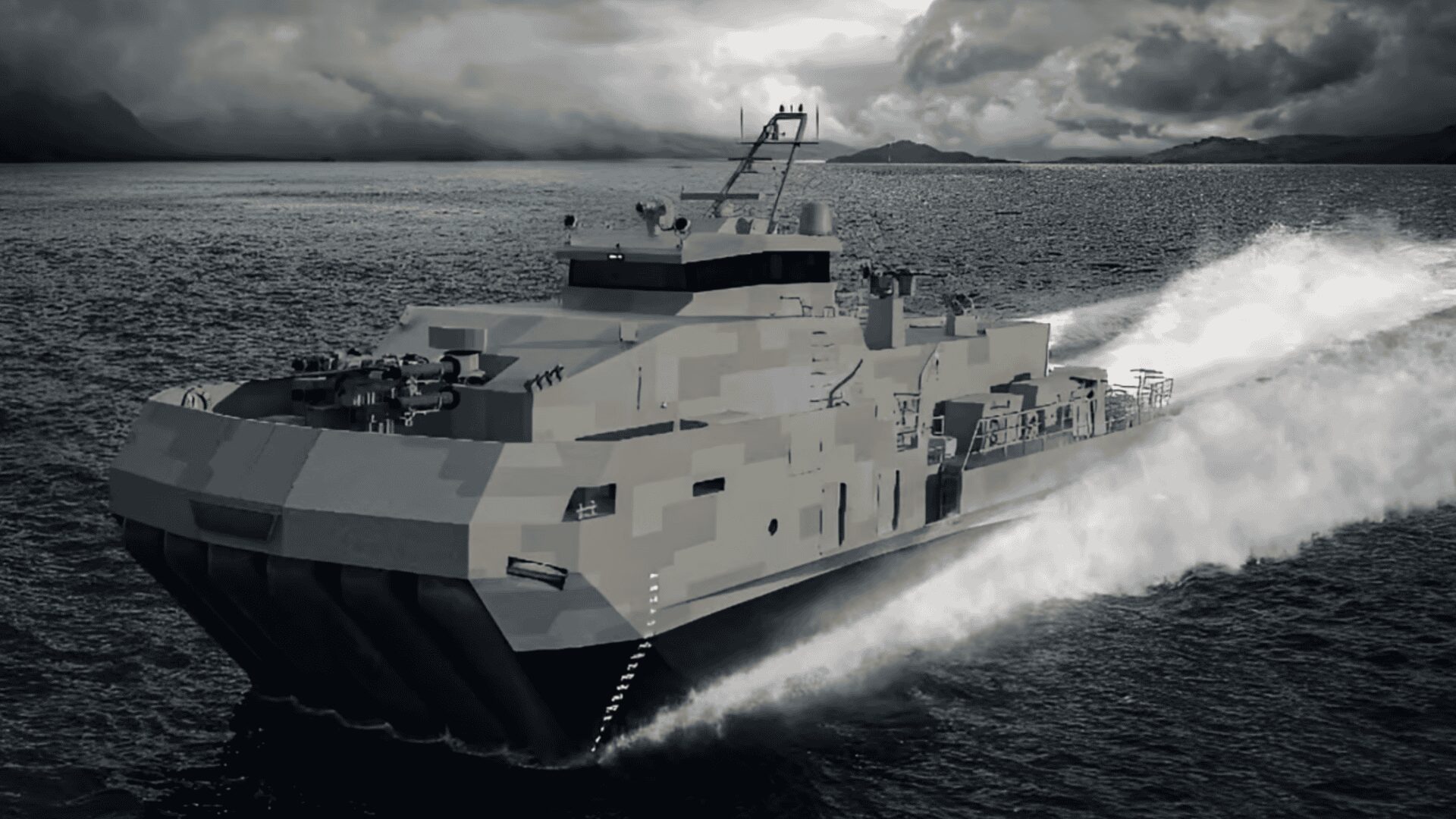
Military Vessel Regarded by the Brand as “the Most Powerful Autonomous Warship in the World” Features Artificial Intelligence, Missile Launching, and Operational Capability for High Threats.
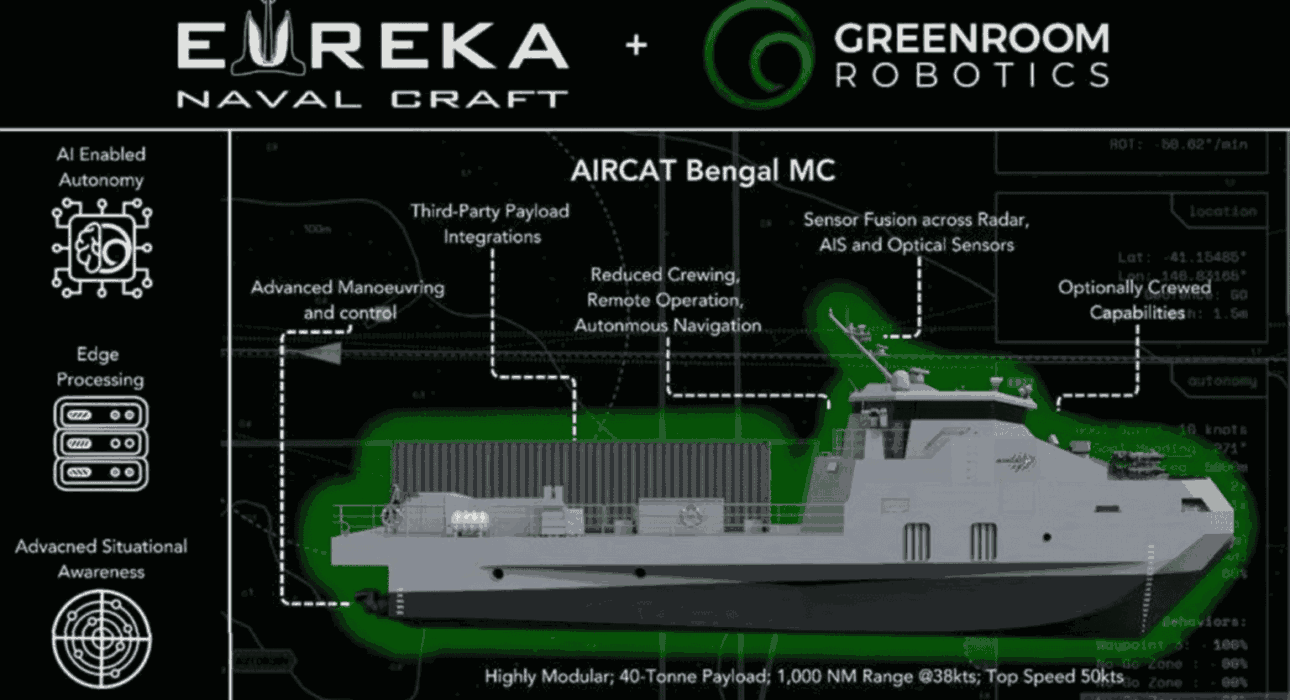
The race for autonomous warships has just gained a new protagonist. Developed by the American Eureka Naval Craft in partnership with the Australian Greenroom Robotics, the AIRCAT Bengal MC has been introduced to the market as the most advanced autonomous naval attack ship in the world. The vessel’s highlight is its ability to carry payloads of up to 40 tons at speeds exceeding 50 knots, equivalent to about 93 km/h — a milestone for the category.
According to an official statement from the companies, the ship will be offered to the United States Navy, the Marine Corps and allied countries belonging to the NATO and the AUKUS alliance, as well as strategic partners in Asia such as Japan, South Korea, Vietnam, Thailand, Singapore, and the Philippines.
AIRCAT Bengal MC Redefines Naval Transport and Combat
Designed to operate in various scenarios, the AIRCAT Bengal MC can be operated with or without crew. Its architecture allows it to function as a missile launch platform, troop transport, landing support vessel, drone base, or even electronic warfare and mine countermeasure unit.
-
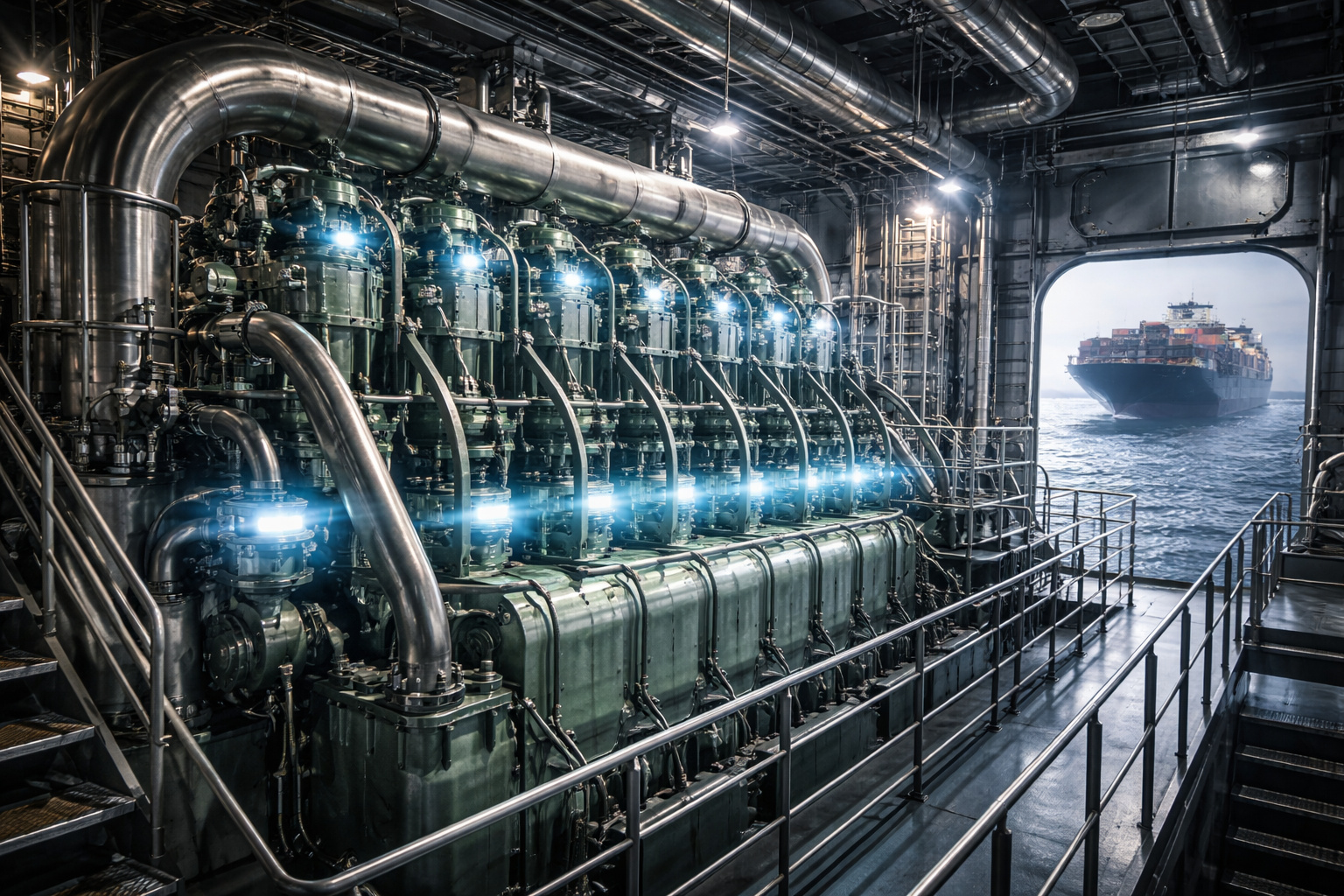
Europe is trying to create an ammonia-powered marine engine without auxiliary fuel, which could unlock the race for giant emission-free ships. The technology aims to eliminate one of the biggest obstacles to clean maritime propulsion.
-
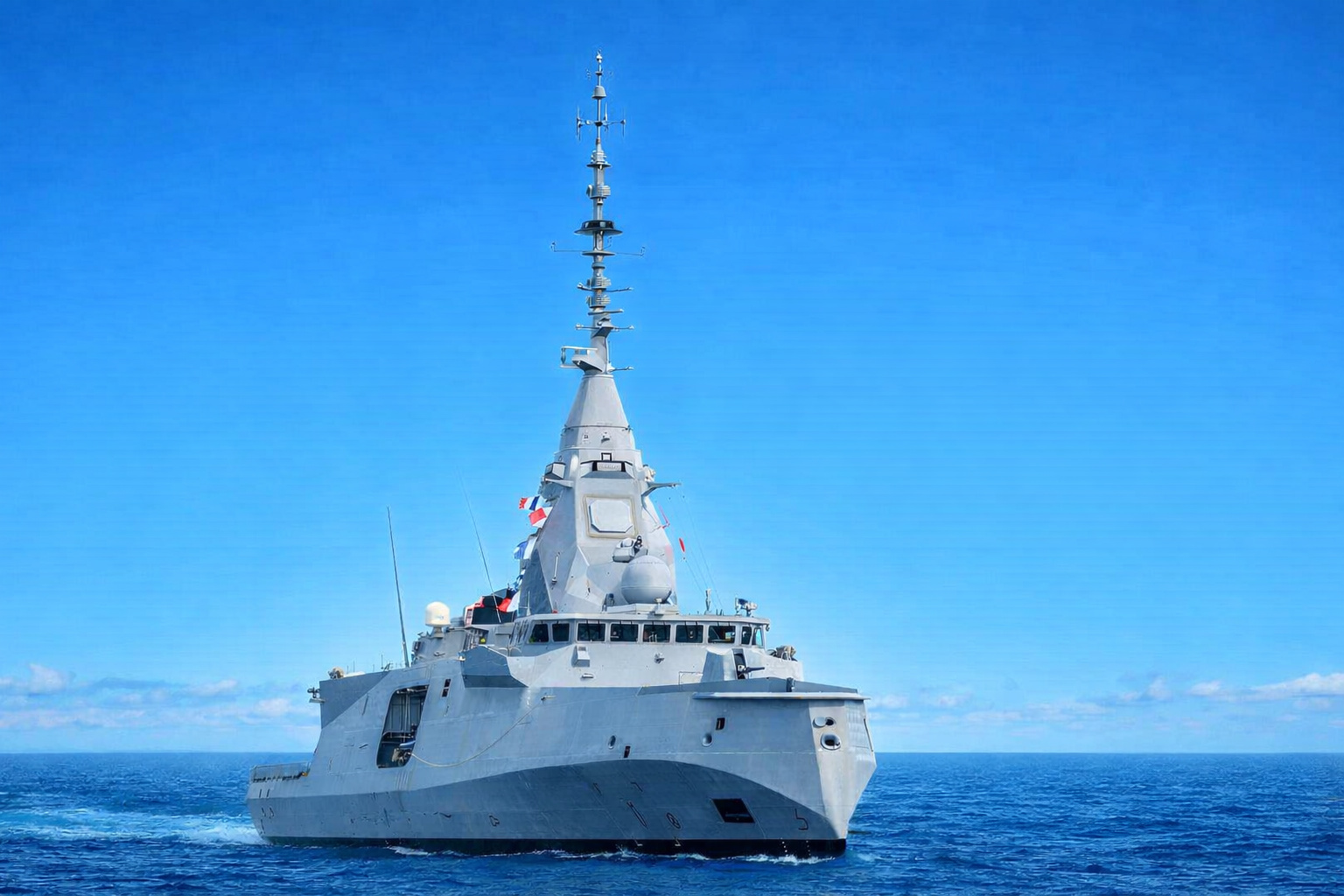
A 4,500-ton frigate with just over 100 crew members, state-of-the-art radar, and cruise missiles is being touted as the new standard of naval warfare in the 21st century.
-
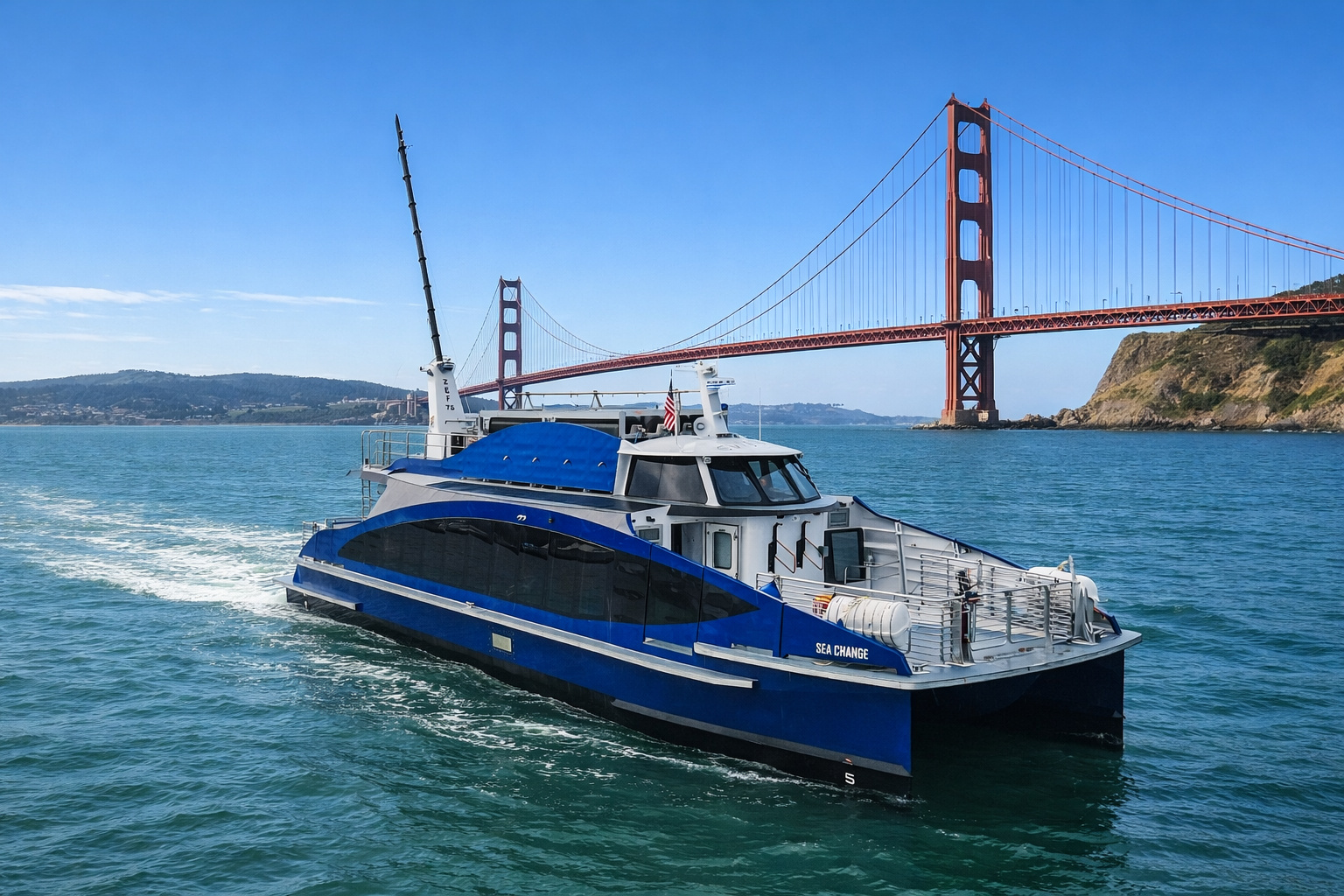
The first commercial hydrogen-powered ferry enters operation in the U.S., eliminates the use of diesel, uses fuel cells to generate clean energy on board, and transforms San Francisco Bay into a landmark of the new era of emission-free navigation.
-
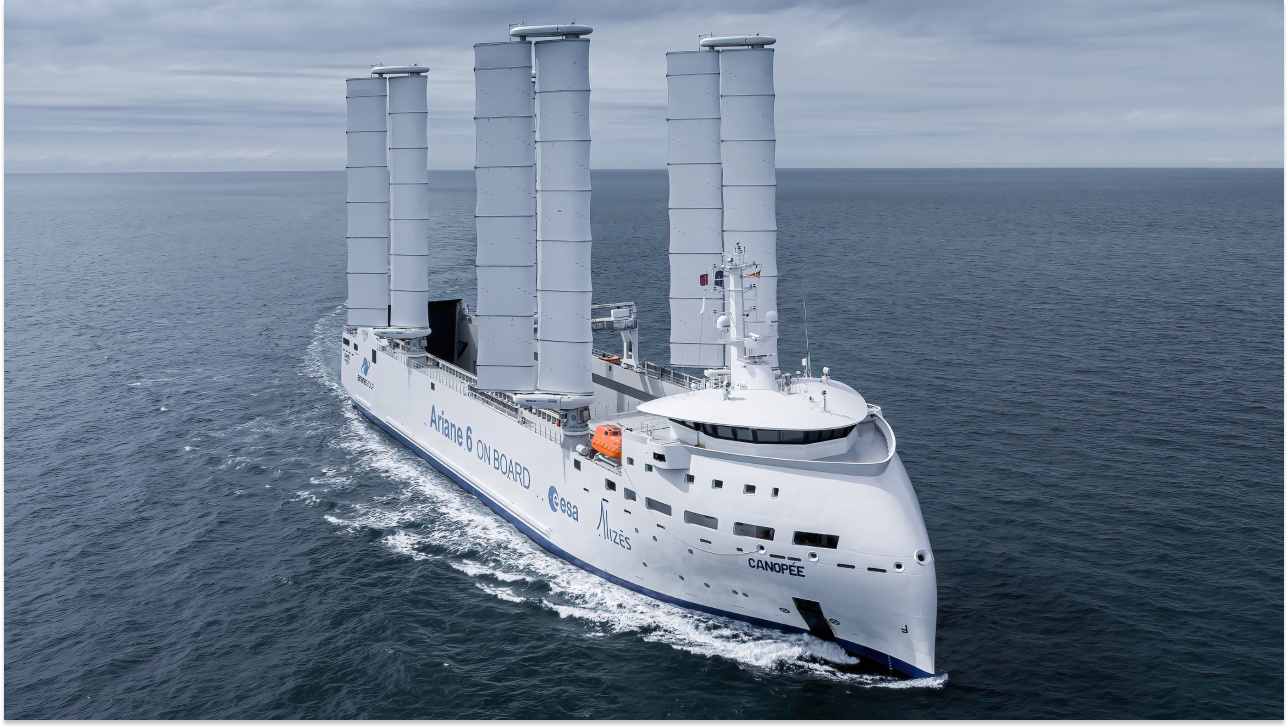
With a length of 121 meters and four rigid sails of 36 meters that automatically rotate to capture the wind, Canopée is the world’s first hybrid industrial cargo ship powered by wind, used to transport rockets and reduce fuel consumption by up to 30% on transoceanic routes.

Versatility is enhanced by the GAMA (Greenroom Advanced Maritime Autonomy) software, developed by Greenroom Robotics over years of testing with vessels like the Sentinel PBAT, from the Royal Australian Navy. The system ensures operational autonomy in high-complexity situations using smart sensors, AI, and network security protocols.
Bengal MC’s Attack Capacity Includes Cruise Missiles and Swarm Systems
The autonomous AIRCAT Bengal MC was designed to operate in high-intensity missions with state-of-the-art armaments. The vessel supports the launch of Tomahawk cruise missiles and Naval Strike Missiles (NSM), elevating its offensive potential to levels similar to larger ships, at significantly reduced cost and risk.
According to Bo Jardine, CEO of Eureka Naval Craft, the Bengal MC represents a structural change in the logic of modern naval warfare:
“The AIRCAT Bengal MC offers a rapid alternative, equipped with cutting-edge armament, autonomous and capable of carrying much larger loads at greater speeds. This increases the reaction capability in threat scenarios, reducing dependence on large manned vessels.”
AIRCAT Bengal MC Carries Up to 40 Tons with a Range of 1,000 Nautical Miles
In addition to speed — exceeding 50 knots, depending on the load — the Bengal MC also stands out for its range of up to 1,000 nautical miles (about 1,850 km), allowing the vessel to operate efficiently in long-duration patrols, coastal surveillance missions, and strategic transport of equipment or soldiers.
With a payload capacity of up to 40 tons, the vessel surpasses the majority of autonomous ships currently in operation. This structure allows not only logistical support in military operations but also tactical use in rapid landings, even in hard-to-reach areas.
Artificial Intelligence System Guides Tactical Decisions in Real Time
The technological differential of the AIRCAT Bengal MC lies in the integration of artificial intelligence into navigation and combat systems. The AI is responsible for processing data in real time, making autonomous decisions in critical situations, and adjusting routes or behaviors according to the maritime environment.
Additionally, the ship has advanced situational alert systems and is ready to operate in coordinated swarms with other vessels of the same class. This allows the AIRCAT fleet to operate jointly with a high degree of precision and safety, reducing response time and increasing deterrence capability.
Another highlight of the project is the use of modular construction, a technique that allows greater agility in manufacturing and maintaining the vessels. The concept facilitates the repair of damaged parts and reduces downtime for the units.
Additionally, the Bengal MC was designed to be more fuel-efficient, which reduces operational costs over time. The manufacturers’ proposal is to deliver a vessel with low cost and offensive power comparable to traditional warships.
AIRCAT Fleet Includes Ships for Specific Missions: Lynx, Jaguar, and Panther
The Bengal MC integrates the new AIRCAT fleet, which includes other models adapted for different types of operation: the Lynx, aimed at reconnaissance and rescue; the Jaguar, focused on rapid attack; and the Panther, dedicated to uncrewed logistics. Each vessel is built based on mission requirements, maintaining a common technological base.
The fleet is fully interoperable and can be managed in a network, allowing joint strategies with autonomous task division among the ships. This approach is already being evaluated for use in coastal defense operations and surveillance in disputed maritime zones.
U.S. Strategy Targets Low-Cost Warfare with Allies’ Support
The launch of the AIRCAT Bengal MC occurs at a time when the United States and its allies are seeking more accessible and effective tactical alternatives for facing potential threats in the Indo-Pacific and the South China Sea.
By offering a model capable of operating in a self-sufficient, rapid, and armed manner, the project fits into the expanded deterrence strategy with reduced exposure of human lives. Furthermore, marketing to countries of the NATO and AUKUS strengthens interoperability among Western allies, in a context of increasing geopolitical tension in the Pacific.









Seja o primeiro a reagir!