





 Portuguese
  English
  Spanish
  3 min of reading
  0 comments


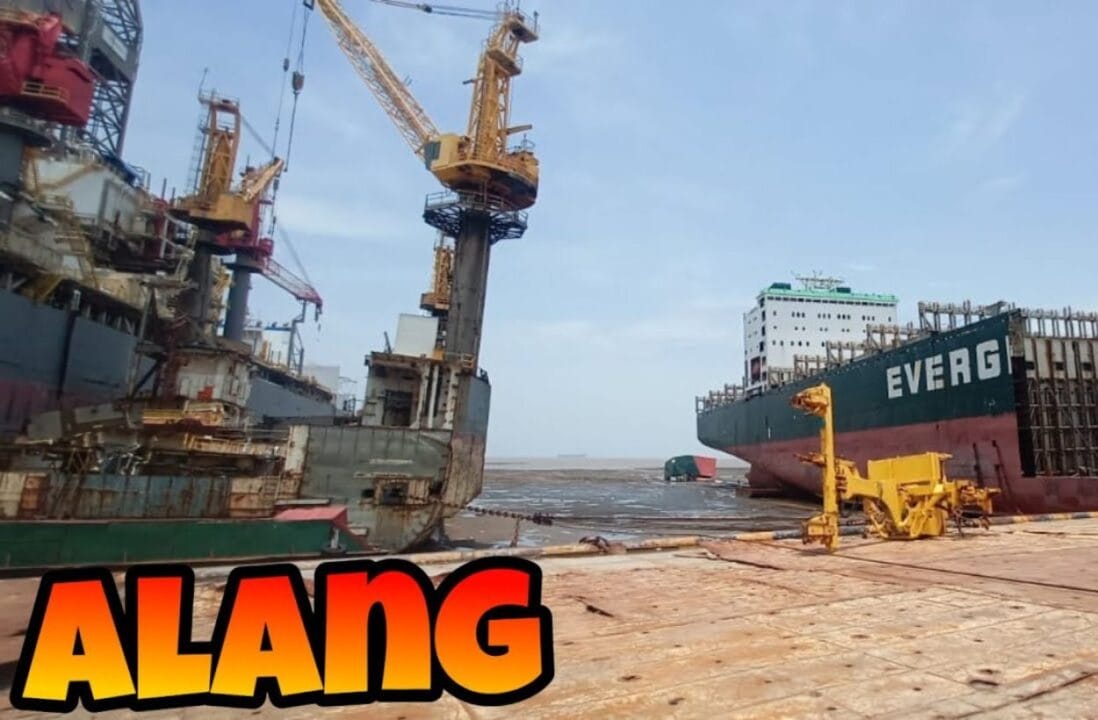
Annually, 700 Ships Are Dismantled Globally, With More Than Half Finding Their End in Alang, India, the Largest Ship Graveyard in the World, Where the Shipbuilding Industry Reveals a Difficult Scenario and Severe Environmental Challenges.
In Alang, India, lies the largest ship graveyard in the world, where, every year, around 700 ships, including cargo ships, oil tankers, and luxurious cruise liners, are decommissioned and dismantled. This process generates jobs, but the reality for local workers is marked by difficult working conditions. Initiated in 1983, shipbreaking in Alang has become a complex social problem.
Daily, ships arrive on the beach of Alang to be dismantled, recycled, and sold as scrap. The work, carried out manually by thousands of workers, is often in exhausting conditions and poorly paid.
How the Largest Ship Graveyard in the World Works
The dismantling technique begins with the grounding of the ships during high tides, facilitating workers’ access to the structures for dismantling. The process is arduous and dangerous, with high accident risks, often fatal, due to the distance from hospitals and inadequate working conditions, according to the UOL portal.
-
Historic bankruptcy of Centauro shocks the market, and the century-old company puts more than 500,000 products, machines, and complete infrastructure up for online auction.

-
New shoe factory in Ceará is expected to create 400 jobs and strengthen the local economy.
-
No one imagined it, but a mixture of sawdust with a mineral that fights fires surprises scientists with a result that changes the course of fire-resistant construction.

-
From empty land to a high-end house, wooden construction uses a lightweight system, metal structure for the foundation, ventilated ceramic cladding, and special windows to create an efficient and comfortable living space throughout the year.


In addition to social problems, the environmental impact in Alang is significant. The lack of proper decontamination of ships before dismantling leads to the leakage of toxic waste on the beach, affecting both the environment and the health of workers.
Brazilian Aircraft Carrier Minas Gerais Also Ended Up There in India
The low cost of ship dismantling in Alang attracts international ship owners, including historical cases like the Brazilian aircraft carrier Minas Gerais, read about it here. However, working conditions and environmental practices in Alang continue to generate protests and global issues, highlighting the urgent need for reforms in the local shipbuilding industry.
The largest ship graveyard in the world in Alang is a testament to the dark side of the shipbuilding industry, where profit often outweighs humanitarian and environmental considerations. The reality in Alang demands global attention to improve working conditions and environmental practices, ensuring the sustainability of the shipbuilding industry and the dignity of workers.
Ship Dismantling in Brazil
The activity of ship dismantling in Brazil, comparatively smaller and less structured than in countries like India, Bangladesh, and Turkey, occurs on a reduced scale. Some national companies occasionally operate in dismantling, focusing on recycling and material recovery.
Some Shipyards in Brazil
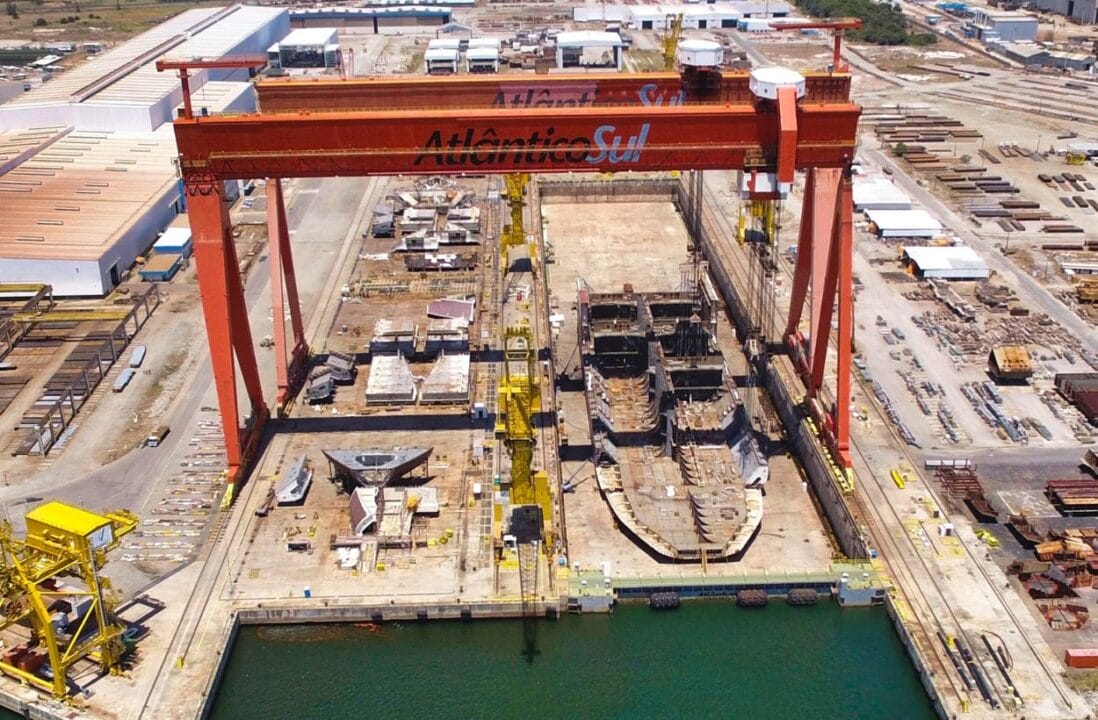
- Atlântico Sul Shipyard (EAS): located in the Industrial Port Complex of Suape, in Ipojuca, Pernambuco, this shipyard is one of the giants in Latin America and stands out for building oil tankers and naval repairs, with significant steel processing capacity.
- INACE (Ceará Naval Industry): in Fortaleza, Ceará, INACE has a long history of building various vessels, including tugs, patrol boats, and yachts.
- Vard Promar: also located in Ipojuca, Pernambuco, specializes in offshore vessels, including fishing boats and icebreakers.
- Mauá Shipyard: in Niterói, Rio de Janeiro, has a centennial tradition in shipbuilding and repair, being one of the oldest and most important in the country.
- Detroit Brasil S.A.: located in Itajaí, Santa Catarina, is known for medium-sized naval repair and construction services.
This network of shipyards demonstrates the capacity and diversity of the Brazilian shipbuilding industry, crucial for the maritime economy of the country, meeting local and international demands for construction, maintenance, and repair of vessels.
While Brazil does not have a ship graveyard on a scale comparable to Alang, its shipbuilding industry is well established, with shipyards strategically located throughout the national territory. The ship dismantling area, still emerging, may represent a front for expansion for the Brazilian shipbuilding industry, suggesting potential for economic and environmental development.










Seja o primeiro a reagir!