Portuguese
  Spanish


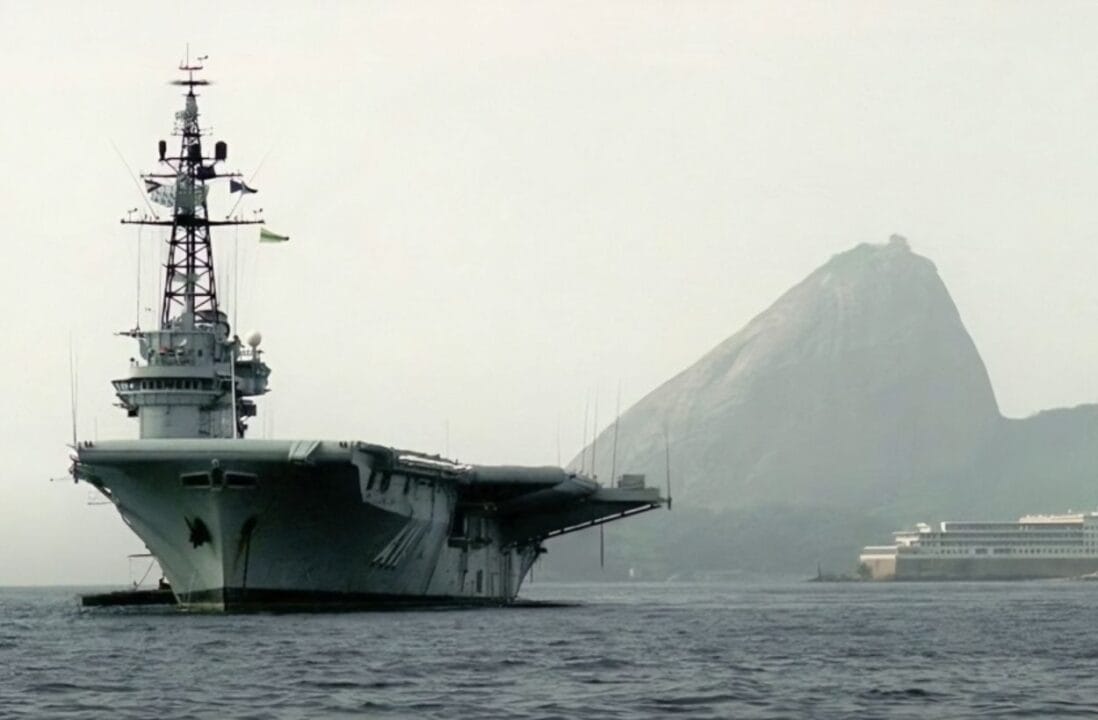


From Warrior of World War II to Brazilian Flagship, the History of Minas Gerais Reflects Naval Evolution, Marking Its Transition from a British Aircraft Carrier to a Symbol of Sovereignty and Maritime Capability of Brazil.
The Minas Gerais, the first aircraft carrier of the Brazilian Navy, has a history filled with transformations and global services. Originally built in 1942 during World War II, it was part of the Colossus class of the Royal Navy, and was later acquired by the Brazilian Navy in 1956.
Started at the height of World War II, the Minas Gerais, then known as HMS Vengeance, was part of a British effort to rapidly expand its fleet of aircraft carriers. After the end of the conflict, it briefly served in the Royal Navy before being transferred to the Royal Australian Navy, and finally, to Brazil.
Modernization and Brazilian Service on Minas Gerais, the First Aircraft Carrier of the Brazilian Navy


After its acquisition by Brazil, the ship underwent extensive modernization, including the addition of an angled flight deck and advanced radar systems. Renamed Minas Gerais, it arrived in Brazil in 1961, marking the beginning of its legacy in the Brazilian Navy.
-
They exchanged the idea of a large house for a 35 m² warehouse, spent US$ 12,000 on the structure, and created a tiny house in Colorado with space to live and work.

-
While modern cities rely on pumps and electricity, in Iran, ancient tunnels carried water through the desert using only slope and gravity.
-
Instead of sending families far from the city, a project in Chile intentionally created incomplete houses on expensive urban land and left technical space for each to grow.
-
General Motors Replaces Over a Thousand Workers with 50 Cobots at Electric Vehicle Plant, UAW Union Criticizes Move Amid Industry’s Automation Push

During its service, the Minas Gerais faced challenges, such as conflicts of interest with the Brazilian Air Force over the operation of fixed-wing aircraft. Nevertheless, it became a vital component of Brazil’s naval capability, participating in military exercises and serving as flagship.
Decommissioning and Final Destination
After more than 50 years of service, the Minas Gerais was decommissioned in 2001, being replaced by the aircraft carrier São Paulo. Its years of service exceeded the expected lifespan of its class, reflecting the durability and importance of the Colossus class light aircraft carriers.
The Minas Gerais was not only the first aircraft carrier of the Brazilian Navy but also a testament to the evolution of naval engineering and Brazil’s strategic importance in the global maritime landscape. Its legacy remains a significant milestone in Brazilian naval history.
The Minas Gerais, after a distinguished career marked by reforms and technological updates, was decommissioned in 2001. Its attempts at preservation as a museum did not prosper, resulting in the sale of the ship for dismantling in India. This fate sealed the end of the journey of Brazil’s first aircraft carrier, closing an important chapter in Brazil’s naval history.
Comparison: Aircraft Carrier Minas Gerais and Aircraft Carrier São Paulo
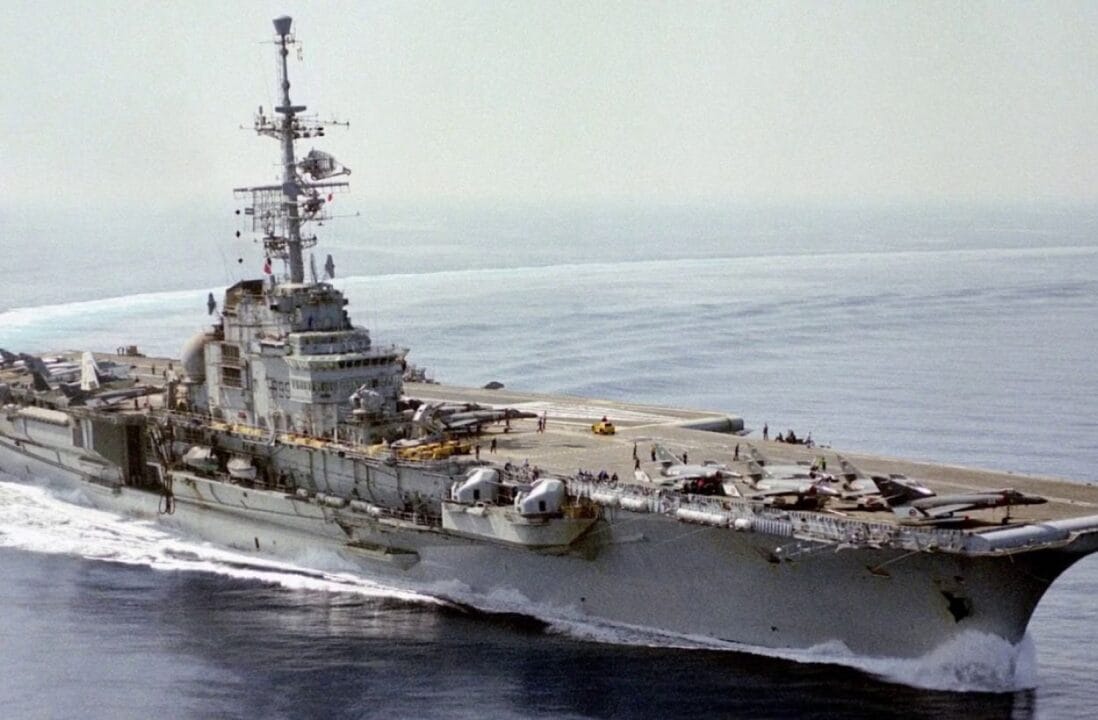
In terms of comparison, the Minas Gerais, a Colossus class aircraft carrier, was smaller and designed for more limited operations, with a capacity for 16 aircraft. In contrast, the aircraft carrier São Paulo, former French Foch, was a larger and more advanced ship, with a capacity for about 40 aircraft, including operations with catapults for launching fixed-wing aircraft, reflecting a significant step in the operational capability of the Brazilian Navy.
The trajectory of Minas Gerais and São Paulo illustrates the evolution of the Brazilian Navy, from the adaptation of World War II era warships to the pursuit of more contemporary and global naval capabilities. While the Minas Gerais symbolizes the beginnings of Brazilian naval aviation, the São Paulo stands out for its attempt at modernization and expansion of the country’s maritime capabilities.
Brazil had two aircraft carriers in its naval history: the Minas Gerais and the São Paulo. The Minas Gerais, which served from 1960 to 2001, was a pioneer in Brazilian naval aviation, while the São Paulo, acquired in 2000, represented a modernization of the fleet, despite the technical challenges faced. Now, the Brazilian Navy is considering purchasing a new aircraft carrier (Read the full article).