





 Portuguese
  English
  Spanish
  6 min of reading
  0 comments


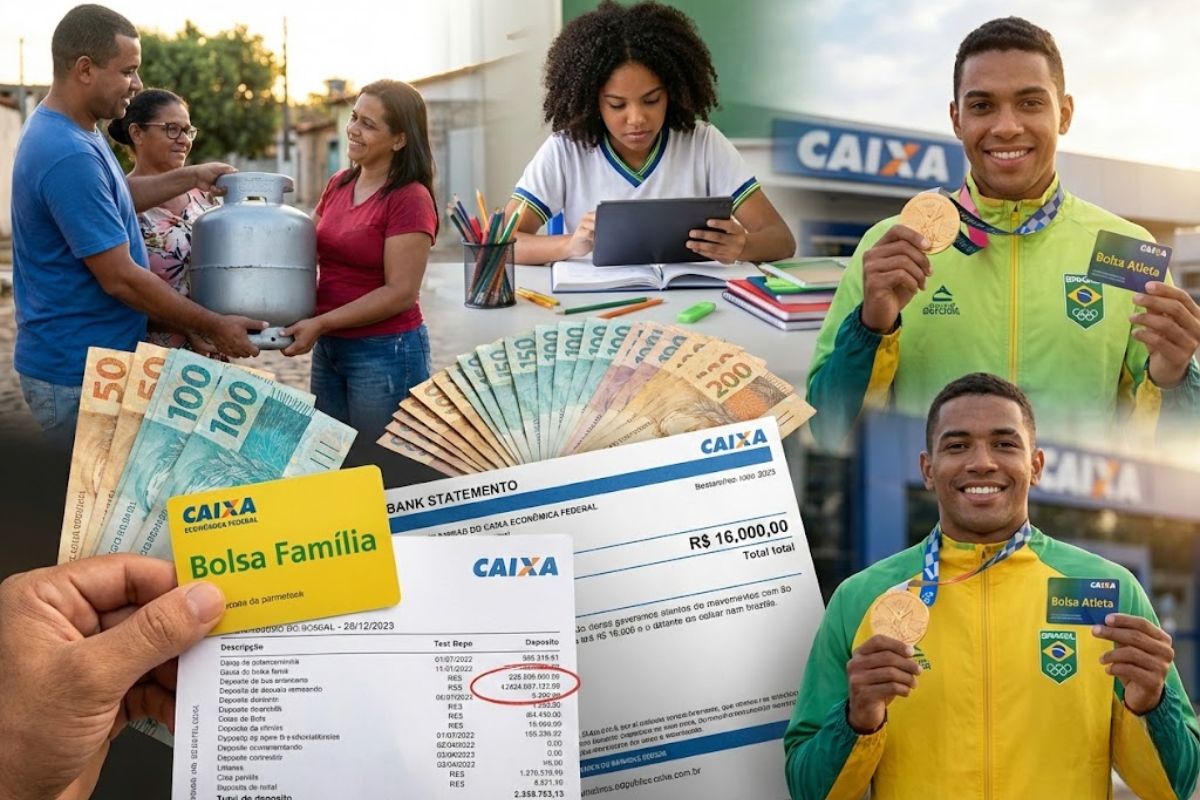
Among the benefits managed by Caixa, there are transfers for low-income families, public school students, and athletes without sponsorship, with specific criteria for access and digital consultation. Even with clear rules, updated registration, and regular payments, millions still do not request amounts that could strengthen their household budget.
The benefits paid by Caixa go far beyond Bolsa Família and include three fronts with a direct impact on real life: support for kitchen gas costs, financial incentives for school retention, and scholarships for high-performance athletes without sponsorship. In a scenario of tight income, this set can represent a concrete difference in the month.
Nevertheless, a large part of eligible Brazilians continues to be excluded from these transfers due to recurring reasons: outdated registration, lack of knowledge about the rules, and difficulty in tracking the situation through digital channels. The result is simple and harsh: available money does not reach those in need.
Why So Many Benefits Remain Invisible to Those Who Are Entitled
When it comes to income transfer, attention tends to focus on the better-known programs. This creates a side effect: other benefits linked to the same social protection ecosystem end up being treated as secondary, even when they meet urgent needs, such as food, school retention, and continuity of sports training.
-
Havan buys historic football land in Blumenau for a million-dollar amount protected by a confidentiality clause and is already planning to change even the layout of streets to build a megastore in half-timbered style costing 80 million reais.

-
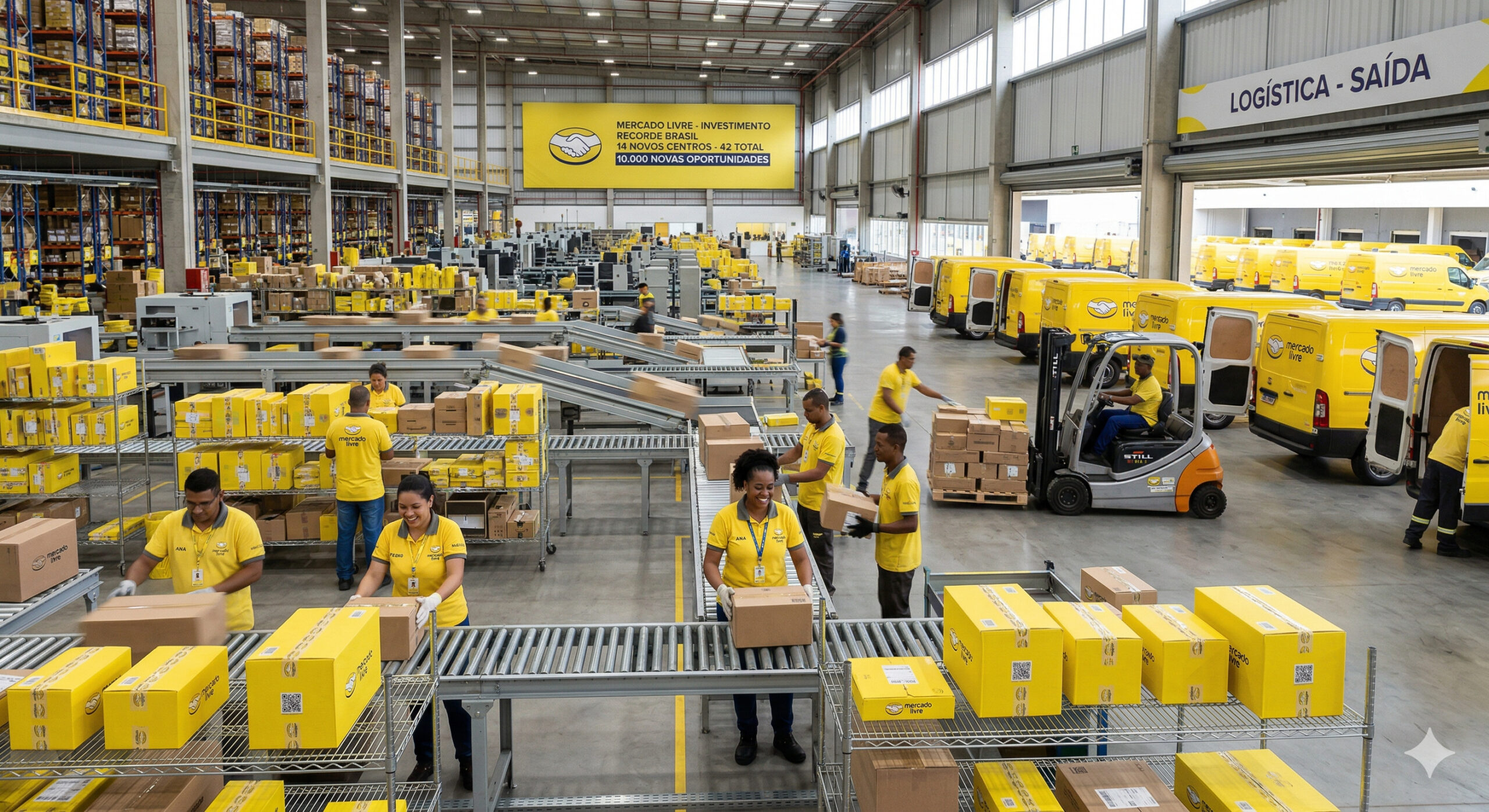
Mercado Livre “opens the vault” and announces a record investment of R$ 57 billion in Brazil in 2026, a value 50% higher than the previous year, with an expansion plan that includes 14 new logistics centers, totaling 42 units in the country and hiring an additional 10,000 employees.
-
How investment in technology can revolutionize the national economy and enhance industrial gains, according to a study that highlights the direct impact on productivity, innovation, and wealth retention within Brazil.

-
The largest food company on the planet, JBS, has just opened a 4,000 square meter laboratory in Florianópolis to develop customized proteins that modulate muscle mass gain, immune response, and metabolic performance.


There is also an operational component. Each policy has its own eligibility, documentation, and monitoring requirements. For many families, the challenge is not only to “be entitled,” but to understand where to consult, how much they receive, how often, and what needs to be done to avoid losing the payment. At this point, the lack of practical information weighs as much as the lack of income.
Another decisive factor is registration. Programs linked to CadÚnico depend on consistent and updated data. When family situations change and the registration does not keep up, access to benefits is compromised. Therefore, the problem is not only “not knowing that it exists”; many times, it is about not being able to maintain consistency between rules, systems, and home routine.
Auxílio-Gás: Who Receives, How It Works, and Where to Track

Among the least utilized benefits, Auxílio-Gás stands out as one of the most relevant for household budgets. The focus is on families registered in CadÚnico, with a family income of less than half a minimum wage per person. Those already receiving Bolsa Família can also receive Auxílio-Gás, as payments may occur together.
Prioritization follows clear social criteria: families with women victims of domestic violence with protective measures, lower per capita income, and a greater number of members benefiting from Bolsa Família. In other words, the program’s design aims to reach those in situations of greater vulnerability in their daily lives.
Access begins with CadÚnico, with the presentation of the CPF or voter registration card of the family responsible person. For other members, documents such as birth or marriage certificates, ID, CPF (when applicable), work card, and proof of residence and income help keep the registration complete. Without minimally organized documentation, the benefit tends to be stalled.
Verification can be done through the Bolsa Família and Caixa Tem apps, logging in with CPF and password. In the statement tab, just select Auxílio-Gás to check installments and pending issues. The payment is bimonthly and corresponds to the national average of the gas cylinder, as calculated by ANP, which aligns the amount with the real cost of the input at each period.
Pé-de-Meia: Continuous Incentive for Enrollment, Attendance, and Completion of School

In the educational field, Pé-de-Meia is one of the benefits with the greatest potential for structural impact, as it directly addresses school dropout. The program’s logic is not to pay a one-time installment, but to create a path of incentives for the student to enroll, continue attending classes, and complete the stage with participation in the required assessments.
The student can receive R$ 200 for enrollment and, throughout the year, access the Attendance Incentive of R$ 200 monthly, paid in eight periodic installments, provided they meet a minimum monthly attendance of 80% of the class hours or an annual average of 80%. It is a model that links the transfer to continuous school commitment, not just to the initial enrollment.
There is also an incentive for completion, of R$ 1,000 per year, paid in a single installment into the savings account for those who complete and pass the grade they are enrolled in, with participation in SAEB and other external assessment exams applied by the education systems. For the 3rd year of high school, there is also an incentive of R$ 200 for those who register and participate in both days of the Enem.
The program is aimed at public school students aged 14 to 24 registered in CadÚnico, prioritizing beneficiaries of Bolsa Família. The amounts are credited to digital accounts automatically opened by Caixa. Those over 18 can manage the account directly; minors need authorization from their guardian. Consultation occurs through the MEC’s Student Journey app. It is a benefit that combines retention, merit, and digital monitoring.
Bolsa Atleta: When the Benefit Funds Continued High Performance

In sports, the logic of benefits changes its audience but not its social purpose: to ensure continuity where private sponsorship is lacking. Bolsa Atleta caters to Olympic and Paralympic athletes without sufficient commercial support to sustain training routines, travel, and participation in competitions throughout the season.
The amounts vary according to the category and level of performance. At the base level, the student category starts at R$ 410. At the top, the international podium level exceeds R$ 16,000. This range shows that the program is not a uniform aid: it follows the athlete’s competitive stage and the cost of staying in the sports circuit.
Selection occurs through bids from the Ministry of Sports, with performance validation, and payment is made by Caixa for up to one year. In practice, this answers a central question: why does the program matter? Because, without minimal income predictability, many athletes interrupt preparation cycles even before competing under equivalent conditions.
Besides the individual effect, this type of transfer also influences the sports system as a whole. When the athlete continues training, public investment preserves trajectory, technical training, and competitive representation. It is a benefit of maintenance, not of luxury.
How to Prevent Caixa Benefits from Slipping Off the Family Radar
The first step to not losing benefits is to treat CadÚnico as a living tool, not as a one-time registration left forgotten. Changes in income, family composition, and address directly impact eligibility, prioritization, and regularity of payment. Without updates, the right may exist on paper but fail in practice.
The second step is to create a routine of monitoring in the official apps: Caixa Tem, Bolsa Família, and, for students, the Student Journey app. This monitoring serves not only to see if an amount has been deposited; it allows identifying pending issues in advance, avoiding long interruptions. Those who frequently monitor statements and statuses react faster to blocks and inconsistencies.
It is also worth organizing basic documentation for all family members, as many obstacles arise precisely when proving social ties and conditions. CPF, ID, certificates, proof of residence, and income do not increase the transfer amount but increase the chances of the process flowing smoothly without rework.
Finally, understanding the purpose of each policy helps avoid confusing criteria. Auxílio-Gás responds to the cost of household energy; Pé-de-Meia combats dropout and rewards school retention; Bolsa Atleta sustains sports continuity without sponsorship. When the family knows who receives, how much they receive, and where to consult, the benefits cease to be a distant promise and become effective resources.
The debate over benefits is not limited to “having a program” or “not having a program.” The decisive point is real access: comprehensible rules, up-to-date registration, simple consultation, and payment predictability. Without this, even existing policies remain underutilized, and millions continue to forgo amounts that could relieve essential expenses.
In your reality, which of these benefits still goes unnoticed: Auxílio-Gás, Pé-de-Meia, or Bolsa Atleta, and what else makes access difficult: information, registration, documentation, or tracking the apps? Sharing this detail helps map the problem more precisely and transform guidance into practical solutions.









Seja o primeiro a reagir!