





 Portuguese
  English
  Spanish
  4 min of reading
  0 comments


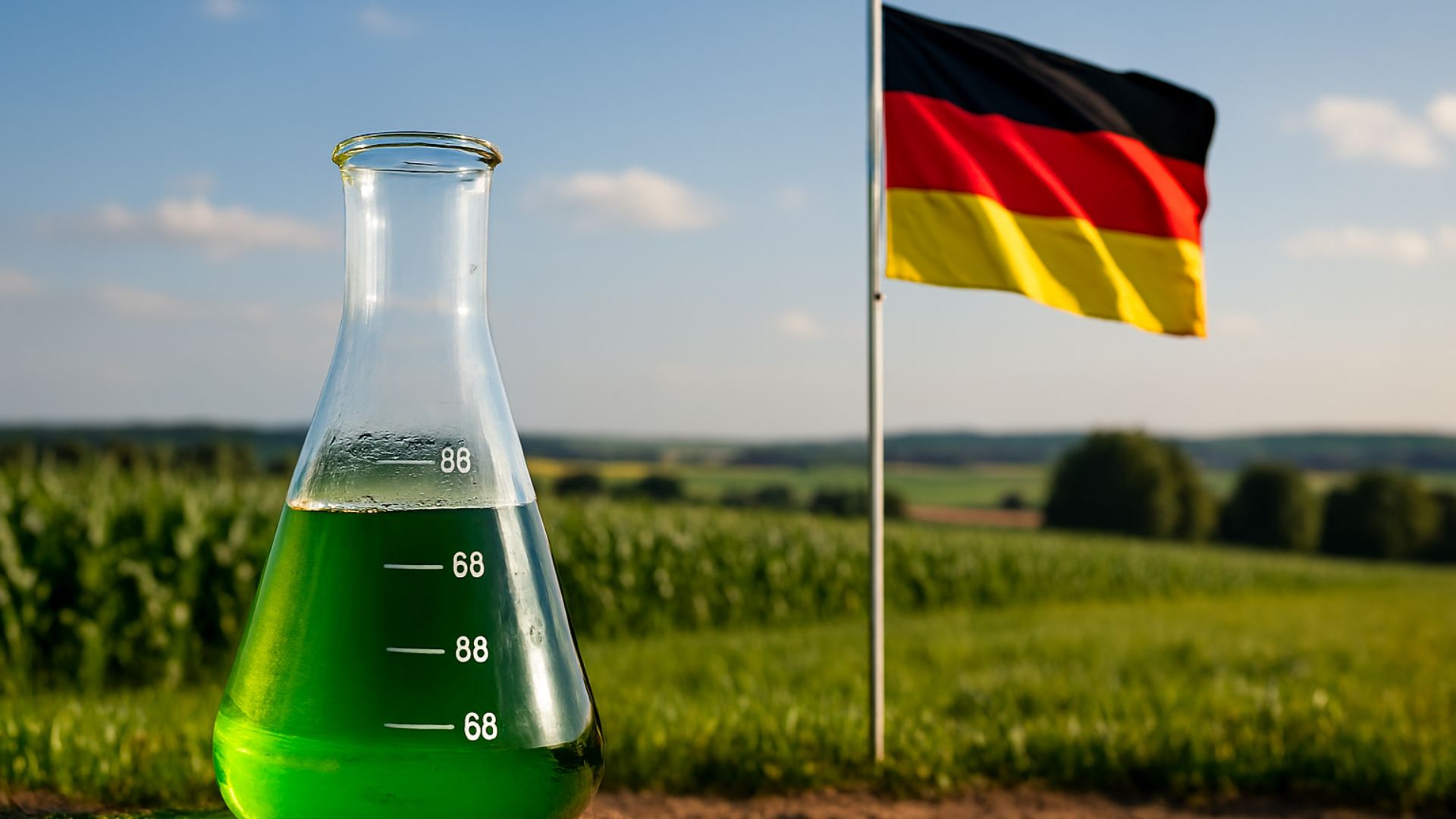
Germany Advances Sustainability by Implementing a New Law That Reinforces the Use of Biofuels, Expanding the Role of Biodiesel and Ethanol in Emission Reduction Targets by 2030
The Germany approved on Wednesday (10) a new law aimed at biofuels, ensuring the continued use of food and animal fats as raw materials in the production of renewable energy. According to a report published by the website Cana Online, the announcement from the Ministry of the Environment confirms that the country will maintain the use of biodiesel and ethanol in the national decarbonization strategy, aligning with the European Union directive and reinforcing sustainability targets by 2030. The decision marks a significant advance in German energy policy, ensuring predictability and stability in the sector.
What Changes with the New Biofuel Law in Germany
Right at the beginning of the announcement, the government highlighted that Germany will maintain the currently allowed raw materials, discarding the previous plan for a gradual phase-out of these inputs. The maintenance of these rules represents a relief for agricultural producers, oilseed merchants, and industries that depend on the renewable fuel chain to meet environmental targets.
The new law changes important points of the biofuels policy. According to the Ministry of the Environment, food, grains, canola, used vegetable oils, and animal fats remain authorized in the production of biodiesel and ethanol, adhering to already established limits. This decision preserves regulatory certainty and avoids abrupt disruptions in the energy and agricultural sectors.
-
Revolution in public transport: Goiânia puts into circulation the first articulated buses powered by biomethane in Brazil and promises to drastically reduce pollution on the Anhanguera Corridor.

-
From the field to the pipelines: Mato Grosso do Sul accelerates the energy transition and consolidates a new axis in renewable energy with the arrival of a giant biogas plant.

-
The Economist states that Brazil has a “secret weapon” against expensive oil and highlights how the country can reduce economic impacts even in international scenarios of high volatility.
-
Brazil accelerates decarbonization in the South: International forum in Foz do Iguaçu gathers leaders to discuss the advancement of biomethane in the energy matrix and the potential of “caipira pre-salt.”

Furthermore, the legislation incorporates the European Renewable Energy Directive (RED III), which creates stricter rules for the transportation, electricity, and heating sectors. Until now, this adaptation had been delayed, but with the published text, Germany takes a decisive step to reinforce its climate commitment.
Another essential point is the exclusion of palm oil from decarbonization targets starting in 2027. This measure responds to global concerns about deforestation and environmental impacts associated with the production of this input. By removing palm oil from the list of countable materials, the country reinforces its position in favor of sustainability.
The Importance of Biodiesel and Ethanol for Environmental Targets
The Germany‘s program to reduce greenhouse gases is based on the blending of biodiesel and ethanol with fossil fuels. This practice reduces emissions in road transport and helps oil companies meet mandatory reduction targets. The role of biofuels remains essential, especially in sectors where full electrification is still not feasible.
The legislation maintains the use of raw materials such as canola oil, vegetable waste, grains, and sugarcane in the production of these advanced fuels. For the industry, this regulatory certainty avoids abrupt fluctuations in costs and ensures continuity in investments.
Another relevant point is the restriction on double counting, a mechanism that allowed certain renewable fuels to be counted twice for meeting targets. The limitation of this practice seeks greater transparency, avoiding distortions and strengthening environmental efficiency.
Impact of the New Biofuel Law on the Agricultural Market and Sustainability
The decision from Germany directly benefits oilseed producers and the entire agricultural chain. The previous government had proposed reducing the use of food ingredients and animal fats, which could have a strong economic impact. With the reversal of the proposal, merchants and farmers expressed relief, highlighting that the measure brings stability to the market.
A canola merchant stated that the maintenance of raw materials “generates overall relief,” emphasizing that the end of double counting also creates a more balanced regulatory environment. This stability contributes to price predictability and security in agricultural planning.
From an environmental perspective, the continuity of biofuels allows the country to progress gradually, but solidly, towards international sustainability targets. Biofuels still play an essential role in the energy transition, especially in heavy transport, agricultural machinery, and long-haul fleets — segments where electric alternatives are still limited.
The end of palm oil accounting, scheduled for 2027, also reinforces Germany‘s environmental commitment, aligning with European standards and responding to studies indicating environmental impacts from cultivation in certain tropical countries.
Sustainability and Energy Transition: The Role of Germany
By approving the new law, Germany reinforces its leadership in the global energy transition. The inclusion of the European directive in national law strengthens the regulatory framework, ensuring that clean energy policies advance in a coordinated manner among European Union member states. The decision enhances energy security and expands the role of biofuels as a low-carbon solution.
The continued use of biodiesel and ethanol represents a complementary strategy to electrification, enabling heavy transport to rapidly reduce emissions while electric and hydrogen technologies evolve. The legislation also provides predictability to investors, contributing to new projects in innovation and energy efficiency.
In the international arena, the measure directly influences the global market for oilseeds and biofuels. Exporting countries, such as Brazil, can benefit from stable demand for ethanol and used vegetable oils. Additionally, Germany’s position is likely to influence other European countries to strengthen their energy sustainability programs.
Germany’s Strategic Path to 2030 with Biofuels
The approval of the new law on biofuels marks an essential advance for Germany‘s climate goals by 2030. The country reaffirms its commitment to the use of biodiesel and ethanol, ensuring regulatory safety, support for the agricultural sector, and alignment with European Union guidelines.
With measures that combine environmental responsibility and economic stability, the legislation strengthens the role of renewable fuels in the energy transition. Germany continues to be a reference, combining innovation, environmental rigor, and sustainability throughout its journey towards a low-carbon economy.








Seja o primeiro a reagir!