





 Portuguese
  English
  Spanish
  5 min of reading
  0 comments


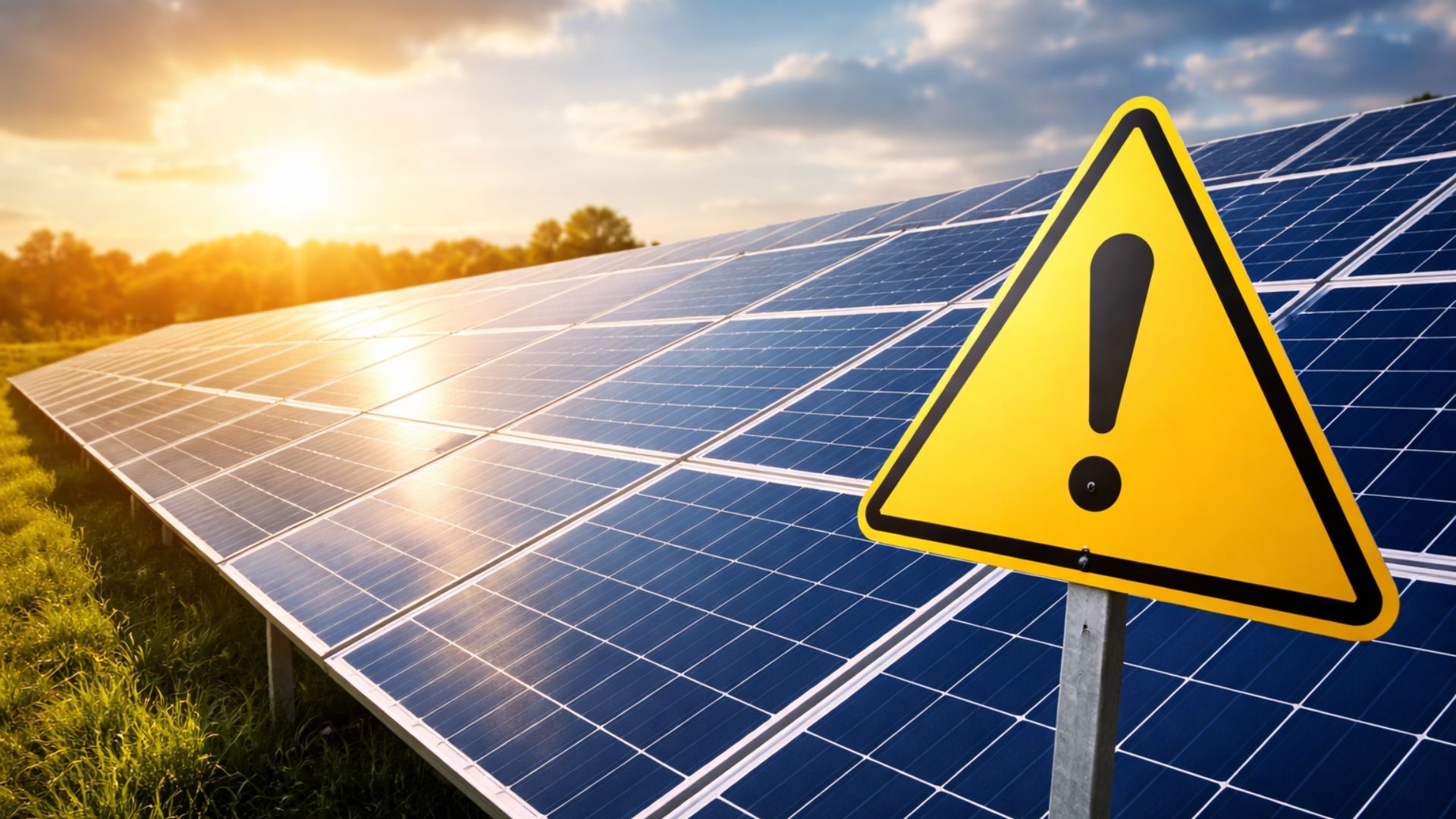
Understand how the advancement of solar energy is causing overload in the Brazilian electric system, leading to the shutdown of power plants, risks of instability, and real impacts on energy costs in the country.
The rapid advancement of solar energy in the country has brought significant gains to the energy matrix, but it has also revealed a growing problem: the overload in the Brazilian electric system. According to a publication by Jornal Nacional through G1, during peak generation times, the volume produced exceeds demand, forcing the operator to take emergency measures.
Today, distributed solar generation already totals about 44 thousand megawatts of installed capacity, making it the second largest source in the country, behind only hydroelectric plants. However, this rapid growth has not been matched by electrical infrastructure at the same pace.
In practice, this means that Brazil is already producing more energy than it can use at certain times of the day. To avoid instability and even blackouts, the National Electric System Operator (ONS) has requested generation cuts at various power plants, a measure that highlights the new challenge facing the sector.
-
Russia spent $5 billion and 28 years modernizing a nuclear warship that had been inactive since 1997. The Admiral Nakhimov returned to the sea in August 2025 as the heaviest surface combat ship in the world, with 176 missile launchers, including hypersonic Zircon missiles.

-
James Webb finds 300 galaxies with mysterious scars, and this discovery may show that the universe was born much more violently than astronomers had imagined.

-
Haiti’s capital is experiencing an energy and construction crisis, facing blackouts, a blocked port, and buildings at risk after years of instability and a significant earthquake.

-
Government unlocks R$ 554 million for a highway that has been requested for decades and accelerates the duplication of BR.

The Brazilian electric system suffers from overload during peak solar energy hours
The problem occurs mainly between 10 AM and 4 PM, when solar incidence is more intense and production surges across the country. During this period, millions of photovoltaic systems inject energy into the grid simultaneously.
This behavior creates a delicate imbalance. Supply grows much faster than consumption, generating an overload that needs to be controlled in real-time to avoid collapses in the Brazilian electric system.
Unlike large hydroelectric plants, distributed generation cannot be easily adjusted. Solar panels on rooftops of homes, businesses, and rural properties operate automatically, without direct control from the national operator. The result is a pressured system that needs to react quickly to maintain stability.
Cuts in power plants become routine to avoid blackouts and protect the system
In light of this scenario, the ONS has adopted an increasingly frequent practice: requesting the partial shutdown of solar and wind power plants. This measure, although necessary, reveals a paradox — the country needs to waste clean energy to maintain the balance of the grid.
In the past year, renewable power plants have failed to generate more than 20% of the energy they could produce, either due to operational limitations or lack of evacuation capacity.
This type of intervention prevents blackouts but has significant impacts:
- Reduction in the efficiency of renewable generation
- Loss of revenue for companies in the sector
- Increased complexity in system operation
As a result, producers have begun to pressure the government for financial compensation, claiming losses caused by mandatory cuts.

Limited infrastructure worsens the overload in the Brazilian electric system
One of the main bottlenecks is in the transmission network. Brazil still lacks sufficient infrastructure to transport all the solar energy generated, especially in regions with a high concentration of photovoltaic systems.
The lack of adequate lines means that energy simply cannot reach consumer centers, intensifying the overload in the Brazilian electric system.
Experts point out that investments need to keep pace with the expansion of generation. Among the main needs are:
- New transmission lines for strategic regions
- Expansion of substations
- Modernization of distribution networks
Without these improvements, the country will continue to face energy waste and operational risks.
Growth of solar energy challenges the traditional model of the Brazilian electric system
The advancement of solar energy is profoundly changing the way the Brazilian electric system operates. The traditional model, based on large centralized power plants, is no longer sufficient to handle millions of small generators spread across the territory.
This transformation brings benefits but also increases the complexity of the system. The predictability of generation decreases, while the need for monitoring and control increases.
Moreover, the absence of large-scale storage exacerbates the problem. Energy generated in excess during the day cannot be easily stored for nighttime use, which reinforces the need for cuts and amplifies the feeling of waste.
Economic impacts of overload and excess solar energy in the country
Although solar energy is considered one of the cheapest sources, the current scenario shows that unplanned expansion can generate additional costs.
The need to balance the Brazilian electric system in the face of overload brings direct effects:
- Urgent investments in infrastructure
- Higher operational costs
- Need for compensation for affected power plants
According to experts, the current model may even pressure energy prices in the short term, contrary to the expectation of cost reduction.
There are also criticisms regarding how distributed generation has expanded in the country. As many systems are not directly controlled, excess production at specific moments can compromise the balance of the system.

Billion-dollar investments aim to modernize the Brazilian electric system
To tackle the problem, the federal government has increased investments in infrastructure. Since 2023, about R$ 70 billion have been allocated to the expansion of transmission networks and the modernization of the electric sector.
The goal is to reduce cuts in power plants and allow better utilization of the solar energy generated in the country.
These investments include:
- Construction of new transmission lines
- Reinforcement of strategic substations
- Expansion of regional integration capacity
Despite the advances, experts warn that results take time and that the system will still face challenges in the short term.
Paths to reduce overload and improve the use of solar energy
In addition to infrastructure, other solutions are being discussed to reduce the overload in the Brazilian electric system and increase the efficiency of energy use.
Among the main strategies are:
- Encouragement of energy consumption during the day
- Incentive for the use of electric vehicles
- Electrification of industrial processes
- Export of energy to neighboring countries
Another essential point is investment in storage. Large-scale batteries can allow excess energy to be used during times of lower generation, reducing the need to shut down power plants.
What this scenario reveals about the future of energy in Brazil
The current scenario shows that Brazil is undergoing an accelerated energy transition. Solar energy has ceased to be a complementary alternative and has taken on a central role in the matrix.
However, the episode of overload in the Brazilian electric system highlights that growth without planning can generate imbalances.
The challenge now is to find a point of equilibrium. It is necessary to expand generation but also ensure that the system can absorb this energy efficiently and safely.
The future will depend on strategic decisions, continuous investments, and technological adaptation. If well managed, this process can transform Brazil into a global reference in clean energy.
Otherwise, problems such as cuts in power plants, energy waste, and rising costs may become increasingly frequent. The warning has been given — and the Brazilian electric sector has already begun to react.








Seja o primeiro a reagir!