





 Portuguese
  English
  Spanish
  3 min of reading
  1 comment


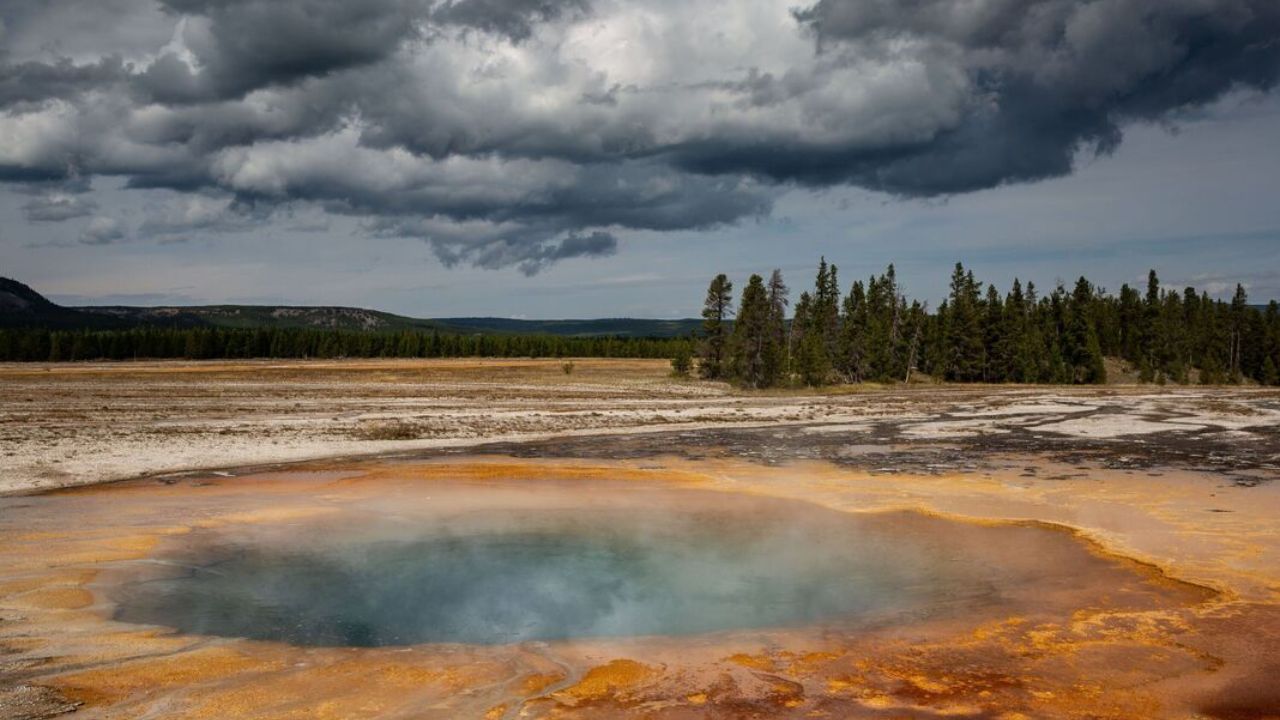


With Eruptions A Thousand Times More Powerful Than Common Volcanoes, The Yellowstone Supervolcano Has Shaped Continents In The Past And Could Cause A Global Volcanic Winter If It Erupts Again.
Imagine an event so powerful that it could alter the global climate, cause mass migration, and impact entire generations. We are talking about supervolcanoes, rare and impressive geological phenomena that, although they may seem like something from a science fiction movie, are a reality that science cannot ignore. Among them, the Yellowstone supervolcano, located in the state of Wyoming, USA, stands out as one of the most monitored and concerning.
But what makes these giants so dangerous? And should we really be concerned about a possible eruption?
What Is A Supervolcano And Why Should We Be Concerned?
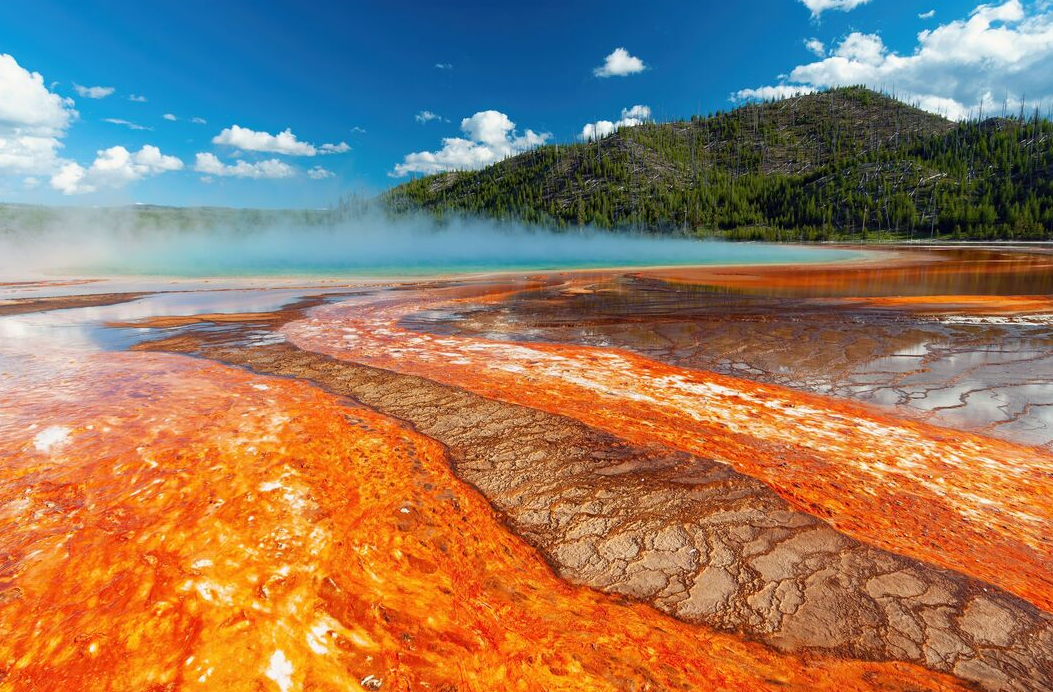
Supervolcanoes are not like the volcanoes we are used to seeing in movies or news. They do not erupt regularly, but when they do, the impact is colossal. These phenomena are classified by the Volcanic Explosivity Index (VEI), reaching the maximum level of 8. This means that a single eruption can release more than 1,000 cubic kilometers of volcanic material—imagine burying an entire city in ash in a matter of minutes.
-
Expedition 501: Scientists drill into the ocean floor and discover a giant reserve of fresh water hidden beneath the sea, extracting nearly 50,000 liters and revealing an invisible system that could reshape the map of water scarcity.
-
Archaeologists find an intact tomb over 2,500 years old, with more than 100 preserved objects, weapons, jewelry, and human remains never touched.
-
Volcanic lava transforms into threads as fine as human hair that travel over 30 kilometers by wind and fall like cutting rain on roofs and backyards in Hawaii and Iceland.
-
NASA issues a warning for the feared Godzilla El Niño that could change the planet’s climate in 2026 with extreme warming of the Pacific capable of causing devastating droughts in some regions and historic floods in others simultaneously.

By comparison, Krakatoa, whose eruption in 1883 devastated part of Indonesia and killed more than 36,000 people, does not come close to the power of a supervolcano. While such events are already considered catastrophic, a supervolcano has the power to alter global ecosystems and create a true planetary crisis.
Yellowstone: The Sleeping Giant
Yellowstone has a long and impressive geological history. In the last two million years, there have been three massive eruptions: 2.1 million, 1.3 million, and 630,000 years ago. Each was powerful enough to shape the landscape of North America and influence the global climate for decades.
What fuels this giant is a vast reservoir of magma located beneath Yellowstone National Park, famous for its geysers and hot springs. This same geothermal energy that attracts millions of visitors each year also represents one of the greatest natural risks on the planet.
Although Yellowstone’s current activity is within normal range, scientists keep a close eye on this volcano. Small earthquakes, ground deformations, and geothermal changes are constantly monitored by the United States Geological Survey (USGS). Fortunately, the current consensus is that a catastrophic eruption is unlikely in the near future.
What Would Happen If Yellowstone Erupted?
If Yellowstone were to explode today, the devastation would be unimaginable. Nearby regions would be covered in ash within hours, suffocating millions of people and destroying all infrastructure. Roofs would collapse under the weight of the ash, while human lungs would have no chance against volcanic particles.
The entire world would feel the impact. A “volcanic winter” could reduce global temperatures by up to 10°C, lasting for years and directly affecting agriculture. This scenario would lead to famine, water shortages, and an unprecedented migration crisis. Essentially, it would be a forced reboot for the planet.
What Is The Likelihood Of An Eruption Happening?
The good news is that, according to the USGS, the chances of a supervolcano eruption in our lifetimes are extremely low. Yellowstone has been stable for the last 140 years, which is reassuring. However, scientists warn that many supervolcanoes around the world do not receive the attention and monitoring they need, leaving the planet vulnerable to surprises.






E tem uma galerinha aí preocupada com a flatulência bovina e ovina. Dá pra levar essa turma a sério?