





 Portuguese
  English
  Spanish
  3 min of reading
  1 comment


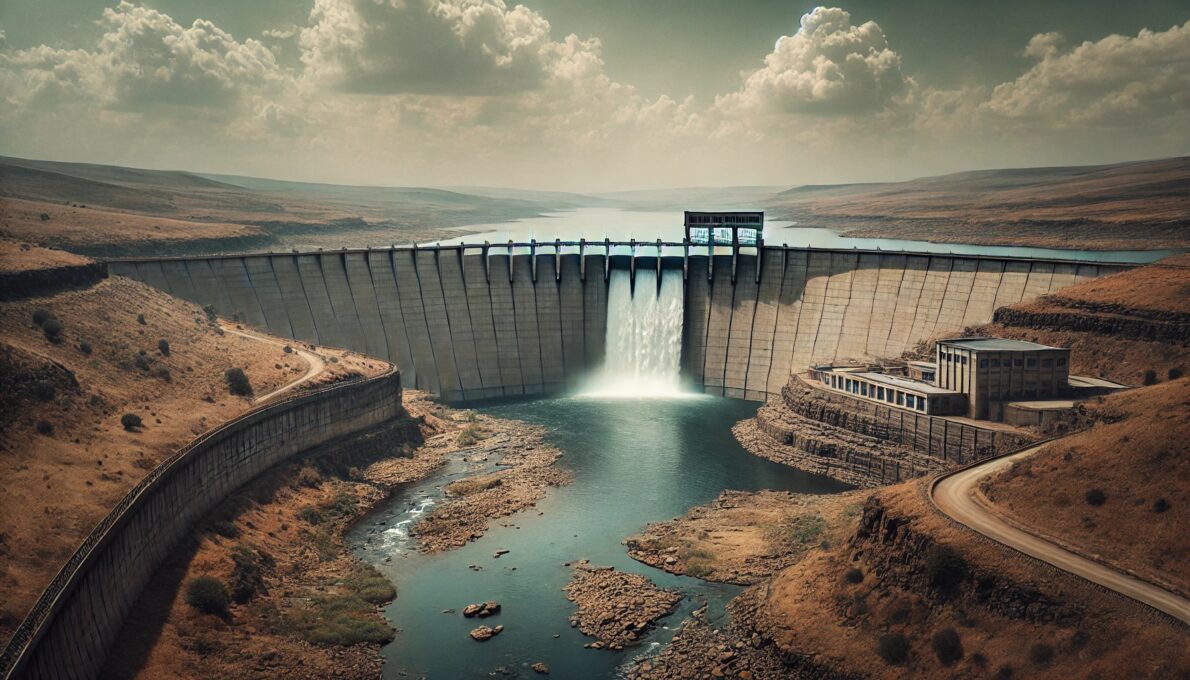


It Seems That This Will Be One of the Most Challenging Works of the Modern Era of Civil Engineering, Located at the Largest Earth Dam in the World, with Over 55 Km in Length: The Hirakud Dam.
In the heart of the plains of Odisha state, India, where the waters of the Mahanadi River serpentine, stands a monumental work: the Hirakud Dam. Located just 10 km from Sambalpur, this structure is not only a feat of modern engineering but also the largest earth dam in the world. With an impressive length of 55 km, the Hirakud Dam dominates the landscape, becoming an essential landmark for the region.
Beyond its grandeur, the dam plays a crucial role in water resource management and energy generation, solidifying itself as a vital pillar for local development. However, challenges such as maintenance and siltation of the dam threaten its integrity, requiring increased attention from the authorities.
The Importance of the Dam in India
Despite all its grandeur, recent assessments point to significant maintenance and siltation problems that threaten its integrity, raising concerns about potential structural risks. As experts and authorities debate solutions, the dam in India symbolizes not just an engineering achievement but also an ongoing challenge of sustainability and safety.
-
Historic bankruptcy of Centauro shocks the market, and the century-old company puts more than 500,000 products, machines, and complete infrastructure up for online auction.

-
New shoe factory in Ceará is expected to create 400 jobs and strengthen the local economy.

-
No one imagined it, but a mixture of sawdust with a mineral that fights fires surprises scientists with a result that changes the course of fire-resistant construction.

-
From empty land to a high-end house, wooden construction uses a lightweight system, metal structure for the foundation, ventilated ceramic cladding, and special windows to create an efficient and comfortable living space throughout the year.


Situated between the hills of Chandili Dunguri and Laxmidungri, 100 km north of Sambalpur, India, the Hirakud Dam majestically extends for 25.8 km, marking its presence as the largest dam in the world. This immense project is not merely a marvel of modern engineering but also a geographic landmark, encompassing a vast stretch of the Mahanadi River.


Constructed with a combination of earth, concrete, and masonry, the dam in India is flanked by extensive dikes, measuring 21 km on either side, closing off the low passages of the adjacent hills. The massive reservoir formed by the Hirakud Dam covers an area of 743 square kilometers, with an impressive perimeter of over 639 km. This body of water not only prevents devastating floods from the Mahanadi Delta, but also serves as a vital resource for regional biodiversity, irrigation of farmland, and electricity generation.
Understand How the Hirakud Dam Works
The construction of the dam in India was a monumental milestone in hydropower engineering, combining advanced technologies and traditional techniques to create the largest dam in the world. Built on the Mahanadi River, the dam stretches for 25.8 km, and this colossal structure consists of earth, concrete, and masonry, as mentioned earlier, forming not only a physical barrier, but also the largest artificial lake in India, covering an area of 743 square kilometers.
Despite logistical and technical challenges, construction progressed rapidly. The main dam, measuring 4.8 km in length, was strategically located between two hills to take advantage of the natural topography, optimizing both water collection and structural resilience. One important detail is that the Hirakud Dam is not just a dam but also a hydropower complex, supporting two main powerhouses.
Powerhouse 1 is equipped with three turbines of 37.5 MW and two Francis turbines of 24 MW, totaling an installed capacity of 259.5 MW. Powerhouse 2 adds another 72 MW through its three generators of 24 MW each.
Challenges Found at the Largest Dam in the World
The dam in India, while a monumental feat of engineering, faces significant challenges that impact both the environment and local communities. Siltation has progressively reduced the reservoir’s capacity, diminishing its ability to retain water by 24%, which affects both flood management and energy generation.
Furthermore, the structural integrity of the dam has become an increasing concern, with delays in necessary inspections and maintenance raising alarms about the potential risk of failure. This scenario worries not only for the safety of communities but also for the potential ecological disaster that could arise from a structural failure.









O título não condiz com a realidade… Barragem não é obra perigosa! Das grandes barragens de hidrelétricas no Brasil registrou-se acidente com morte apenas em 1977 cuja motivação foi política: interferência política na operação da UHE. Portanto, não foi um problema de engenharia…
Barragens de Hidroelétricas não são perigosas como o título diz. Perigosas são as consequências à sociedade de não haver barragens.
Parabéns à Índia por não cultivar pré-conceitos técnicos e ambientais contra as barragens.