





 Portuguese
  English
  Spanish
  4 min of reading
  0 comments


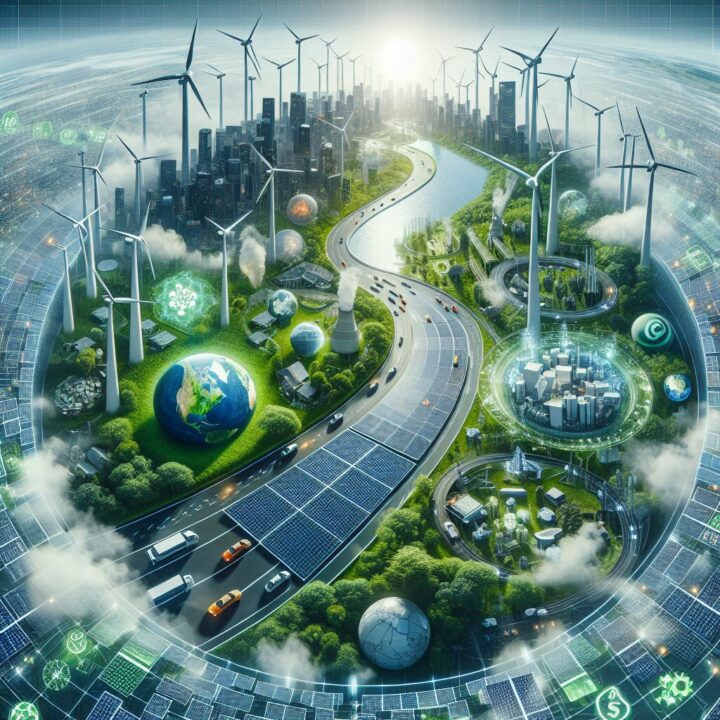
Energy Transition: The Brazilian Energy Matrix Evolved, with Renewable Sources Dominating, Promoting Carbon Neutrality, Public Investments, and Electricity Generation.
Energy transition: in Brazil, the adoption of renewable sources has gained momentum, reflecting a global movement towards sustainability and reduced environmental impact. This process significantly contributes to a reduction in greenhouse gas emissions and greater energy security. Today, solar and wind energy are among the main options for clean energy, accompanied by increasing investment in infrastructures to support these technologies.
Furthermore, the energy transition involves not just changing how energy is generated, but also how it is distributed and consumed. It is important to highlight the joint efforts between the public and private sectors in promoting a transformation that prioritizes the energy matrix change. The energy matrix change is crucial for Brazil’s sustainable future, ensuring that future generations have access to clean and renewable energy sources.
The Challenges of the Energy Transition
Many years later, the energy transition remains one of the greatest challenges of the century. The Brazilian energy matrix underwent a significant transformation between 1970 and 2022. In the 1970s, the matrix was predominantly composed of non-renewable sources, such as oil and its derivatives. In the following two decades, the country began to diversify its energy sources, including renewable options such as hydropower and biomass.
-
Renewable energy advances over protected areas in Brazil, and a survey by the Energy Transition Observatory reveals silent impacts that challenge environmental conservation and pressure sensitive traditional territories.

-
Rio Grande do Sul accelerates energy transition: State invests in renewable technologies and consolidates decarbonization strategies and pathways to attract billions in new industrial investments.

-
With 160,000 m² of collectors, an area larger than 20 football fields, Silkeborg, in Denmark, hosts a solar thermal plant that heats 19,500 homes and could become the largest solar heating plant in the world.

-
A study reveals the expansion of renewable energy procurement in Brazil and shows how companies are taking advantage of opportunities to reduce expenses, ensure energy efficiency, and strengthen strategic environmental commitments.


In the 2000s, there was considerable expansion in the use of wind and solar energy. After twenty-two years, the Brazilian energy matrix consisted of 55.2% non-renewable sources and 44.8% renewable sources. Currently, the matrix is predominantly renewable, with hydropower accounting for 56.8% of all electricity generated in Brazil.
Environmental Impact and Carbon Emissions
The issue of energy transition has gained another dimension due to environmental concerns. The Earth cannot sustain carbon emissions for long, which are responsible for the greenhouse effect and climate change. In Brazil, the evolutionary process is highlighted by the Energy Transition Program (PTE), which was developed by the Energy Research Company (EPE) in partnership with the Inter-American Development Bank (IDB) and the Brazilian Center for International Relations (CEBRI).
The PTE aims to discuss long-term energy transition scenarios, with ambitious goals and detailed strategies to achieve carbon neutrality by 2050. Last year, important studies were published that provide a clear outlook on the future and the scenario for energy transition in the country.
Financing and Public Investments
Reports indicate that Brazil will need to allocate around R$233 billion by 2050 to achieve the decarbonization stipulated by the PTE. Meeting this ambitious goal requires the formation of an alliance between the public and private sectors to achieve a common and beneficial objective for all: a greener and more sustainable future for the next generations.
In 2023, Brazil recorded an annual record in the expansion of electricity generation, adding 10.3 gigawatts (GW) of installed capacity, with 87% coming from photovoltaic and solar plants, as reported by the Ministry of Mines and Energy. In total, 291 new projects began operations last year.
Advancements and Economic Growth
These advancements not only increase the energy capacity of the country but also boost the economy and create new job opportunities. Strategic partnerships have been essential for the progress of this agenda.
In February 2024, the World Bank, the Ministry of Finance, and the Ministry of Environment and Climate Change announced a partnership to promote public and private investments related to climate. Collaboration areas include technical and financial solutions to support climate resilience instruments, such as the Ecological Transformation Plan and the Climate Fund.
Future Opportunities and Challenges
In practice, this initiative represents a significant advancement in optimizing resources to finance solutions that combat the effects of climate change. Brazil is on a promising trajectory towards energy transition, with strong support from the financial market and strategic partnerships aimed at promoting sustainability and decarbonization of the economy.
However, it is worth noting that current climate episodes, such as excessive rainfall or its lack, demonstrate the need for robust investments, constantly evolving regulations, and a diversified energy matrix. These measures are crucial for the current context, allowing the country to leverage its potential and become a global leader in clean energy and sustainable solutions.
Contributing significantly to mitigation and adaptation to climate change, Brazil positions itself for a future more aligned with the natural cycles of our planet, promoting a more sustainable environment for future generations.
Source: Press BANCO BV









Seja o primeiro a reagir!