





 Portuguese
  English
  Spanish
  5 min of reading
  0 comments


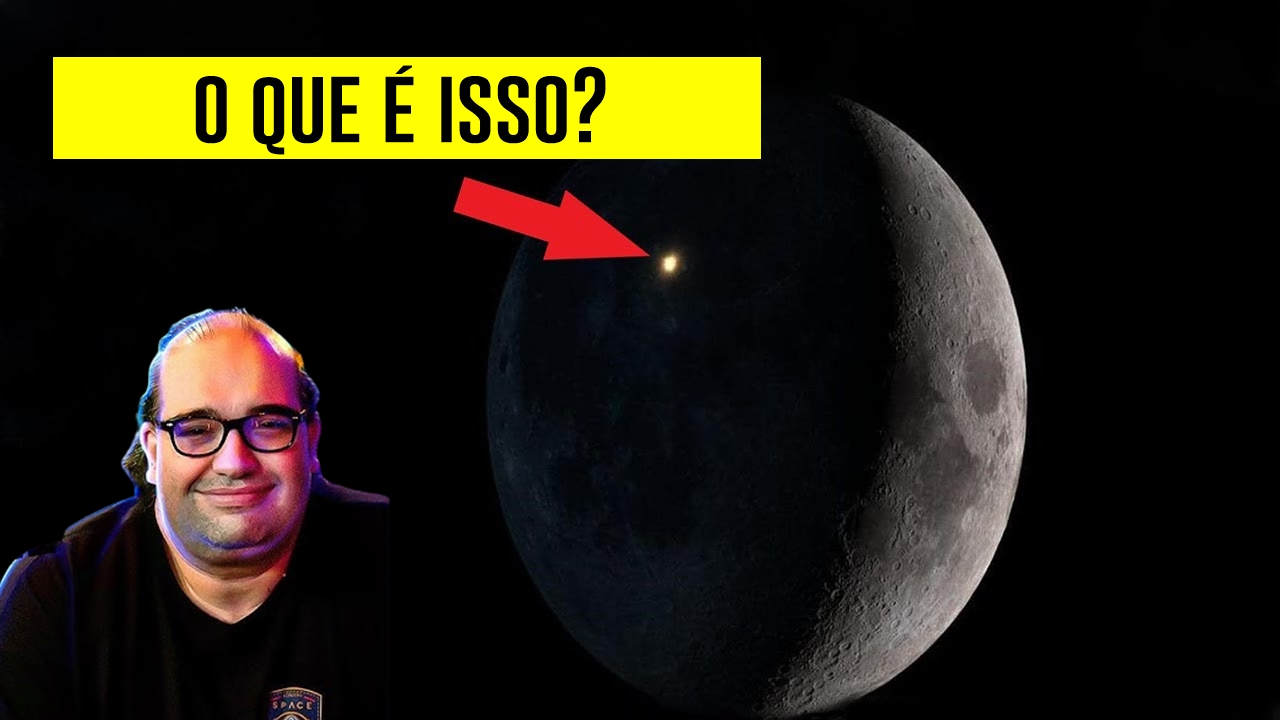
The Mysterious Lights on the Moon Surprised Internet Users and Generated Various Theories. Sergio Sacani Explains the Phenomenon in a Video You Cannot Miss.
In recent days, a curious video gained traction on social media, provoking heated debates about the possibility of extraterrestrial life. The footage, recorded by an amateur astronomer, showed mysterious reddish glows on the Copernicus Crater, located on the lunar surface. Sergio Sacani seized the opportunity to comment on the phenomenon.
For many, that was irrefutable evidence of alien activities. But, as science communicator Sergio Sacani pointed out in one of his casual analyses, the phenomenon has nothing to do with “aliens,” but rather with a fascinating and well-documented natural event: the Lunar Transient Phenomena (LTP).
The Lunar Transient Phenomenon
Lunar transient phenomena are observations of temporary lights, color changes, or other visual effects recorded on the surface of the Moon. These events have been documented for centuries, dating back to the first telescopes aimed at the Earth’s natural satellite. In 1787, astronomer William Herschel reported observing bright and luminous spots on the Moon, something he initially interpreted as active volcanoes.
-
Motorola launched the Signature with a gold seal from DxOMark, tying with the iPhone 17 Pro in camera performance, Snapdragon 8 Gen 5 that surpassed 3 million in benchmarks, and a zoom that impresses even at night.

-
Satellites reveal beneath the Sahara a giant river buried for thousands of kilometers: study shows that the largest hot desert on the planet was once traversed by a river system comparable to the largest on Earth.

-
Scientists have captured something never seen in space: newly born stars are creating gigantic rings of light a thousand times larger than the distance between the Earth and the Sun, and this changes everything we knew about stellar birth.

-
Geologists find traces of a continent that disappeared 155 million years ago after separating from Australia and reveal that it did not sink, but broke into fragments scattered across Southeast Asia.

Since then, reports of flickering lights, colored glows, and even luminous mists have intrigued scientists and space enthusiasts. Although there is no absolute consensus on the exact causes of these phenomena, plausible theories include lunar seismic activities releasing gases from below, impacts from micrometeorites, or occasional reflections caused by the mineral composition of the lunar soil.
The Viral Video and Sergio Sacani’s Analysis
The viral video showcased images captured by a telescope, highlighting the reddish glows within the Copernicus Crater, one of the Moon’s most iconic formations. Widely shared on TikTok, Twitter, and YouTube, the content quickly sparked popular imagination, with many users claiming that the light was proof of “alien bases” or “extraterrestrial technology” on the Moon.
Sergio Sacani, known for his channel “Space Today,” specialized in astronomy, quickly addressed the topic. In a lighthearted tone, he stated:
“Mysterious reddish glows were recorded inside the Copernicus Crater; what could this be? The cool explanation – ALIENS!!! Hahaha!! The boring explanation – a phenomenon known as lunar transient phenomenon, where glows have been recorded on the surface of the Moon for centuries!!!“
With his engaging and educational approach, Sacani demystified the idea that lunar transient phenomena are linked to extraterrestrial intelligences. He explained that events like this can be caused by gas releases, such as radon, or by the interaction of solar particles with the surface of the Moon.
The Fascination with Aliens
The relationship between unexplained phenomena in the sky and the assumption of alien activities is not new. Humanity has always sought answers for unusual events, and the idea of intelligent life beyond Earth holds a deep fascination.
Sightings of mysterious lights on the Moon or other celestial bodies often fuel conspiracy theories, frequently driven by gaps in scientific knowledge.
However, it is important to highlight that the scientific community takes a cautious, evidence-based approach when dealing with these phenomena. The search for extraterrestrial life is a legitimate and expanding field, but so far, no concrete evidence has been found in phenomena like those recorded in the Copernicus Crater.
What Do We Know About the Glows on the Moon Explained by Sacani?
Lunar transient phenomena are still not fully understood, but technological advancements help clarify their causes. Among the most accepted hypotheses are:
- Release of Underground Gases:
In specific regions of the Moon, such as the Copernicus Crater, geological fissures may allow the release of gases like radon or argon. When these gases interact with solar particles, they can generate brief glows. - Impacts from Micrometeorites:
The Moon is constantly exposed to impacts from small meteorites. These impacts can release enough energy to produce flashes of light that are visible from Earth. - Mineral Reflections:
Certain minerals present on the lunar surface can reflect sunlight in unusual ways, creating transient visual patterns. This effect is amplified by changes in lighting and the position of the Earth and Moon. - Solar Activities:
Explosions of charged particles from the Sun can interact with the lunar surface, generating brief luminous discharges.
Videos like the one that went viral on social media highlight the importance of scientific communication on accessible and popular platforms. Sergio Sacani’s approach is an example of how accurate information can demystify natural phenomena without diminishing their fascination.
By combining humor with scientific data, he manages to reach a diverse audience, from casual curious individuals to astronomy enthusiasts. Moreover, this style of communication helps combat misinformation, which often turns natural events into conspiracy theories.
Why Do We Continue to Look at the Moon with Fascination?
The Moon, our natural satellite, is one of the most studied celestial objects, yet still holds many mysteries. Lunar transient phenomena are just one example of how something so close to Earth can surprise even the most experienced astronomers.
In recent years, missions like those from NASA and ESA have utilized high-precision equipment to study the Moon in detail. With plans for human return to the satellite through the Artemis program, it is expected that more information about these phenomena will be collected directly on the surface.
The Moon also plays a symbolic role in human culture, being associated with myths, legends, and poetry. Perhaps it is this mix of physical proximity and emotional mystery that makes phenomena like the glows in the Copernicus Crater so intriguing.
Beyond the Glows
The observation of the Moon continues to reveal unexpected aspects. Recent studies indicate the presence of frozen water in permanently shadowed craters, something that could be crucial for future space missions. Additionally, the investigation of transient phenomena may provide valuable clues about lunar geology and even its formation history.
While scientific answers demystify part of the mystery, they also open new doors for exploration and learning. After all, every glow or unexpected event in the cosmos reminds us of how much there is still to discover.
The lunar transient phenomenon is a perfect example of how science and common sense sometimes meet on opposite grounds. While the public quickly associates mysterious lights with aliens, science offers explanations based on evidence and rigorous research.
However, human fascination with extraterrestrials is understandable. Events like the glows in the Copernicus Crater invite us to look at the sky and question our place in the universe. And even if the explanation is “boring,” as Sergio Sacani jokes, the mystery and beauty of the cosmos continue to inspire and challenge us.








Seja o primeiro a reagir!