





 Portuguese
  English
  Spanish
  5 min of reading
  0 comments


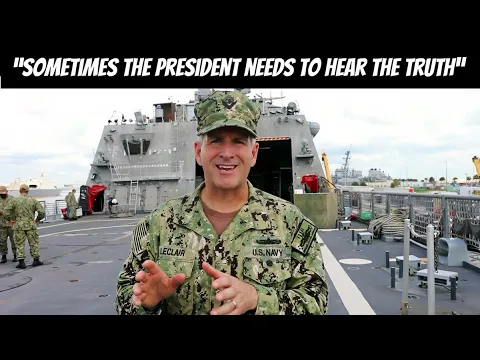
Retired Admiral Ted LeClair Breaks Silence When Analyzing Publicly the Direction of the U.S. Navy, Advocating Deep Structural Changes, Political Consistency, and Realistic Decisions on Ships, Budget, and Strategy, Amid Criticisms on Readiness and Naval Planning Accumulated Over Recent Decades
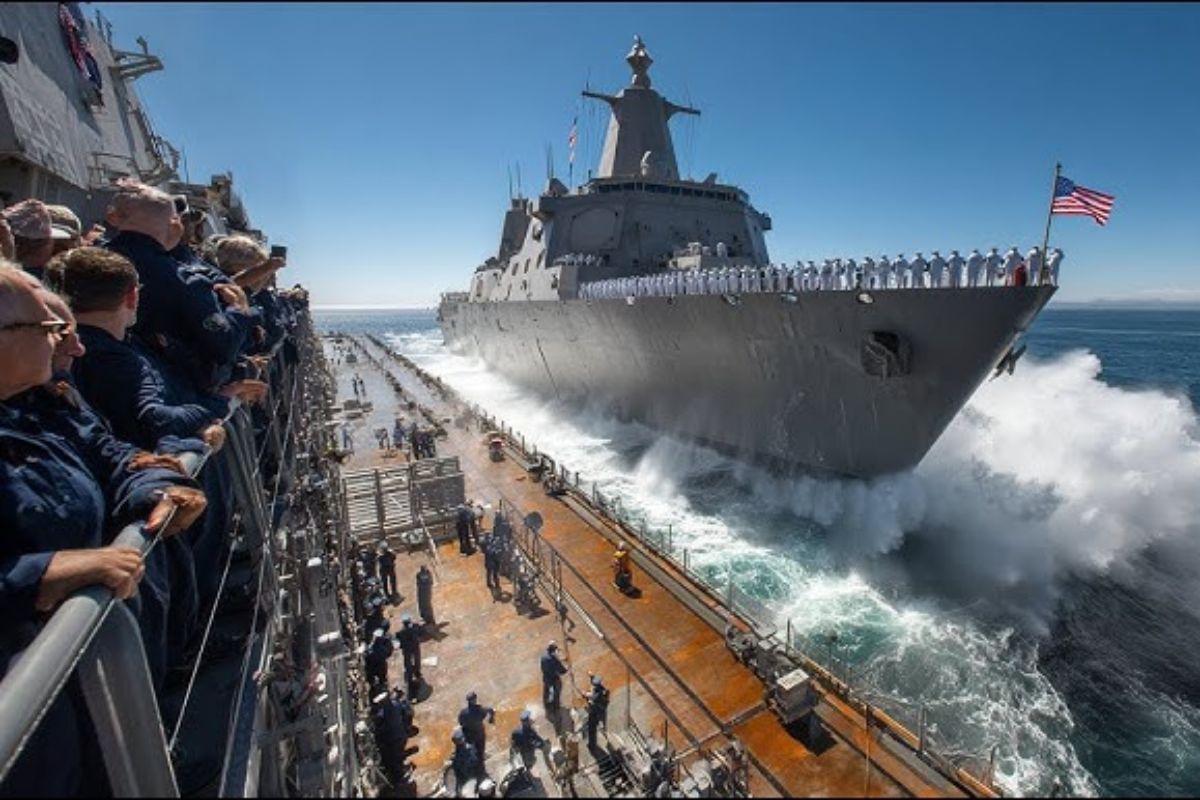
When addressing the announcement of a new warship from the so-called Trump Class, the admiral emphasized that the debate should not be limited to the specific model, but rather on what the Navy truly needs to operate in high-intensity scenarios, maintain global presence, and avoid inconsistent investment cycles and recurring waste.
Admiral Ted LeClair, a retired rear admiral of the U.S. Navy, brought his accumulated experience from operational and strategic commands to explain why the current fleet faces serious limitations and why decisions made today will have a direct impact for decades.
According to the admiral, the discussion about new ships should start from a basic question that is often ignored: what is the national strategy that the Navy needs to sustain and how long will it be maintained consistently?
-
Italian researchers have detected what appears to be a second Sphinx buried under the sands of Egypt, and satellite scans reveal a gigantic underground megastructure hidden beneath the Giza Plateau for over 3,000 years.

-
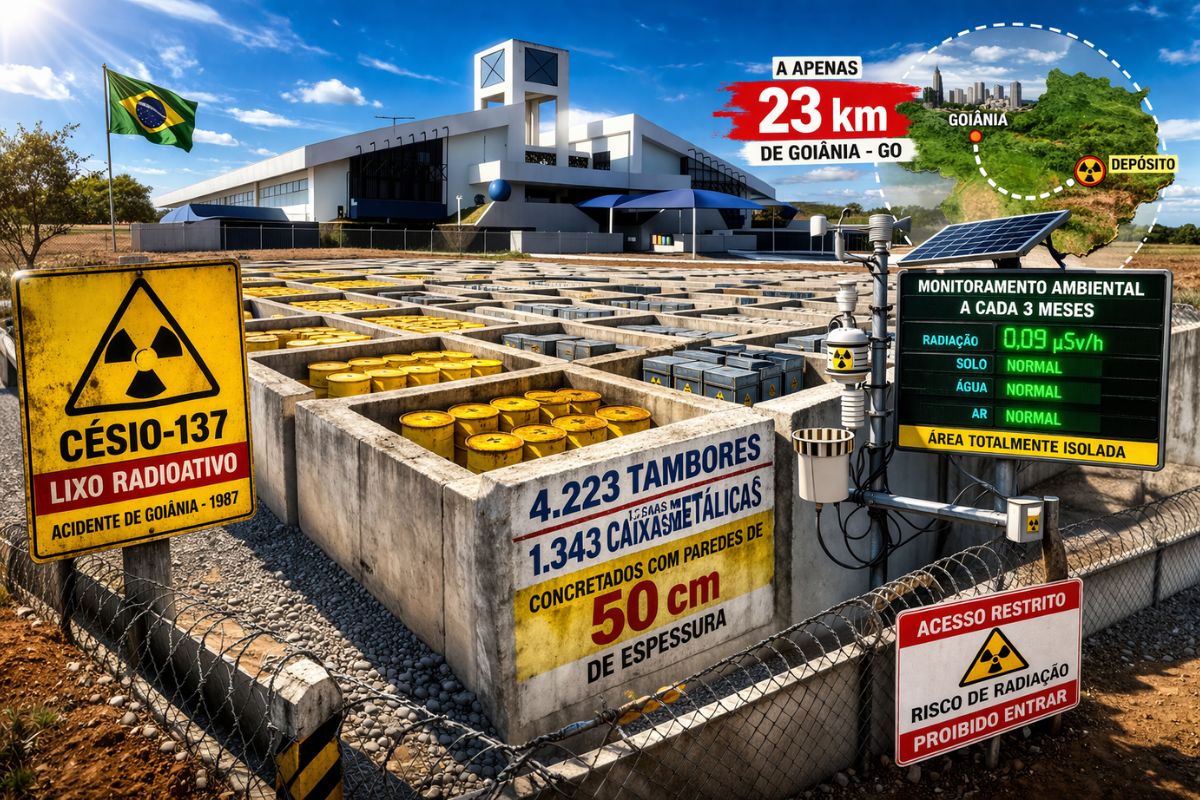
There are 4,223 drums and 1,343 metal boxes concreted with 50-centimeter walls that store the radioactive waste from Cesium-137 in the worst radiological accident in Brazil, just 23 kilometers from Goiânia, with environmental monitoring every three months.
-
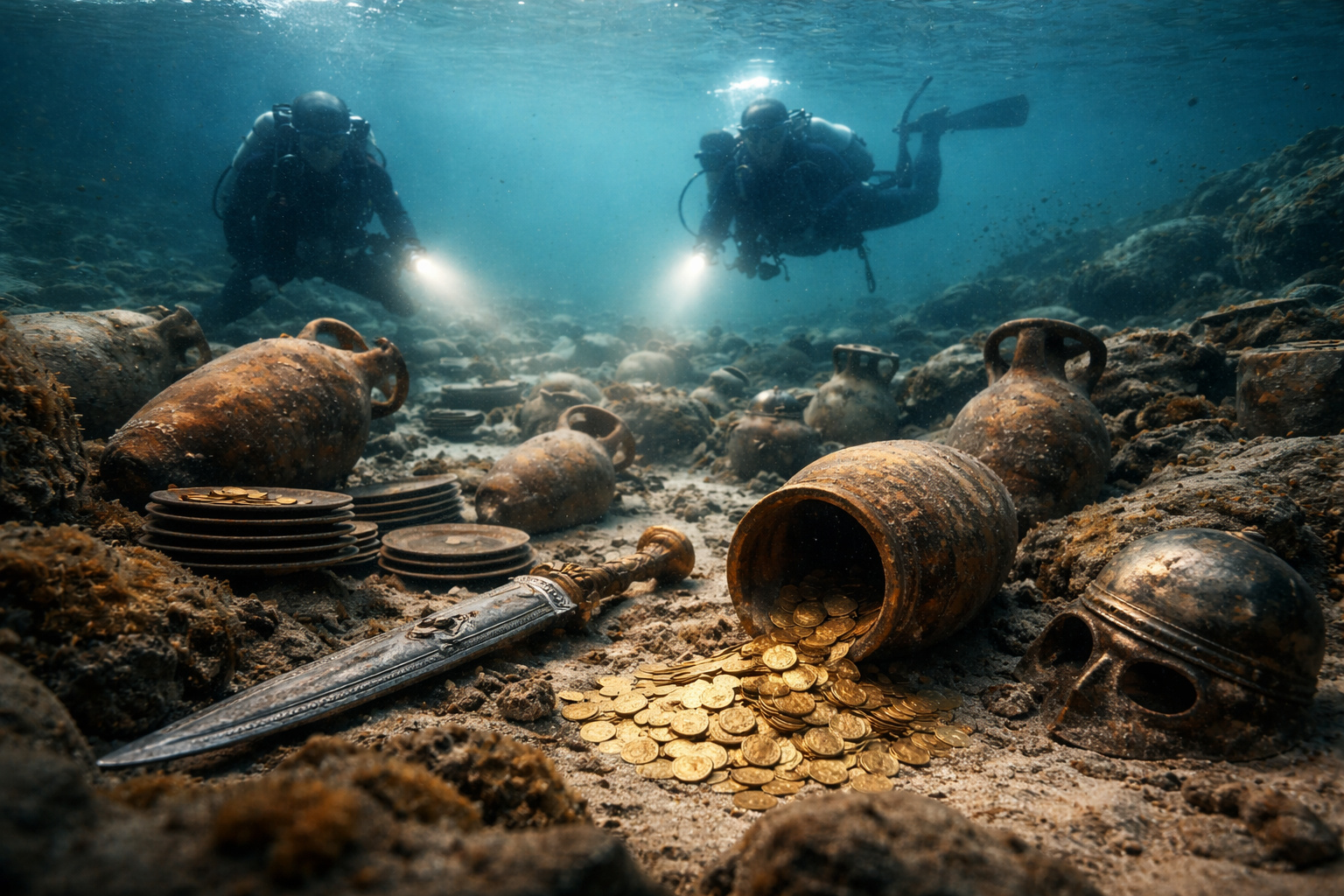
Giant Roman treasure found at the bottom of Lake Neuchâtel in Switzerland reveals an advanced trade system, circulation of goods, and armed escort in the Roman Empire about two thousand years ago.
-
He buried 1,200 old tires in the walls to build his own self-sufficient house in the mountains with glass bottles, rainwater, and an integrated greenhouse.


The Admiral’s Trajectory and Accumulated Operational Experience

Commissioned by the Royal Officer College in Villanova, Ted LeClair chose surface warfare as his specialty and began his career on the destroyer USS Callaghan DDG94, accumulating five operational missions.
Over the years, he took command of units like Boats 22 and the 42nd Expeditionary Boat Division.
The admiral also served as deputy commander of the 7th Fleet of the United States and as director of operations of the Indo-Pacific Command, in addition to holding strategic roles in the Naval Surface Force in the Pacific.
This experience, according to him, is crucial to understanding the real limits between theoretical planning and practical execution at sea.
The Central Issue Raised by the Admiral: Lack of Consistency

For the admiral, the key word that summarizes the Navy’s main problem is consistency.
He states that Congress is the one who decides how many ships will be built and how much money will be invested, but the frequent changes in direction create cycles of starts and stops that destroy industrial and operational efficiency.
According to the admiral, ships take decades to be built, operated, and maintained.
When political demand changes with each administration, shipyards lose skilled labor, costs rise, and platforms end up being delivered late and over budget.
The Mathematics of Naval Readiness That Few Know

The admiral highlighted a point little understood by the public: an operational ship requires two others to sustain it.
While one is on mission, another undergoes maintenance, and a third prepares to be mobilized. Three ships are needed to ensure one is operational.
This logic explains why absolute fleet numbers can be misleading.
A Navy that appears large on paper may, in practice, have few means available for real combat, especially in high-intensity scenarios in the Western Pacific.
The Dilemma of Large Combat Ships

LeClair stated that he supports the construction of a new large surface combat ship, but warned that this only makes sense if there is strategic clarity.
The admiral reminded that the Arleigh Burke destroyer has reached its physical limit, with no room for new systems like lasers, hypersonic vehicles, and future weaponry.
According to him, insisting on small hulls for increasingly complex missions creates unsolvable technical bottlenecks.
Technology advances, but physical space does not grow, which forces the Navy to rethink the size and concept of platforms.
Availability Versus Capacity: The Lesson Learned
One of the points most emphasized by the admiral was the concept of availability.
He explained that it is pointless to have sophisticated systems if the ship is not available when the fleet commander needs it.
The cited example involves the publicly criticized LCS program, which, according to LeClair, started to carry out real missions after operational adjustments.
For the admiral, the initial mistake was betting on innovation without adequate maintenance infrastructure, training, and spare parts.
The Navy That Exists Today is the Navy of the Next War
LeClair stated plainly that if a conflict occurs in the coming years, the available Navy will be the current one, not the one projected in future programs.
Therefore, he advocates for immediate focus on the existing fleet rather than overemphasizing platforms that will only enter service decades ahead.
The admiral warned that discussions about future ships cannot obscure the need to maintain and modernize the means already in operation, at the risk of creating a dangerous strategic void.
Costs, Readiness, and Difficult Decisions
Comparing a destroyer to a Ferrari, the admiral explained that using a billion-dollar ship for simple missions depletes precious resources.
For presence tasks, naval diplomacy, or patrol, smaller and cheaper platforms are more efficient.
He highlighted that the fiduciary responsibility of an admiral includes telling hard truths to the chain of command, including to the commander-in-chief, when an order may result in resource waste and unnecessary wear on the fleet.
Why the Navy is Still Incomparable According to the Admiral
Despite the criticisms, LeClair stated that no other navy in the world can mobilize forces, maintain prolonged operations, and sustain global presence like the United States.
Tonage, logistics, refueling, and staying power at sea remain decisive differentiators.
The admiral emphasized that recognizing problems does not mean denying achievements.
On the contrary, pointing out failures is part of the effort to preserve naval superiority in an increasingly competitive international environment.
What the Navy Really Needs Moving Forward
In the admiral’s view, the Navy needs strategic clarity, constant demand signals from Congress, continuity between administrations, and realistic decisions on costs and capabilities.
Without this, any new program runs the risk of repeating past mistakes.
He concluded that investing in consistency is as important as investing in ships, because without predictability there is no strong industry, there is no sustainable readiness, and there is no reliable deterrence.
In your opinion, is the country willing to maintain a consistent naval strategy for decades, or will it continue to change course with each new government?









-

Uma pessoa reagiu a isso.