





 Portuguese
  English
  Spanish
  3 min of reading
  0 comments



TST Confirms: Companies That Provide Less Than 1 Hour of Break Must Pay the Suppressed Time with an Additional 50%, in Protection of Worker Health.
The lunch break, also called intra-work break, is stipulated in Article 71 of the Consolidation of Labor Laws (CLT). For work shifts longer than six hours, the employee is entitled to at least 1 hour of rest and a maximum of 2 hours. This period is not just a benefit, but a health and safety measure: it ensures adequate time for meals and recovery of the worker’s energy. The law makes it clear that the employer cannot unilaterally reduce this break, except in specific cases authorized by the Ministry of Labor.
What Changed with the Labor Reform
Before the Labor Reform of 2017 (Law No. 13.467/2017), if the company granted less than 1 hour of break, the employee was entitled to full payment for that hour, plus an additional 50%.
After the reform, the rule changed: the compensation became only for the suppressed time, with a 50% increase. That is, if the employee took only 30 minutes of break, the company must pay an additional 30 minutes as overtime with the respective increase.
-
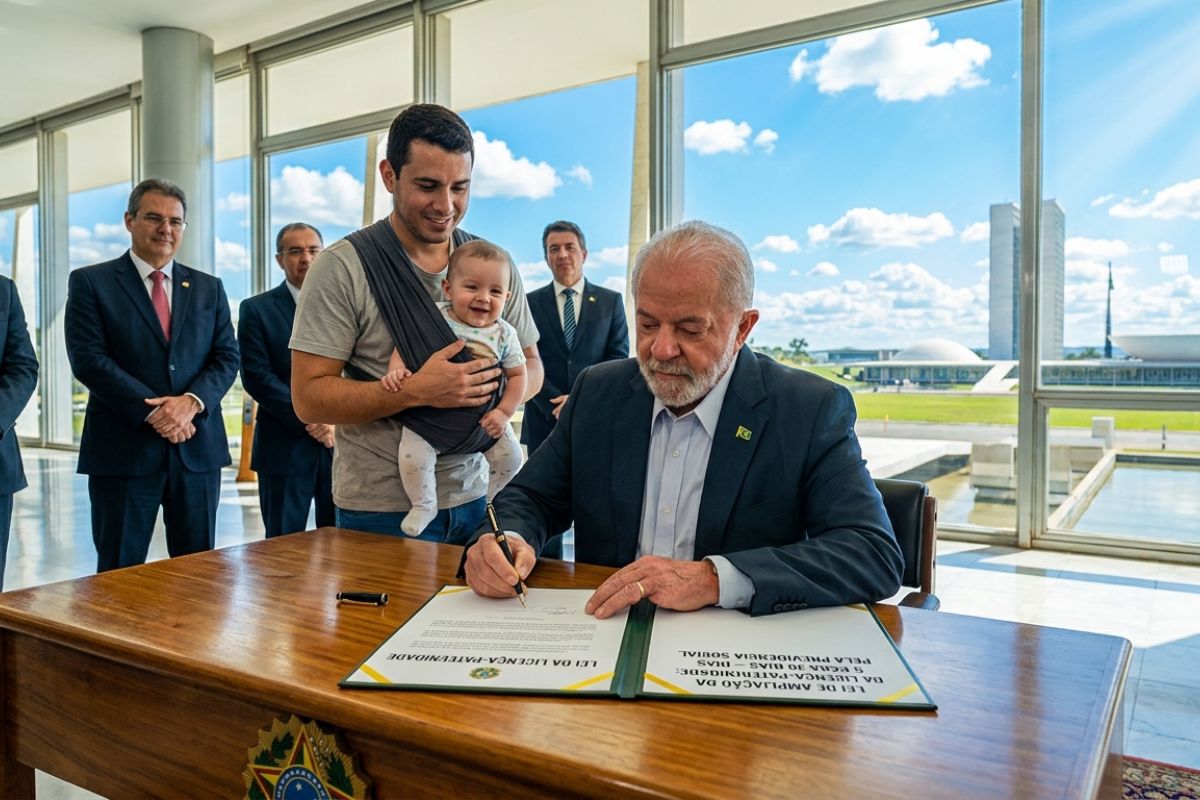
Government enacts new law: paternity leave increases from 5 to 20 days with gradual increases until 2029, and Social Security pays the paternity salary; companies no longer bear the absence cost, estimated at R$ 5.4 billion.
-
End of the 1-hour lunch break in the CLT? Current labor law maintains the break, allows for negotiated reductions, and defines rules for working hours and home office in Brazil.

-
Employee Fired After Accumulating 114 Days of Medical Leave in One Year, Labor Court Upholds Company’s Decision

-
Employee Fired While Treating Depression Wins in Court and Vale Is Required to Rehire Him Following Decision Based on the CLT and INSS Benefits


This change reduced the financial impact on the employer but maintained the obligation to pay whenever the minimum break is not respected.
TST Understanding on Suppressed Time
The Superior Labor Court (TST) has already consolidated this understanding. In 2019, Summary 437, which previously provided for payment of the full hour, was adjusted to align with the new wording of the CLT.
Today, the jurisprudence reinforces that:
- The partial suppression of the break requires payment of the reduced time, with an additional 50%;
- The amount is compensatory in nature and does not reflect in vacation, 13th salary, and FGTS;
- The rule applies to both new and old contracts, but hours prior to the reform follow the legislation of that time.
Practical Examples of Condemnations
A case judged by the Labor Court of the 15th Region (Campinas) in 2022 determined that a supermarket chain must pay all employees amounts related to 20 daily minutes suppressed from the break. The time was used for internal movement and uniform changes, which reduced effective rest.
In the Labor Court of the 2nd Region (São Paulo), a call center company was ordered to compensate employees who only received 40 minutes for lunch. The court highlighted that the shortened break increased stress in the activity, constituting a violation of Article 71 of the CLT.
Impacts for Companies and Workers
For workers, the decision means protection of physical and mental health. Short breaks compromise adequate nutrition, rest, and even productivity.
For companies, non-compliance can generate a significant labor liability. A simple calculation shows the risk:
- 30 minutes suppressed per day;
- 22 business days in the month;
- 11 overtime hours per month per employee.
Multiplied by hundreds of employees, the total can become millions, not to mention fines and impacts from collective actions.
Experts Reinforce the Importance of Complying with the Law
The labor lawyer Gustavo Filipe Barbosa Garcia states: “the intra-work break is a guarantee of health. Partial suppression, even if small, generates compensation. The company that ignores this accumulates serious liabilities.”
The occupational physician Carla Nogueira adds: “adequate breaks reduce accidents and increase productivity. The cost of breaks is less than the cost of absences and compensations.”
Respect for Breaks Is a Matter of Health and Management
The jurisprudence of the TST makes it clear: shortened lunch breaks are costly. A company that grants less than 1 hour of break for shifts longer than six hours must pay the suppressed time with an additional 50%.
More than a labor right, the break is a tool for protecting the health and well-being of workers. Complying with the law is not just about avoiding fines and sentences, but also about investing in productivity and reducing risks for all.









Seja o primeiro a reagir!