





 English
  Francês
  Alemão
  Italiano
  Japonês
  Norueguês
  Portuguese
  Spanish
  6 min of reading
  0 comments


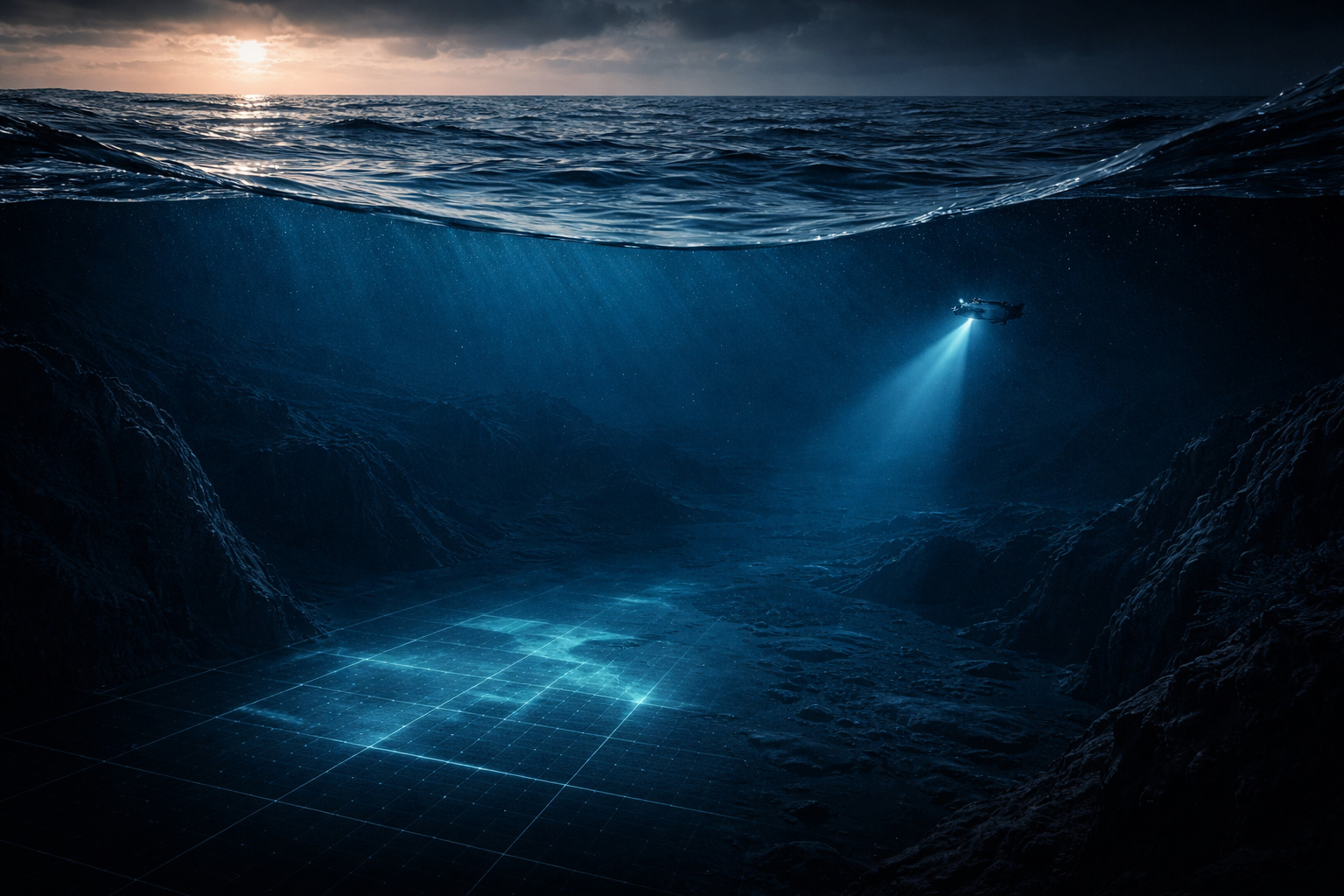
More than 70% of the ocean remains unknown, revealing a planet still unexplored beneath the waves, where we know more about Mars than about the seafloor itself.
Earth is often called the “blue planet,” but this definition hides a little intuitive reality: most of this blue is still unknown in detail. Despite technological advances in recent decades, over 73% of the ocean floor has never been mapped with modern high-resolution technology. This data, updated by international initiatives such as Seabed 2030 and NOAA, reveals a significant gap in global scientific knowledge. While humanity has developed probes capable of mapping other planets with precision, the detailed relief of our own planet remains, for the most part, invisible.
What does “unmapped” mean on the ocean floor
When it is said that the ocean floor has not been mapped, it does not mean a total absence of information. There is an approximate global map obtained by satellites, based on gravitational variations caused by underwater formations.
However, this type of mapping has low resolution. It does not allow for the identification of details such as smaller underwater mountains, deep valleys, complex geological structures, or specific habitats.
-
Seen from space, a colossal ‘Y’ cuts through the largest desert in China, blending a jade-filled river, red and white mountains, and revealing the absurd scale of the transformation of the Taklamakan surrounded by a green wall with billions of trees.

-
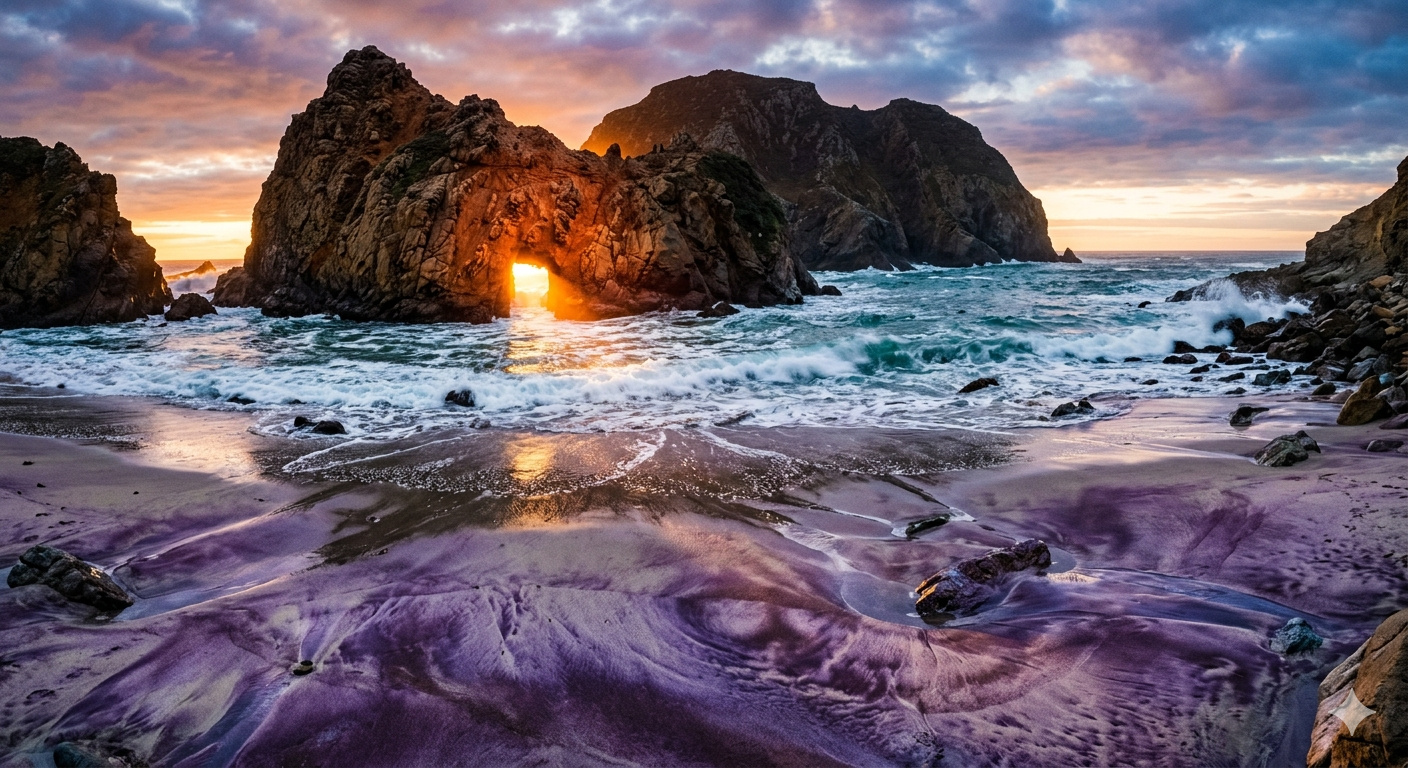
The Pacific Ocean reveals what the cliffs of Big Sur have hidden for millennia: Pfeiffer Beach, in California, features swirling purple sand formed by garnet crystals and displays a stone arch that is illuminated by the sun in winter for just a few days each year.
-
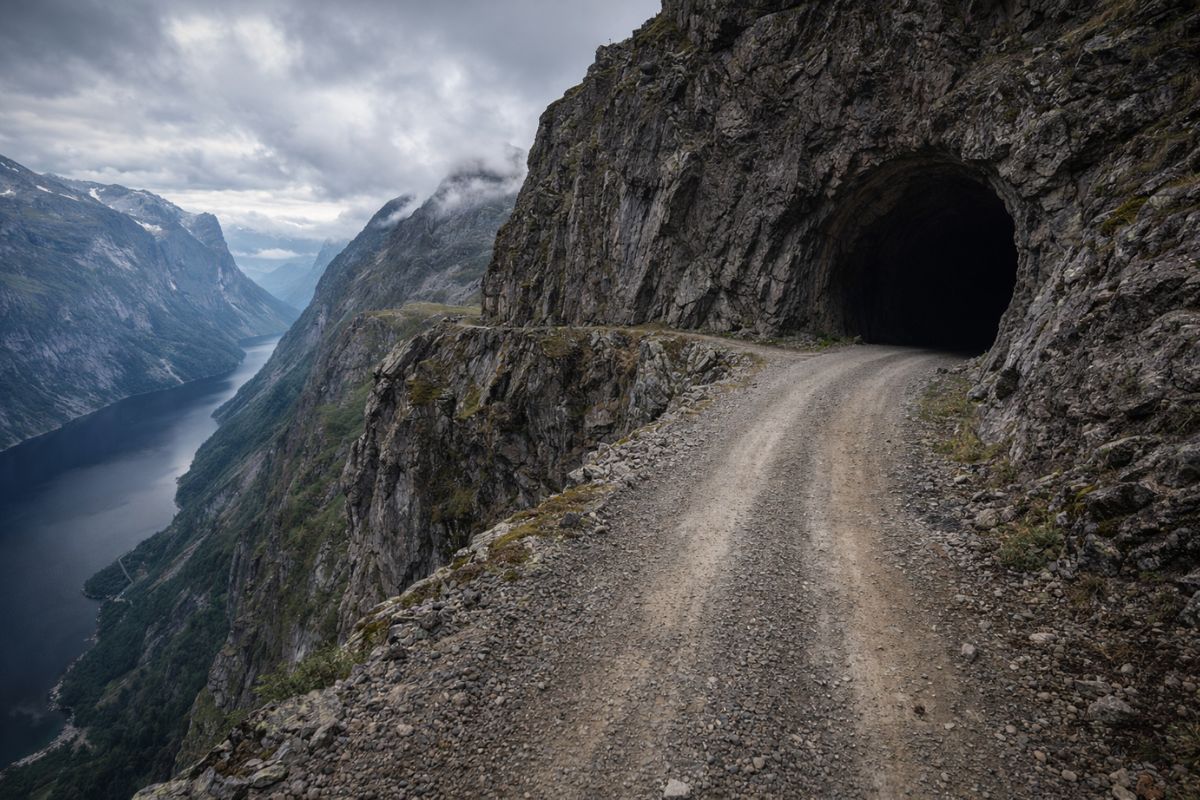
Aursjøvegen in Norway is a 100-kilometer gravel road that crosses chasms and dark tunnels carved into the rock at an altitude of 947 meters in the fjords and is only open for four months a year.
-
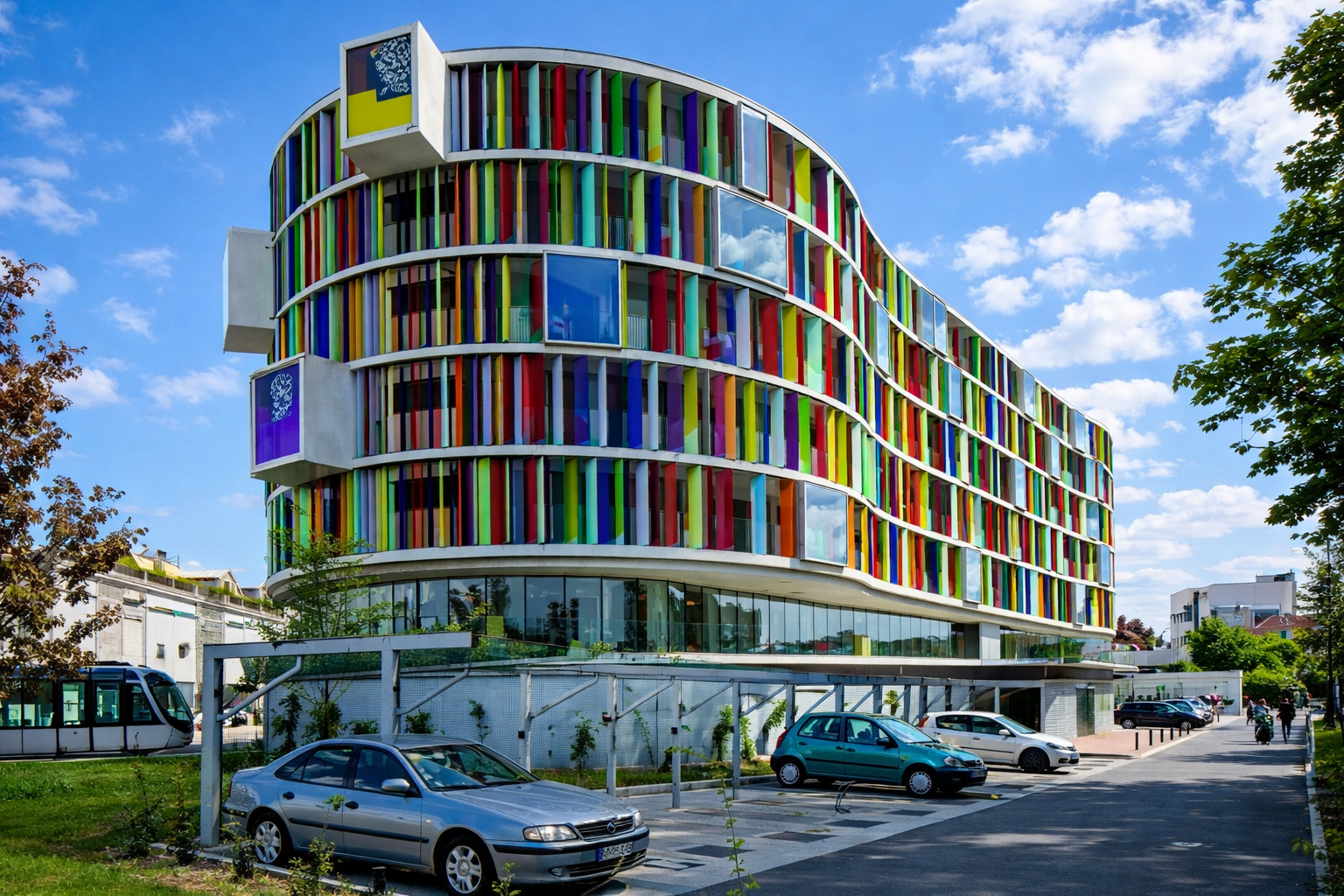
With about 4,000 m², the building constructed in a traditional neighborhood in France looks like a rainbow, has a colorful facade, mixes vibrant glass, and creates one of the most unusual visuals in Bordeaux.

High-resolution mapping, considered the modern standard, uses multibeam sonar installed on vessels. This technology sends sound waves to the ocean floor and measures the return time, creating detailed images of the underwater relief. This type of mapping covers only about a quarter of the ocean floor.
An area larger than four African continents still unknown
The dimension of what has yet to be mapped is impressive. The oceans cover approximately 361 million square kilometers of the Earth’s surface. With about 73% still unmapped in high resolution, this represents around 260 million square kilometers.
For comparison, the African continent has about 30 million square kilometers. This means that the unknown area on the ocean floor is equivalent to more than four times the entire Africa.
This scale helps to understand why the ocean is considered one of the last frontiers of scientific exploration on the planet.
Why we know Mars better than the ocean floor
One of the most recurring comparisons in science is that we know the surface of Mars better than the ocean floors of Earth. This statement has a real basis, although it needs to be interpreted correctly.
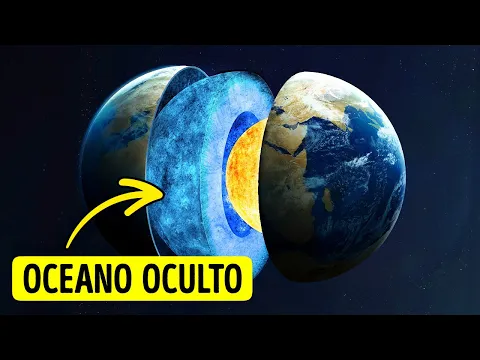

Mars has been almost completely mapped by orbital probes equipped with high-resolution cameras. These missions have managed to capture much of the planet’s surface in detail down to a few meters.
In the case of Earth, the ocean floor is covered by kilometers of water, which prevents the direct use of optical satellites. This makes mapping much more complex, expensive, and time-consuming, relying on ships and specialized equipment.
This technological difference explains why, despite being on our own planet, we still know less about the seabed than about some celestial bodies.
The average depth and the challenges of submarine exploration
The oceans have an average depth of approximately 3,682 meters, which can exceed 10,000 meters in regions like the Mariana Trench. At these depths, the pressure is extremely high, reaching over 1,000 atmospheres.
Additionally, the absence of sunlight makes the environment completely dark. Temperatures are close to freezing, and conditions are hostile for equipment and vehicles.
These factors make exploring the ocean floor a technically challenging and financially costly task, contributing to the slow pace of global mapping.
The role of the Seabed 2030 project in the race for mapping
Seabed 2030 is an international initiative aimed at mapping 100% of the ocean floor by the end of the decade. The project brings together governments, scientific institutions, and private companies in a collaborative effort to accelerate data collection.
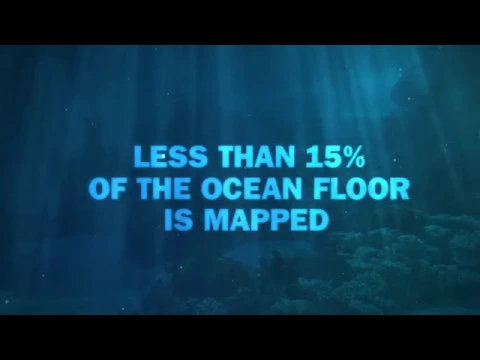
Since its launch, the percentage of mapped area has been consistently increasing, but it is still far from reaching totality. The challenge lies not only in data collection but also in processing and integrating the obtained information.
This type of initiative is considered essential to expand knowledge about the planet and support various areas, from navigation to scientific research.
How many species may exist on the ocean floor
The ocean floor is one of the richest and least explored environments in terms of biodiversity. Scientific estimates suggest that there may be between 700,000 and over 1 million marine species.
A significant portion of these species has yet to be identified or cataloged. In deep regions, where exploration is more limited, new forms of life are frequently discovered.
Many of these organisms have unique characteristics adapted to extreme conditions, which raises interest not only scientifically but also biotechnologically.
The impact of ignorance on science and the economy
The lack of detailed mapping of the ocean floor has implications that go beyond scientific curiosity. It affects areas such as maritime safety, natural resource exploration, installation of submarine cables, and environmental monitoring.
Without accurate information about the underwater relief, industrial and scientific operations face greater risks and uncertainties. Furthermore, the absence of data limits the understanding of important geological and climatic processes.
The ocean floor plays a fundamental role in regulating the global climate, influencing ocean currents, carbon cycles, and heat distribution on the planet.
Technological advances have allowed for the acceleration of the mapping process. Autonomous underwater vehicles, marine drones, and new sonar systems are making data collection more efficient.
Moreover, the integration of data from different sources, including commercial ships, has contributed to expanding the coverage of mapping. Even so, the pace is still insufficient to quickly cover the entire ocean area, which keeps a large part of the seabed out of the detailed reach of science.
The ocean as the last great frontier of Earth
Throughout history, humanity has explored continents, crossed oceans, and reached space. However, the ocean floor remains one of the least known regions of the planet.
This condition makes the ocean a kind of “last frontier,” where there is still much to be discovered. Each new expedition reveals geological formations, species, and processes that expand our understanding of Earth.
The contrast between technological advancement and ignorance of our own planet highlights the complexity of ocean environments.

Despite all scientific advances, Earth still holds large unknown areas. The ocean floor, with its vast expanse and depth, represents one of those regions.
More than 73% of this area remains without detailed mapping, a number that highlights both the challenge and the potential for discovery.
While satellites continue to explore space, ocean exploration remains an essential task to understand how the planet functions as a whole.
What can still be discovered in the depths
The ignorance of the ocean floor is not just a gap, but also an opportunity. New geological formations, mineral resources, and species can still be identified.
These discoveries can have significant impacts in areas such as energy, medicine, and technology. At the same time, they raise questions about the preservation and sustainable use of marine resources.
The balance between exploration and conservation will be one of the main challenges as knowledge about the ocean advances.
A reality that redefines what we know about the planet
The fact that a large part of the ocean floor has yet to be mapped redefines the perception of human knowledge. Even on a planet that has been extensively studied, there are still vast and poorly understood regions.
This reality reinforces the importance of scientific research and international cooperation to expand our understanding of Earth.
The ocean, which covers most of the planet’s surface, remains a largely unknown territory — a reminder that there is still much to be explored within the very world we live in.








Seja o primeiro a reagir!