





 Portuguese
  English
  Spanish
  8 min of reading
  0 comments


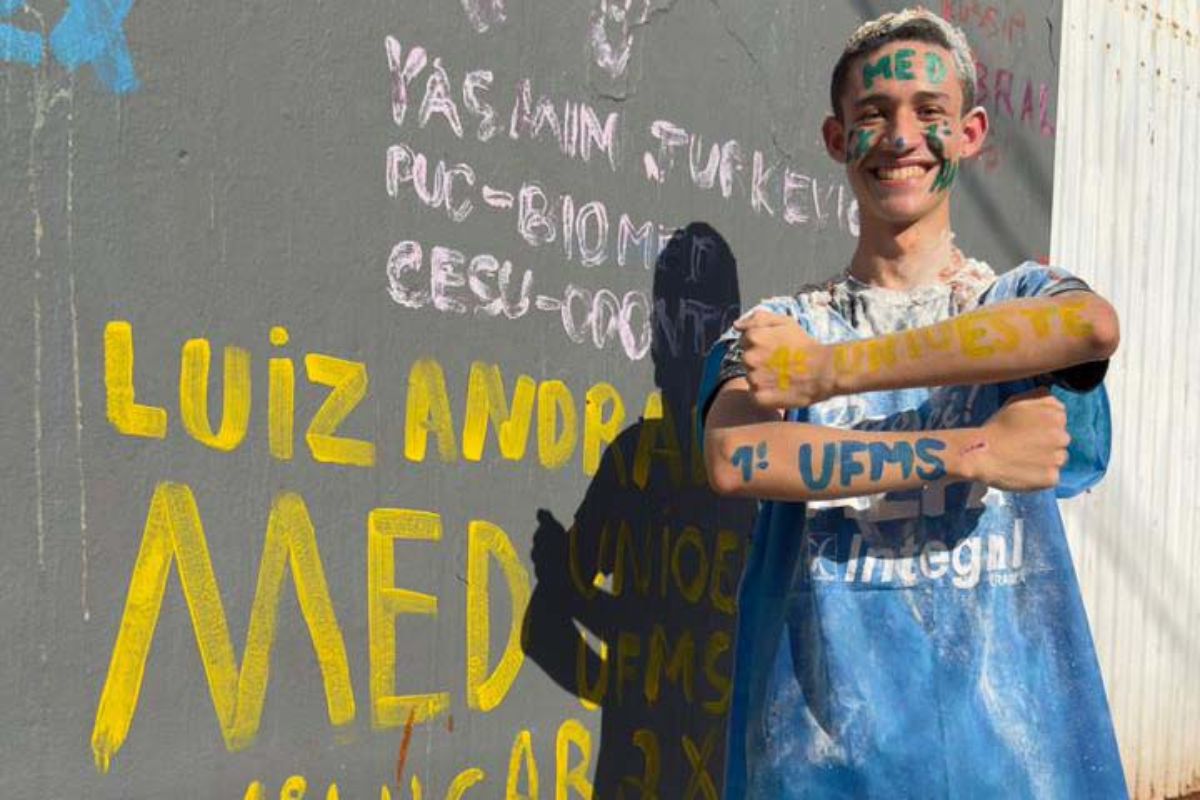
Student Luiz Fernando from Alto Paraíso (PR) Traveled 13.4 Thousand KM to Study a Semester in Australia Through Ganhando o Mundo and Upon Returning in 2024 Accelerated Preparation: School, Independent Study, and Preparatory Course. In 2025, at 17, He Ranked 1st in Medicine at Unioeste and UFMS.
At 17, student Luiz Fernando Souza de Andrade carries a journey that mixes kilometers, choices, and a discipline that doesn’t fit in a slogan. From Alto Paraíso in Northwestern Paraná, he went to Australia in 2024 for a semester and, upon returning, shifted his study routine into another gear to reach the top of two competitive medical selection processes.
The journey was not linear, nor “magical”: it involved an exchange with cultural adaptation, focus on public university, attempts at different entrance exams, days ending close to 11 PM, and weekends filled with mock tests and detailed corrections. In the midst of this, state programs come into play, different selection modalities, and a question that lingers for any student: what changes when consistency becomes a method and not just a will?
From the Classroom in Alto Paraíso to the Semester in Australia
The student was 15 years old when, in 2024, he crossed the ocean to study in Beaconsfield, Australia, through the Ganhando o Mundo program from the Paraná State Department of Education (Seed-PR). The distance mentioned between the two points is 13.4 thousand kilometers, with over 24 hours of flight time, a type of journey that indicates the experience would be not only academic but also about autonomy and adaptation.
-
Spain surprises the world by erecting 62 artificial dunes, mixing sand with natural remains of posidonia, and causing the structure to lose only 1.4% of its volume in 1 year.

-
With 16 Bulava missiles, improvements in acoustic stealth, and a design focused on silent patrols, Russia’s nuclear submarine was born to ensure Moscow’s invisible retaliation and has become one of the pillars of its maritime strength.

-
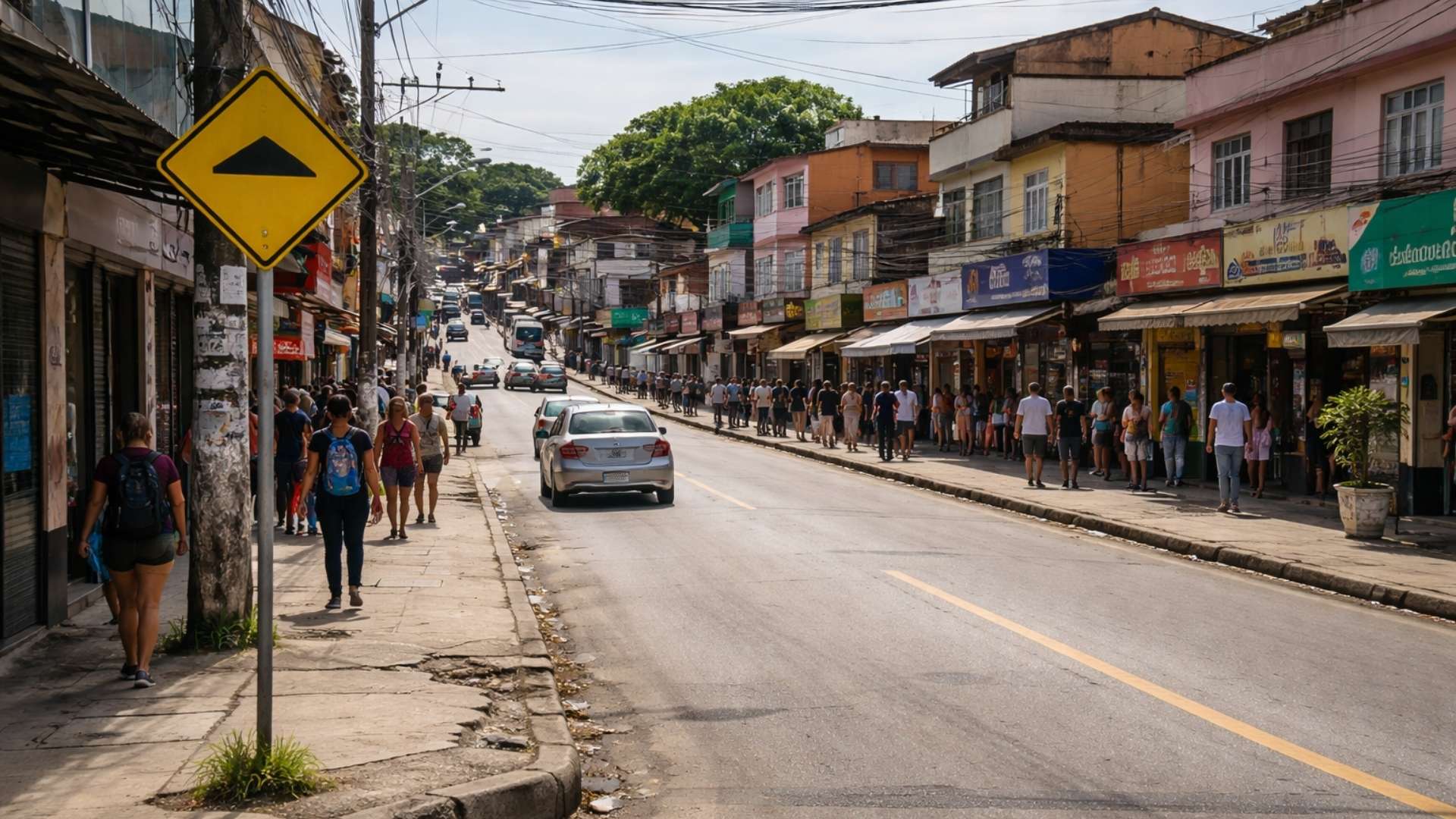
‘Populous’ city in Rio among the worst in Brazil in national ranking and exposes silent development crisis.
-
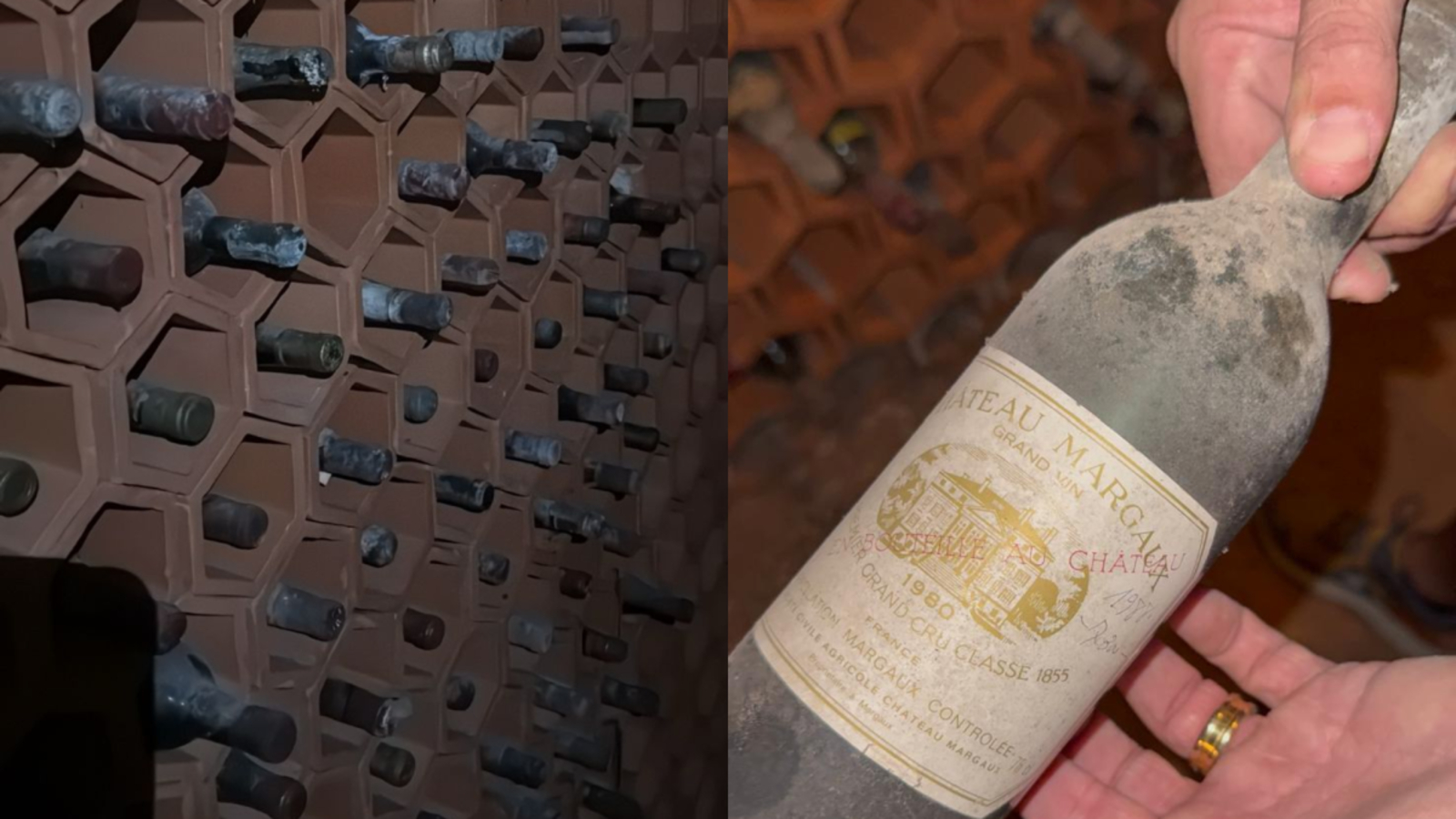
Couple buys house in the South Zone of São Paulo, opens a hidden door in the garage, and finds a secret wine cellar with dozens of old wines forgotten since the 1970s.

During this time, Luiz describes developing his English to fluency and experiencing an immersion that included school routine, living with a host family, friendships, and extracurricular activities, such as camping, hiking, and beach visits.
The exchange is seen as a leap in repertoire and maturity, but also as practical training to deal with challenges in a completely new context, away from the safety net and with language barriers at the beginning.
The Return in 2024 and the Turning Point for the Study Routine
Upon returning from the exchange in July 2024, the student states that he intensified his pace with a clear goal: to enter Medicine in a public university.
His formula at this point combined high school in the morning, self-study in the afternoon for about four hours daily, and a preparatory course in the evening, from 7 PM to 10 PM, balancing classes at Colégio Estadual Vila Alta in Alto Paraíso.
The logic behind this was not just “studying more,” but structuring the day so that each block had a function. He mentions focusing on solving exercises and specific classes, especially in Biology and Chemistry, in addition to maintaining consistency even when performance fluctuated.
The phrase “giving up was never an option” serves as his mindset, but what supports the result is the practical fit of the routine, with schedules, goals, and daily repetition.
Two Approvals in Medicine and Two Different Selection Methods
At 17, Luiz achieved a rare milestone: first place in Medicine at two public universities, the State University of West Paraná (Unioeste) and the Federal University of Mato Grosso do Sul (UFMS). In the case of Unioeste, he was the top candidate in the Aprova Paraná Universidades, an initiative developed in partnership between Seed-PR and the State Department of Science, Technology, and Higher Education (Seti). At UFMS, he led the serial selection process, a model that assesses students over the three years of high school.
In addition to these selections, the student reports that he took entrance exams for UFPR, UEL, Unicentro, Unioeste, UFMS, and also participated in Enem, always prioritizing public universities.
He states that he did not expect to “pass directly” at that point and describes the approval as a surprise, even with the intense preparation. This highlights an important detail of highly competitive processes: the feeling of unpredictability remains, as minor deviations in tests, competition, and criteria can change everything.
The Bridge Between Enem, the Scholarship in Umuarama, and the “Milimetrada” Routine
Before the first place in Medicine, the student had already achieved a significant result: approval in 5th place in Civil Engineering at the Federal Technological University of Paraná (UTFPR), still in the 2nd year of high school, with the 2023 Enem score. This performance paved the way for a scholarship in Umuarama, 66 kilometers from his hometown, where the routine became even more rigid.
In Umuarama, he divided his day between a full-time course focusing on the entrance exam for Medicine, and in the evening, the 3rd year of high school at Colégio Estadual Pedro II.
The described schedule starts around 6:30 AM, with classes from 7:15 AM to noon, two hours of “quick” lunch to allow time, and returning to the preparatory course around 1:15 PM. He reports studying in individual cubicles with active study, exercises, and targeted classes until about 7 PM, followed by school in the evening and arriving home around 11 PM. It is a routine that trades leisure for predictability, minimizing the “dead” intervals of the day.
Mock Tests, Detailed Correction, and the Logic of “Quality with Volume”
On weekends, the student does not describe a complete break. On Saturdays, there were morning classes and mock tests in the afternoon, focusing on Enem, entrance exams, and previous questions. On Sundays, even with some rest, he reserved two to three hours for detailed corrections, reviewing errors, correct answers, and areas for improvement, as a way to adjust the course before gaps became habits.
Daily, Luiz states that he completed an average of 70 exercises per day, emphasizing that it was not just about quantity but quality. The method highlighted in his account is one of repetition with review: solve, correct, understand the reason for the error, and return to the content with more accuracy.
This cycle transforms “studying” into a feedback system, where the student does not depend solely on motivation, but on a process that shows where he is failing.
The Role of Childhood Dreams and the Decision to Stay Focused
The choice of Medicine did not arise in the final stretch: Luiz says the desire has been there since childhood, around five years old, when he broke his collarbone and needed to be transferred to a hospital, an experience that marked his first contact with more complex healthcare than that of the small-town health unit. The memory of the doctor and the team appears as an emotional trigger that has turned into a life plan over the years.
When he states that “there is no tip or secret” and summarizes everything to “sit in the chair and study with focus,” this doesn’t diminish the complexity of the journey, but reinforces what the entire account shows: consistency, sacrifices, and strategy.
He mentions that he sometimes went out with friends but gave up many moments and acknowledges that no one feels good every day; however, it is necessary to maintain consistency. Discipline appears as something that can be trained, not as a gift, built through repetition and commitment to the goal.
Public Programs, Access Numbers, and the Impact of Example in the School Community
The student’s achievement is also presented as a result of public policies and expanded access pathways. In the context of Aprova Mais Universidades and Prova Paraná Mais, the program allows students from public schools to compete for spots in state universities using the score from an assessment applied the previous November.
In the reported scenario, 13.4 thousand students made 24.2 thousand registrations, as each can apply for up to two courses, and 3,757 spots were offered in 1.3 thousand courses across the seven state universities: UEL, UEM, UEPG, UENP, Unioeste, Unicentro, and Unespar.
The emotional impact is reflected in the family’s words. The mother, Sirley Souza de Andrade, a 41-year-old teacher, describes the approval as a “contagious” joy and highlights the challenges of the process, mentioning distance, anxiety, and insecurity during the uncertainty period leading up to the results.
The father, Ademir Caetano de Andrade, a 50-year-old rural worker, speaks of the expectation that his son will become a humane professional and make a difference in the community.
Meanwhile, the head of the Regional Education Department of Umuarama, Gilmara Zanata, describes the student as dedicated and outstanding in learning, and broadens the perspective to public education: each approval in competitive courses sends a collective message about the quality and potential of public education.
What’s Next: Moving Cities, Starting Classes, and Plans in Public Health
After the approval, Luiz chose Unioeste and is preparing for a concrete move: traveling 340 kilometers to study at the campus in Francisco Beltrão, in Southwestern Paraná, with enrollment already completed.
He states that classes start on March 16, that he is already in contact with upperclassmen, and plans to visit the campus and new home the following week, as well as having met future classmates.
Regarding his professional future, the student says that he is not yet thinking about specialization and intends to decide after exploring the areas within the degree.
He projects to pursue residency, and if he does not pass on the first try, he intends to keep trying, also mentioning a desire to work in public health. At the same time, he admits a natural insecurity because everything is new: city, housing, and university.
The approval closes one chapter but opens another full of practical decisions, where performance in exams gives way to the challenge of maintaining the pace and building a path within college.
The Exchange as a Tool for Repertoire and Resilience, Not Just a Trip
Ganhando o Mundo appears in Luiz’s case as more than an international experience. He says the greatest learning was learning how to deal with adversities and solve problems, especially when he was not yet fluent and was in a place where no one knew him.
This experience, in his account, becomes training in resilience, communication, and adaptation, skills that do not replace study but can strengthen the student’s autonomy.
The program also has a large-scale dimension. It is described as the largest student exchange program in Brazil, with the first edition in 2022, sending 2,540 students abroad to English-speaking countries, including the United Kingdom, Australia, Canada, New Zealand, and the United States. In 2026, the ongoing edition is forecasted to offer two thousand spots, with 675 students already sent since the beginning of the year to Ireland, the United Kingdom, New Zealand, and Canada, with planned departures throughout the year also to Australia, according to local calendars.
In the end, the projection is for 4,540 students to be benefited. In Luiz’s case, he states that after his participation, the schools he attended saw an increase in the number of students selected for 2026, totaling five students, with two already on their way to New Zealand. When a student “gains the world,” the entire school tends to recalibrate what it considers possible.
Conclusion: The story of student Luiz Fernando intersects three axes that rarely appear together with such clarity: an exchange with a real impact on maturity, a meticulously engineered routine, and two first-place approvals in Medicine through different selective paths.
More than an individual case, what emerges is a portrait of how focus, methodology, and public opportunities can transform a small town into a launching pad.
And in your experience, what matters most for a student to go from “want to” to “passed”: rigid routine, school support, preparatory course, mock tests, or the experience of gaining repertoire outside the place of origin? Share in the comments what worked for you, or what you would change in this strategy.








-

-

-

-

-

33 pessoas reagiram a isso.