





 Portuguese
  English
  Spanish
  6 min of reading
  0 comments


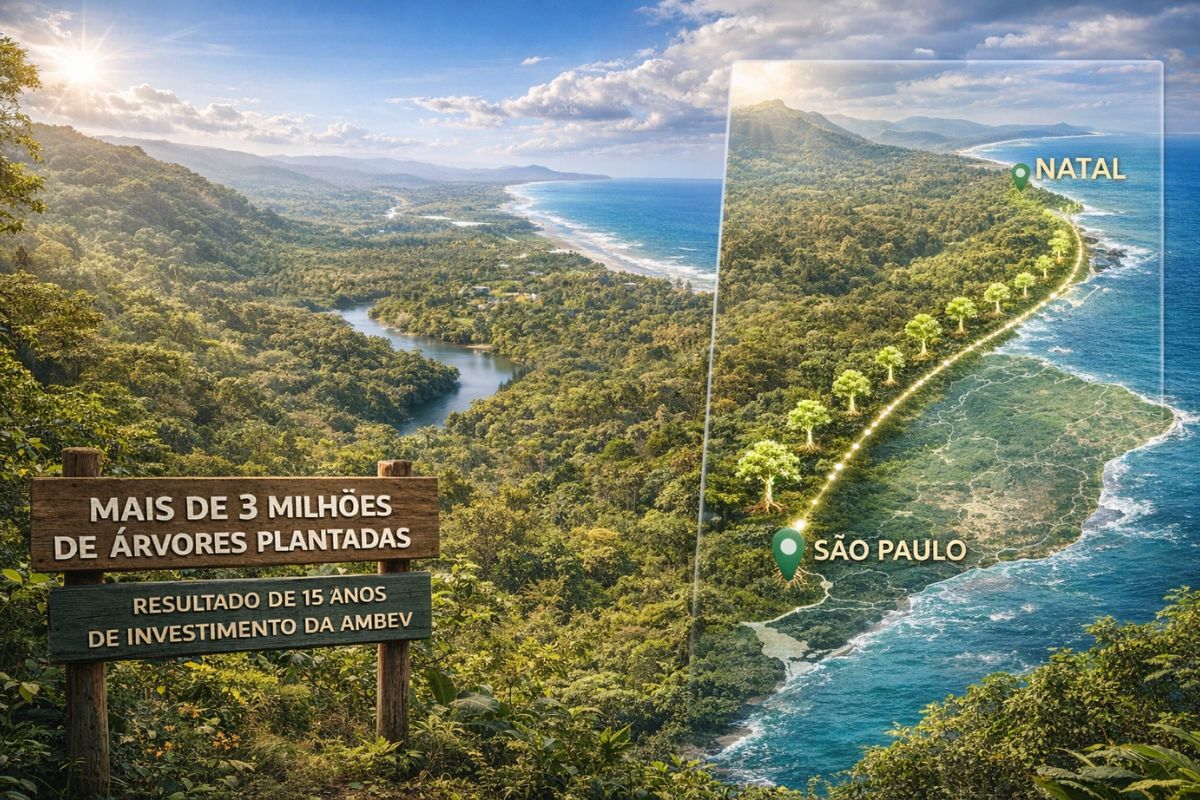
The Bacias e Florestas program by Ambev has reached 15 thousand hectares restored and 3 million trees planted in areas of water stress, equivalent to a continuous strip between São Paulo and Natal along the coast, consolidating one of the largest private environmental recovery initiatives in the country.
When a brewery announces that it has planted over 3 million trees, the first reaction of many people is to be skeptical. But Ambev’s numbers are concrete and auditable. According to the portal Economia IG, the Bacias e Florestas program, launched in 2010, has reached the mark of 15 thousand hectares restored in areas of water stress, regions where the demand for water exceeds the available quantity or where the quality is not suitable for consumption. The restored area is equivalent to a continuous strip between São Paulo and Natal along the coast, representing about one-fifth of the entire Brazilian coastline.
The result did not appear overnight. It took 15 years of continuous investment, with the collaboration of NGOs The Nature Conservancy (TNC), WWF-Brasil, and Fundação Avina, as well as local partners in various regions of the country. Ambev currently operates in 7 river basins in Brazil and 11 across South America, and by 2025 reached 100% of the communities located in water-stressed areas where it operates, fulfilling a global public commitment. What started as a corporate environmental program has become one of the largest private environmental recovery actions in Brazil.
What Ambev has done in 15 years with the Bacias e Florestas program

image: AMBEV
The Bacias e Florestas program was born in 2010 from a partnership between Ambev and WWF-Brasil, with a goal that at the time seemed too ambitious for a beverage company: to restore critical river basins in the country.
-
A new AI collar technology for cattle eliminates physical fences, creates virtual barriers, monitors animals 24/7, and detects changes in behavior and health.

-
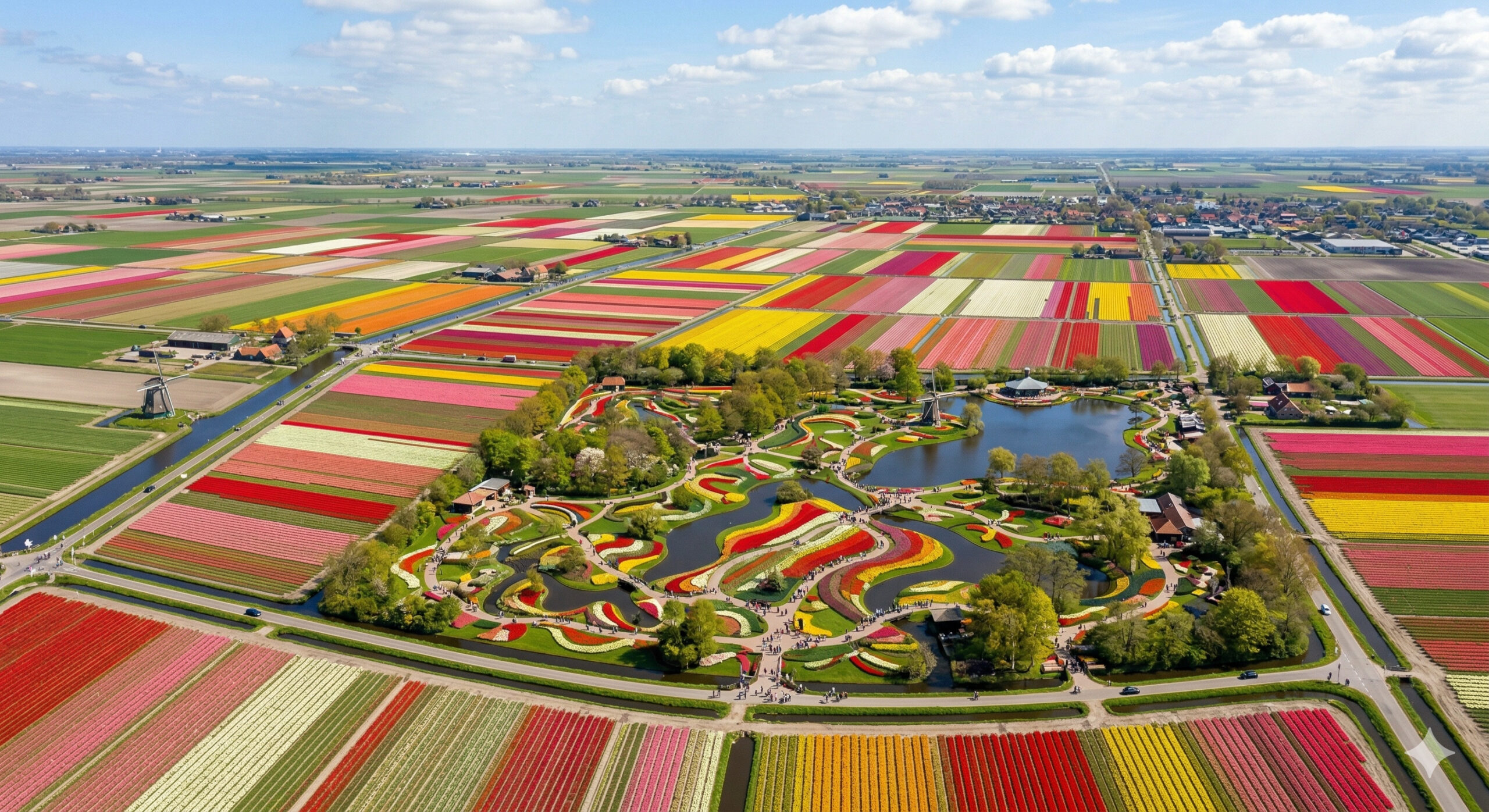
For a few weeks each year, an entire country blooms with billions of tulips, creating a mosaic of colors visible from the sky, while a single garden gathers more than 7 million flowers and attracts visitors from around the world to one of the most impressive shows in Europe.
-
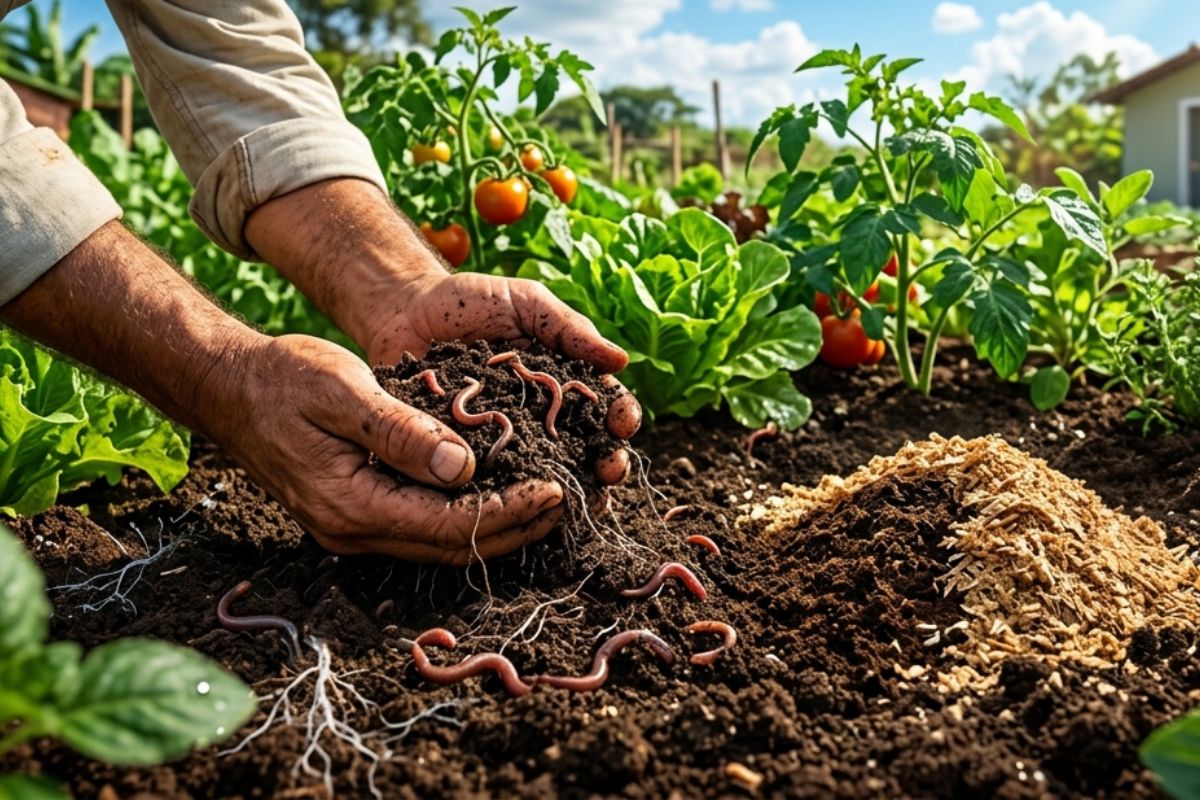
Bokashi, a Japanese technique of controlled fermentation, becomes the organic fertilizer that revitalizes the soil: it activates microorganisms and earthworms, improves pH and moisture retention, gradually releases nutrients, and helps prevent pests in the garden.
-
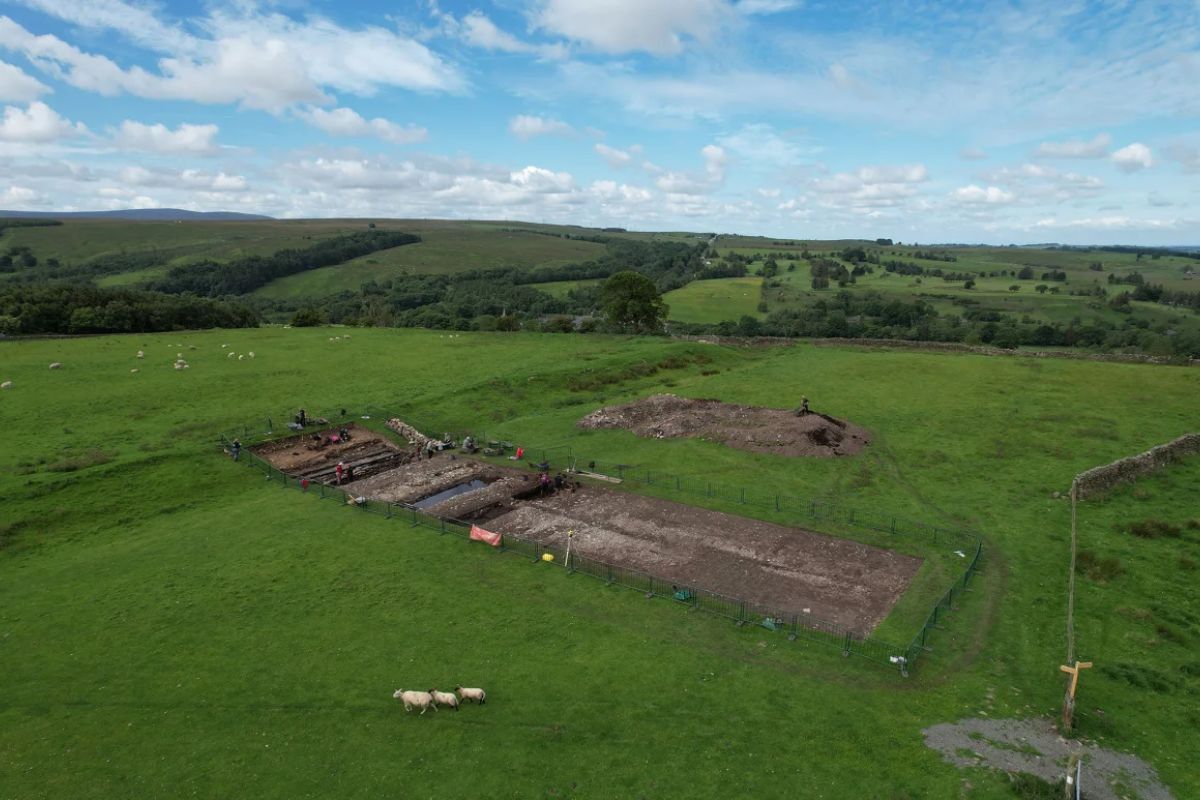
Archaeologists found giant shoes over 30 centimeters near Hadrian’s Wall that survived nearly two thousand years buried and now raise a mystery: who were these Roman soldiers so different from the others?

The logic was simple, but it required patience. Water is the fundamental input for beer production, and Ambev understood that protecting the sources of this resource was a matter of operational survival, not just image.
Over 15 years, the program went through various phases: diagnosis of the basins, planning with local communities, ecological restoration, environmental education, soil conservation practices, and continuous monitoring of the restored areas.
Ambev did not just plant trees and leave. The Bacias e Florestas program ensures the monitoring of the restored areas for several years, ensuring that the trees grow and fulfill their role in the ecosystem.
In addition to planting, the program includes rural sanitation actions, technical training for sustainable production, and Payment for Environmental Services (PES), an economic incentive for rural producers who commit to forest recovery on their properties.
The accumulated results by 2025 include over 3 million native trees planted, 15 thousand hectares restored and conserved, and presence in 4 of the 12 river basins in Brazil, including priority basins such as those of PCJ, Paraíba do Sul, and Guandu in Rio de Janeiro. The program has also expanded to other South American countries, reaching 11 basins on the continent.
Why planting trees solves water scarcity
The connection between forests and water may not be obvious to those living in the city, but it is one of the most well-documented relationships in environmental science. Native vegetation plays an essential role in the water cycle.
The roots of trees help to infiltrate rain into the soil, preventing floods and erosion. The canopies protect the soil from intense sunlight, retaining moisture. And trees “transpire,” releasing moisture that contributes to cloud formation. Therefore, the more native trees in a river basin, the greater the availability of water in the region.
It is precisely this mechanism that the Ambev program explores. The areas of water stress where Bacias e Florestas operates are regions where the original vegetation has been degraded by decades of deforestation, intensive agriculture, or unplanned urbanization.
By restoring native vegetation cover in these areas, Ambev is not only compensating for environmental impact: it is rebuilding the natural infrastructure that ensures water supply for millions of people.
The reforestation also reduces erosion, increases water infiltration into the soil, and strengthens the resilience of communities against extreme weather events.
Drones, technology, and the future of environmental recovery
The Bacias e Florestas program has not remained stagnant in traditional planting methods. Ambev has incorporated the use of drones for dispersing native seeds in hard-to-reach areas, such as slopes and regions near springs.
This technology expands the scale and efficiency of environmental restoration projects, allowing access to terrains that manual planting could not cover as quickly.
The nursery of the Jaguatiaia Association, one of the program’s partners, produces 250 thousand seedlings of native Atlantic Forest species per year, feeding the restoration pipeline of Bacias e Florestas. In addition to technology in the field, Ambev also invests in automation and real-time monitoring of water consumption within its own breweries.
In the last 20 years, the company has reduced water consumption for producing one liter of beer by over 55%, reaching a mark of 2.37 liters of water per liter of beverage produced. This number has already surpassed the water efficiency target the company had set for 2025, which was 2.5 liters per liter.
The real size of 15 thousand hectares restored
Putting into perspective what it means to restore 15 thousand hectares helps to understand the scale of what Ambev has accomplished. The area is equivalent to a continuous strip between São Paulo and Natal along the Brazilian coast, approximately one-fifth of the entire country’s coastline.
In 2024, when the program completed 10 years with 2 million trees, the reforested area was already equivalent to 788 football fields. A year later, the jump to 3 million shows that the planting pace has accelerated.
The impact goes beyond vegetation. With the millions of trees planted, Ambev estimates it has compensated for about 16 thousand tons of CO2. The program created governance mechanisms that benefited over 156 families and improved the water quality index in the monitored basins.
In 2023, Bacias e Florestas received the Guardians of Water award, presented at COP28 by the UN Global Compact in Brazil. The international recognition confirmed that Ambev’s initiative aligns with five of the 17 UN Sustainable Development Goals, including access to clean water, action against climate change, and protection of terrestrial life.
Sustainability as an investment: what Ambev teaches
In the words of the financial market itself, sustainable development is an investment like any other: it takes time to show returns.
The Bacias e Florestas program by Ambev took 15 years to reach the scale it presents today, and the results show that the long-term environmental recovery logic works when there is consistency. The company did not treat sustainability as a one-off campaign. It treated it as a continuous operation.
Felipe Baruque, Vice President of Sustainability at Ambev, summarizes the motivation: “Water is essential not only for our business but for people’s lives.
As one of the largest beverage producers in Brazil, we know that our operation depends on this resource and, therefore, we have the responsibility to use it efficiently and actively contribute to its preservation.”
The next phase of Ambev’s program envisions continuing the expansion to new basins and deepening partnerships with local communities, keeping Bacias e Florestas as one of the largest private environmental recovery actions in Brazil.
Do you believe that large companies can make a real environmental difference?
The case of Ambev with the Bacias e Florestas program raises a relevant discussion: when a company that depends on water to produce invests for 15 years in the environmental recovery of river basins, is this genuine sustainability or a business strategy? Probably, it is both at the same time. And perhaps that is exactly why it works.
And you, what do you think? Do you believe that initiatives like Ambev’s make a real difference for the environment, or do you see it as just green marketing? Have you seen any environmental recovery actions in your area? Share in the comments.








Seja o primeiro a reagir!