





 Portuguese
  English
  Spanish
  6 min of reading
  12 comments


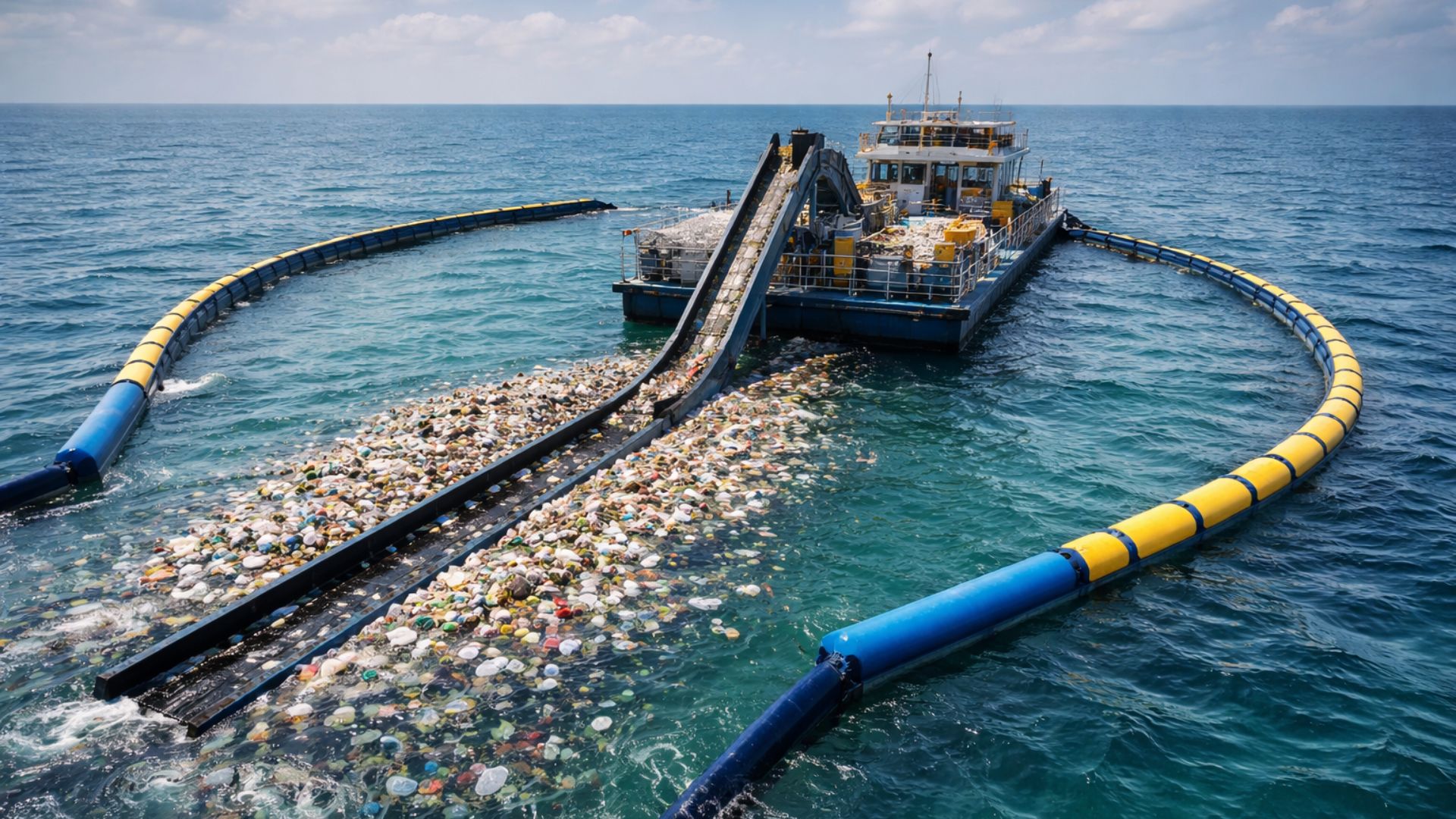


The Pressure of Plastic Waste in Rivers and Seas Drives Capture and Recycling Technologies on an Industrial Scale, Focusing on Floating Barriers, Sorting, and Reuse.
Plastic pollution entering rivers and seas is on the rise globally, driven by structural failures in waste management.
Despite this scenario, environmental engineering initiatives are trying to scale up to reduce the continuous flow of waste and remove some of the material already accumulated in aquatic ecosystems.
Among these initiatives is The Ocean Cleanup, a foundation created in 2013 and based in the Netherlands, which gained international prominence by betting on large-scale technological solutions.
-
The Argentine government celebrates the lowest poverty rate in 7 years, but experts warn that the methodology has changed, real wages have fallen, unemployment has risen, and the number of people on the streets of Buenos Aires has increased by 57% since Milei took office.

-
7.8 magnitude earthquake in Indonesia frightens the population, triggers tsunami alert, and hits an island with over 200,000 inhabitants this Thursday.
-
Google will finally let you change that embarrassing Gmail address you created in your teenage years without losing any accounts, logins, or old emails: the feature is already available in the United States.

-
Heading to Brazil in a Bonanza F33 single-engine aircraft: a couple departs from Florida on a visual flight, makes technical stops in the Caribbean to refuel and organize paperwork, and begins the staged crossing until they reach the country.

Through specific systems, the organization acts both in intercepting waste in rivers and in removing floating plastic in accumulation areas in the ocean, such as the North Pacific Gyre.
Data released by the organization itself indicates that more than 45 million kilograms of waste have already been removed from aquatic environments in different regions of the planet.
This volume includes operations carried out in rivers, coastal areas, and offshore missions over more than a decade.
In a report released at the end of 2025, the organization stated that more than 25 million kilograms were removed in just that year, significantly increasing the total accumulated.
Although it is not an American organization, the United States stands out on the map of partnerships, operational tests, and large-scale projects.
Within this strategy, the “30 Cities” program concentrates efforts on capturing waste in rivers and urban channels deemed critical.
Los Angeles is listed among the cities mentioned by the organization as part of the initiative to reduce the amount of plastic reaching the ocean.
Plastic Pollution and the Path to the Ocean
Reports from international organizations show that most plastic pollution originates from activities taking place on land.
Before reaching the sea, this material travels through rivers, streams, and urban drainage systems, accumulating along the way.
Estimates from the United Nations Environment Programme indicate that every year, between 19 million and 23 million tons of plastic waste leak into aquatic ecosystems.
As a direct consequence, rivers, lakes, and seas begin to coexist with a permanent flow of hard-to-degrade debris.
In light of this situation, cleanup actions are usually organized in two complementary fronts, each with its own challenges.
On one hand, there is the containment of waste in rivers, where the material is still relatively concentrated and accessible.
On the other hand, there is the challenge of addressing the historical stock spread across the open ocean, in areas subject to variable winds and currents.
According to estimates from The Ocean Cleanup, a relatively small number of rivers accounts for a large portion of the plastic that reaches the sea.
The organization estimates that about 1,000 rivers concentrate almost 80% of the global annual plastic emissions transported by waterways.
This volume is estimated at between 0.8 and 2.7 million metric tons per year.
Floating Barriers and Waste Capture in Rivers

In rivers, the strategy adopted is to stop waste from reaching the ocean.
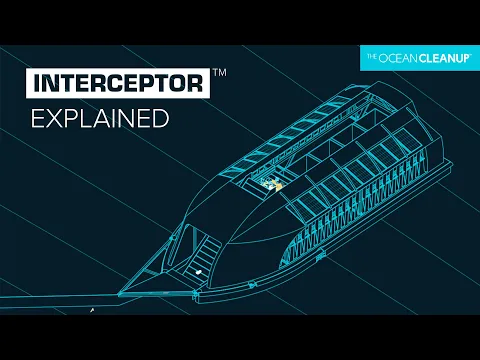
To achieve this objective, the group’s best-known technology is the “Interceptor” line, based on barriers and floating structures.
These systems direct waste to collection and temporary storage points, reducing dispersion.
In the project’s official communication, the focus is on the need for operational scale.
The stated goal is to operate in 1,000 rivers considered critical to reducing most of the transported volume.
At the same time, the organization has started to invest in urban programs developed in partnership with governments and local actors.
The operations are adjusted to the realities of the cities and the disposal routes that traverse channels and rivers.
At the launch of the “30 Cities Program,” the organization reported that offshore extractions were temporarily suspended.
During this interval, efforts focused on mapping “hotspots” and reducing operational costs.
Great Garbage Patch and Challenges in the Open Ocean
In the ocean, the scenario is less predictable and more subject to natural variables.
The main target of the missions is an area known as the Great Pacific Garbage Patch, located in the North Pacific.
In this area, plastic waste accumulates due to the dynamics of ocean currents.
In previous projects, the strategy involved floating systems equipped with a submerged “skirt” to trap debris.
The logistics include continuous collection and subsequent unloading on land for sorting and processing.
As operations advanced, the entity made technical adjustments after identifying initial flaws and limitations.
A report from Time magazine recalls that the first large system launched in 2018 did not perform as expected.
From this experience, the organization began to adopt a combined approach.
The current model combines river interception and targeted collection in ocean areas.
Sorting, Recycling, and the Destination of Collected Plastic
Removing plastic from the water is just the first step in a longer process.
Next comes the sorting phase and defining the destination of the collected material.
The waste often arrives mixed with wood, algae, sludge, metals, and abandoned fishing gear.

Part of this volume can be recycled, provided it meets minimum quality criteria.
Another portion, however, must be discarded due to high levels of degradation or contamination.
As a way to finance operations and demonstrate reuse, The Ocean Cleanup has begun to associate part of the material with commercial products.
In 2020, the organization launched glasses made from plastic certified as originating from the Great Pacific Garbage Patch.
The initiative was presented as a strategy to financially support the continuation of missions.
Nonetheless, this type of application does not mean that all collected plastic is converted into end-consumer items.
The transformation into industrial raw material depends on complex recycling chains.
Washing, sorting by polymer, and strict contamination control are decisive steps.
These requirements become even more relevant when the aim is to meet more demanding uses, such as packaging.
Precision in the Separation and Industrial Recycling of PET
In the industry, separating plastics by type and quality requires the combination of different processes.
Mechanical stages are integrated with identification systems based on optical sensors.
In recent years, artificial intelligence solutions have started to recognize polymers and eliminate contaminants more efficiently.
In applications related to packaging and food-grade recycling, purity targets can exceed 95%.
This performance, however, directly depends on the input material and the design of the industrial process.
In recycling lines, plastic is usually ground into flakes before successive washings.
These stages remove salt, oil, and deposits accumulated during exposure to the aquatic environment.
Next, density separation processes come in, which further refine the material.
After that, the flakes proceed to extrusion and become pellets.
These pellets return to the production chain as raw material for new products, including packaging.

When it occurs, the transformation into PET bottles depends on specific technical and regulatory requirements.
This care is even greater in applications destined for food and beverages.
For this reason, the standard referred to as “industrial” is related to the production of resin with controlled quality.
This is not an automatic guarantee that all plastic removed from the sea will be transformed into a new bottle.
Scale, Costs, and Limits of Cleaning as a Solution
Even with increasing capture numbers, experts often treat cleanup as only part of the response to the problem.
International organizations reinforce that the main challenge lies in the volume of waste that continues to enter aquatic ecosystems.
As long as this annual leakage remains in the tens of millions of tons, removal competes with constant replenishment.
Within this context, The Ocean Cleanup maintains the goal of removing 90% of floating plastic by 2040.
The strategy combines the removal of the so-called “legacy” in the ocean with the interruption of flow in rivers.
More than technology, the challenge involves scale, funding, and effective public policies.
Waste management on land, urban collection, and supervision of irregular disposal are part of this equation.
With so many actors involved, the question remains as to who will sustain, in the long term, the necessary structural changes to prevent waste from reaching the water?








A reciclagem é uma das maiores preocupações da atualidade e os governos gastariam bem menos e economizariam muuuito mais se fizessem uma coleta seletiva bem séria e não esperassem esse luxo chegar nos rios e mares. Acorda governo…
O desgaste dos pneus nas rodovias também é um grande contribuinte à disseminação de micropartículas em lagoas, rios e oceanos. Pois, boa parte deste desgaste é levada pela chuva aos mananciais.
É urgente que se tome esta providência aqui exposta