





 Portuguese
  English
  Spanish
  4 min of reading
  4 comments


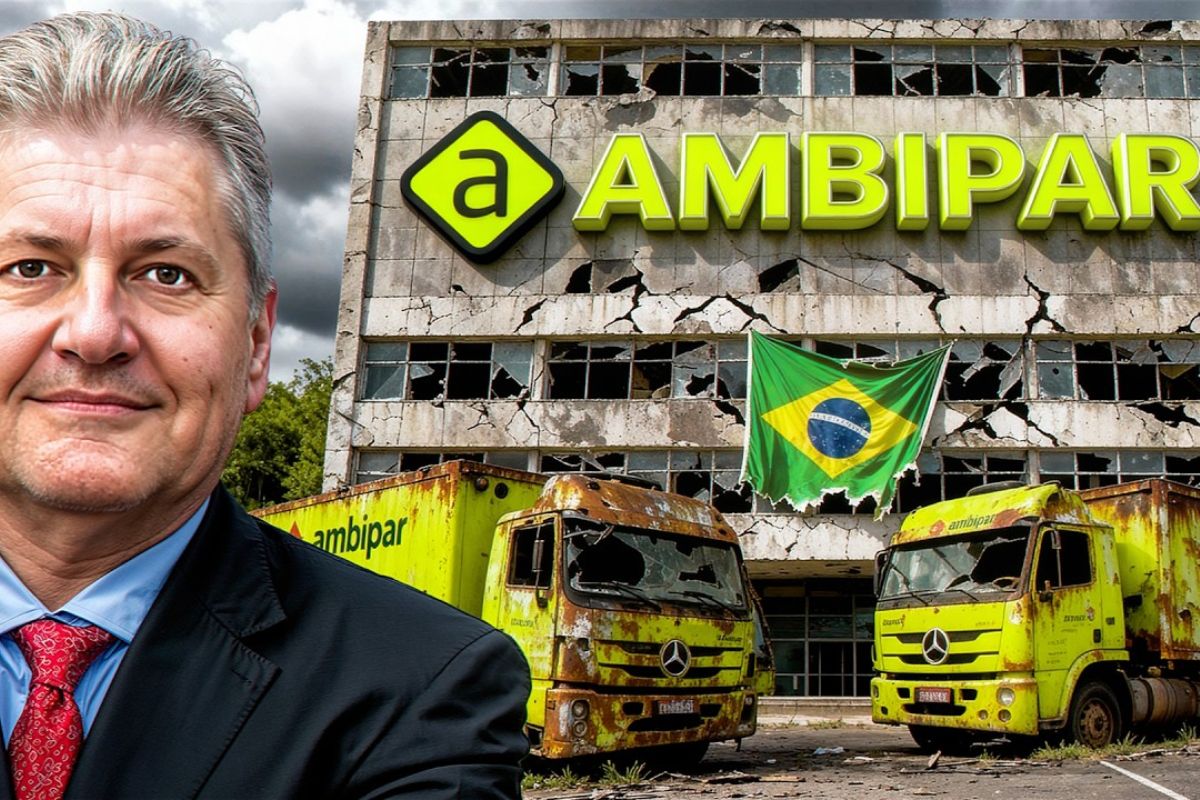


After Years of Aggressive Expansion, Ambipar Faces High Debt, Investigations, and Billionaire Losses, Exposing Weaknesses of Brazilian “Green Capitalism.”
Ambipar has become synonymous with environmental ambition and operational efficiency. In recent years, Ambipar has been celebrated as a showcase of sustainability with profit, expanding its presence in dozens of countries and piling up contracts with large industries. But behind the rhetoric, the accelerated model of acquisitions and leverage has opened a hole that is difficult to close.
According to the portal Disruptive Knowledge, the shock came in the second half of 2025: shares plummeted by up to 90% in days, investors accounted for significant losses, and a product sold as “structured and safe” became a symbol of poorly priced risk. At the center was a mosaic of liabilities, contractual disputes, and a race for cash that proved insufficient.
From Icon to Stress: How the Trajectory Turned into a Warning
The story begins in the 1990s, when the group emerged to transform waste into value and respond to chemical emergencies. For decades, growth was consistent, embracing tasks that few wanted to do from spills to hazardous waste. The machinery seemed well-oiled.
-
Brazilian city bets on the business environment to generate jobs and attract investments in the energy sector — secretary reveals strategy at Macaé Energy 2026.

-
50 viaducts, 4 tunnels, 28 bridges, and 40 kilometers of bike paths: BR-262 in Espírito Santo will receive 8.6 billion reais for the largest engineering project in the state’s history, inspired by the Immigrant Highway in São Paulo.

-
Brazil produces too much clean energy and doesn’t know what to do with it: over 20% of solar and wind capacity was wasted in 2025 while investors flee and 509 renewable generation projects were abandoned in the last year.

-
Piauí will produce a new fuel that replaces diesel without needing to change anything in the truck’s engine and reduces pollutant gas emissions by half: truck drivers from all over the Northeast are already celebrating the news that will arrive later this decade.


The turning point was the IPO in 2020. With the IPO, Ambipar accelerated acquisitions in Brazil and abroad, selling the thesis of the circular economy and “planetary” response. The market applauded, and valuation followed suit. However, the fuel for this leap was, in large part, debt and increasing complexity.
The Gear of Acquisitions and the Leverage Bill
From 2020 to 2022, there were nearly 40 purchases in reverse logistics, recycling, and emergency responses. Each acquisition brought liabilities, integration, working capital, and audits, raising the level of operational risk. Revenue advanced, but the balance sheet became heavier.
In 2022, ambition raised the bar with the listing of the subsidiary Ambipar Response in New York, and in 2023, the issuance of green bonds worth US$ 750 million. On paper, the thesis of “green capitalism” gained scale; in practice, debt pressured cash, especially with integration still ongoing and controls scattered across multiple geographies.
Stress took shape through Structured Operations Certificates (COIs) linked to Ambipar. Sold by financial institutions as modern alternatives, COIs combine fixed income with market risk without protection from the FGC. When the company’s credit perception melted, these papers turned to dust for thousands of investors.
The operational trigger came from a demand for additional guarantees (≈ R$ 60 million) in a banking contract that could trigger cross defaults. Even claiming around R$ 4.7 billion in cash, the company said it could not meet the obligation without triggering other debts. Practical liquidity did not appear, and the market smelled crisis.
From Urgent Protection to Crisis of Confidence


On September 25, 2025, Ambipar requested urgent protection from the courts to suspend executions for 30 days, citing that the shortfall could exceed R$ 10 billion if there were a general acceleration of debts. Almost simultaneous departures of key executives (CFO, legal, IR) worsened the reading.
The downgrade to D (default) cemented the distrust. In one day, the market value shrank from R$ 43 billion to R$ 12 billion, with a drop of over 50% in shares and more than 90% in the month. Abroad, bonds fell to 13 cents on the dollar. The market message was crystal clear: trust is an asset, and it had run out.
Chain Reaction: Investors, Governance, and Green Bonds
The COIs linked to Ambipar plummeted, and clients reported losses close to 90%. Institutions argued that the risks were outlined in the documentation; investors claim the sales pitch minimized potential loss. The commercial friction migrated to social media and legal tables, with complaints and requests for investigations.
The blow also hit funds exposed to the papers and green bonds that became synonymous with distrust. Suppliers began to demand payment in advance; contracts were suspended; credit lines were locked. Even with announcements of “normal operations,” the day-to-day showed fragmentation and cash pressure.
What Is on the Table: Survival, Asset Sales, and Governance
The company announced crisis committees, replacement of executives, and capital review, in addition to negotiating debts and assessing asset sales. Without profound reorganization, the scenario of judicial recovery remains on the radar, given the level of leverage and wear with creditors.
More than an isolated case, the Ambipar crisis exposes a systemic problem: growth through acquisitions without integration at the same speed, underestimated leverage, complex structured products sold to retail, and a veneer of ESG that does not replace controls, liquidity, and governance. Financial sustainability is part of sustainability.
Ambipar has become a case study of how strong thesis cannot withstand weak cash and fragile governance. “Green capitalism” without accounting prudence and robust integration comes at a high cost to the company, creditors, and retail investors.
And you, what lessons do you draw from this fall?
- Should structured products like COIs have stricter sales rules?
- Should serial acquisitions without integration raise regulatory alarms?
- In ESG, what is the real weight of leverage and risk transparency?
Do you agree with this reading? Do you think this case changes how the market evaluates “green” companies? Leave your opinion in the comments we want to hear from those who live this in practice.








A gana por crescimento ultra rápido trás muitos riscos, o mercado global não perdoa quem ultrapassa os limites!
Não se pode crescer indefinidamente, melhor permanecer pequeno e consistente, sustentável sobre as próprias pernas
Grande verdade. Minha empresa encolheu, pagou dividas com vendas de capital do sócio e começou a ter novamente capital de giro das vendas não de alavancagem.
Aplicar é bom, mas, tradição no setor é essencial para bons negócios e duradouros. O mercado financeiro é cheio de ?. Todo cuidado é pouco.