





 Portuguese
  English
  Spanish
  2 min of reading


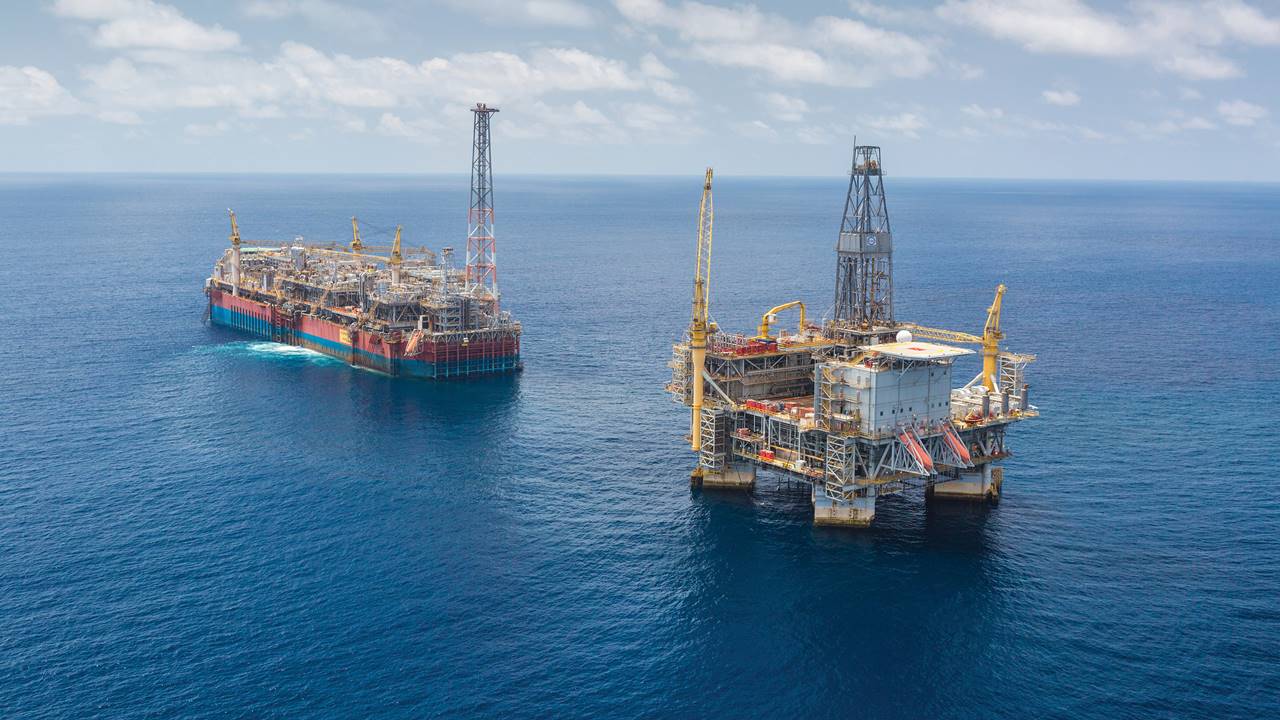
Authorization Granted by the Agency Refers to the Exploration Plan of the Titan Field in the Pre-salt of the Santos Basin
ANP approved yesterday, May 30, the PEM (Minimum Exploratory Program) issued by the American oil company ExxonMobil to drill up to 22 wells in the Titan field, in the Santos basin.
The block was acquired by the company in the 5th sharing round, and drilling is expected to begin in 2020.
ExxonMobil shows that its activities in Brazil are booming, in addition to the start of drilling in the Titan block, the company already has two environmental license requests underway.
The licenses refer to campaigns in areas that the company won in 2017 in the 14th and 15th rounds and the 3rd, 4th, and 5th pre-salt auctions.
-
Government unlocks R$ 554 million for a highway that has been requested for decades and accelerates the duplication of BR.
-
Without bricks, without cement, and without endless construction: the cardboard house that is assembled in modules and can be moved.

-
Billions of barrels on the equatorial margin could lead Amapá to double its oil production in Brazil — the state aims to enter the route of companies in the Campos Basin, attract investments, and boost jobs and businesses in the oil and gas sector.

-
Without bricks, without cement, and without endless construction: the cardboard house that is assembled in modules and can be moved.

Of the 22 wells that ExxonMobil intends to drill, 17 exploratory wells are in the CM-753, C-M-789, S-M-536, S-M-647, and Titan blocks, in the Campos and Santos basins.
In the Campos Basin, in the area of the C-M-037 and C-M-067 blocks, drilling of up to five exploratory wells is planned.
Strengthening its presence in Brazil, ExxonMobil already holds stakes in 26 exploratory assets in Brazil in the Campos, Santos, Sergipe-Alagoas, Ceará, and Potiguar basins.
Support Bases Can Reactivate Idle Areas
ExxonMobil, the world’s largest privately-owned oil company, stated that it plans to use the Nitshore areas in Niterói or the Porto do Açu in São João da Barra as support bases, a hope to reactivate idle construction sites and generate jobs in areas heavily affected by the oil and gas industry’s crisis since 2013.
For aerial logistics, the idea is to use the Jacarepaguá airport in Rio de Janeiro, which underwent improvement works in 2007 during the Pan American Games, gaining more powerful radio and lighting systems.
See Also! Saipem Units Are Under Investigation in Brazil for Irregularities in Petrobras Contracts!









Seja o primeiro a reagir!