





 Portuguese
  English
  Spanish
  3 min of reading
  0 comments


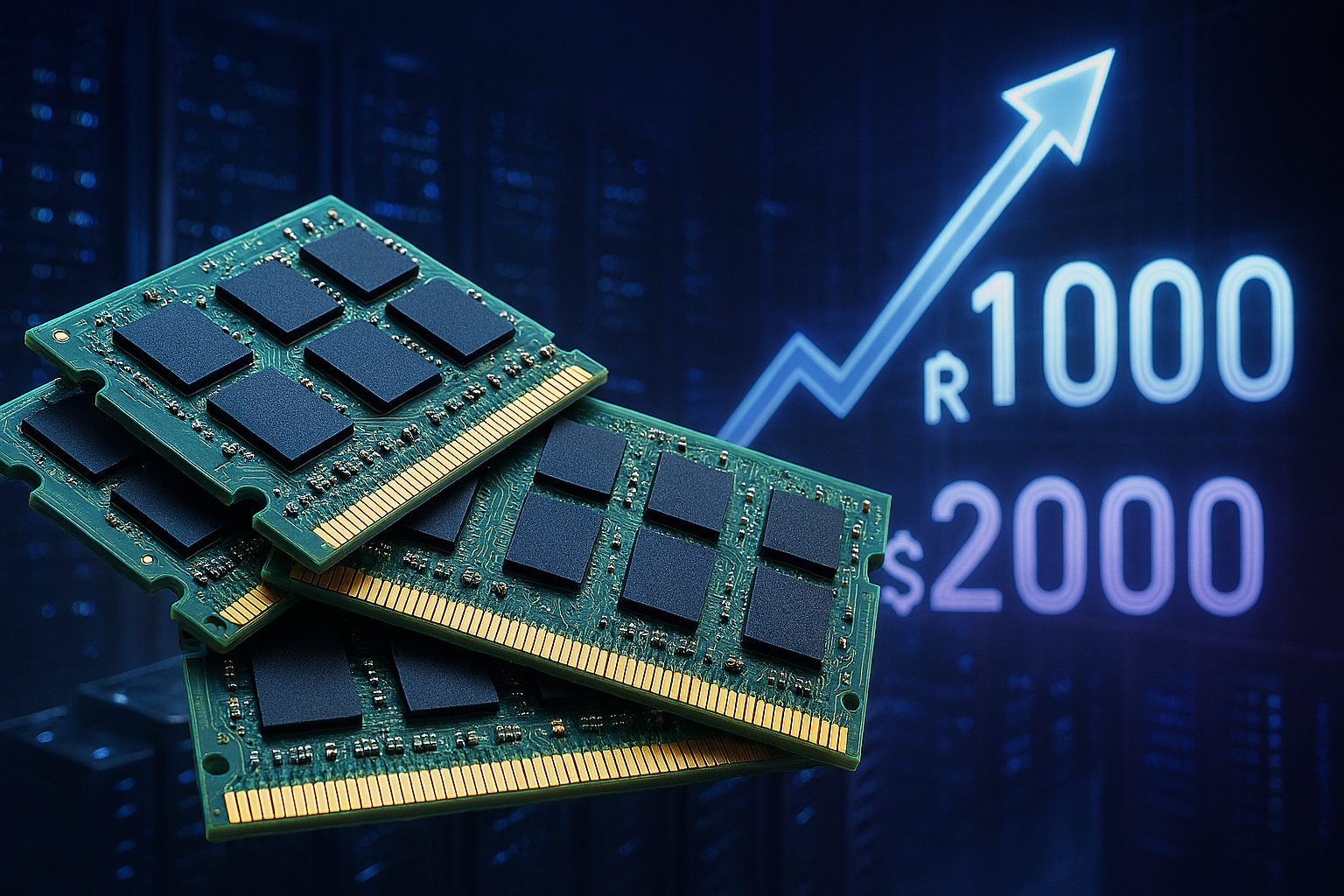
With Manufacturers Prioritizing AI and Data Centers, RAM Supply in Retail Fell and Prices Soared: Modules That Cost R$ 200 Now Exceed R$ 1,000 for the Consumer.
In recent months, anyone trying to build or upgrade a computer has been in for a shock. RAM memory modules that cost around R$ 200 in the Brazilian retail market have now surpassed R$ 1,000, especially in larger capacities and more recent standards. This surge is not isolated or a result of local speculation: it reflects a structural change in the global semiconductor industry, which has redirected its production to where the margins are higher — servers and artificial intelligence.
The Strategic Turn of RAM Manufacturers
The global memory market is dominated by three giants: Samsung, SK Hynix, and Micron. None of them have “left” the sector, but they have radically changed their priorities. Micron, for example, announced the discontinuation of the Crucial brand aimed at the end consumer, focusing its efforts on corporate solutions and high-performance memory for AI and data centers.
This decision does not mean abandoning RAM, but ceasing to produce significant volumes for traditional retail, where margins are lower and competition is higher. The focus is now on HBM (High Bandwidth Memory), specialized modules used in AI accelerators, which yield much more per unit produced.
-
While the world looks at oil, the war with Iran is already disrupting helium supply from Qatar, affecting car and iPhone chips, threatening AI expansion, and putting pressure on aluminum packaging at the highest value in four years.

-
Global warming will expose a treasure hidden under the ice of Antarctica and may spark an international dispute over gold and valuable minerals.

-
A street vendor from Praia Grande built a robot made of scrap from scooters and washing machines that pulls his popcorn cart on the beach, emits sounds, and interacts with customers, becoming an attraction on the coast of São Paulo.

-
The specifications of the Xiaomi 18 Pro Max have been leaked, and the highlight is a dual 200 MP camera with a new 22-nanometer technology that promises to consume less energy and capture details in shadows and bright areas using LOFIC HDR.

Why AI “Swallows” Common Memory
Artificial intelligence models require huge amounts of memory, with extreme bandwidth and continuous supply. A single AI cluster consumes more memory than thousands of home PCs combined. Since factories have limited capacity, each wafer designated for AI is one wafer less for common DDR4 and DDR5.
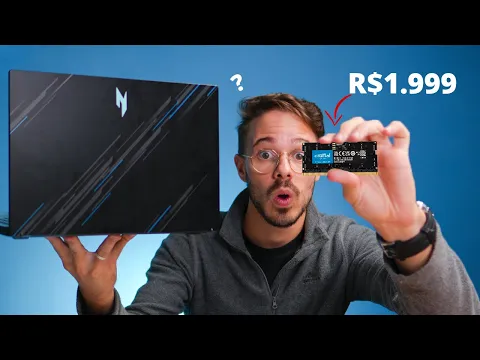

The result is simple: less supply in retail. With domestic demand relatively stable, scarcity drives prices up — and fast.
DDR4 and DDR5 Have Become Victims of the Technological Transition
The situation is even more sensitive because the market is undergoing a transition between generations. DDR4 is starting to lose production space, while DDR5 has not yet reached sufficient scale to reduce costs. In the middle of this transition, popular capacities like 16 GB and 32 GB have become bottlenecks, especially in higher-quality kits.
The average consumer feels the direct impact: the upgrade that was once simple has turned into a high investment, often greater than the cost of other PC components.
While retail struggles, manufacturers are showing robust financial results. Samsung, for example, regained its leadership in the global memory market in 2025, driven precisely by AI demand. From an industrial perspective, the strategy makes sense: sell fewer units, but with much larger margins.
For the end consumer, however, the side effect is clear: higher prices, fewer options, and longer replacement cycles.
It Is Not a Local Phenomenon, It Is Global
The increase is not limited to Brazil. The United States, Europe, and Asia are experiencing the same trend, with consistent price increases for RAM modules in retail. What changes are the taxes and currency volatility, which, in the Brazilian case, amplify the impact on the final price.
In the short term, there are no signs of relief. The race for AI continues to accelerate, new data centers are being announced globally, and HBM production is continuing to absorb much of the manufacturing capacity.
Only a significant expansion of factories or a slowdown in AI demand could rebalance the market — scenarios that do not seem imminent.
For those who rely on RAM in everyday life, the reality has changed: the simplest component of the computer has become one of the most expensive.
The explosion in RAM memory prices makes it clear that the revolution of artificial intelligence does not come without a cost, and it is not confined to big techs. The average consumer is paying the price for an industry that has chosen to prioritize thinking machines over the computers we use.
And you, dear reader: is it worth waiting for a drop in prices or will common RAM never be cheap again?







-

-

3 pessoas reagiram a isso.