





 Portuguese
  English
  Spanish
  4 min of reading
  31 comments


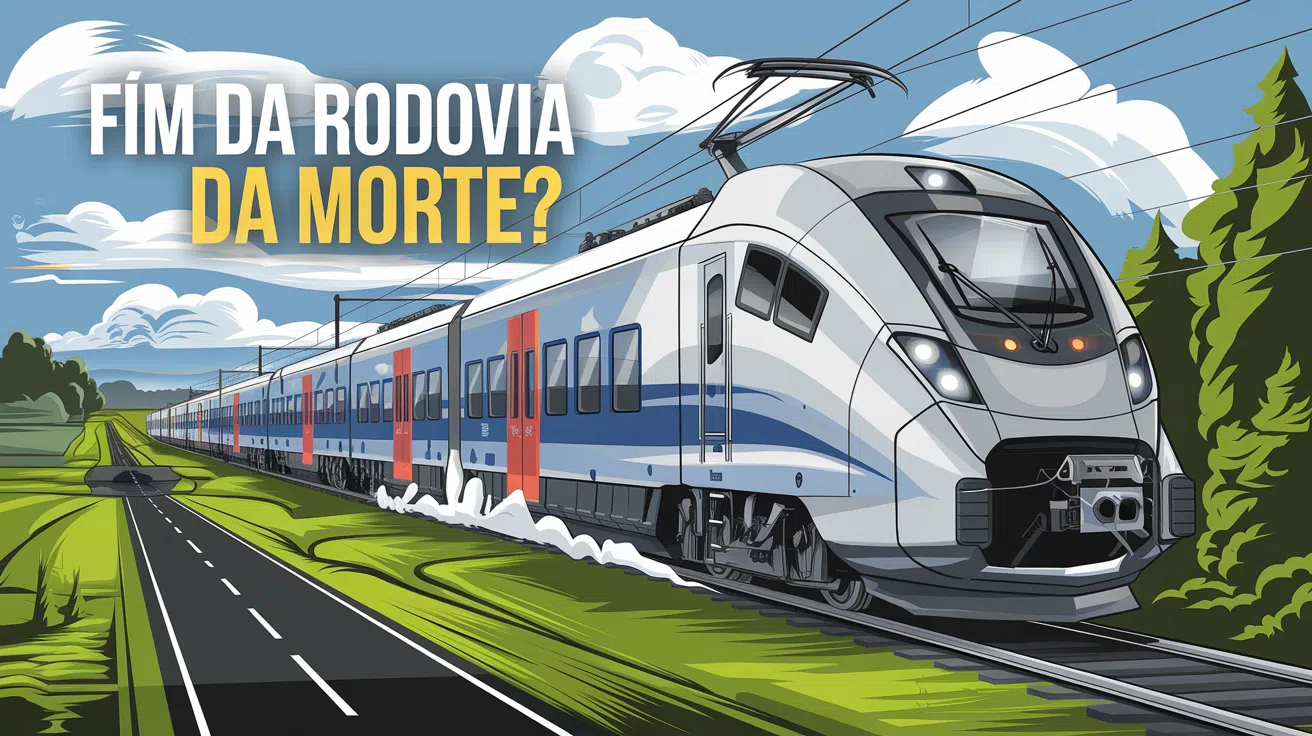


ANTT Approved The Construction Of The Serra Azul Railway Branch, Promising To Revolutionize The Transport Of Ore And Ease The Dangerous BR.
The Promise Of A New Logistic Horizon For Minas Gerais And Brazil Is Closer To Reality.
With the approval of the National Land Transport Agency (ANTT), the construction of a new railway branch, designed to transport tons of iron ore, promises to transform the transport scenario on one of the busiest and most dangerous highways in the country: BR-381.
The proposal is bold: to replace the daily flow of heavy trucks that cross the road, reduce fatal accidents, and even cut carbon emissions.
-
A new Brazilian shopping center worth R$ 400 million will be built in an area equivalent to more than 4 football fields, featuring 90 stores, 5 cinemas, a supermarket, a college, and parking for 1,700 cars, potentially generating 3,000 jobs.

-
Larger than entire cities in Brazil: BYD is building a 4.6 km² complex in Bahia with a capacity for 600,000 vehicles per year, but the discovery of 163 workers in conditions analogous to slavery has shaken the entire project.

-
With an investment of R$ 612 million, a capacity to process 1.2 million liters of milk per day, Piracanjuba inaugurates a mega cheese factory that increases national production, reduces dependence on imports, and repositions Brazil on the global dairy map.

-
Brazilian city gains industrial hub for 85 companies that is equivalent to 55 football fields.


The project, called Serra Azul Railway Branch, is an initiative by Cedro Participações, which, after ANTT’s approval, plans to install a 26 km long branch between Mateus Leme and São Joaquim de Bicas, in Greater Belo Horizonte.
The railway line could absorb the transport of up to 25 million tons of iron ore per year, removing about 5,000 trucks from the highway per day, according to information from Cedro Participações.
Export Opportunity and Risk Reduction
According to data from ANTT, the branch will connect to the Southeast Regional Network, the main railway line that runs through Minas Gerais towards Rio de Janeiro, ensuring the export of the ore.
The expectation is that the project, in addition to easing the heavy traffic on BR-381, can generate thousands of jobs during construction and operation phases.
BR-381, known as the “Highway of Death” due to the high number of fatal accidents, is one of the most dangerous stretches in the country.
In the last three years, about 400 deaths have been recorded along the stretch that cuts through Serra Azul, in the metropolitan region of BH.
For the Legal and Institutional Vice President of Cedro, Eduardo Couto, the branch will not only transform the logistics of transporting iron ore but also be an important step toward a more sustainable and secure economy.
“The infrastructure will help reduce carbon emissions by up to 40 million tons annually and will lower costs, benefiting the productive chain of the sector,” Couto explained.
Structure and Capacity: How The Railway Branch Will Be
According to Cedro’s plans, the branch will be operated by five trains with the capacity to carry up to 130 tons in 132 wagons.
Each of these trains represents a replacement of approximately 570 trucks, which will result in a drastic reduction of heavy traffic on BR-381, improving flow and increasing safety for drivers and local communities.
However, the proposal has not moved forward without resistance. MRS Logística, the concessionaire responsible for the Southeast Regional Network, raised questions about the project with ANTT, claiming that the decision was made hastily.
MRS sought to exercise its right of preference for the stretch, but its requests for deadline extensions were rejected by the agency.
Even with approval, the dispute was taken to the Federal Regional Court, where MRS obtained a preliminary injunction to suspend the decision in an attempt to reverse the authorization.
Impasse Between Companies and Legal Action
This disagreement between Cedro and MRS creates an impasse regarding the continuity of the project.
Cedro stated that the suspension obtained by MRS does not have a direct impact on ANTT’s approval, as the decision was officially published in the Official Gazette of the Union.
While the legal decision is in effect, the infrastructure sector awaits a resolution that can ensure the execution of the branch and the achievement of the proposed benefits.
For Felipe Fernandes Queiroz, director of ANTT, the measure is crucial for advancing Brazil’s railway infrastructure.
In his words, “the goal is to promote the expansion of the railway system in the country, without allowing procrastination of a project with the potential to transform regional safety and economy.”
Promise Of Accident Reduction And Environmental Impact
The project has the potential to reduce accidents, improve road safety, and contribute to a more sustainable Brazil.
With the replacement of trucks by trains, there will be a significant decrease in pollutant gas emissions, according to Cedro.
This means that the impact will not only be economic but also environmental, aligning with sustainability guidelines that are increasingly demanded by society.
For residents in areas such as Mateus Leme and São Joaquim de Bicas, the branch could mean more tranquility, with less heavy vehicle traffic on the roads, fewer accidents, and consequently, a better quality of life.
But with the disputes between companies and the judicial suspension, will this project ever get off the ground? The impasse leaves the future of this mega structure open and the impacts it could bring to Minas Gerais and Brazil.






Ai vem uma pessoa com a mente limitada e comenta, ( e caminhoneiros desempregados ) quer dizer que o caminhoneiro não pode mudar de ramo , aprender a fazer outra coisa, se deslocar para outra região com uma demanda maior, mas as pessoas podem continuar morrendo por causa da quantidade de carretas pessadas na região.
Brasil tem rodovias saturadas, sucateadas… Uma vergonha Brasileira..
Brasil e o atraso ridiculo nas questões das ferrovias , chega a ser hipocrisia