





 Portuguese
  English
  Spanish
  5 min of reading
  0 comments


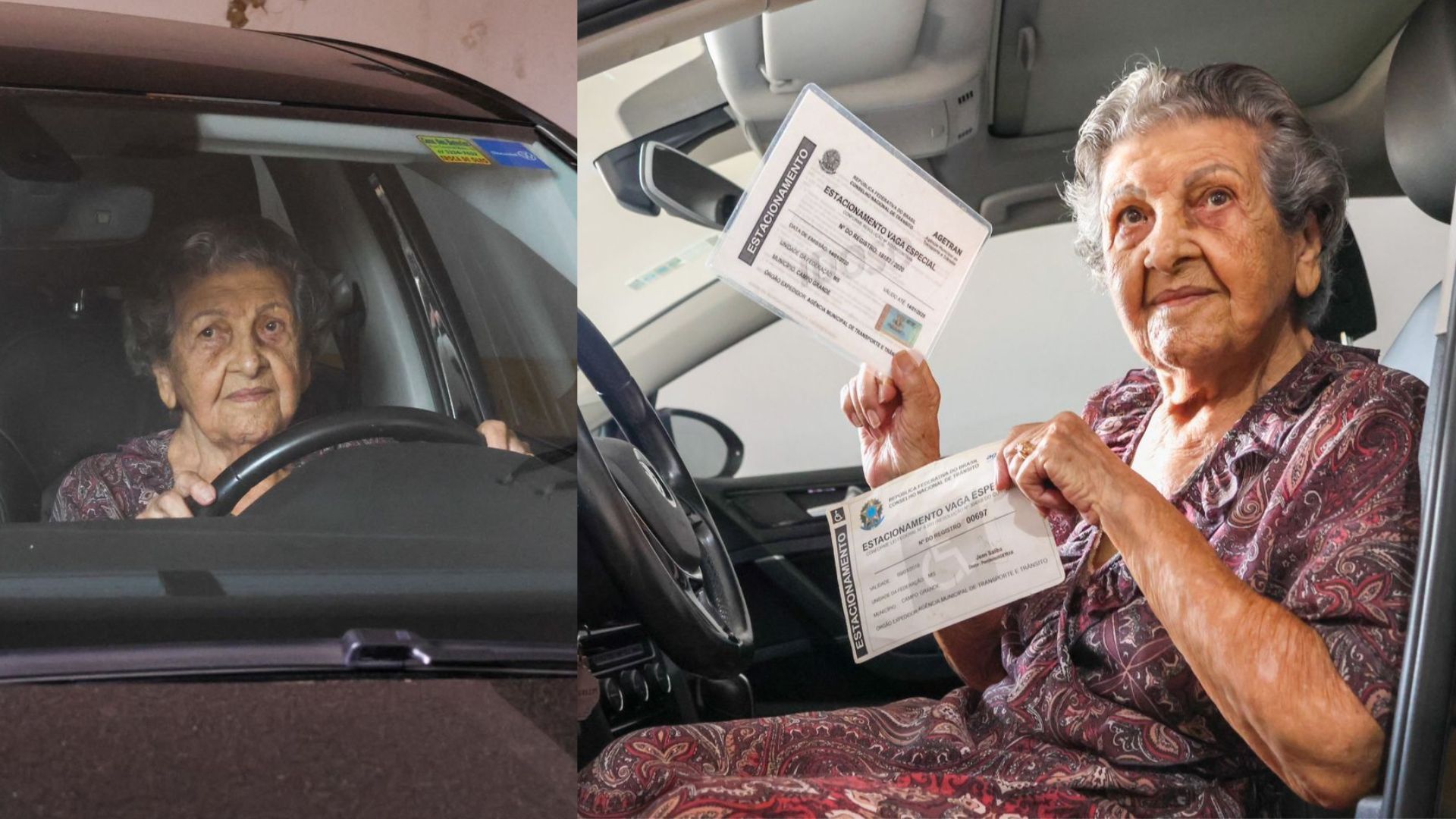
Renewal of CNH at 101 Years Old Draws Attention for Uniting Advanced Age, Rigid Medical Evaluation, and Maintenance of Daily Driving Routine in Campo Grande, with License Valid for Three More Years, Absence of Fines, and Official Confirmation from Detran-MS, Transforming a Bureaucratic Procedure into a Concrete Example of Mobility and Independence in Old Age.
At 101 years old, Campo Grande resident Hafiza Abussafi Ennes renewed her National Driver’s License (CNH) after undergoing a medical evaluation at the State Department of Traffic of Mato Grosso do Sul.
After passing the procedure, she received authorization to remain licensed for three more years, until she turns 104, within the criteria defined by traffic legislation.
The renewal, confirmed by the state agency, took place on the driver’s birthday, at the central agency of the Detran-MS in Campo Grande, which heightened the attention around the service.
-
Friends have been building a small “town” for 30 years to grow old together, with compact houses, a common area, nature surrounding it, and a collective life project designed for friendship, coexistence, and simplicity.

-
This small town in Germany created its own currency 24 years ago, today it circulates millions per year, is accepted in over 300 stores, and the German government allowed all of this to happen under one condition.

-
Curitiba is shrinking and is expected to lose 97,000 residents by 2050, while inland cities in Paraná such as Sarandi, Araucária, and Toledo are experiencing accelerated growth that is changing the entire state’s map.

-
Tourists were poisoned on Everest in a million-dollar fraud scheme involving helicopters that diverted over $19 million and shocked international authorities.


The episode gained prominence due to the combination of advanced age and the maintenance of a driving routine, always within the requirements for drivers who must prove their fitness to drive.
In the waiting room, the atmosphere changed when news spread that a centenarian was renewing her CNH among the service users.
According to interviews published at the time, people waiting for service reacted with applause upon seeing Hafiza complete the process at the counter, without any treatment outside the administrative protocol.
Renewal of CNH on Birthday

Instead of postponing the renewal to another date, Hafiza chose to complete the step on her birthday, making the commitment part of her day’s agenda.
The choice, described in local reports, shaped a simple and direct scene, easily recognizable by those observing the service.
An elderly woman arrives at the traffic agency, completes the required examinations, and leaves the location with the document valid for three more years.
During the process, a medical board evaluation was performed, a mandatory step to verify health conditions and fitness, according to the rules applicable to the driver’s profile.
In her case, the release occurred after checking the requirements and updating her records, according to the report given by the driver herself in an interview.
Commenting on the service, Hafiza attributed the decision solely to the analysis made during the examination, without mentioning any exceptions.
“The doctor conducted the examinations again, saw that I have no fines or violations, and renewed for three more years,” she stated.
Autonomy and Mobility in Old Age
The interest around the story can also be explained as it dispenses with abstract discourses on aging.
In the journalistic records, what is observed is a concrete sequence of actions linked to the daily routine.
She schedules the service, goes to the agency, undergoes the exams, and maintains, within what was authorized, the ability to drive her own car for daily commitments.
In cities like Campo Grande, short trips for medical appointments, grocery shopping, pharmacy visits, and personal commitments often determine the degree of dependency or autonomy in organizing one’s agenda.
For this reason, for part of the public, the CNH ends up functioning as a symbol of independence, and not just as a traffic document.
Still, the repercussion is not sustained solely by the symbolic meaning.
Attention grows because the case brings together verifiable elements, such as confirmation from Detran-MS, the date of service, and the granted validity period.
This set of factors contributed to distancing the narrative from informal reporting and kept the story anchored in objective information.
Elderly Drivers and Detran-MS Data


Although the image of a centenarian driver may seem unusual, Detran-MS has already released numbers that help contextualize the scenario in the state.
According to a survey by the agency, Mato Grosso do Sul recorded 208 drivers over 90 years old who renewed their licenses in the past five years.
Even within this universe, Detran-MS reported, in articles about the renewal, that Hafiza was identified as the oldest active driver in Campo Grande during that period.
This combination of official data and the identification of a specific case widened the reach of the story beyond local news.
Medical Evaluation and Validity of the License
The publications that reported the renewal highlighted a central aspect of the process.
There was no administrative exception.
The authorization was granted after a medical evaluation, and the validity of the document was defined with a determined period, as occurs when the professional assessment establishes the conditions for driving and the frequency of reassessment.
Moreover, the way Hafiza addresses the topic contributed to sustaining public interest.
In interviews, she did not present the episode as something extraordinary but as part of a routine that includes tasks and medical commitments.
“Get in the car, accompany me to the doctor, and we talked. I’m in a hurry.”
This naturalness is also evident in another statement reproduced in the media coverage.
“Do you think it’s worth living up to 100 years or more?” “Maybe yes, but it’s a lot of work.”
By gathering dates, procedures, official confirmations, and recorded statements from interviews, Hafiza’s case solidified as a narrative of mobility in old age, without losing sight of the central criterion of safety.
Driving remains permitted only when the required criteria are evaluated and met at the time of renewal.
In such situations, what should weigh more in public debate.
The age displayed on the document or the objective result of the evaluation that certifies, at that moment, the fitness to drive responsibly?









Seja o primeiro a reagir!