





 Portuguese
  English
  Spanish
  4 min of reading
  3 comments


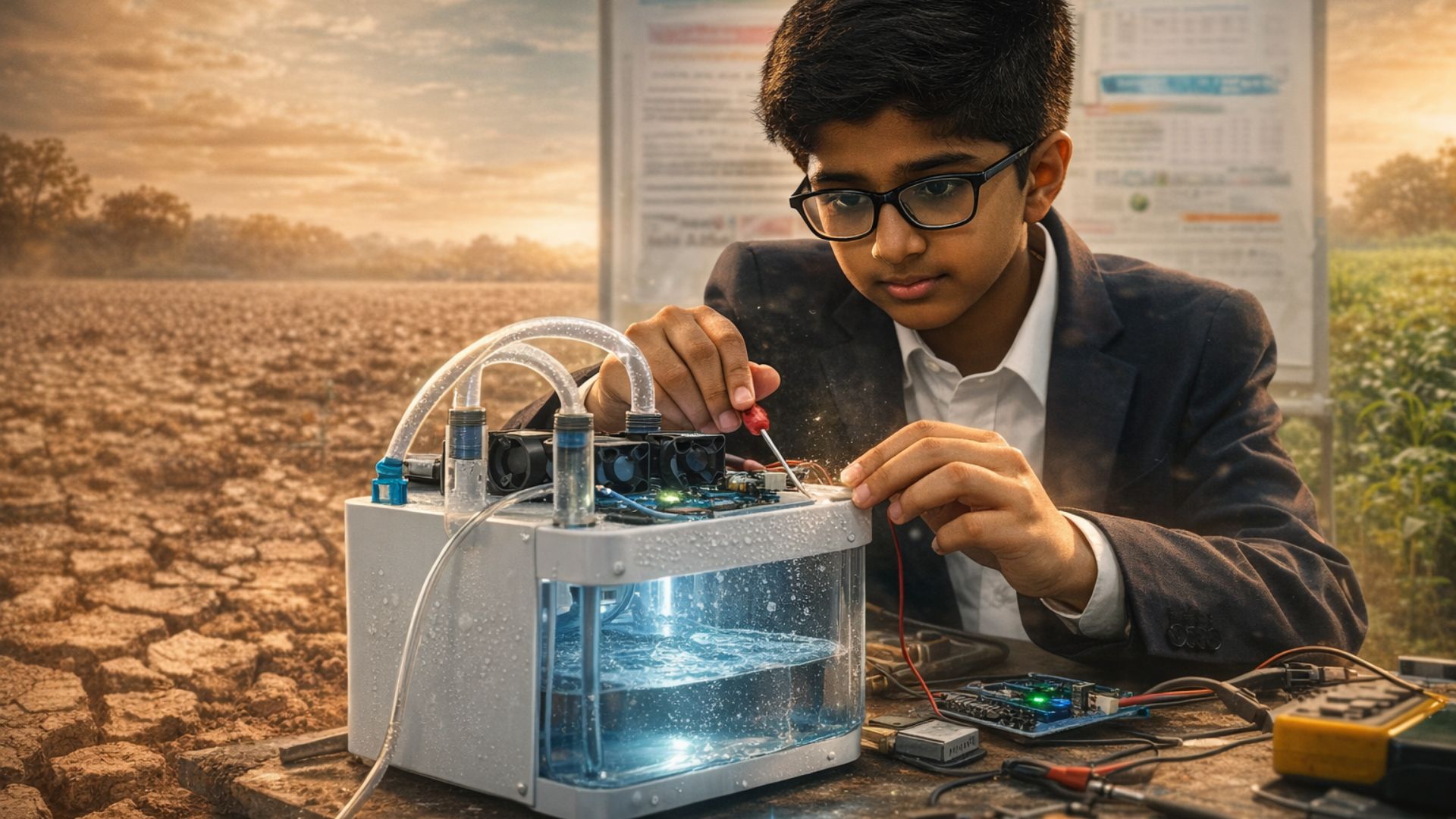


Florida Student Develops Low-Cost System to Capture Dry Air Moisture and Convert It into Water for Irrigation, Earns Spot Among the Top Ten Finalists of the 3M Young Scientist Challenge and Competes for National Prize of $25,000.
A 13-year-old student from Florida was selected as one of the ten finalists of the 3M Young Scientist Challenge for presenting a low-cost system that seeks to capture moisture from the air and convert it into water for irrigation.
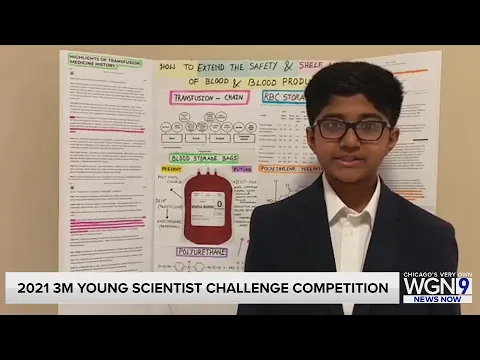
The project is by Aniket Sarkar, a 7th-grade student at Pine View School in Sarasota, and is competing for the grand prize of $25,000, in addition to the title of “America’s Top Young Scientist,” awarded to the winner at the final stage of the competition.
Water Scarcity in Agriculture Inspires Solution
The proposal arises from a recurring difficulty in farming: maintaining production when the available water for irrigation diminishes due to prolonged droughts or local supply limits, a situation that affects planning, costs, and productivity in different American regions.
-
Friends have been building a small “town” for 30 years to grow old together, with compact houses, a common area, nature surrounding it, and a collective life project designed for friendship, coexistence, and simplicity.

-
This small town in Germany created its own currency 24 years ago, today it circulates millions per year, is accepted in over 300 stores, and the German government allowed all of this to happen under one condition.

-
Curitiba is shrinking and is expected to lose 97,000 residents by 2050, while inland cities in Paraná such as Sarandi, Araucária, and Toledo are experiencing accelerated growth that is changing the entire state’s map.

-
Tourists were poisoned on Everest in a million-dollar fraud scheme involving helicopters that diverted over $19 million and shocked international authorities.


In describing the idea, the challenge organization summarizes the concept as a “atmospheric moisture capture” system capable of “pulling water from dry air” to help farmers maintain crops in increasingly arid areas.
Even though the public text does not present a complete specification package, selection as a finalist indicates that the proposal was framed as a testable solution for a daily problem, within the criteria of science and engineering adopted by the contest.
How Atmospheric Moisture Capture Works

Even in environments classified as dry, the air often carries water vapor, and part of this moisture can be condensed under suitable conditions; this principle is the foundation of the project, with a declared focus on simplicity and applicability.
Instead of relying on industrial structures, the initiative was presented as an accessible alternative for agricultural use, a sensitive point because small changes in water access can alter the viability of planting, soil management, and local food security.
On the other hand, the official presentation of the finalist does not inform, in the same space, which materials were used, what volume of water could be obtained, nor the energy consumption required, items that normally determine viability at a rural scale.
Scientific Mentorship and Crucial Stage of the Competition
The ten finalists of the 3M Young Scientist Challenge undergo individual mentoring with 3M scientists during a development program, a stage in which ideas are refined, prototypes mature, and scientific communication is trained for the final presentation.
In Aniket Sarkar’s case, the mentoring was conducted by Timothy Hebrink, introduced by the organization as a senior researcher at 3M, and the student reported being encouraged to expand on a previous idea during the guidance.
The competition, held in partnership with Discovery Education, evaluates creativity, mastery of scientific and engineering principles, clarity in explanation, and the ability to demonstrate research, in addition to challenges and presentations in the decisive phase.
Air Water Capture and Impact on Agriculture

In agriculture, water means not just irrigation, but also planting predictability, productivity stability, and loss reduction, especially in regions where availability fluctuates and forces producers to combine reservoirs, drip systems, and consumption monitoring.
Water capture technologies from the air appear as a complementary alternative, with performance that varies based on relative humidity, temperature, cost, and operating scale, and thus low-cost ideas tend to attract attention when promising adaptation to different realities.
Aiming at arid areas of the Midwest and West of the United States, the student connects to a scenario where producers face pressure for water efficiency and seek to reduce dependence on traditional sources, even though no single solution completely resolves the challenge.
What Is Already Known About the Finalist Project
The public list of the challenge identifies Aniket Sarkar, his school, and the general line of the project, which enables basic verification of the case and differentiates the initiative from reports without institutional backing, common in stories that go viral on social media.
Moreover, the contest page states that finalists receive mentoring and compete for the $25,000 prize, information repeated in official program presentation statements, reinforcing the process design.
However, details remain open that help the reader measure practical impact, such as the daily water production rate, the estimated cost per liter, and the minimum climatic conditions for the system to function, points not described in the public profile.
While curiosity often focuses on the “water from air” effect, journalistic interest falls on the combination of a real problem, an engineering proposal aimed at agriculture, and recognition from a national contest, with mentoring and structured evaluation stages.
If accessible solutions can capture moisture even when the air seems dry, what technical and scale limits need to be overcome for an idea like Aniket’s to leave the competition environment and become a useful tool for farmers?









Aff de novo essa ****? Vocês só podem estar de sacanagem
Capturar umidade do ar seco, não parece que vai funcionar. Se o ar é seco, não tem umidade, ou tem muito pouco. Já é a segunda reportagem com o mesmo assunto, é o mesmo adolescente?
tive acesso a ideia do autor, mas não a quanto ao princípio científico e ao modelo prático do engenho científico na prática e se esse modelo pode ser replicado para uso como solução no campo em áreas de baixa pluviosidade.