





 Portuguese
  English
  Spanish
  5 min of reading
  0 comments


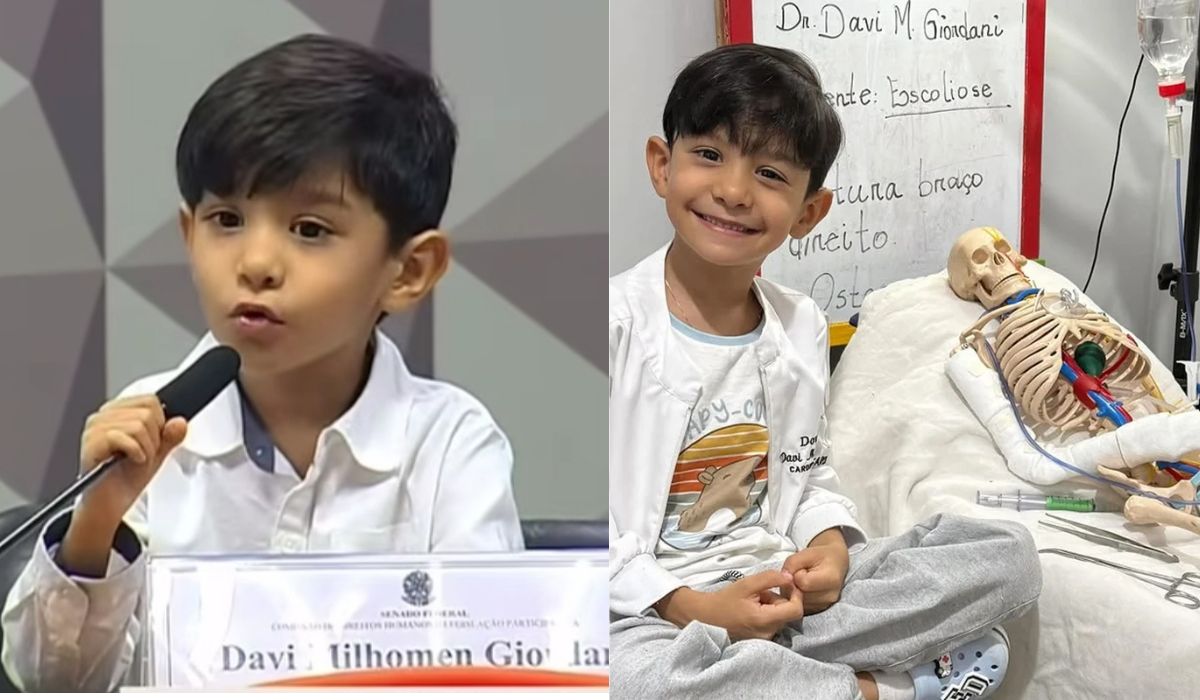
At 6 Years Old, A Boy From Goiânia Took To The Senate A Report About Giftedness That Went Viral On Social Media.
The participation reignited discussions about schools, family support, and health information online.
At 6 years old, the boy from Goiás Davi Milhomem Giordani spoke at the Federal Senate during a public hearing on giftedness, a topic related to educational policies.
Living in Goiânia, he reported how he perceives his own condition and advocated for better preparation of schools and support for families.
-
Archaeologists found giant shoes over 30 centimeters near Hadrian’s Wall that survived nearly two thousand years buried and now raise a mystery: who were these Roman soldiers so different from the others?

-
Meta’s new smart glasses are not just for seeing; they use artificial intelligence, analyze your food, summarize messages, and can even change the way you work in professions like engineering.

-
According to an analysis by NASA, only one human-made structure is visible from space, and it is not the Great Wall of China or the Pyramids of Egypt.

-
After 377 years of history, the Brazilian Army will have its first female general: Colonel Claudia Cacho has been promoted to brigadier general by Lula and will receive the sword and command baton this Wednesday in Brasília.
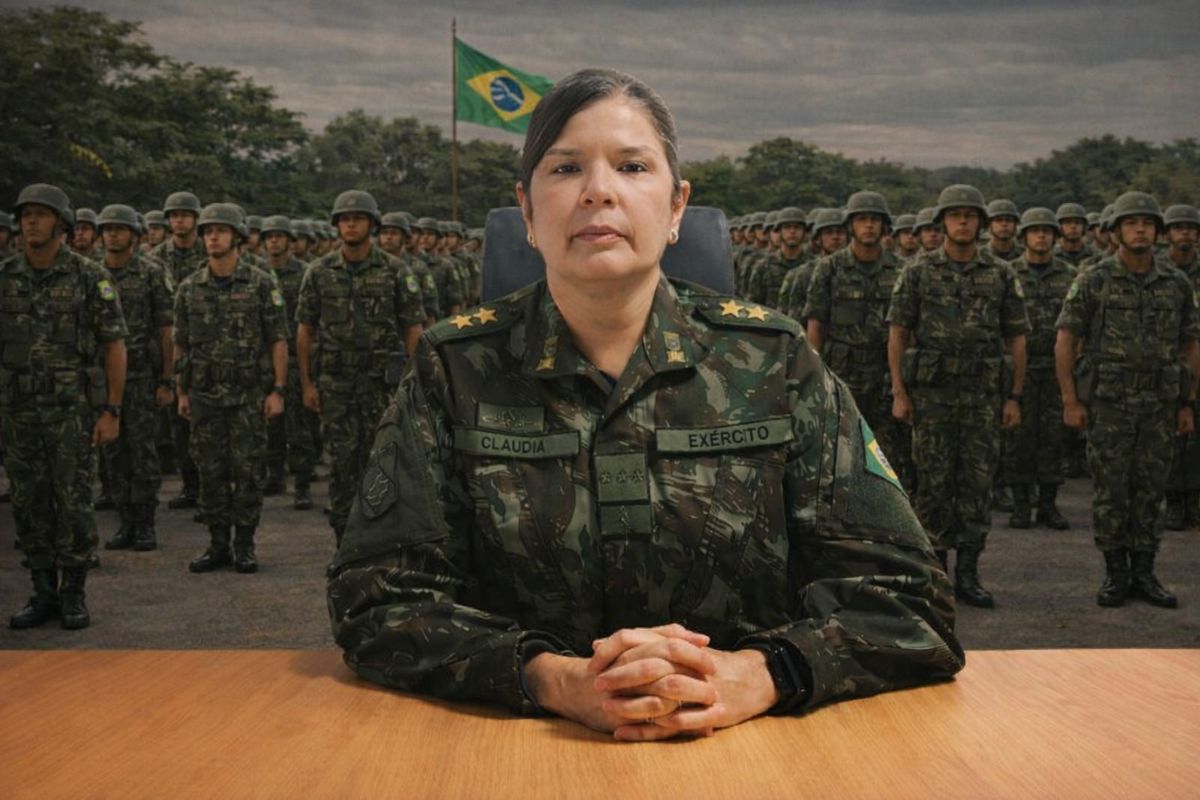

The video of his participation spread on social media and went viral.
According to the impact recorded on the platforms, the excerpt of the speech surpassed 6 million views and received thousands of comments.
With the circulation of the content, the topic reemerged strongly in public debate.
The exposure also prompted more people to seek information on how to identify and support children with giftedness in the school environment.
What He Reported About Living With Giftedness
In his speech to the Senate, Davi described what he considers to be one of the most striking aspects of the condition: the feeling of always processing information at high speed.
“Having this condition is a mix of emotions, since our brain thinks too quickly and wants to assimilate everything at once,” he stated.
The boy also drew attention to the emotional difficulties that may accompany giftedness, a topic often cited in educational discussions.

While addressing the subject, he advocated for the need for acceptance and appropriate strategies within schools.
In public hearings, this type of report is often used to illustrate how different learning profiles require specific responses.
Still, the support and solutions vary according to the education network and available resources, according to educators participating in this debate.
Hearing In The Senate And Educational Policies For Giftedness
Davi participated in a public hearing that discussed giftedness and educational policies.
The participation took place in the Senate and, as he himself mentioned, included a visit to the Human Rights Committee, where he spoke about the importance of viewing the subject as a demand for rights.
The debate gathered reports and arguments regarding the identification and support of children with giftedness.
The discussion also involved the need to guide families and prepare schools to recognize and support students who deviate from the more common learning pattern.
In these meetings, specialists and family members often point out that the lack of support can lead to adaptation difficulties, even when there is high performance in some areas.
The topic generally involves both pedagogical measures as well as emotional support and ongoing guidance.
Interest In Anatomy And The Dream Of Becoming A Cardiologist
Diagnosed with giftedness during early childhood, Davi began reading at the age of 2, according to reports released about his journey.
After seeing an image of a skeleton in a children’s book, he began to show interest in anatomy and subjects related to medicine.
Since then, the boy claims he wants to pursue a medical career and states that he plans to become a cardiologist.
“My dream is to save lives,” he declared during his participation in the Human Rights Committee.
The story has become associated with the way he translates health topics for a broad audience on social media.
The nickname “mini-doctor” accompanies this exposure, especially in publications highlighting the focus of the content he produces.

Health Videos On The Internet And The Alert About Medical Consultation
On social media, Davi posts educational videos about anatomy and disease prevention.
When discussing the subject, he often emphasizes that this type of content is informational and does not replace professional assistance.
“Videos on the internet do not replace in-person consultations,” he usually warns, according to how this phrase appears associated with his publications.
The message is reiterated amidst content that provides general guidance without directing to individual diagnoses.
This type of caution is frequently cited by health professionals when discussing medical information on the internet.
The general guideline is that online content does not substitute clinical evaluation, especially in cases involving symptoms, treatments, or medication use.
The boy’s profile gathers around 4 million followers, according to the most referenced data in publications about the case.
The audience, in turn, helped to broaden the reach of the debate on giftedness, bringing the topic closer to an audience that doesn’t always follow educational discussions in detail.
Debate About Giftedness In Schools And Support For Families
With the speech going viral, the discussion around giftedness gained more visibility.
The case also highlighted a recurring point in educational debates: the difference between recognizing a condition and effectively offering consistent support in school.
Families often report challenges in obtaining guidance and appropriate support, especially when there are no trained professionals to identify signs of giftedness.
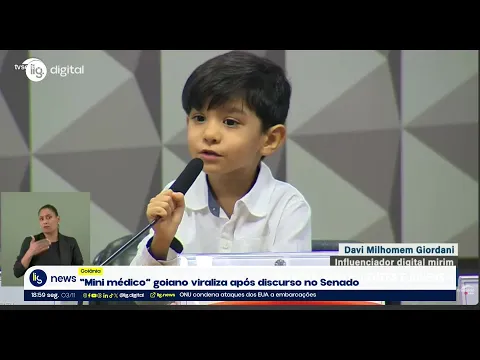

In many contexts, the lack of teaching strategies compatible with the student profile and the absence of emotional support are cited as factors that can aggravate difficulties with coexistence and adaptation.
By bringing this agenda to the Senate, Davi argued that public policies and actions in the school should not rely solely on isolated initiatives.
The speech also reinforced the idea that children and adolescents directly impacted by these decisions can contribute with accounts that complement technical analyses.
With millions of people watching the speech and commenting on the topic, the discussion about giftedness is likely to remain prominent on social media and in educational environments.







-

-

13 pessoas reagiram a isso.