





 Portuguese
  English
  Spanish
  6 min of reading
  4 comments


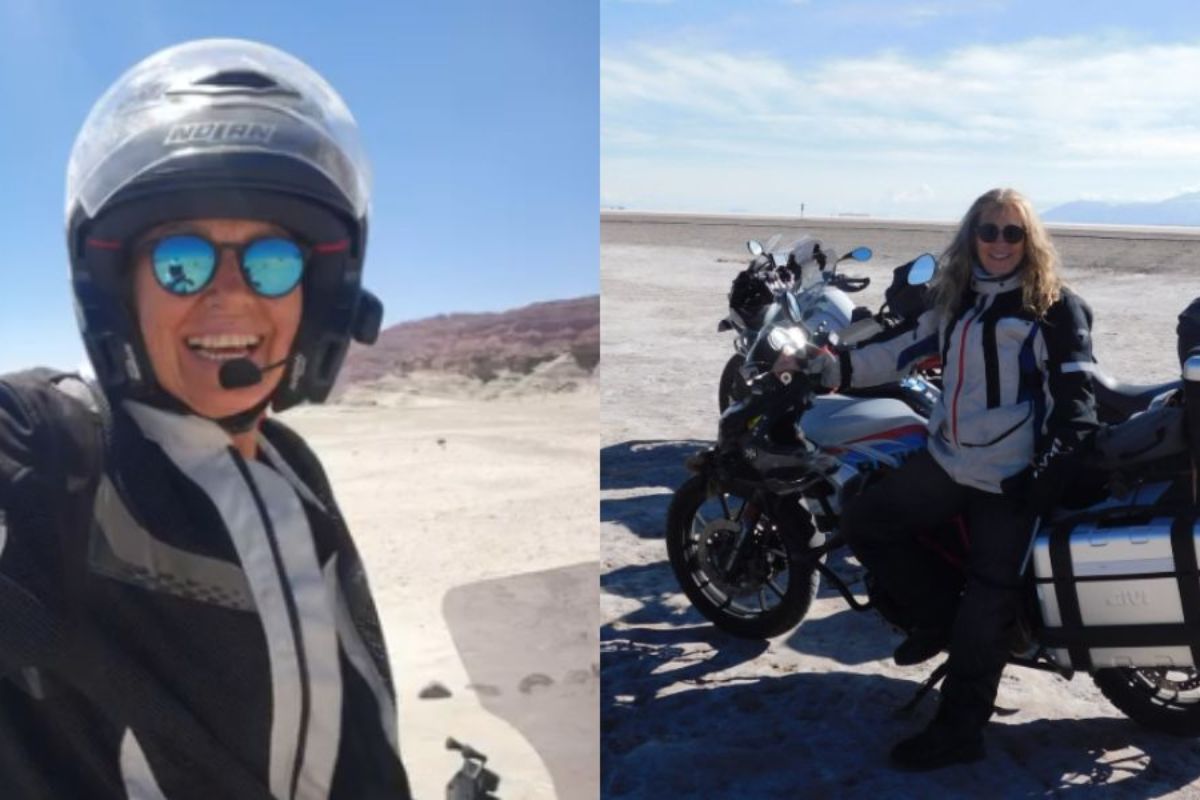


After Retirement at 60, A 60-Year-Old Woman Decides to Learn How to Ride a Motorcycle and Transforms Life on the Road into an Endless Journey Without a Fixed Itinerary.
At 60 years old, she retired, decided to learn how to ride a motorcycle, and began to treat the road as a permanent address, turning a phase of uncertainty into a long-term life project. What started as an alternative to deal with an injury and the impossibility of continuing with trekking transformed into a routine of solo travels, route planning, and constant adaptation to new landscapes and weather conditions.
In Alicia Burnowicz’s journey, learning to ride a motorcycle was not just about acquiring a new skill, but redefining priorities, redesigning the concept of home, and practically proving that chronological age and lifestyle do not need to walk hand in hand. Instead of accepting the retreat from activities due to retirement, she expanded her horizons, accumulating over 120,000 kilometers traveled in a journey that mixes self-sufficiency, support networks, and the ability to make decisions in unpredictable environments.
When Riding a Motorcycle Becomes an Answer to Adversity
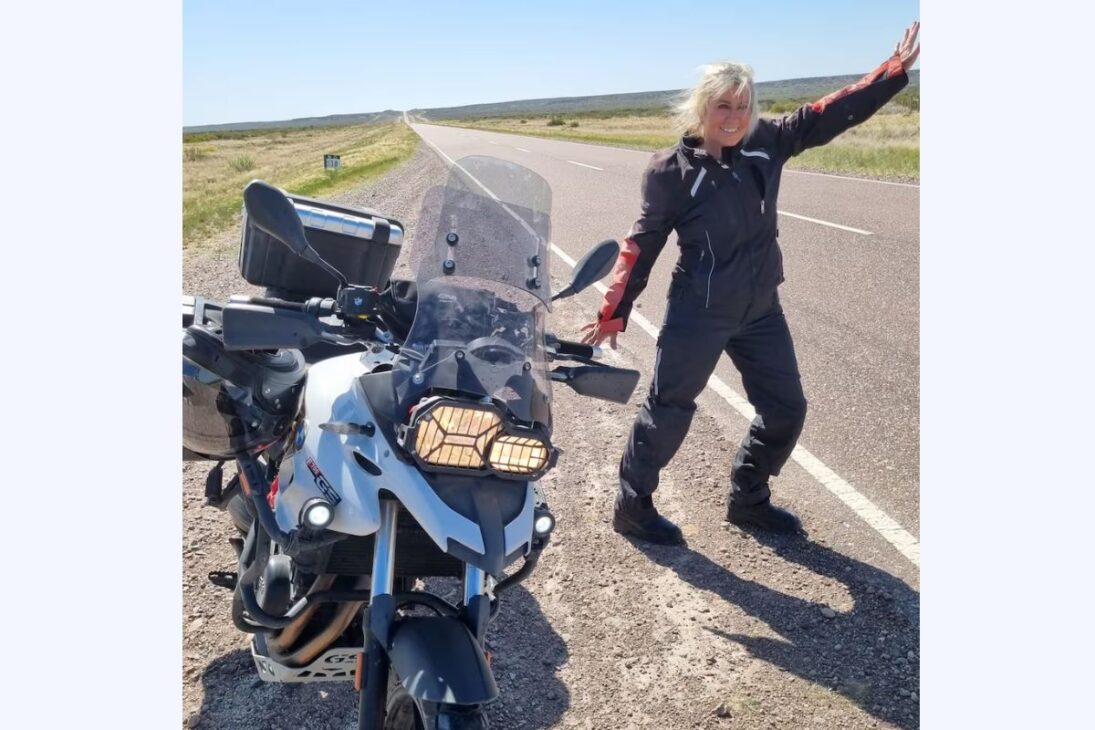
Alicia’s story begins with a limitation, not a conquest.
-
Italian researchers have detected what appears to be a second Sphinx buried under the sands of Egypt, and satellite scans reveal a gigantic underground megastructure hidden beneath the Giza Plateau for over 3,000 years.

-
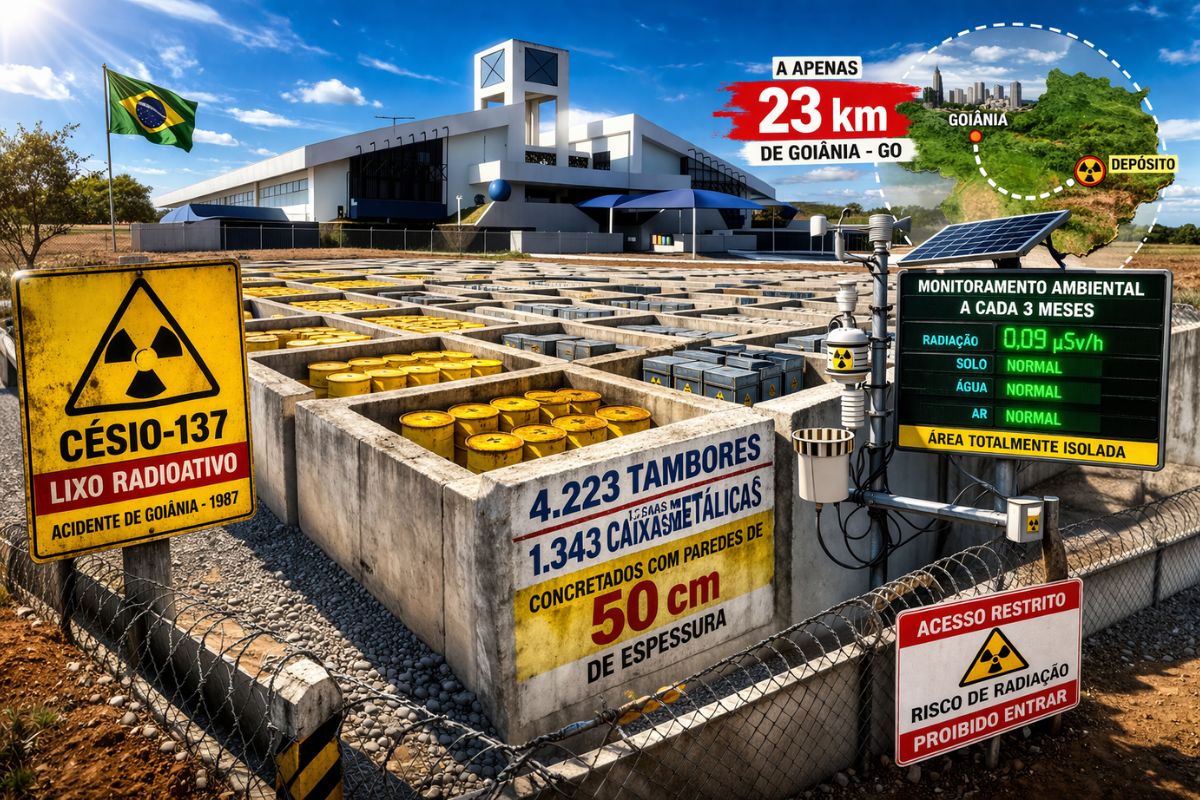
There are 4,223 drums and 1,343 metal boxes concreted with 50-centimeter walls that store the radioactive waste from Cesium-137 in the worst radiological accident in Brazil, just 23 kilometers from Goiânia, with environmental monitoring every three months.
-
Giant Roman treasure found at the bottom of Lake Neuchâtel in Switzerland reveals an advanced trade system, circulation of goods, and armed escort in the Roman Empire about two thousand years ago.

-
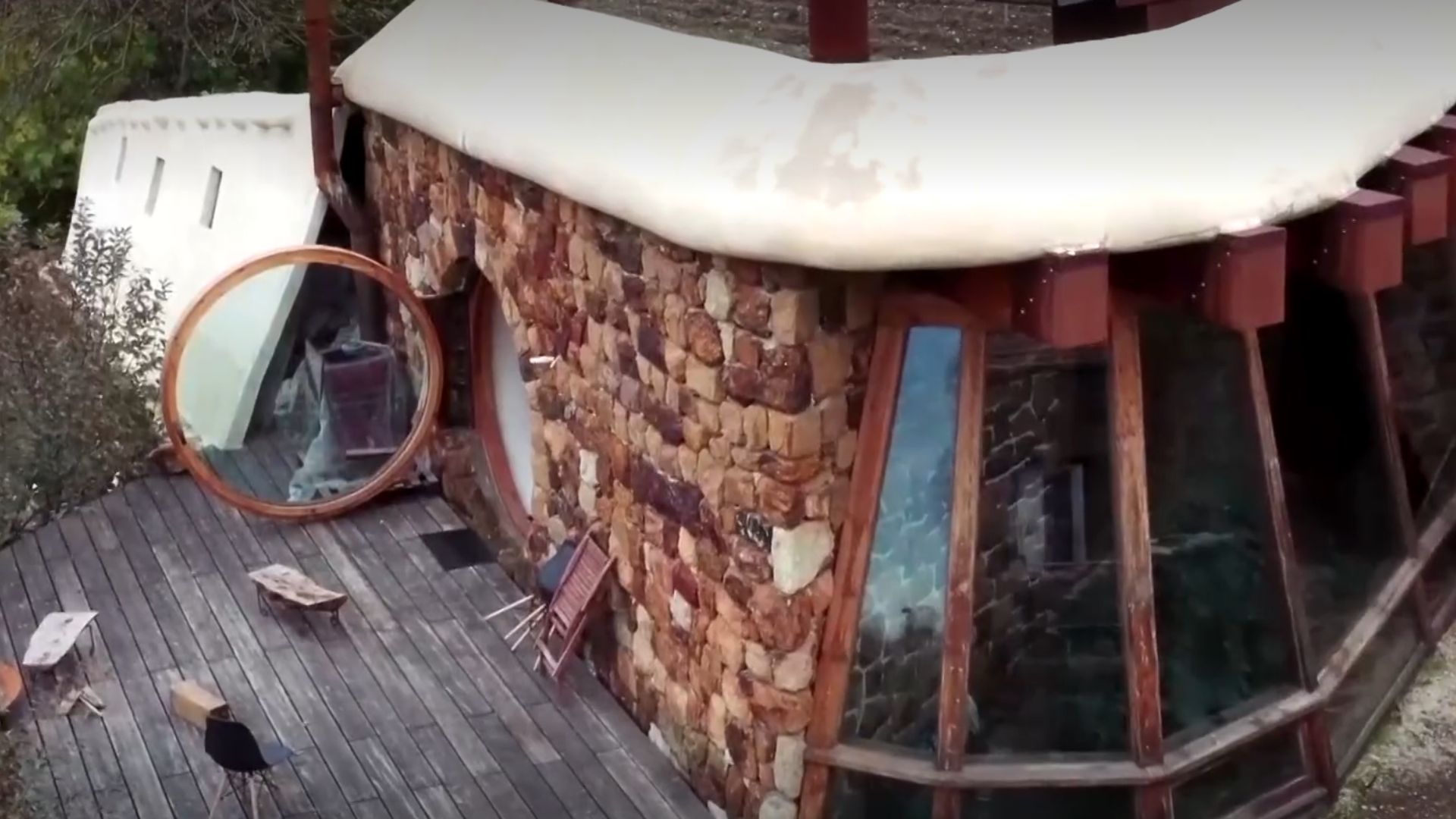
He buried 1,200 old tires in the walls to build his own self-sufficient house in the mountains with glass bottles, rainwater, and an integrated greenhouse.
Before deciding to ride a motorcycle, her main outdoor activity was trekking, until an injury kept her away from the trails indefinitely.
This forced rupture in her routine put her in front of a classic choice: accept the loss of mobility or seek another way to maintain an intense connection with nature and the road.
It was in this context that the motorcycle emerged as a tool for continuity.
Instead of abandoning an active life, Alicia turned adversity into a turning point, initially experiencing short, controlled rides, assessing whether her body would respond well to the new demands.
The motorcycle allowed her to compensate for specific physical limitations with a means of transport that simultaneously preserved the feeling of freedom and expanded the reach of her travels.
From Routine in Bariloche to the Decision to Live on the Road
The initial phase of the journey was discreet. After learning to ride a motorcycle, Alicia started with short routes around Bariloche, an environment she already knew well from her previous routine.
She tested schedules, types of roads, and weather conditions, observing the motorcycle’s behavior, the impact on her body, and the mental demands of each journey.
Over time, these routes ceased to be mere tests and began to compose a new life pattern.
Gradually, the road stopped being an exception and became the norm, and the traditional home gave way to the concept of a mobile home, where reduced luggage, motorcycle maintenance, and route planning replaced fixed commitments and rigid schedules.
Retirement, instead of slowing her down, opened up space for a type of mobility that is often not associated with people in their 60s.
Carretera Austral: Laboratory of Autonomy on Two Wheels
When she decided to tackle the Carretera Austral, Alicia already mastered the basics of riding a motorcycle, but deliberately chose a route considered challenging, with long stretches of limited infrastructure and variable weather conditions.
The road, known among travelers for its logistical difficulties, served as a kind of intensive laboratory of autonomy on two wheels.
Far from large urban centers, she needed to adjust her planning for fuel, food, overnight stays, and basic maintenance.
With fewer amenities and more stretches of remote road, the Carretera Austral forced Alicia to travel with fewer items, greater criteria, and a heightened focus on real priorities, such as safety, terrain reading, and physical energy management.
The experience solidified skills that would be fundamental for later stages of her life on the road.
From Riding a Motorcycle to Machu Picchu: Planning, Risks, and Achievements
After gaining confidence on the Carretera Austral, Alicia expanded her range and set a goal that, for many motorcyclists, blends technical and symbolic challenges: reaching Machu Picchu by motorcycle.
The expedition lasted 107 days and combined long distances, winding mountain stretches, high altitude, and unpredictable weather, requiring more detailed planning for each stage.
The journey demonstrated that riding a motorcycle long distances requires much more than balance and acceleration.
It involves constant map reading, adapting to roads in different conditions, and quick responses to unforeseen events.
In the case of Machu Picchu, the destination carried additional weight.
It was not just a tourist spot, but the materialization of a goal that seemed distant for someone who, a few years before, still saw herself limited by an injury and the societal expectations associated with age.
The Role of Motorcycle Communities on the Road
Throughout her travels, Alicia realized that riding a motorcycle is not necessarily a solitary activity, even on solo trips.
She found an active community of motorcyclists, organized in a decentralized way, especially on social networks and travel forums.
This network serves as technical and emotional support, offering everything from route information to invitations for temporary lodging.
In situations of maintenance, mechanical breakdowns, or sudden weather changes, the support of these groups proved crucial.
The availability of other motorcyclists to help with tools, workshop referrals, or simple company on more delicate stretches reinforces the sense of belonging.
Alicia’s experience highlights that the decision to ride a motorcycle and live on the road is facilitated when there is a network of solidarity connecting people across different countries and routes, which reduces isolation and enhances the feeling of safety.
When Riding a Motorcycle Inspires Others to Redefine Limits
With over 120,000 kilometers traveled, Alicia’s account began circulating on personal profiles and channels dedicated to travel and adventure.
Gradually, her journey ceased to be just an individual narrative and became a reference for those considering starting new activities after 50 or 60 years old.
Comments and messages from readers show that the decision to learn how to ride a motorcycle at this stage of life challenges established ideas about aging and agency, encouraging others to reassess their own self-imposed barriers.
Examples include people who resumed old interests, revised retirement plans, or simply began to consider the possibility of longer trips, with or without a motorcycle.
Alicia’s story does not prescribe a unique model of life but demonstrates that age is not, by itself, an obstacle to physically and mentally challenging projects, provided they are accompanied by preparation, responsibility, and risk awareness.
What Alicia’s Story Teaches About Starting to Ride a Motorcycle After 60
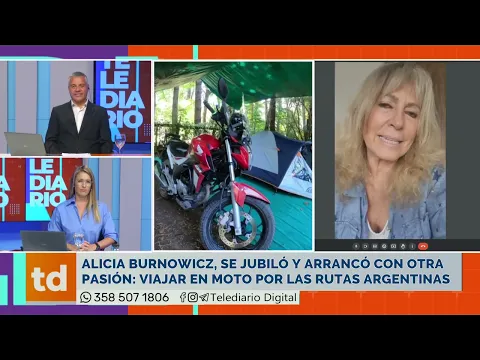

Alicia Burnowicz’s journey shows that learning to ride a motorcycle at 60 can be less an act of rupture and more a form of continuity, in which previous experiences, work discipline, and self-awareness turn into tools to face the road with maturity.
The motorcycle serves as a means, not an end, allowing a phase of life that many see as a closure to expand.
At the same time, the story emphasizes the importance of planning, respecting personal limitations, and building a support network.
More than merely an adventure itinerary, it is a concrete case of repositioning identity, where retirement is not a final point, but a turning point.
In light of this, here is a question for the reader: if you could choose a new way of living after retirement, would you dare to learn how to ride a motorcycle and embrace the road as part of your routine, or would you seek another path to reinvent this phase of life?










I was diagnosed with Parkinson’s disease four years ago. For over two years, I relied on Levodopa and several other medications, but unfortunately, the symptoms kept getting worse. The tremors became more noticeable, and my balance and mobility started to decline quickly. Last year, out of desperation and hope, I decided to try a herbal treatment program from NaturePath Herbal Clinic.
Honestly, I was skeptical at first, but within a few months of starting the treatment, I began to notice real changes. My movements became smoother, the tremors subsided, and I felt steadier on my feet. Incredibly, I also regained much of my energy and confidence. It’s been a life-changing experience I feel more like myself again, better than I’ve felt in years.If you or a loved one is struggling with Parkinson’s disease, I truly recommend looking into their natural approach. You can visit their website at www. naturepathherbalclinic .com
My husband was diagnosed of Parkinsons disease 2 years ago, when he was 49. He had a stooped posture, tremors, right arm does not move and also a pulsating feeling in his body. He was placed on Senemet for 8 months and then Sifrol was introduced and replaced the Senemet, during this time span he was also diagnosed with dementia. He started having hallucinations, lost touch with reality. Suspecting it was the medication I took him off the Siferol (with the doctor’s knowledge) and started him on PD-5 natural herbal formula we ordered from AKNNI HERBAL CENTRE, his symptoms totally declined over a 3 weeks use of the AKANNI HERBAL Parkinson’s disease natural herbal formula. He is now almost 51 and doing very well, the disease is totally reversed! (Visit w w w.aknniherbscentre .com)
My husband was diagnosed of Parkinsons disease 2 years ago, when he was 49. He had a stooped posture, tremors, right arm does not move and also a pulsating feeling in his body. He was placed on Senemet for 8 months and then Sifrol was introduced and replaced the Senemet, during this time span he was also diagnosed with dementia. He started having hallucinations, lost touch with reality. Suspecting it was the medication I took him off the Siferol (with the doctor’s knowledge) and started him on PD-5 natural herbal formula we ordered from AKNNI HERBAL CENTRE, his symptoms totally declined over a 3 weeks use of the AKANNI HERBAL Parkinson’s disease natural herbal formula. He is now almost 51 and doing very well, the disease is totally reversed! (Visit w w w.aknniherbscentre .com)