





 Portuguese
  English
  Spanish
  6 min of reading
  0 comments


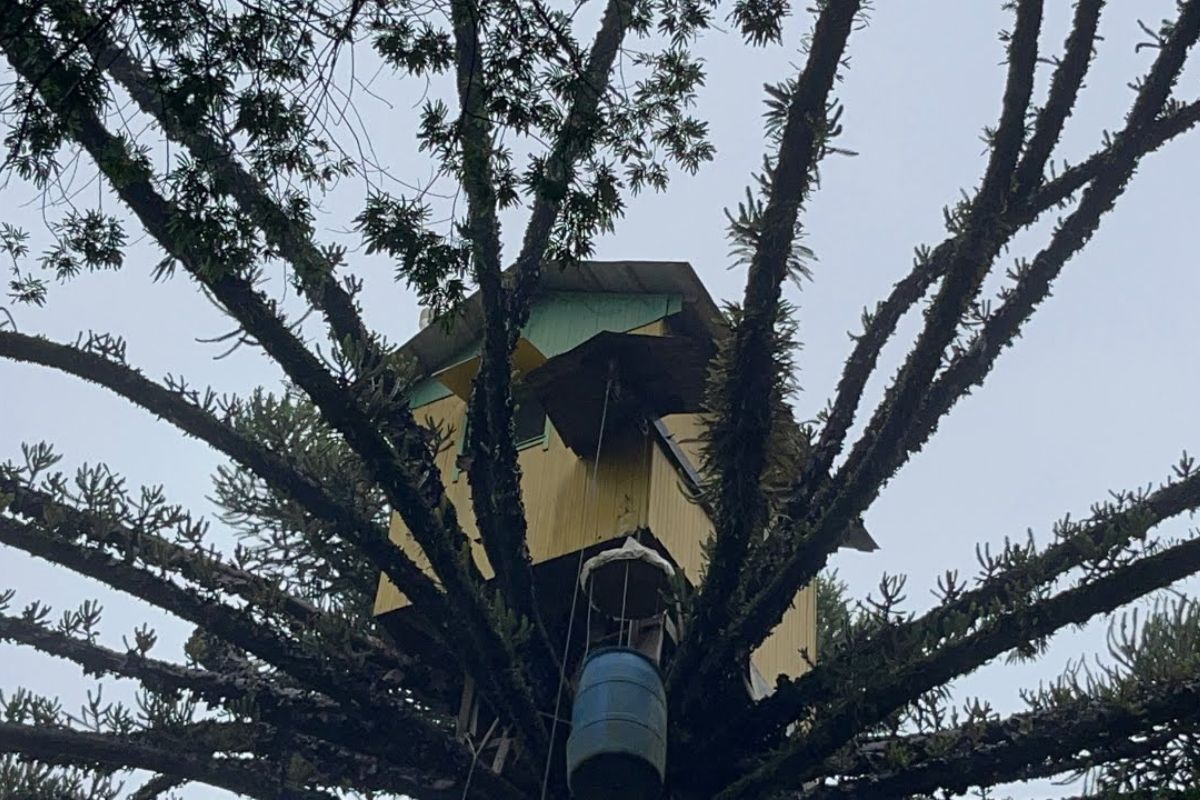
In Flores da Cunha, in Rio Grande do Sul, Seu Luiz built alone on the farm a handmade ski lift and a treehouse at the top of a pine tree, with a wooden cart, cables and pulleys, a limit of 100 kg and a focus on safety for registered spot visits in a local notebook.
On May 4, 2023, in Flores da Cunha, in Rio Grande do Sul, farmer Seu Luiz, at 75 years old, presented to visitors the system that he built alone on the farm: a functional ski lift, with electric traction, rotation control, and a declared limit of 100 kg.
On the same property in Flores da Cunha, he showed the treehouse installed on a pine estimated to be about 15 meters high, accessed by a ladder and secured with a safety lock; the grapevine, mentioned as made in 2017, appears as part of the scenery of a domestic project that turned into an attraction for those who register their visit in the guestbook.
Where Is the Farm and Who Is Seu Luiz

The record places the visit in a location in the first district of Flores da Cunha, in Rio Grande do Sul.
-
Italian researchers have detected what appears to be a second Sphinx buried under the sands of Egypt, and satellite scans reveal a gigantic underground megastructure hidden beneath the Giza Plateau for over 3,000 years.

-
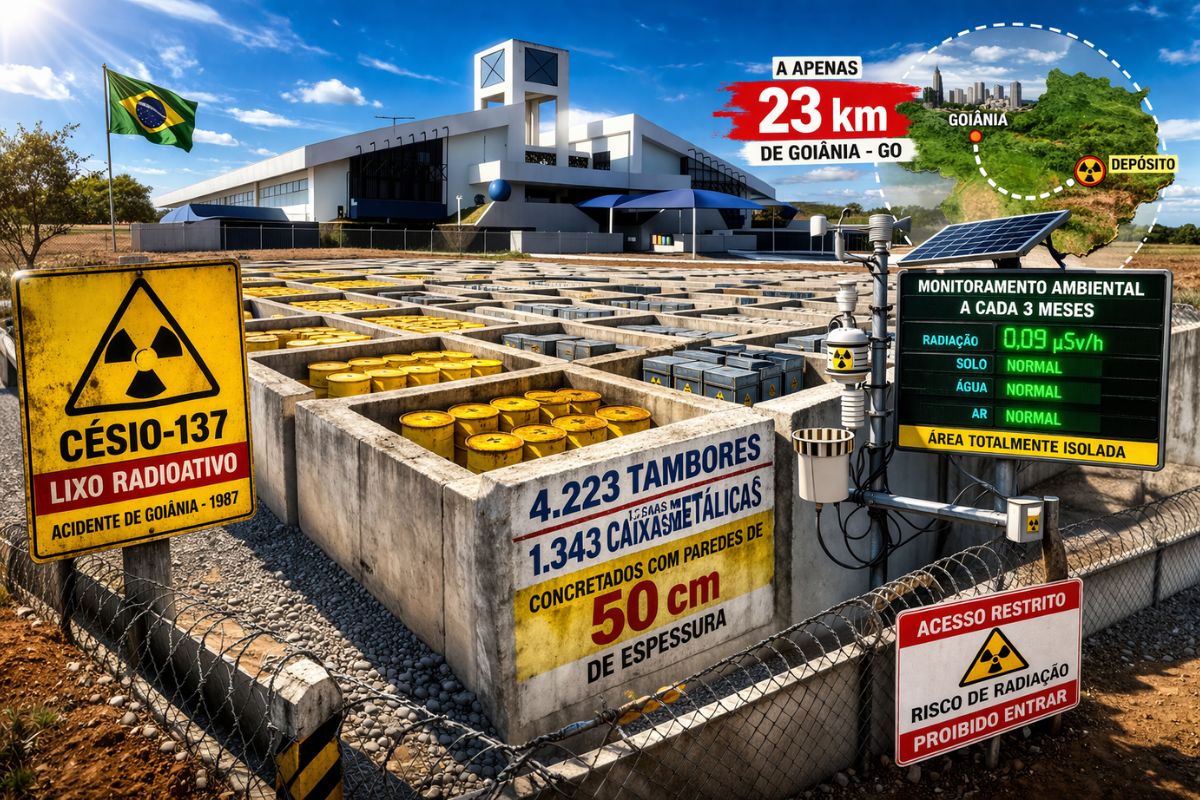
There are 4,223 drums and 1,343 metal boxes concreted with 50-centimeter walls that store the radioactive waste from Cesium-137 in the worst radiological accident in Brazil, just 23 kilometers from Goiânia, with environmental monitoring every three months.
-
Giant Roman treasure found at the bottom of Lake Neuchâtel in Switzerland reveals an advanced trade system, circulation of goods, and armed escort in the Roman Empire about two thousand years ago.

-
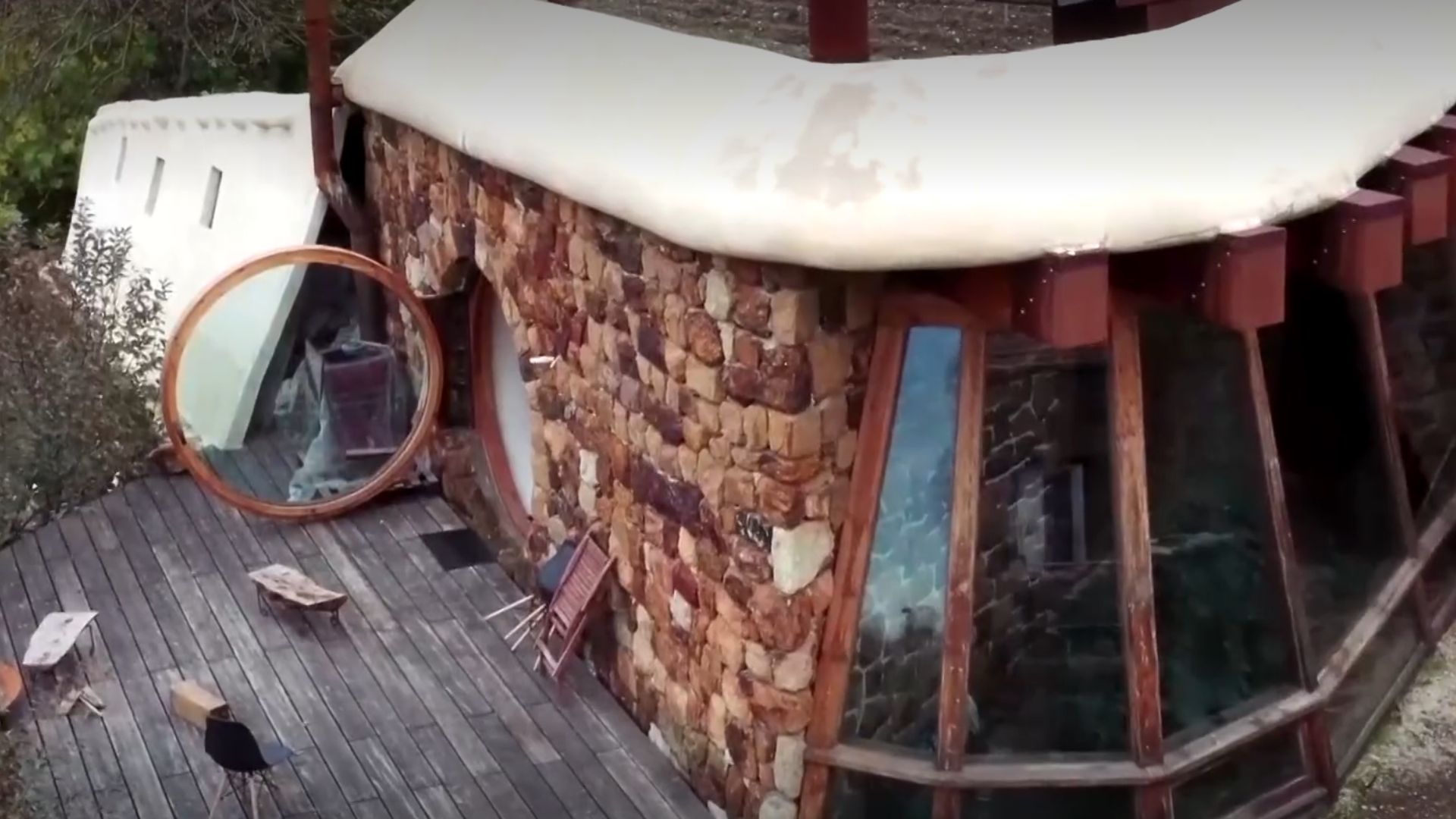
He buried 1,200 old tires in the walls to build his own self-sufficient house in the mountains with glass bottles, rainwater, and an integrated greenhouse.

In the conversation, Seu Luiz states that he was born in the region and that he moved to the current property when he was 33 years old, reinforcing his long-term bond with the place and work in the fields.
The family narrative is also used as context.
He claims to have parents of Italian origin and recounts the story of his grandfather who came from Italy as a child, on a journey that included landing in Rio, passing through Porto Alegre, and settling in a rural area.
It is a biography narrated as continuous manual labor, with a memory of difficulties and adaptation.
This background helps to understand why the decision to build alone on the farm an unusual structure does not appear as a break from rural life.
In the same record, he details technical tasks, such as stone cutting and building typical property structures, reinforcing a repertoire of practical trades.
What Is the Ski Lift He Built on the Farm
The ski lift is presented as a handmade device, with one person sitting in a wooden cart that moves suspended by cables.
The record associates the operation with the “electric part” and highlights the need to “give the right rotation” to pull and maintain stable movement.
Three objective parameters appear in the material.
The first is the weight limit, cited as up to 100 kg. The second is the height, referred to as 18 meters high during the crossing.
The third is operational control, linked to rotation adjustment and the use of brakes to keep the cart under control.
The record also indicates that safety is treated as a practical concern, although without technical detail.
There are mentions of a support rope and verbal guidelines to hold and conduct the crossing calmly.
At another point, Seu Luiz comments that he made recent adjustments and that one part “started to get water,” a sign of ongoing maintenance in a solution exposed to the weather.
In the journalistic excerpt, the central data is simple and verifiable: he built alone on the farm a functional ski lift, with declared parameters and operation supervised by someone who knows the structure.
Treehouse in Pine: Height, Access and Entry Control

The second piece of the set is the treehouse, mounted at the top of a pine within the farm.
In the record, the height is estimated at around 15 meters, and access occurs via a ladder, with a final stretch that requires careful climbing and grabbing.
There is an explicit mention of a safety lock, closed before starting the ascent. The record also exposes the attempt to restrict handling:
Seu Luiz says he put a “secret to open” and claims that “no one opens,” associating control with the protection of stored items.
The informality of the tourist point appears in a concrete element: inside the treehouse, there is a guestbook, where visitors register their name and date.
The signature marks the day May 4, 2023, fixing the temporal cut and reinforcing that the treehouse has consolidated as an attraction for those arriving at the property.
What the Case Reveals About Practical Engineering and Manual Labor
From a technical point of view, the case illustrates a combination of practical engineering and controlled improvisation.
When talking about rotation, electric traction, and speed, Seu Luiz exposes the challenge of marrying pulling effort with movement stability.
When describing the transportation of materials, the record mentions rope, cart, and the internal logistics of the property, treated as part of the work.
Here, a factual limit is worth noting: the material does not inform cable gauge, system power, anchoring method, inspection, or reports.
Therefore, it is not possible to infer regulatory compliance or structural safety based on the record alone.
What can be stated is the existence of the observed functionality and the presence of declared empirical controls, such as the limit of 100 kg, lock, secret, and supervision.
The ski lift and the treehouse are also connected to a history of manual work on the farm: in the same record, Seu Luiz describes stone cutting and rural practices as part of the repertoire, reinforcing the profile of someone who built alone on the farm not just a curiosity, but a coherent set with his daily life.
Visits, Safety and the Boundary Between Curiosity and Responsibility
In a section of the dialogue, the visitor asks whether he receives tourists or if it is just for friends, and the response suggests a restricted pattern, linked to sporadic visits.
This limitation is relevant because it changes the expectation of control: operation open to the public usually requires a level of formalization not described in the material.
At the same time, the record suggests circulation of visitors beyond the family core, with mention of people who would have gone up, including a reference to a delegate.
This indicates that the ski lift and the treehouse already function as a point of curiosity in the local routine.
The technical alert here is direct and unembellished: suspended structures and vertical accesses carry inherent risk.
When someone built alone on the farm a ski lift and a treehouse in a pine, risk reduction depends on access control, supervision, respect for limits, and maintenance, not on an impulse to “test” out of curiosity.
Age, Disposition, and the Central Message from Seu Luiz Himself
The most striking aspect is the combination of age and initiative.
The record includes references to 75 and 76 years old, and also a routine of continuing to perform physical tasks, such as climbing trees and operating elevated structures.
Seu Luiz summarizes this in an objective recommendation: “we should not look at our age”.
This point materializes in details of the narrated daily life. There is mention of a eucalyptus tree and a height of 38 meters, in addition to the idea of adding a step every year, reinforcing the drive to remain active.
For the journalistic profile, the message is less about heroism and more about persistence, with invention functioning as a symbol of trajectory.
The story of Flores da Cunha shows that innovation also arises in rural routines, with attempts, adjustments, and maintenance.
When someone built alone on the farm a ski lift and a treehouse in a pine, the focus shifts to three axes: culture of manual work, safety in private structures, and the impact of visits on domestic projects.
If you produce content or cover local stories, the most responsible approach is to combine curiosity with prudence: document facts, record dates and limits, and avoid encouraging unconsidered use of structures not described as formal attractions. The case is strong precisely because it is real and observable, but also because it exposes the thin line between fascination and responsibility.
Would you have the courage to ride a handmade ski lift and climb a treehouse in a pine tree?








-

-

-

-

-

16 pessoas reagiram a isso.