





 Portuguese
  English
  Spanish
  4 min of reading
  19 comments


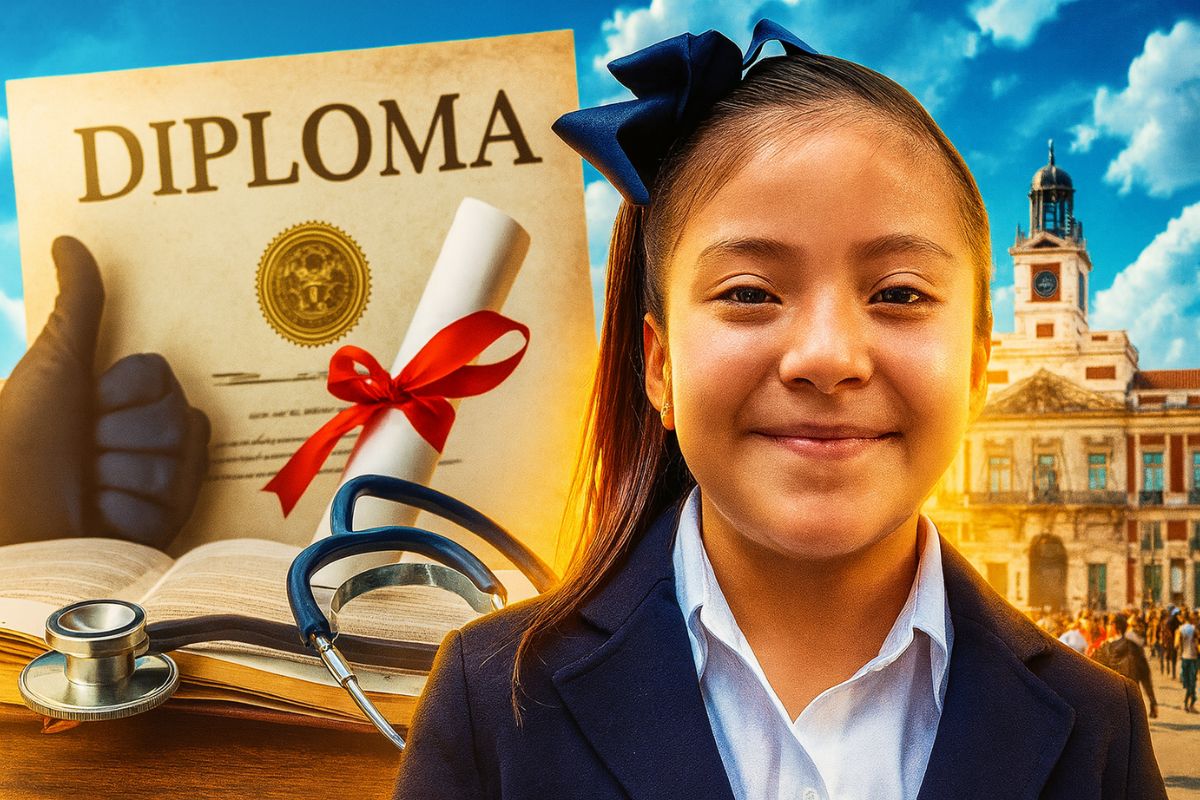


At 9 Years Old, Gifted Girl Graduates High School, Speaks Four Languages, and Enters Medical School in Mexico
With an IQ of 158, similar to Albert Einstein, gifted girl Michelle Arellano Guillén graduated high school at nine years old and entered Medical School after accelerating her entire educational process through validation exams. Her case drew attention for highlighting the limitations of a school system ill-prepared to deal with extreme intellectual talents.
The story of the young Mexican from Chiapas symbolizes both the power of early minds and the structural difficulties of institutions that still treat exceptional students at the same pace as others. At nine years old, Michelle already mastered four languages, practiced competitive sports, and demonstrated rare emotional maturity, forcing her family to seek alternatives outside the traditional educational path.
The Early Awakening of an Out-of-the-Box Mind
From a very young age, the gifted girl showed clear signs of accelerated development.
-
China has accumulated up to 1.4 billion barrels of oil in strategic reserves, invested 25 years in renewable energy, and purchased 80% of cheap Iranian oil: how Beijing has prepared for decades for the crisis that is now shaking the world.

-
A single lake holds 20% of the planet’s non-frozen freshwater and is also the deepest and oldest on Earth.

-
How 5,000 Indian dabbawalas manage to deliver around 200,000 lunchboxes a day in Mumbai for over 130 years using bicycles, crowded trains, and a manual system that continues to operate with impressive accuracy.

-
While restoring a historic mansion from 1910, a brick structure with an old turbine that generated energy from the Rio do Testo emerged, along with a hidden door and a rare floor concealed under layers of wax.

She spoke English at two, read and wrote at four, and demonstrated mastery over science and anatomy topics early in her literacy.
Her academic performance was impressive, but it also isolated her.
Regular schools quickly became insufficient. Teachers reported that Michelle was bored with the slow pace of classes and often finished tasks before her classmates.
Boredom and lack of challenge led her parents to seek personalized solutions, such as “radical acceleration”: a model where the child takes exams to validate entire grades all at once, advancing according to her level of understanding.
Accelerated Education and Entry into College at Age 9
Through this process, Michelle completed elementary and high school in just a few years.
At nine, she earned the certificate that enabled her to enter university.
The choice of course was not random — the young girl always dreamed of following in her parents’ footsteps, both doctors, and saw Medicine as a field where she could combine science, empathy, and intellectual curiosity.
In addition to her academic performance, her path includes high-performance sports activities: black belt in Taekwondo, swimming champion, and holder of hundreds of medals, the girl breaks the stereotype that early intellect comes with physical or social isolation.
The disciplined routine between studies and sports became part of the balance that sustains her development.
The Challenge of Educational Systems in the Face of Giftedness
Michelle’s case illustrates a recurring dilemma: how to adapt standardized educational systems to the cognitive needs of students who think and learn at an accelerated pace.
Experts warn that, without appropriate policies, gifted children may suffer exclusion, demotivation, and even develop anxiety due to a lack of stimulation.
In Mexico, as in other Latin American countries, support for students with high abilities is still limited.
The story of the gifted girl reignites the debate on the importance of flexible curricula and specialized psychological support, ensuring that talent does not become a burden.
Between Scientific Curiosity and Life as an Athlete
Despite her intense routine, Michelle maintains interests that go beyond Medicine.
She dreams of being a marine biologist and actress, demonstrating a multifaceted curiosity that reflects the diversity of her abilities.
The balance between science and art reinforces the creative potential that often accompanies superior intelligence.
According to reports, the girl actively participates in sports projects and maintains a disciplined daily routine, with set times for studying, resting, and physical practice.
This control is considered fundamental by neurodevelopment specialists, who advocate that stimulation should be broad and not just intellectual.
A Symbol of the Future of Education and Cognitive Inclusion
The journey of the gifted girl from Mexico has become an international reference not only for the academic achievement but for the message it carries: talent needs to be understood and embraced, not forcefully fitted into rigid patterns.
Cases like Michelle’s reveal that exceptional intelligence requires public policies, teacher training, and family support prepared to sustain paths outside the average.
More than a story of precocity, it serves as a warning about how the educational system deals with differences.
In a world that values innovation, neglecting giftedness is wasting human potential on a large scale.
At nine years old, gifted girl Michelle Arellano Guillén has already turned her story into a global example of adaptation, effort, and intellectual uniqueness.
Her early entry into Medicine challenges the notion that age defines academic maturity, opening space for a new reflection on how education should deal with extraordinary minds.
Is accelerating education the best solution or are there risks of emotional overload? We want to hear from those who live this reality up close — leave your opinion in the comments.








Quem lhe ensinou inglês aos 2 anos?
Importa saber que os superdotados podem trazer para a humanidade grande ajuda, grandes avanços, em áreas diversas. Eles vão pular a infância?! Se for bem orientada desde a infância, não vão pular a infância, podendo ter escolhas . Escolas para superdotados são necessárias em toda América Latina, com corpo docente muito bem preparados para atende – los e orienta – los.
No Brasil, os superdotados quase sempre não são percebidos como tal, pois , a classe docente teria que ter uma formação e treino especial para indentifica – los. As escolas, também deveriam estar preparadas para atende – los. Percebo que este problema é de toda América Latina. O que fazer?! Tratado Internacional para atender a estes em seu próprio país, com acompanhamento do órgão internacional por todo o período educacional de cada super ditado.