





 Portuguese
  English
  Spanish
  4 min of reading
  0 comments


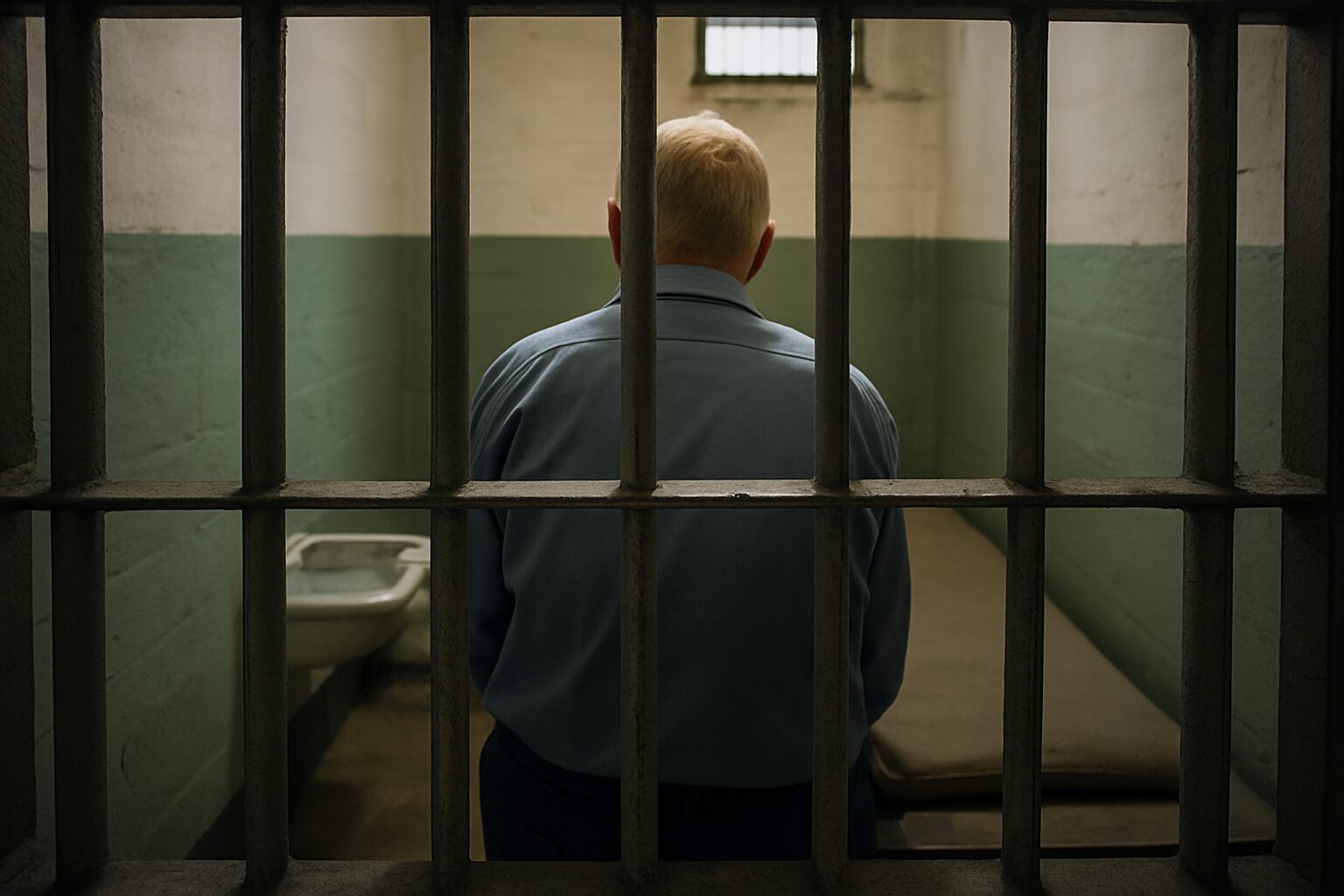
Last Living Ex-Inmate of Alcatraz, Charlie Hopkins Recalls the Routine at the Most Feared Prison in the US and Comments on Reopening Proposal Made by Trump
At 93 years old, Charlie Hopkins carries in his memory the sound that still echoes from the cold walls of the most feared prison in the United States: the silence of Alcatraz.
The maximum-security penitentiary, located on an isolated island about 2 km off the coast of San Francisco, profoundly marked his life. Sent there in 1955, Hopkins was serving time for kidnapping and robbery.
What impressed him the most? The almost absolute silence, interrupted only by the distant whistle of ships crossing the icy waters.
-
The Argentine government celebrates the lowest poverty rate in 7 years, but experts warn that the methodology has changed, real wages have fallen, unemployment has risen, and the number of people on the streets of Buenos Aires has increased by 57% since Milei took office.

-
7.8 magnitude earthquake in Indonesia frightens the population, triggers tsunami alert, and hits an island with over 200,000 inhabitants this Thursday.

-
Google will finally let you change that embarrassing Gmail address you created in your teenage years without losing any accounts, logins, or old emails: the feature is already available in the United States.

-
Heading to Brazil in a Bonanza F33 single-engine aircraft: a couple departs from Florida on a visual flight, makes technical stops in the Caribbean to refuel and organize paperwork, and begins the staged crossing until they reach the country.


“It’s a lonely sound“, he says. The memory is strong. “It reminds me of Hank Williams singing ‘I’m So Lonesome I Could Cry’.“
The Last Man of Alcatraz
According to the National Archives in San Francisco, Hopkins may be the last living ex-inmate of Alcatraz. Another former prisoner, William Baker, was still alive the previous year.
Today, Hopkins lives in Florida with his daughter and grandson. His story has turned into a memoir with a thousand pages, half of which deals with his own problematic behavior.
His time at Alcatraz began after conflicts in other prisons. He had been arrested in Jacksonville, Florida, in 1952, for his involvement in robberies and kidnappings. The criminal group he belonged to used hostages to overcome roadblocks and steal cars. Three years later, he was transferred to Alcatraz.
Hard Life on the Island
The routine in the prison was simple, but harsh. “There was nothing to do,” he recalls. No radio, few books, and only the cell as a living space. Walking back and forth was one of the only distractions. Hopkins worked cleaning the prison floor. “I scrubbed until it shone.”
The prison was clean, according to him, but inhospitable. The place, about nine acres, surrounded by freezing waters and strong currents, was initially a military fort.
In the early 20th century, it became a military prison, and in the 1930s, it came under the control of the Department of Justice, which transformed it into a federal penitentiary to combat organized crime.
Dangerous Companions
Hopkins shared the prison with famous names like gangster Al Capone, the murderer Robert Stroud – known as the “Birdman” of Alcatraz – and James “Whitey” Bulger, one of the most feared crime lords. The prison has served as a backdrop for various films, including the famous “The Rock” from 1996.
Even under maximum security, Hopkins got into trouble. He spent six months isolated in “Block D,” reserved for problematic inmates. The reason? He tried to help prisoners escape.
One of them was Forrest Tucker, a bank robber. Hopkins stole saw blades from the electrical shop to cut bars in the kitchen. The plan failed. The tools were found, and those involved were punished.
Frustrated Escapes
Tucker did not give up. In 1956, during a kidney surgery, he injured his ankle with a pencil, forcing the guards to remove the handcuffs. He took advantage of the trip to the hospital to overpower attendants and escape. He was captured hours later in a cornfield wearing a hospital gown.
Over the years, 14 escape attempts occurred, involving 36 inmates. The most famous was in 1962, when Frank Morris and brothers Clarence and John Anglin escaped using paper mache heads in their beds and exited through ventilation ducts. They were never found. The FBI believes they drowned.
The End of Alcatraz
In 1963, a year after this escape, the prison was closed. The reason: high costs. Keeping the structure operational was more expensive than building new facilities.
Today, Alcatraz has turned into a museum, generating about US$ 60 million a year. The building is in ruins: peeling paint, rusted pipes, and degraded bathrooms. Started in 1907, the structure has suffered from the action of time.
Hopkins was transferred in 1958 to a prison in Missouri. There, he received psychiatric treatment that helped improve his behavior. In 1963, he was released. He worked in workshops and resumed life outside the bars.
Trump’s Proposal
Despite the state of deterioration, former President Donald Trump announced on May 4 his intention to reopen and expand Alcatraz prison. The proposal would be to hold violent and ruthless criminals. “It represents something very strong, very powerful – law and order,” Trump said.
Hopkins, a supporter of the president, does not believe the plan is real. “In fact, he doesn’t want to open that place,” he states.
For him, it is a symbolic gesture to reinforce the punishment rhetoric against criminals and illegal immigrants. “It would be very expensive,” he says. “Back then, the sewage system went to the ocean. They would need to create another way to deal with that.”
Last Memory
Alcatraz has been closed for more than 60 years. But for Charlie Hopkins, the island has never stopped echoing. He is the last living link to a place that, for three decades, symbolized punishment and isolation. A place where silence was more frightening than the walls.
With information from BBC.








Seja o primeiro a reagir!