





 Português
  Inglês
  Espanhol
  5 min de leitura
  94 comentários


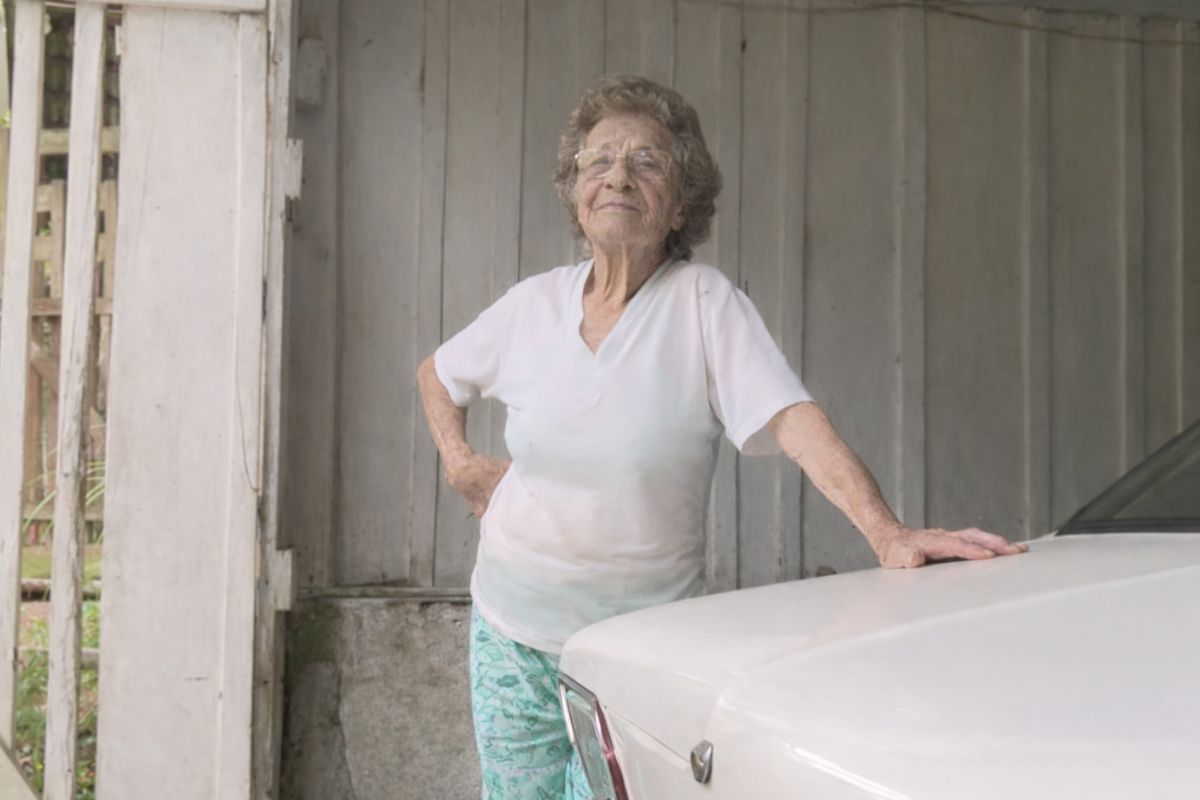


At 97, Dona Lavínia Continues to Live Alone in Gaspar, Uses the Same 76 Chevette to Go to the Bank, the Market, the Pharmacy, and the Church, and Has Become a Discreet Symbol of Full Independence in the City’s Routine.
In practice, this means that Dona Lavínia continues to live alone and manage her own life, with a simple and clear agenda. She decides when to leave, gets into the 76 Chevette that has been with her for over four decades, and drives through the streets of Gaspar with the confidence of someone who has built this independence over a lifetime.
The Routine of Someone Who Continues to Live Alone at 97
When the 76 Chevette, shark model, appears on the streets of Gaspar, many people already know who is behind the wheel. At 97, Dona Lavínia continues to live alone and drive the same car she bought and started using at 44 years old.
Her routine today is streamlined. Long trips, like visits to Brusque to see siblings or taking her daughter to Blumenau, are a thing of the past. Now, her daily map revolves around a few fixed points.
-
The world’s first octopus farm wants to open in the Canary Islands and is already provoking an international reaction: the plan aims to produce 3,000 tons per year.

-
Drought may be creating stronger superbugs in the soil and helping antibiotic resistance reach hospitals, warns a study highlighting a problem that could grow alongside extreme weather.

-
The biggest scam in history: Napoleon’s France deceived the United States by selling them a territory that was Spanish.

-
Why is the Danakil Desert so dangerous? It has unstable terrain and how extreme temperatures and toxic gases turn the region into one of the most hostile environments on Earth.


She drives to church, the pharmacy, the supermarket, and the bank. That is enough to keep the house stocked, health in check and faith in order.
The curious thing is that, even at an advanced age, she does not see it as heroism. For Dona Lavínia, continuing to live alone and managing by car is part of a normalcy she built early on, learning to take on responsibilities from childhood.
The 76 Chevette That Became a Life Companion

The 76 Chevette is not just an old car. It is a character in Dona Lavínia’s story, as much as the woman behind the wheel. She says that the “teaching” of driving was to the point. Paulinho, who helped her learn, just explained the sequence of gears.
First, second, third and fourth. No long lessons or complete courses. She got into the car, made a wrong turn, corrected it, hit the road, and never stopped.
Over time, the trips became longer and more frequent, connecting Gaspar to Brusque and Blumenau for family and work commitments.
Today, the emotional mileage carries as much weight as the mechanical. To keep the Chevette in good condition, Dona Lavínia continues to live alone, but she is not isolated from a technical support network.
She relies on a mechanic for the engine and another for the bodywork. They take care of the heavy lifting; she pays and keeps track. She does the car wash herself. She cleans it, puts everything in order, and considers it part of the routine of someone who remains active.
Family Nearby, but Independence First
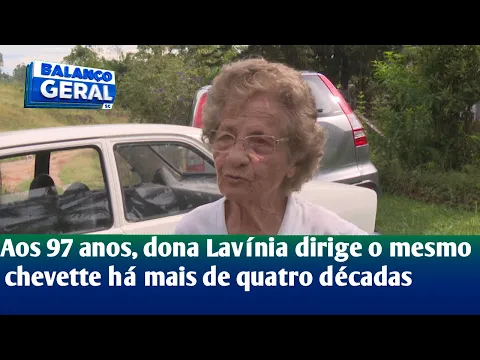

Although Dona Lavínia continues to live alone, her family is close geographically and emotionally. Children, grandchildren, great-grandchildren, and great-great-grandchildren live nearby, keeping up with her routine and helping when needed.
Even so, there is a clear line that she insists on maintaining. Continuing to live alone is, for her, a choice of independence. The house is managed by her, the schedule is set by her, and daily travels follow her command behind the wheel of the Chevette.
Her driver’s license expires this year, and she still does not know if she will renew it. This uncertainty is not just bureaucratic; it is symbolic. Renewing means prolonging this phase where continuing to live alone also includes continuing to drive alone, without relying on others to handle the small demands of daily life.
Hard Childhood, Little Time to Play, and Much Responsibility
Behind the image of a 97-year-old woman behind the wheel lies a life story marked by early responsibility. Dona Lavínia recalls that, since she was very young, she did not have the freedom to play.
She shares that she was often punished by her mother’s siblings, always tasked with taking care of younger siblings. Instead of running, playing, or exploring the world, she spent her time sitting in a cart, with her brother in her lap, holding the child while her mother worked.
This childhood without room for leisure shaped her view of what it means to live truly. Today, when she continues to live alone and freely decides what to do with her own time, she feels that she is finally experiencing the world in the way she could not know in her youth.
What Dona Lavínia’s Independence Says About Aging
Dona Lavínia’s story is a rare snapshot. In a country where aging often means quickly losing autonomy, seeing someone who at 97 continues to live alone, takes care of her own house, and drives her own car compels reflection on old age, health, and independence.
This is not a model to be imposed on everyone. Not every elderly person has the physical, emotional, or safety conditions to live this way.
But Dona Lavínia’s case shows that when health, family support, and willpower converge, it is possible to age with a sense of agency, rather than being merely carried along by the decisions of others.
In the end, that 76 shark Chevette weaving through the streets of Gaspar is a visible sign of something deeper. It is the symbol of a woman who spent her life caring for others, who could hardly be a child, and who now, in the final stretch of her life, chooses to live in the simplest and most direct way she knows. Continuing to live alone, driving, choosing her own path, and finally feeling in practice what it is to have freedom.
And you, upon seeing Dona Lavínia’s story, think it is positive for a 97-year-old person to continue living alone and driving their own car, or do you believe that, at this age, the family should take more control of the routine?








A história de vida da Dna Lavinia é linda e tem uma família que a ama e a respeita.
Espero chegar bem, assim, como ela.
Parabéns a todos.
como é lindo de se ver a Dona Lavinia nessa condição de dona de suas ações . Infelizmente hoje, vivendo uma realidade de muitos produtos químicos no cotidiano, as pessoas muito provável não chegar a fase idosa. Mas os que puderem, que façam .
Ela sendo uma pessoa fisicamente e mentalmente saudavel, não há problemas, que comande a própria vida. Tempo de vida é experiência, não incapacidade.