






 Portuguese
  Spanish


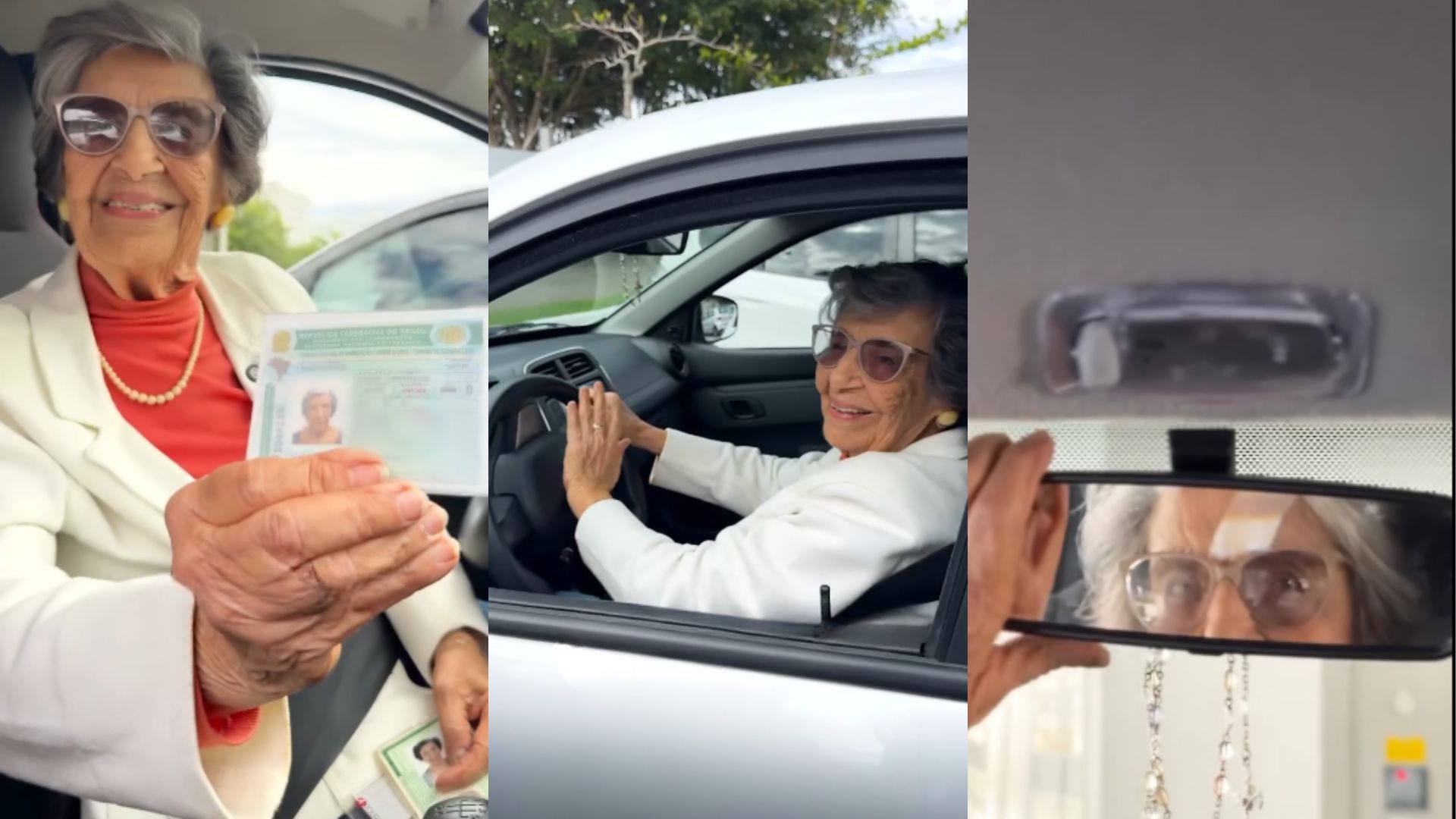


Elderly Woman’s Story from Florianópolis Goes Viral by Showing Active Driving Routine, with an Old License, Independence in Daily Life, and Report Released by the City Hall that Rekindled Debate on Aging, Urban Mobility, and Autonomy in Brazilian Traffic.
At 98 years old, retiree Marilde Rodrigues, a resident of Florianópolis, continues to drive through the streets of the Santa Catarina capital with the same license she obtained in 1961.
Besides the time she has held the license, her active routine stands out, which includes trips to the market, visits, and frequent get-togethers with friends.
The story gained traction after the City Hall of Florianópolis published a video showing Marilde behind the wheel of her own car, a Renault Kwid.
-
Restaurants Combat Frying Odors Before Cooking Begins: Here’s Why This Routine Matters

-
8-Year-Old Girl in Brazil Creates Care Kits for Over 5,000 Homeless People After Learning to Sew with Her Grandmother

-
A Simple Bar of Soap Could Be the Key to Effortlessly Cleaning Stubborn Oven Grease
-
Brazilian Woman Turns 1.3 Tons of Waste into Over 4,000 Sustainable Bags and Accessories


In the video, she talks about her decision to maintain independence in mobility and practically shows how she continues to drive in her daily life.
In the post shared on social media, Marilde jokes about her future by saying she intends to drive “until she’s 101.”
She then adds lightly: “It might even be more,” a phrase that became one of the most shared parts of the video.
Driver’s License from 1961 Crosses Decades and Stands Out

Licensed since 1961, Marilde has 64 years of formal driving experience.
During this time, she has witnessed profound changes in traffic, vehicles, and licensing rules in Brazil.
It was precisely the contrast between the age of the driver’s license and the vitality demonstrated in the images that fueled the buzz on social media.
The long trajectory, combined with the naturalness of her account, helped turn the video into a topic of conversation outside of Santa Catarina.
In one part, she describes how she approaches driving in her daily life and states that she drives “with ease” and “with pleasure.”
These statements appear in the original video and were reproduced in reports that discussed the official material.
Despite the attention generated, Marilde avoids treating the subject as a generational dispute.
When telling simple situations, she recounts that sometimes friends come to pick her up, but when they are without a car, it is she who takes the wheel.
Driving Routine Includes Market Visits, Social Calls, and Meetings
In the video, Marilde explains that she maintains a schedule similar to that of many residents who depend on their cars for daily tasks.
“Oh, I do everything. I feel safe, I go to the market, I visit, I go for a snack, I go out like this with friends…”
The scenes show the elderly woman driving while commenting on her own driving.
At another moment, she reacts to the topic of driving ability and asserts: “you saw that I have control over the steering.”
The content, published by the City Hall, was replicated on social media and was also covered in local reports.
The simple format, without staging, reinforced the perception of a spontaneous account of everyday life.
The car shown in the video is a Renault Kwid, a compact model widely used for urban commutes.
The reports also mention that the vehicle shown features a manual transmission, a detail that caught the attention of part of the audience.

Family Was the Main Challenge to Continue Driving
Although discussions about driving in old age often focus on reflexes and risks, Marilde points out another obstacle.
According to her, the biggest challenge was not her ability, but her relatives’ reaction.
“The hard part was convincing the family to let me drive, right?”
This phrase illustrates a common impasse in homes with elderly people who still drive vehicles.
In Marilde’s case, the released material does not detail how this family agreement was built.
Still, the driver herself associates the difficulty more with obtaining her relatives’ authorization than with the act of driving.
The repercussion of the video also rekindled local debates about elderly drivers.
Reports that contextualized the case recalled that Florianópolis has tens of thousands of drivers in this age group.
Why Stories of Elderly Drivers Attract So Much Attention
The video published by the City Hall relies on simple scenes and short statements, without dramatization.
This format helped to broaden the circulation of the content across different digital platforms.
In addition to the institutional post, snippets appeared on social media, repeating the same central elements.
Among them, the advanced age, the old driver’s license, the Renault Kwid, and the statements made by Marilde.
Part of the interest can also be explained by the symbolic value of a daily gesture.
Instead of treating the car as an exception or adventure, Marilde presents driving as a practical tool to maintain commitments.
The contrast between age and the naturalness of the account often sparks curiosity and identification.




Bom dia. P manter a CNH, é preciso passar no exame médico, não é! Ora, se passou no exame, então tá apto. Vida q segue