





 Português
  Inglês
  Espanhol
  5 min de leitura
  0 comentários


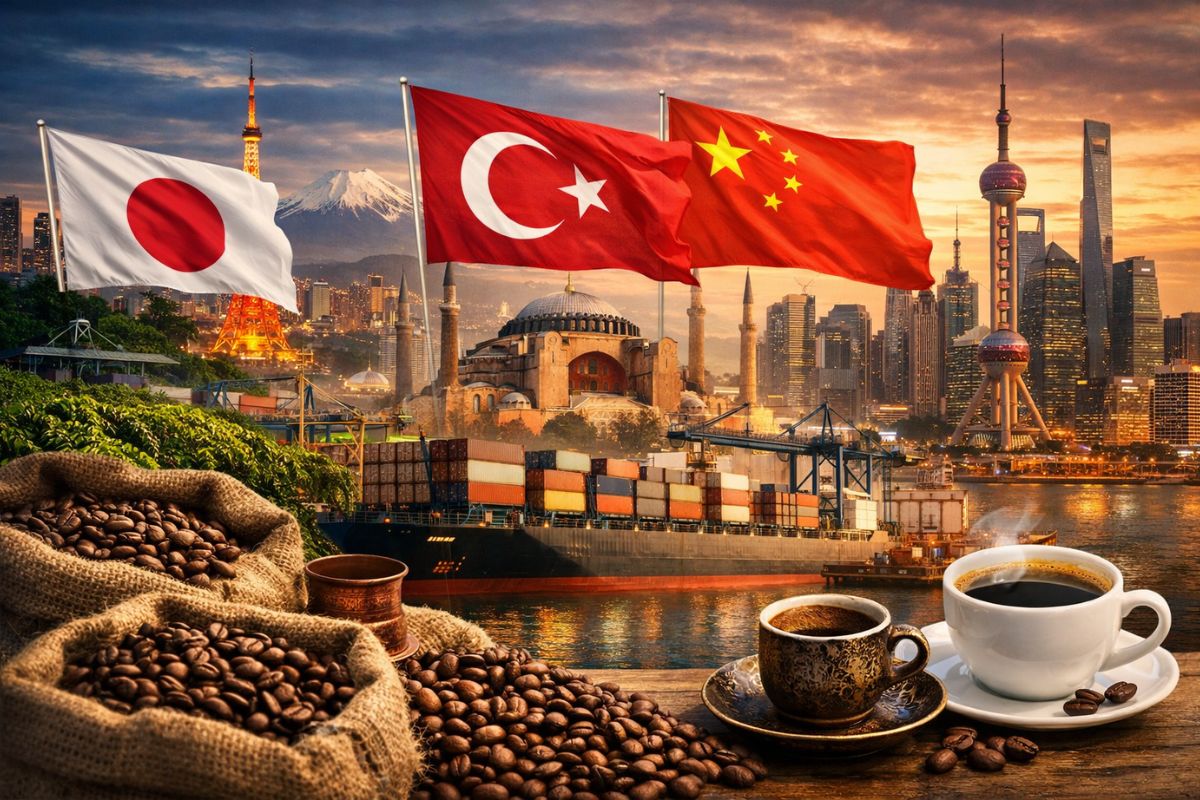
Cecafé Survey Shows That Among The Ten Largest Importers, Only Japan, Turkey, and China Increased Their Purchases of Brazilian Coffee in 2025. Brazil Exported 40,049 Million Bags to 121 Countries, With A 20.8% Decrease in Volume, But Record Revenue Driven by High Prices in The Grain Market.
In 2025, Brazilian coffee experienced a rare contrast: the exported volume fell, but the revenue soared to unprecedented levels, with higher prices in the international market. In this context, only three countries among the largest buyers went against the trend and increased their import of Brazilian coffee, changing the landscape of foreign trade in the sector.
The turnaround became even more evident because the giants pulled back. Exports to the United States plummeted after the tariff, and the country lost its place at the top of the ranking, which went to Germany, despite a reduction in purchases. The map of where Brazilian coffee is going started to shift precisely when the largest markets hit the brakes.
What Changed in The Trade of Brazilian Coffee in 2025

Between January and December 2025, Brazil exported 40,049 million bags of 60 kg of coffee, encompassing all types of the product, destined for 121 countries.
-
Brazilian city gains industrial hub for 85 companies that is equivalent to 55 football fields.

-
Peugeot and Citroën factory in Argentina cuts production by half and opens a layoff program for more than 2,000 employees after Brazil drastically reduced purchases of Argentine vehicles.

-
A Brazilian city gains a factory worth R$ 300 million with the capacity to process 200 thousand tons of wheat per year, a mill of 660 tons/day, silos for 42 thousand tons, and an industrial area of 276 thousand m².
-
Havan will leave the shopping mall in Blumenau to inaugurate something that the chain has never done before: a megastore in half-timbered style in the Historic Center of the city, which is expected to be completed in May and change the landscape of local retail.

The volume represented a 20.8% decrease compared to 2024, in a year marked by climatic problems that affected production and pressured supply.
Even with fewer bags shipped, the revenue was record high because coffee prices in the international market increased.
In practice, Brazil sold less in quantity, but in a more valued environment, where each bag brought in more revenue.
This helps explain why trade became more competitive and sensitive: when supply tightens and price rises, buyer behavior tends to become more selective, and any trade barrier weighs even more.
The Impact of The Tariff and The Drop of The United States
The North American market felt a shock in 2025.
Brazilian exports to the United States dropped 33.9% after the tariff, which remained in effect for soluble coffee.
This drop was not a mere statistical detail: it was enough to remove the U.S. from its position as the top buyer of Brazilian coffee.
When a buyer this size retreats, there is coffee left to be redistributed to other destinations, but not automatically.
Each country purchases for its own specific reasons, with different trade policies, particular internal needs, stocks varying throughout the year, and preferences for types of coffee.
It is at this point that the Cecafé data stands out: among the ten largest importers, only three grew.
Germany Takes The Lead Even While Reducing Purchases
The leadership of the ranking shifted to Germany, but this does not mean expansion. On the contrary: Brazilian coffee exports to the European country dropped 28.7%.
Still, with the even greater decline from the United States, Germany took the top spot as the main destination.
This detail reveals how 2025 was not a year of homogeneous growth among the large importers.
What happened was a rearrangement: traditional leaders lost momentum, and Brazilian coffee trade began to depend more on those who maintained appetite amidst adverse climate, high prices, and tariff barriers.
Japan: Stock Replenishment Drove Increased Purchases
Japan was the fourth largest buyer of Brazilian coffee in 2025 and imported over 2.6 million bags, registering a 19.4% increase compared to 2024.
The explanation provided by Cecafé links this growth to stock replenishment.
This movement suggests a typical market behavior: when an importer spends a period buying less because they are already stocked, they tend to return to the market as stocks dwindle.
In 2025, this return occurred during a period of high prices and tighter supply, making the data even more relevant.
Japan not only returned to buying but increased the pace, reinforcing the role of Brazilian coffee on the shelves and in the supply of the country.
Turkey: Domestic Consumption and Regional Redistribution Sustained The Advance
Turkey also escaped the downward trend and increased purchases by 3.26% in 2025, ranking as the sixth largest importer of Brazilian coffee.
The Cecafé reading points to two simultaneous vectors: catering to the domestic market and acting as a redistribution hub for the product to other countries in the region.
This second function weighs because it transforms the country into a sort of commercial bridge.
Instead of importing only for domestic consumption, Turkey buys to supply supply chains that serve nearby markets, including countries described as being in difficulty and war.
In practice, this means that part of Brazilian coffee enters through one channel and exits through another, maintaining the flow even when traditional buyers reduce orders.
China: Consumption Soared and Brazilian Coffee Gained Space
The third exception was China, which bought 19.49% more Brazilian coffee in 2025 than the previous year, totaling 1.1 million bags of 60 kg.
As a result, the country ranked tenth among the importers of the product, reinforcing a trend of accelerated expansion.
The consumption data helps to dimension the phenomenon: China, historically known as a tea country, now stands as the sixth largest coffee consumer in the world, according to the USDA, behind only the European Union, United States, Brazil, Philippines, and Japan.
The growth is driven by changing habits, with a focus on the entry of young people into regular consumption.
Another relevant point is the preference noted by Cecafé: while some markets seek more competitive prices from different origins, China prioritizes Brazilian arabica coffee.
This creates a type of demand that does not depend solely on price, but also on product profile and positioning, which can maintain purchases steady even in difficult years.
What These Three Countries Reveal About The New Path of Brazilian Coffee
When the total volume drops by 20.8% and the price rises, trade stops being just a race for quantity and becomes a competition for priority.
What Japan, Turkey, and China have in common is not a single reason, but rather the fact that they found specific reasons to increase purchases of Brazilian coffee in 2025: stock, regional strategy, and consumption expansion.
At the same time, the retreat of the United States after the tariff and the reduction from Germany, even while leading, shows that the large markets were not in expansion.
The result is a clear picture: Brazilian coffee remained global, but the engine of growth, in 2025, came from a few destinations that swam against the tide.
And for you: with the U.S. retreating and China growing rapidly, do you think Brazilian coffee will increasingly rely on these new buyers in the coming years?









-

2 pessoas reagiram a isso.