





 Portuguese
  English
  Spanish
  3 min of reading
  59 comments


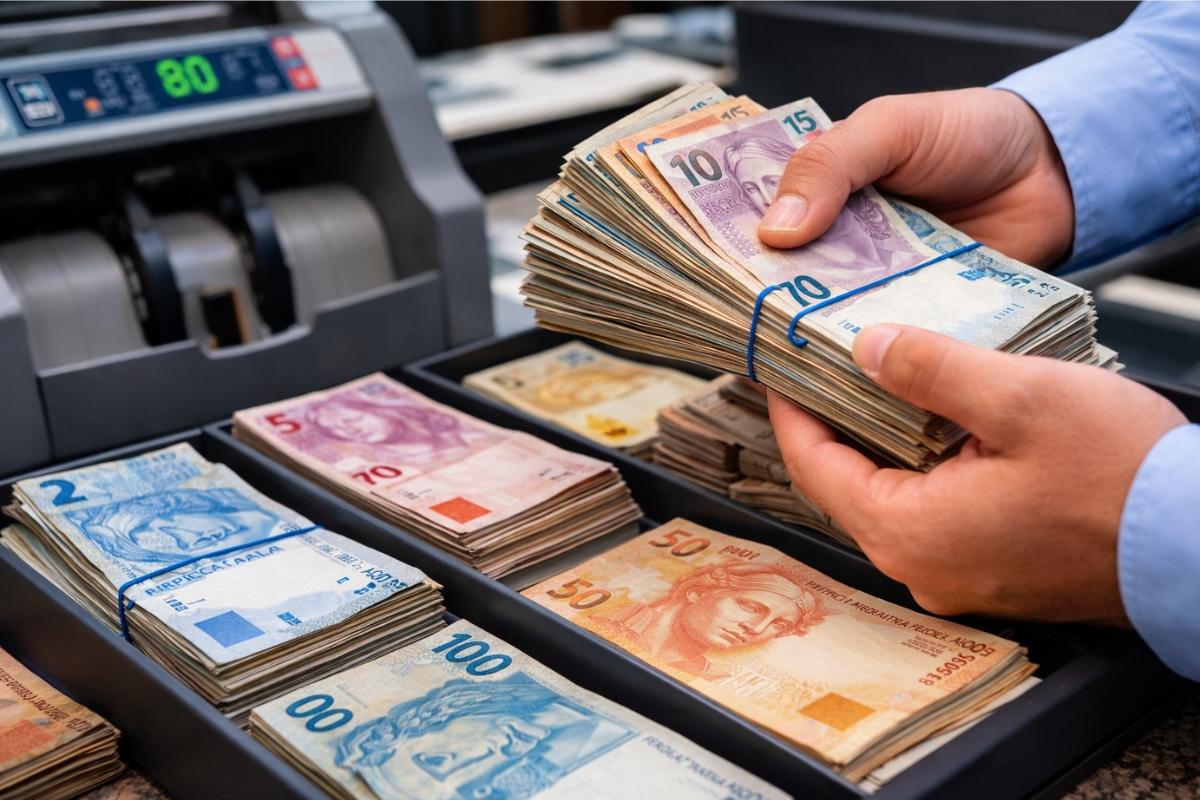


The Change Makes Banks Collect Old Notes in Daily Life, and This Affects How Paper Money Circulates
The Central Bank of Brazil started the process of definitively withdrawing the bills of the first family of the Real, launched in 1994 at the beginning of the Real Plan.
In practice, the notes remain valid, but they no longer return to the public’s wallet when they go through a teller. The goal is to renew the money in circulation with more recent bills.
The impact is felt in daily life, as old bills are separated when they enter the banking system, and circulation decreases over time.
-
The government requests the Federal Revenue Service for a new system to automate the income tax declaration, reducing errors, time, and bureaucracy for millions of Brazilians.

-
Pix in installments, international Pix, and contactless payment without internet: the Central Bank revealed the new features coming to the tool that is already used by almost every adult in Brazil.

-
Mercado Livre has just started selling medications with delivery in up to three hours to your door, and this move could completely change the way Brazilians buy medicines on a daily basis.

-
In Dubai, rising tensions from the war in the Middle East are causing super-rich individuals to leave the Gulf and direct their fortunes to a new financial refuge in Asia.

What Happened and Why This Caught Attention
The rule addresses the definitive removal of the bills from the first family of the Real. These notes were part of the beginning of the Real Plan and circulated for decades.
The measure was not presented as an immediate collection done by people at home. The focus is on the path that money takes when it reaches the banks.
As a result, the old paper money tends to disappear from common use due to wear, standardization, and security of the circulating medium.
What Changes in Practice for Those Who Use Cash
The old bills remain as legal tender, so they can be used for purchases and transactions normally.
The change occurs when they enter a bank branch. When appearing in deposits, payments, or exchanges, banks must retain these notes instead of putting them back into circulation.
This means that the consumer may still receive an old bill in commerce, but it tends to disappear from daily life as soon as it returns to the banking system.
How the Collection Works Within the Banks
The procedure guides the separation of old notes during cash activities. From there, they go to custody and to the flow of replacement.
This path causes worn or old bills to exit the circuit, making room for newer and better-condition notes.
Over time, the trend is to increase the presence of the second family of the Real in everyday use.
The Commemorative Bill of 10 Reais Also Joins the Process
The process includes the commemorative bill of 10 reais, issued in 2000 in reference to the 500 years since the discovery of Brazil.
Even with more limited circulation, this note will also be gradually withdrawn when it reaches financial institutions.
This standardizes the treatment given to old bills and reinforces the replacement with more recent paper money.
What Can Happen from Now On
The withdrawal occurs progressively, following the natural return of old bills to the financial system.
With fewer old notes circulating, the public tends to see more frequently bills in better condition and with more current security features.
The central message is simple: old money remains valid but loses space in daily life because banks start to collect and not return it to the common circuit.
The measure reorganizes the circulation of paper money in the country and reduces the presence of bills launched in 1994, without requiring an immediate rush from the population to the banks.









tem tanta imagem de cédula na casa da moeda, e usam imagem de IA pra ilustrar a matéria🙄
Os Bancos sempre recolheram as cédulas em mau estado de conservação, devolvendo-as ao Banco Central para substituir por novas. É um trabalho constante e realizado internamente nas agências. Quem é ou foi Caixa de Banco sabem muito bem!
Estamos caminhando para um sistema de controle. Tudo sendo arquitetado para 2030
Que bom, quem não deve nada não tem o que temer