





 Portuguese
  English
  Spanish
 4 min of reading
  0 comments


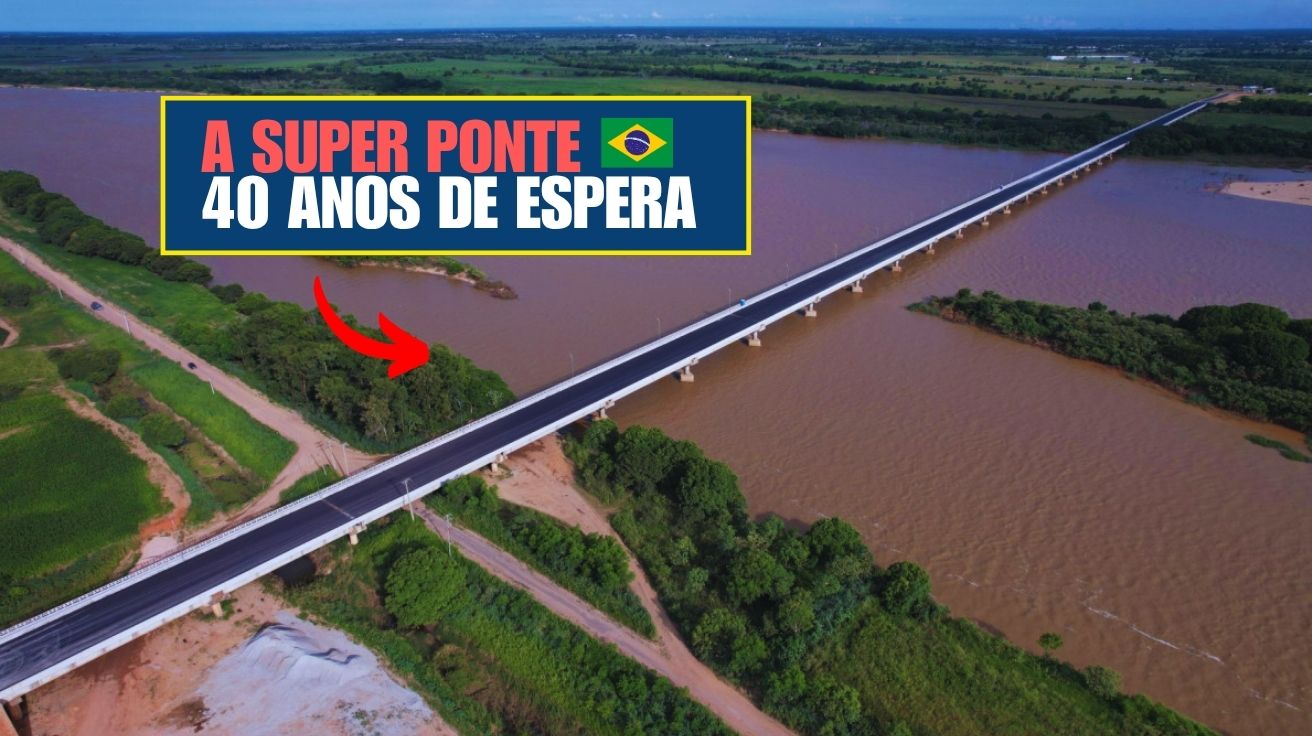
After Four Decades of Political Promises and Stalled Works, the Monumental Bridge Over the Paraíba do Sul River was Finally Delivered with the Promise to Deeply Change Logistics, Tourism, and Economic Growth in Two Cities in Northern Fluminense.
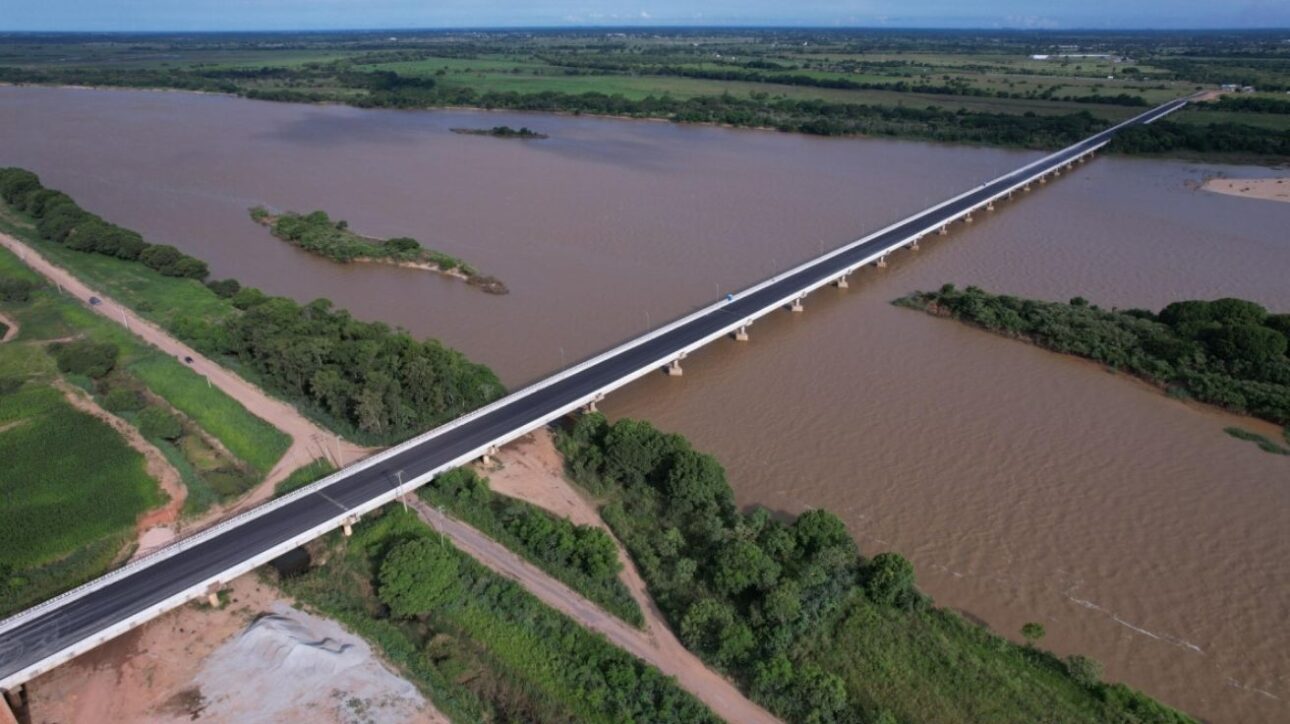
The Integration Bridge Deputy João Peixoto, connecting the municipalities of São João da Barra and São Francisco de Itabapoana in Northern Fluminense, was finally inaugurated after more than four decades of promises, stoppages, and frustrated expectations.
Considered one of the most anticipated projects in the state of Rio de Janeiro, the structure over the Paraíba do Sul River spans 1,344 meters and represents a historical milestone for the region.
The inauguration took place at the beginning of this year, with the presence of state and municipal authorities.
-
The government requests the Federal Revenue Service for a new system to automate the income tax declaration, reducing errors, time, and bureaucracy for millions of Brazilians.

-
Friends have been building a small “town” for 30 years to grow old together, with compact houses, a common area, nature surrounding it, and a collective life project designed for friendship, coexistence, and simplicity.

-
Pix in installments, international Pix, and contactless payment without internet: the Central Bank revealed the new features coming to the tool that is already used by almost every adult in Brazil.
-
This small town in Germany created its own currency 24 years ago, today it circulates millions per year, is accepted in over 300 stores, and the German government allowed all of this to happen under one condition.


Governor Cláudio Castro emphasized the importance of the delivery, highlighting that the bridge “represents a real change in people’s lives, with a direct impact on mobility, the economy, and regional logistics.”
The project received an investment of R$ 291 million from the State Government, through the Department of Highways (DER-RJ).
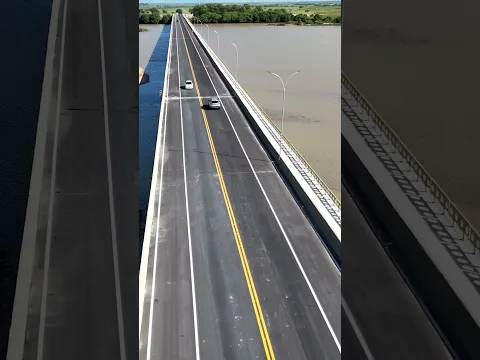
With dual lanes in both directions and a pedestrian walkway, the bridge was designed to support heavy traffic, mainly from trucks linked to agribusiness and industrial transport.
The expectation is that more than 2,300 vehicles will circulate daily across it. Furthermore, the new road connection is expected to reduce the journey by up to 80 kilometers between the cities and access to BR-101.
Integration Bridge: A Decades-Long Wait
The project faced numerous obstacles since the 1980s. Over the years, several governors announced the resumption of the construction, but the work was halted several times due to lack of resources, environmental barriers, and political crises.
The definitive resumption only occurred in 2020, after a restructuring of the state budget.
In addition to the main crossing, improvements to access roads are also planned: RJ-196, which connects the bridge to São Francisco, and RJ-194, which links to the Industrial District of Campos dos Goytacazes.
The president of DER-RJ, Pedro Henrique Ramos, stated that “these complementary roads are essential for the bridge to fulfill its role of logistical and social integration.”
The project was named in honor of state deputy João Peixoto, who passed away in 2020 and advocated for the construction for decades.
Peixoto represented Northern Fluminense in the Legislative Assembly of Rio de Janeiro and was responsible for various negotiations to ensure the project’s continuity.
During the ceremony, the president of Alerj, Rodrigo Bacellar, recalled the legislator’s role: “It was thanks to João Peixoto’s persistence that this bridge was not forgotten.”
Engineering and Mobility
The bridge, besides being a robust structure, required large-scale technical solutions.
To cross the Paraíba do Sul River, engineers drove 35 pillars with deep foundations, some exceeding 20 meters.
The use of precast slabs allowed for accelerated assembly of the bridge, reducing the execution time of the work.
The transportation logistics were partially done by barges over the river itself.
According to data from the Federation of Industries of the State of Rio de Janeiro (Firjan), the bridge is expected to directly benefit about 1 million people.
The expectation is that it will facilitate the evacuation of agricultural production, expand access to the Port of Açu, and promote regional tourism.
<pMunicipalities like São Francisco de Itabapoana, which historically faced access difficulties, will more effectively integrate into the economic axis of Northern Fluminense.
During the inauguration, the creation of an integrated security base on the bridge was also announced, with joint operations by the Military Police, Federal Highway Police, and municipal guards.
The structure will include monitoring cameras and support points for operations, increasing oversight and security in the area.
Regional Impact and Next Steps for the Integration Bridge
Around the bridge, merchants and residents celebrated the completion of the work.
In São João da Barra, sectors related to construction, transport, and tourism are already reporting an increase in demand for properties and services.
In São Francisco de Itabapoana, farmers point out a significant logistical gain, with reduced transportation time to supply centers.
Despite the delivery, the project is still not completely finalized. Works on the accesses of RJ-194 and RJ-196 are still ongoing.
Additionally, the mayor of Campos, Wladimir Garotinho, suggested the construction of a detour to divert heavy traffic from the city center.

The president of Alerj, Rodrigo Bacellar, responded that “changes in the layout at this moment could cause challenges in the Court of Audits,” but that the government is open to studying alternative solutions.
The bridge also assumes a strategic role in emergency situations. In previous years, floods and barge collapses interrupted access between municipalities, leaving entire communities isolated.
With the new permanent crossing, responses to natural disasters can be quicker and more effective.
Northern Fluminense, historically overlooked in major investments, sees in the Integration Bridge a chance for economic repositioning.
Besides logistics, the project strengthens the sense of belonging of two cities that, although separated by a river, share cultural and familial ties.








-

-

5 pessoas reagiram a isso.