





 Portuguese
  English
  Spanish
  6 min of reading
  0 comments


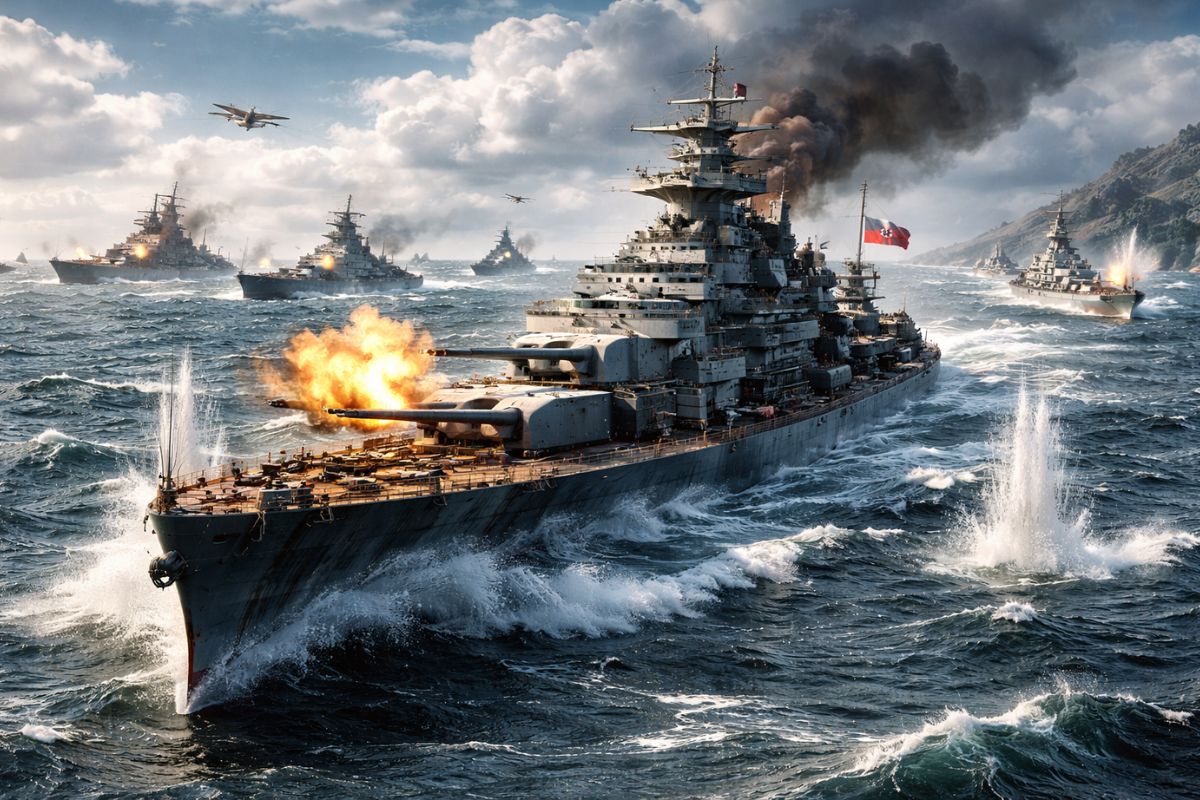
After Destroying the HMS Hood in a Dazzling Confrontation, the Bismarck Became the Target of a Gigantic British Force in the Atlantic, in an Operation That Mobilized Battleships, Aircraft Carriers, Cruisers, and Destroyers Until the Final Outcome at Sea
The Bismarck entered naval warfare history by transforming a confrontation of mere minutes into a profound shock for the British Royal Navy. When the German battleship hit the HMS Hood and split the ship in half, the shock was not just military. The destruction of the biggest British symbol in the North Atlantic became a matter of honor, revenge, and strategic survival.
From that moment on, the Bismarck ceased to be just a powerful warship and became the target of an unprecedented pursuit. The Royal Navy mobilized a colossal force to prevent the German battleship from reaching occupied France and continuing to attack Allied convoys. What followed was a dramatic race between the German giant and dozens of British ships in one of the most striking episodes of World War II.
How the Bismarck Came to Be a Symbol of German Naval Power
Launched in Hamburg amid a ceremony laden with propaganda, the Bismarck was presented as proof that Germany was once again challenging British dominance at sea.
-
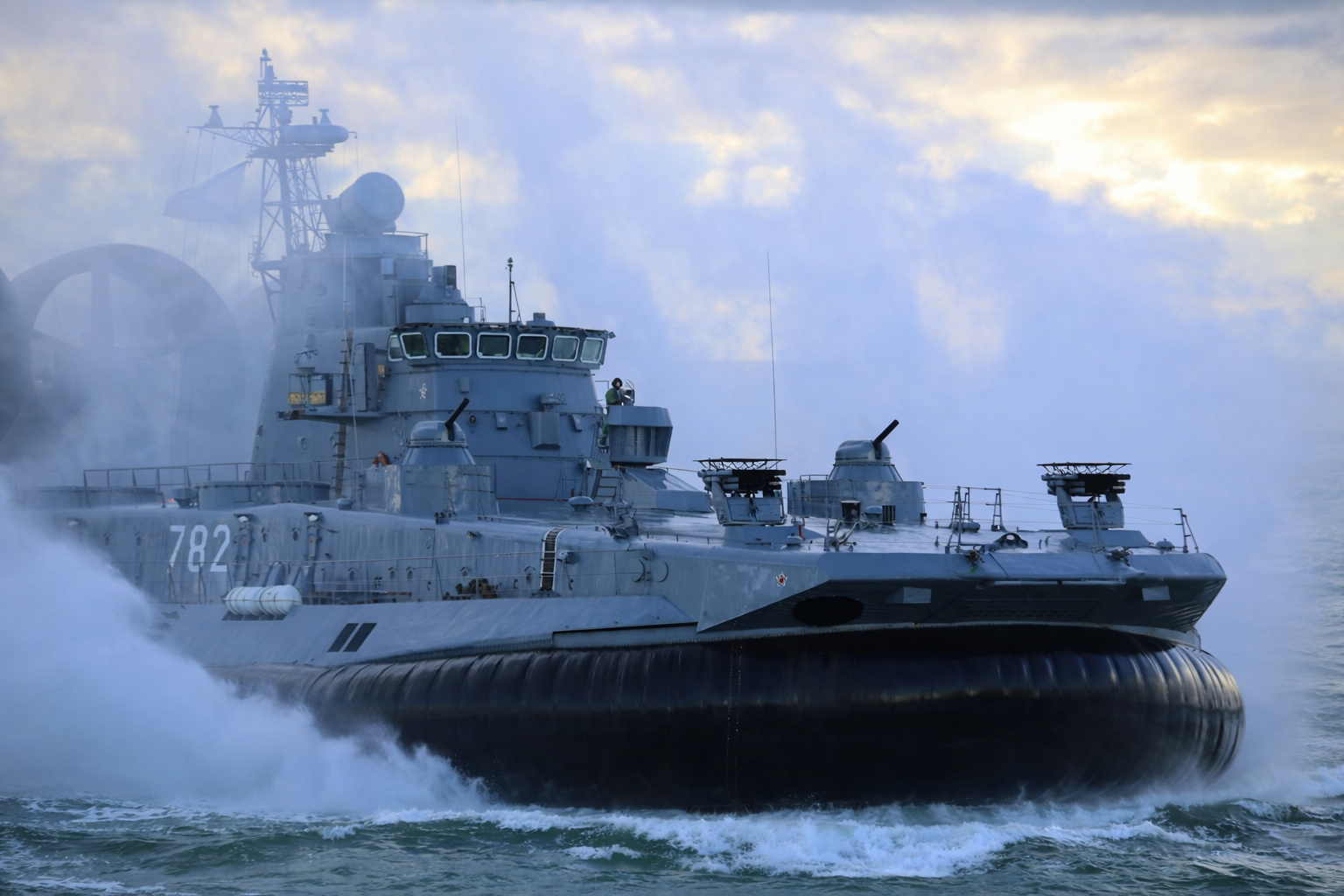
Classified as a “amphibious monster” weighing 555 tons, 57 meters long, and featuring three propellers with a diameter of 5.5 meters, the Zubr is the largest military hovercraft ever built, capable of transporting 3 tanks or 500 soldiers at speeds exceeding 100 km/h over water, ice, and sand, and China has resumed production of it to project power in the South China Sea.
-
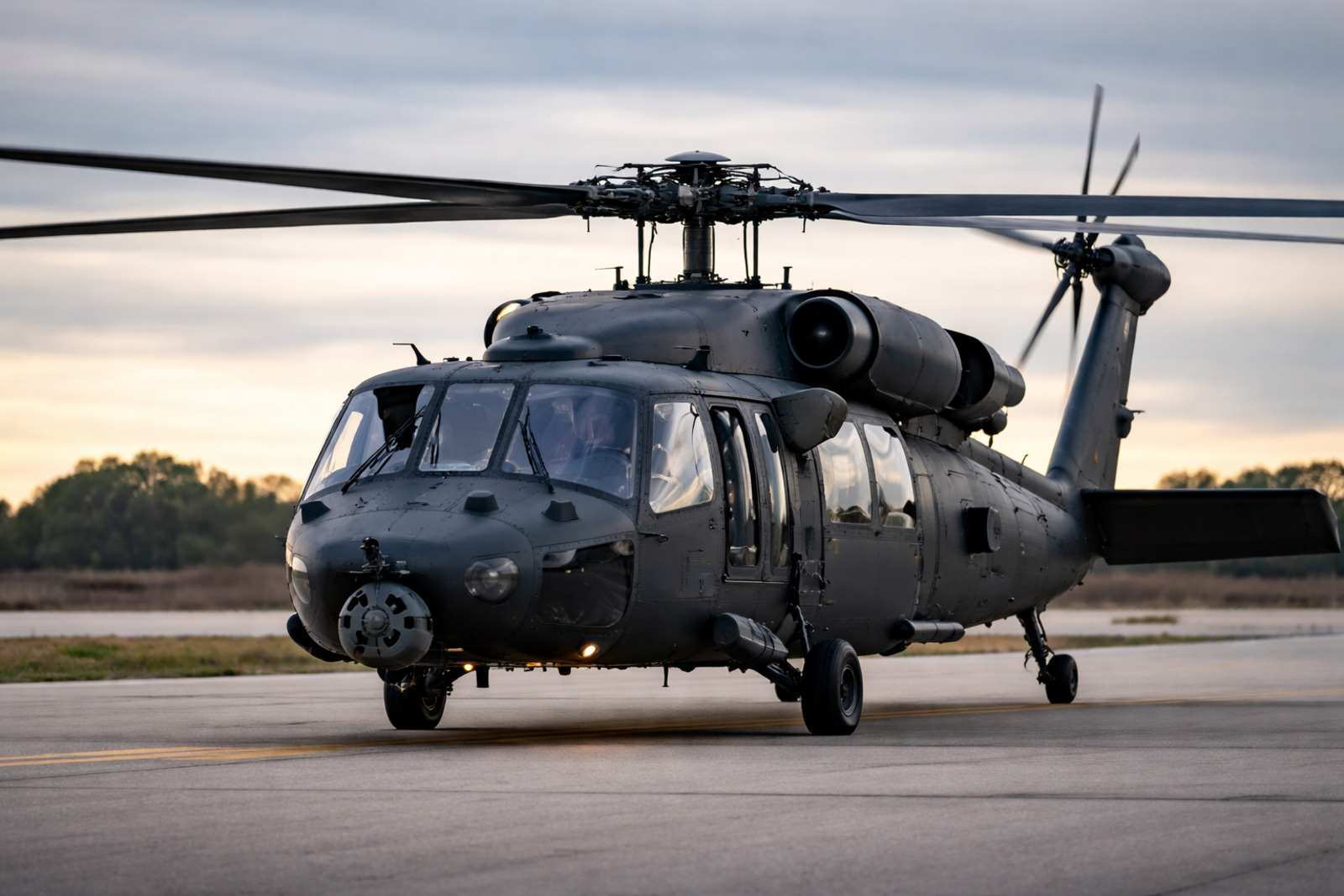
The U.S. Army receives the first Black Hawk helicopter that can fly without pilots, be controlled by a tablet, and even land on its own during high-risk missions.
-
With 11,000 tons and sensors capable of hunting submarines at long distances, the Type 055 has become one of the most feared floating arsenals of the Chinese navy.

-
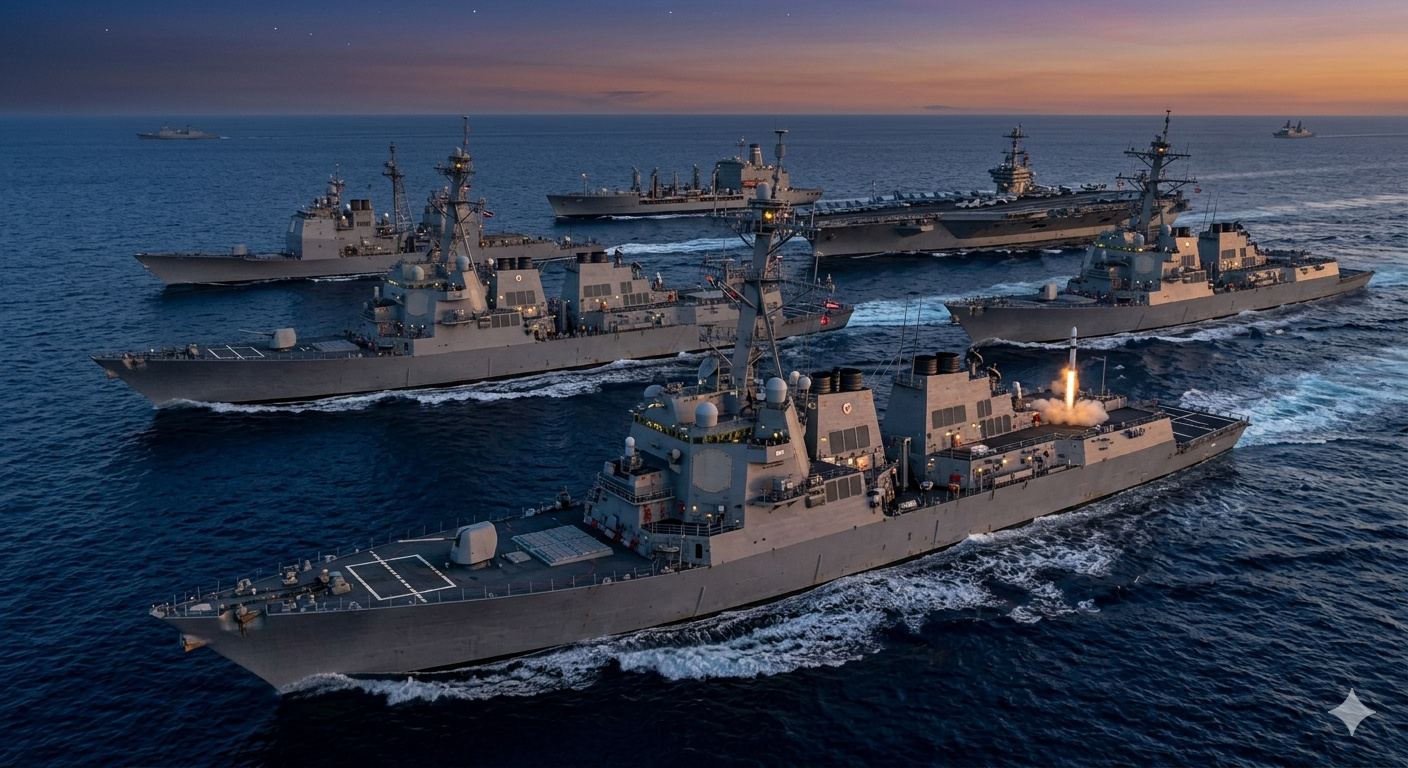
With over 15,000 tons, radars capable of tracking hundreds of targets simultaneously, and more than 120 missiles ready for launch in seconds, modern destroyers cease to be escorts and begin to dominate the naval battlefield.

The battleship was named after Otto von Bismarck, a central figure in the history of the German Empire, and emerged as a project aimed not only at combat but also at intimidation.
The dimensions were impressive. Weighing over 50,000 tons when fully loaded, with great autonomy and eight 15-inch main guns, the Bismarck represented the Kriegsmarine’s bet on a ship capable of imposing respect from a distance. It was a floating fortress designed to attack, withstand, and symbolize the rebirth of German naval power.
Even so, the preparation phase revealed significant limitations. The ship had maneuverability difficulties in certain conditions, faced logistical delays, and spent weeks inactive. Still, when commissioned and placed under the command of Captain Ernst Lindemann, the Bismarck was seen as Germany’s main card to challenge the Atlantic.
The Mission That Took the Bismarck to Sea
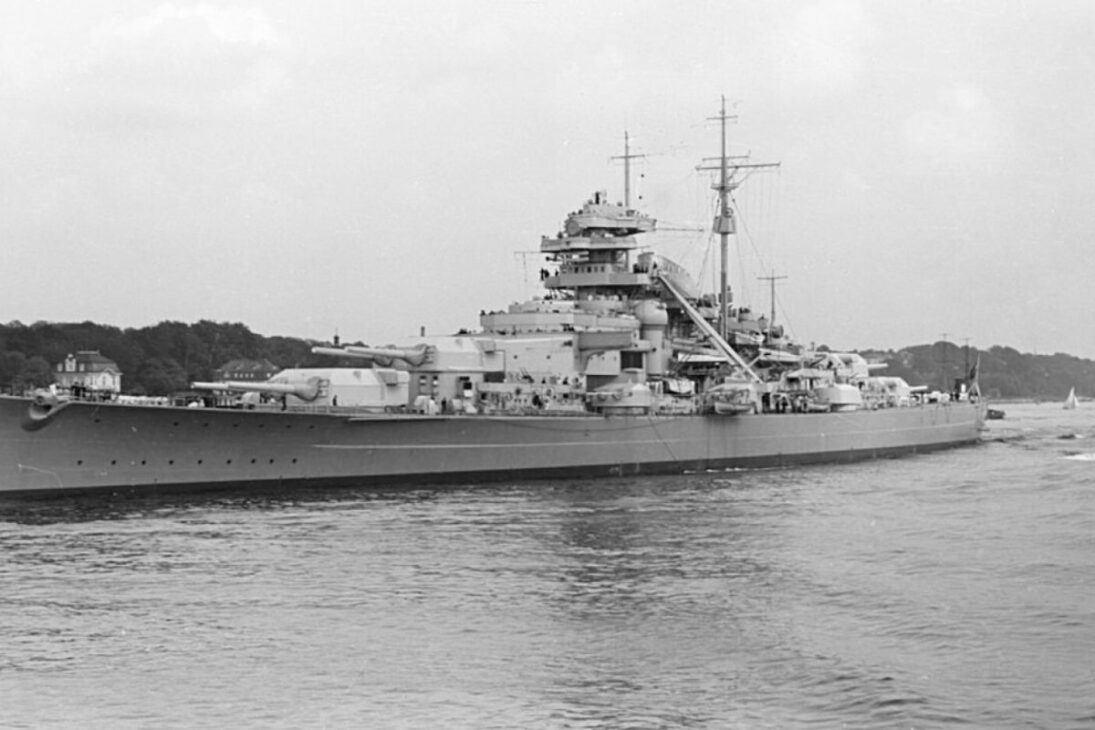
In early 1941, German naval strategy was under pressure. Other large ships had been damaged or were not yet ready, and the Bismarck ended up becoming the most important piece available for an offensive mission.
The plan was not to confront the British fleet in open battle, but to break the blockade, reach the Atlantic, and attack merchant convoys that sustained Britain’s economy and war effort.
This is how Operation Rheinübung was born. The Bismarck would depart accompanied by the heavy cruiser Prinz Eugen, follow the northern route, bypass Norway, cross the Denmark Strait, and seek the open ocean. The ultimate goal was to reach Brest in occupied France after attacking Allied ships and re-supplying along the way.
However, the operation began to lose secrecy too soon. A Swedish cruiser spotted the German formation, then a British pilot managed to photograph it from above, and information quickly reached London. The mission that was supposed to be stealthy turned into a hunt even before the Bismarck reached the Atlantic.
The Duel That Destroyed the HMS Hood
In the early hours of May 24, 1941, the Bismarck confronted the HMS Hood and the HMS Prince of Wales. The confrontation in the Denmark Strait began at an extremely long distance, with the British advancing and the German battleship in a favorable position to fire its main batteries.
In the first moments, the British made a decisive mistake by concentrating fire on the Prinz Eugen, while the Bismarck adjusted its aim relatively calmly. Then, the German shots began to find their target. A shell struck the Hood devastatingly and reached the ammunition area. The explosion split the British battlecruiser in half.
The impact was brutal. Over 1,400 men disappeared into the icy sea, and only three survived. In just a few minutes, the largest symbol of the Royal Navy had been destroyed.
The Prince of Wales managed to hit the Bismarck a few times and inflict significant damage, including an oil leak at the bow, but ultimately retreated. Germany had achieved an impressive victory but also left a fatal vulnerability on its own battleship.
Churchill Orders Total Pursuit
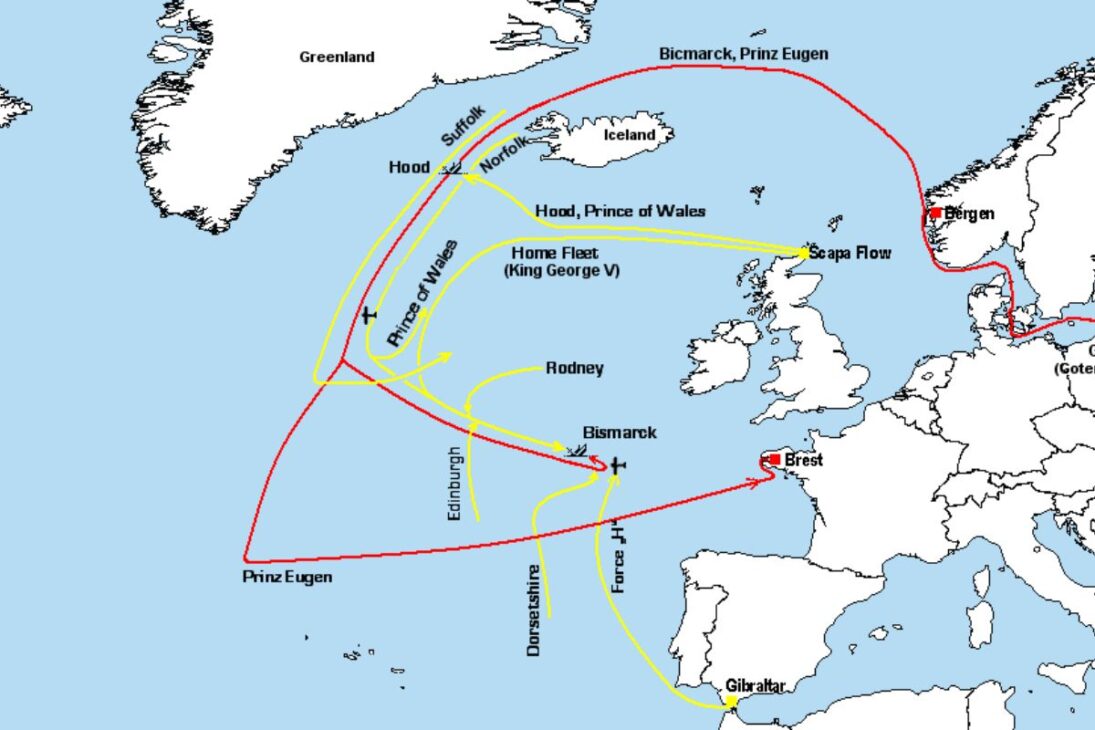
Image: Pibwl – self-made – modified Image:Rheinuebung Karte.png by WerWil
The news of the Hood’s destruction provoked an immediate reaction in London. The Bismarck became an absolute priority target. The order to sink it at any cost turned the Atlantic into the stage for the largest naval pursuit of the war, with six battleships, two aircraft carriers, numerous cruisers, and over twenty destroyers mobilized to intercept the German giant.
The problem for the command of the Bismarck was that the ship was now carrying damage that limited its chance of escape. The oil leak revealed its route, the flooded bow affected navigation, and the risk increased by the hour. Meanwhile, British cruisers maintained contact at a distance and transmitted its position.
On the German side, the hope was to take the Bismarck to the French coast, where it would be closer to air protection and logistical support. Submarines were repositioned, and the command in Berlin tried to organize defensive coverage. But the strategic advantage was already beginning to change hands.
The Torpedo That Condemned the Bismarck
Even Still Floating Strong, the Bismarck began to be pressured from the sky as well. British Swordfish torpedo bombers were launched against it amid extremely difficult conditions. A first attack had little practical effect, but the second strike altered the entire fate of the operation.
A torpedo hit the stern and jammed the Bismarck‘s rudder. From that moment on, the battleship lost the ability to maneuver freely and began to spin in slow circles, effectively trapped in open water. The ship that had humiliated the Royal Navy could no longer escape the siege.
Throughout the night, British destroyers continuously harassed the Bismarck. Not all attacks hit, but the primary objective was already accomplished: keeping the enemy under pressure, preventing any attempt at recovery, and leaving it vulnerable for the final attack at dawn.
The End of the Bismarck in the Atlantic


On the morning of May 27, 1941, the Bismarck was surrounded by the battleships Rodney and King George V, along with approaching cruisers to reinforce the bombardment. With no efficient maneuverability and the fire control system destroyed early in the battle, the German ship began taking successive salvos in an increasingly desperate situation.
One by one, its main guns were silenced. The superstructure turned to ruins, fire spread, and resistance became unsustainable. Inside the ship, the order shifted from attempting to save the hull to preparing for abandonment and sinking. The Bismarck was already a destroyed body trying to stay afloat.
After more than 90 minutes under intense fire, the ship tilted to port and disappeared into the Atlantic. Just over a hundred men survived among the more than 2,200 who had embarked on the mission. The German giant had been destroyed, but its short campaign had already marked naval warfare permanently.
What the End of the Bismarck Changed in the War
The disappearance of the Bismarck had both military and symbolic effects. For the British, the destruction of the battleship restored the honor of the Royal Navy after the shock caused by the loss of the Hood.
For Germany, the episode was devastating. Hitler began to restrict the employment of large surface units in direct confrontations, further reducing the offensive role of that part of the fleet.
Thus, the Bismarck left a contradictory legacy. In just a few days, it demonstrated the destructive power of a modern battleship, exposed the vulnerability even of the largest ships to coordinated pursuits, and showed how a single critical damage can reverse the course of an entire operation.
The story of the Bismarck mixes power, error, reaction speed, and collapse at sea. The ship seemed capable of changing the psychological balance of the war in the Atlantic but ended up besieged, immobilized, and sunk after triggering the largest naval pursuit of World War II.
In your opinion, did the Bismarck really have the potential to change the course of the war at sea, or was its fate already sealed the moment it was located by the British?






-

-

4 pessoas reagiram a isso.