





 Portuguese
  English
  Spanish
  5 min of reading
  0 comments


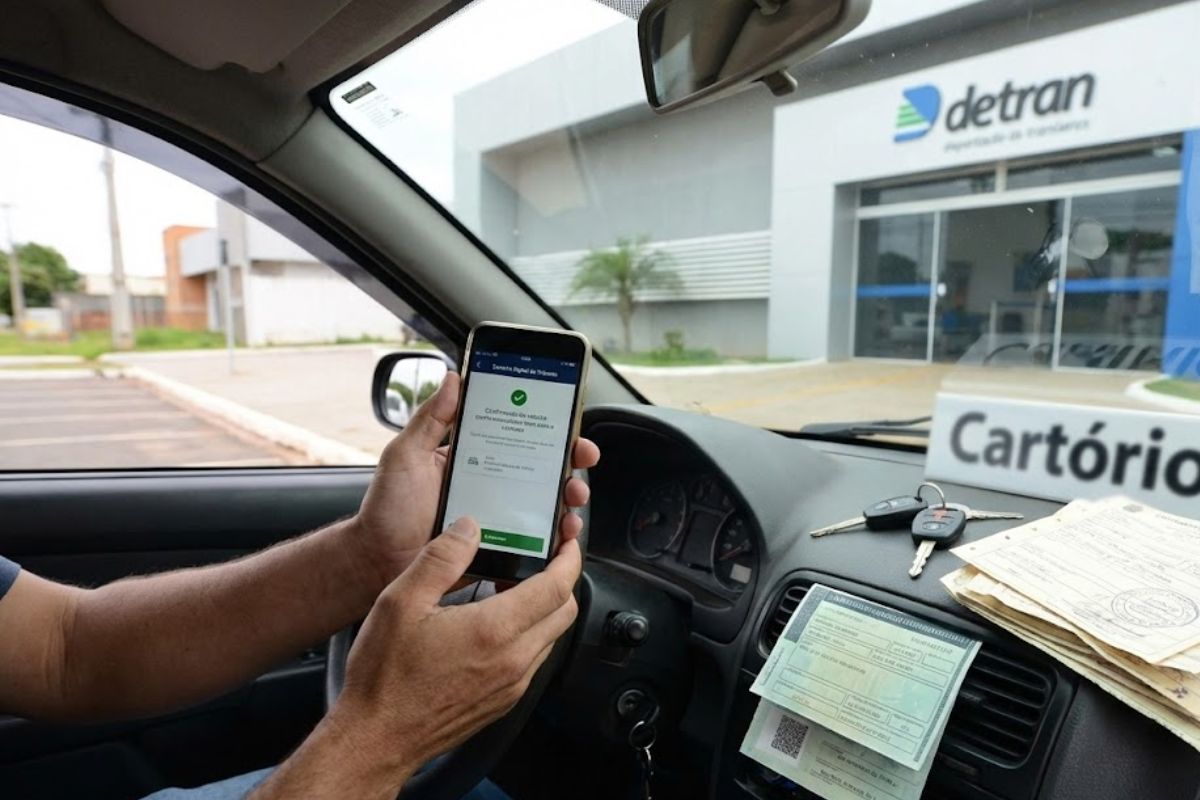
Government’s Plan Is to Move All Vehicle Transfers to the Digital Driver’s License, with Self-Inspection by Photos, In-App Payment, Less Bureaucracy in Notaries and Detrans, and Reduction of Fraud Risks in the Buying and Selling of Used Cars Across the Country and Independent Deliverers.
The federal government has opened a new front to reduce costs and bureaucracy in vehicle transfers, moving the entire process to the Digital Driver’s License app and avoiding lines at Detrans and notaries. After announcing new rules to lower the cost of the driver’s license, the economic team and the transportation department want to replicate the positive impact with a digital solution that directly affects the wallets of those who buy and sell cars.
The measures under consideration, which only depend on regulation by the National Traffic Council and could advance at the beginning of next year, foresee that vehicle transfers will be done from start to finish via mobile phone, including inspection and payment between buyer and seller, with more security against fraud. The intention is to deliver a practical change, low cost for the government, but high impact for millions of drivers who currently face fragmented and in-person steps.
Vehicle Transfer Process Within the Official App
The proposal under discussion is to concentrate all stages of vehicle transfers within the Digital Driver’s License, the official app already used to store driver’s licenses and vehicle documents.
-
Larger than entire cities in Brazil: BYD is building a 4.6 km² complex in Bahia with a capacity for 600,000 vehicles per year, but the discovery of 163 workers in conditions analogous to slavery has shaken the entire project.

-
With an investment of R$ 612 million, a capacity to process 1.2 million liters of milk per day, Piracanjuba inaugurates a mega cheese factory that increases national production, reduces dependence on imports, and repositions Brazil on the global dairy map.

-
Brazilian city gains industrial hub for 85 companies that is equivalent to 55 football fields.

-
Peugeot and Citroën factory in Argentina cuts production by half and opens a layoff program for more than 2,000 employees after Brazil drastically reduced purchases of Argentine vehicles.


Negotiations between the parties would remain free, but the formalization of the sale would be fully recorded on the platform.
According to the design under analysis, buyer and seller would confirm data directly in the app, without the need for paper, notarized signatures, or travel to Detran units just to complete the vehicle transfer.
Digital authentication replaces the physical signature on the Unique Transfer Document, the DUT, which today still requires a visit to the notary to be validated.
Self-Inspection by Photos Replaces Visits to Detran and Accredited Companies
One of the central points is the inspection. The government is inspired by models used by insurance companies, where the vehicle owner records and sends images via mobile phone.
The Digital Driver’s License app would allow for self-inspection, with the submission of photos of the car, mileage, and mandatory items, eliminating an in-person step from the process.
This solution reduces costs for both sellers and buyers and also eases the burden on lots and accredited companies that currently handle inspections.
With self-inspection integrated into the vehicle transfer, citizens avoid travel, lines, and additional fees that further inflate the transaction, especially in large urban centers where wait times are typically longer.
Less Notary, Less Bureaucracy, and Less Fraud in Buying and Selling
Today, the most common routine involves going to a notary for signature recognition, traveling to Detran or an accredited company for inspection, and often informal payment arrangements, which opens gaps for fraud.
By moving the entire vehicle transfer flow to the app, the government aims to reduce physical contact points and also the risk of fraud.
The idea is that payment between buyer and seller can be made within the same platform where the vehicle transfer occurs, tying the release of the document and confirmation of the sale to the receipt of the agreed amount.
This reduces situations where one party is left without the car or the money, a common scenario in fraud cases that use fake receipts or verbal agreements without records.
Low-Cost Strategy with High Impact on the Government’s Image
At the Palácio do Planalto, the view is that the agenda for de-bureaucratization in traffic, initiated with the cheaper driver’s license, brought significant political returns by requiring little from the budget and generating immediate relief for the population.
Reducing the cost to obtain or renew a driver’s license was seen as a concrete measure, easy to explain, and easily perceived by voters.
With the approach of the election year, measures that simplify drivers’ lives and reduce the cost of vehicle transfers gain even more weight in the government’s strategy, which anticipates a tight race.
The assessment is that initiatives of this kind help build a narrative of concern for citizens’ wallets, even without large public spending programs.
Impact on App Drivers and Workers Who Use Cars for Work
Although the changes have a general reach, one of the most positively affected groups is workers who use vehicles as a work tool, such as app drivers, who tend to change cars more frequently to keep their fleets competitive.
The government has been trying to improve relations with this group through financing lines and other targeted actions.
A simpler, faster, and safer vehicle transfer can be another argument in dialogues with app drivers, who currently face costly processes susceptible to bureaucratic issues whenever they change vehicles.
However, this does not automatically guarantee political support or votes, as members of the governing base recognize.
Next Steps Depend on Regulation by Contran
According to internal coordination, the plan is to advance with the new vehicle transfer rules at the beginning of next year, through regulation by the National Traffic Council, without the need for a provisional measure or bill in Congress.
This format makes the process faster and less subject to political impasses.
The current stage involves technical detailing and defining digital security requirements to avoid gaps and ensure the legal validity of each step taken in the app.
Do you think that vehicle transfers done entirely through the app will really reduce fraud and bureaucracy, or do you still prefer to keep part of the process in person at notaries and Detrans?










Seja o primeiro a reagir!