





 Portuguese
  English
  Spanish
  4 min of reading
  0 comments


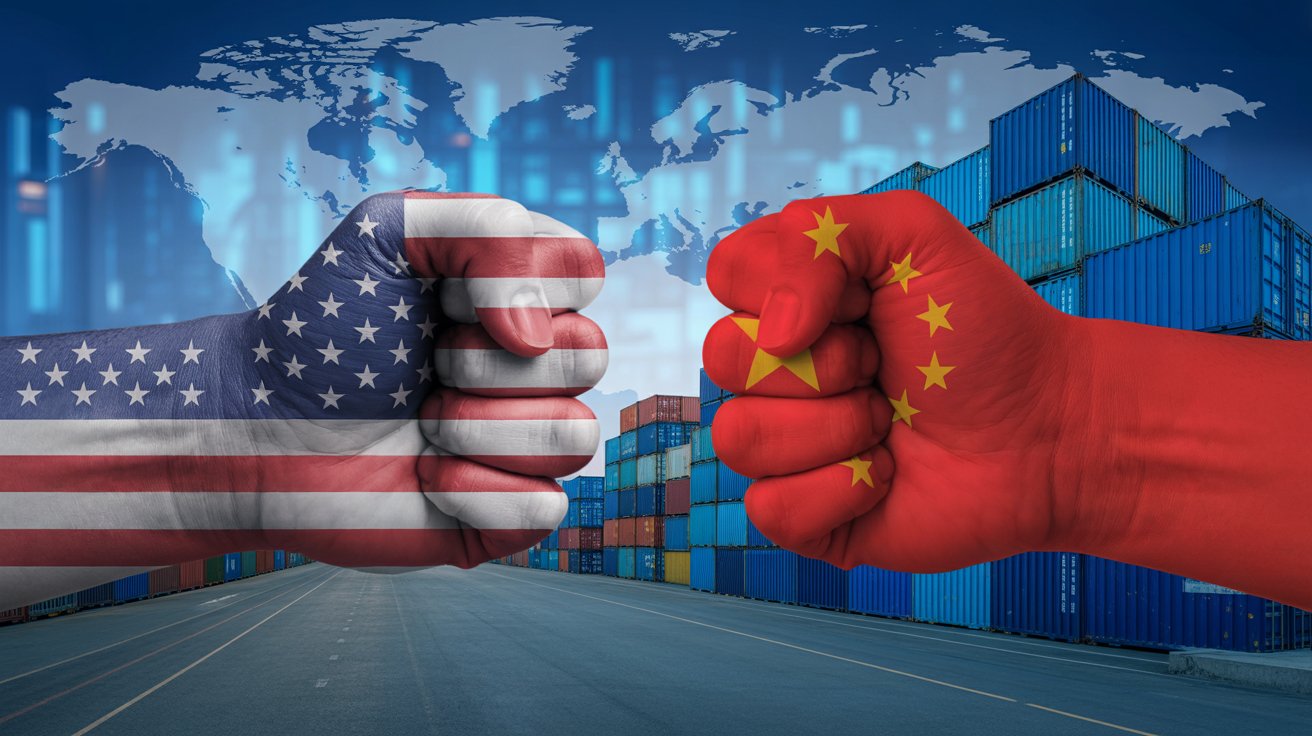
The Former President of the United States Classified the Chinese Measure as “Hostile Economic Act” and Asserted That the Country Can Produce Its Own Oils and Inputs, Intensifying the Trade War Climate on the Eve of New Tariffs
The former president Donald Trump reignited tensions between the two largest economic powers on the planet by stating that the United States can terminate all business with China involving cooking oil and other elements of international trade. The statement was made on Tuesday (14) in a post on Truth Social, the Republican’s social network, after Beijing announced a boycott of American soybean purchases.
Trump called the Chinese attitude a “hostile economic act” and expressed his belief that the decision was deliberate to harm American farmers, one of the former president’s most loyal electoral bases. “I believe that China’s deliberate decision not to buy our soybeans, causing difficulties for our producers, is a hostile economic act,” wrote the Republican.
He added that the United States has the capacity to produce domestically various products currently imported from the Asian country: “We are considering ending business with China related to cooking oil and other elements of trade, as retaliation. For example, we can easily produce cooking oil ourselves, without having to buy it from China,” he concluded.
-
Unlike Brazil, China has banned gambling and casinos to curb the rise of gambling addiction, blocks platforms, punishes operators, and maintains one of the strictest policies in the world to prevent billions from escaping the economy and to protect the population from the social impacts of gambling.

-
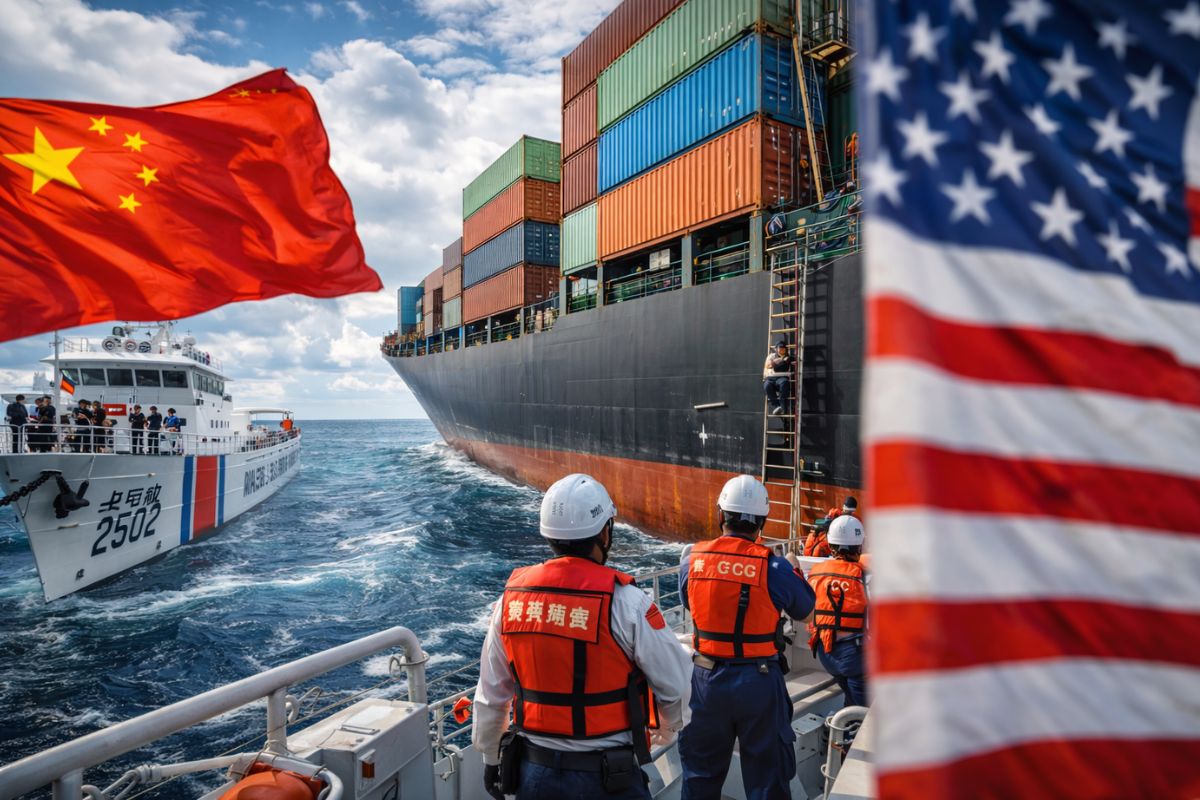
China could impose a quarantine on Taiwan without firing a shot, using the coast guard and inspections to force submission, blocking trade, raising insurance costs, and leaving the U.S. divided between reacting or accepting.
-
Millions of Brazilians over 60 years old do not know that they need a second document in addition to their ID to use exclusive parking spaces, and the infraction for not carrying it is considered very serious, with fines and vehicle towing.

-
Paraíba shoots up and has the most expensive square meter in the Northeast, and the increase in labor puts the region at the center of pressure, with Bahia recording the highest monthly increase in Brazil in construction.

The information was originally reported by G1, which highlighted the impact of Trump’s statements on international stock markets, amplifying uncertainty in agricultural and energy markets.
Escalation of Trade Tensions Between the U.S. and China
Trump’s statements represent another chapter in the escalation of tensions between Washington and Beijing. In recent days, the Republican has escalated his rhetoric against China, labeling the country’s policies as “hypocritical” and “aggressive” after the Chinese government restricted exports of elements of so-called “rare earths” — critical inputs for the manufacturing of batteries, semiconductors, and electric vehicles.
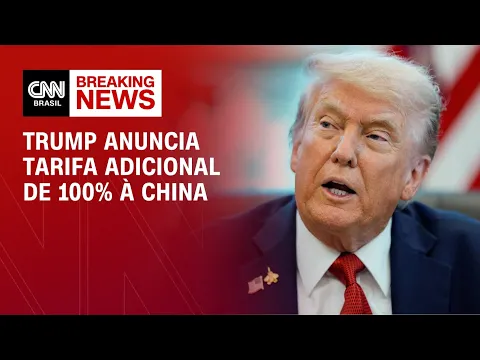
On Friday (10), the Republican directly criticized Beijing’s measure and announced in response that the United States would impose an additional 100% tariff on Chinese products starting November 1. The decision, according to Trump, would be a way to defend American industry from unfair practices and protect local jobs in strategic sectors such as technology, energy, and agriculture.

For its part, the Chinese Ministry of Commerce reacted immediately, stating that controls on the elements of rare earths are “a necessary response” to Washington’s unilateral measures. According to the Chinese government, the tariffs imposed by the U.S. represent a violation of the principles of the World Trade Organization (WTO) and constitute “hostile and contradictory” behavior.
“Threatening to impose high tariffs at any moment is not the right way to deal with China. Our position on tariff wars is consistent: we do not want to fight, but we are not afraid to fight,” the ministry stated in an official communiqué. The note also emphasizes that if the U.S. persists in its actions, China “will take corresponding measures to defend its legitimate rights and interests.”
Impacts on Soybeans and Global Geopolitics
Soybeans have returned to the center of the geopolitical stage. The Chinese boycott of American soybeans, announced days before Trump’s statement, could generate billion-dollar losses for the agricultural sector in the United States, which heavily relies on exports to the Asian giant. China accounts for about 60% of global soybean demand, being the main buyer of American grain.
Experts warn that the Chinese decision is a direct response to Trump’s protectionist stance, which has used aggressive tariffs as a political and electoral instrument. Furthermore, the episode reignites fears of a new trade war with devastating effects on international trade, at a time when the global economy is still trying to recover from recent crises.
During an interview aboard Air Force One, while traveling to Israel on October 13, 2025, Trump reaffirmed that he will not back down to Chinese pressure and that new sanctions are being evaluated. Meanwhile, Chinese President Xi Jinping, who recently participated in a military parade in Beijing for the 80th anniversary of the end of World War II, reiterated that the country “will not accept economic intimidation” and will continue to defend its strategic interests.
With this new exchange of accusations, trade between the U.S. and China returns to the center of the global agenda, and investors are already observing increasing volatility in soybean, oil, and rare metals prices. The impasse promises to intensify in the coming weeks, with the entry into force of the new tariffs and the increase of retaliations from both sides.







-

2 pessoas reagiram a isso.