





 English
  Francês
  Alemão
  Italiano
  Japonês
  Norueguês
  Portuguese
  Spanish
  3 min of reading
  0 comments


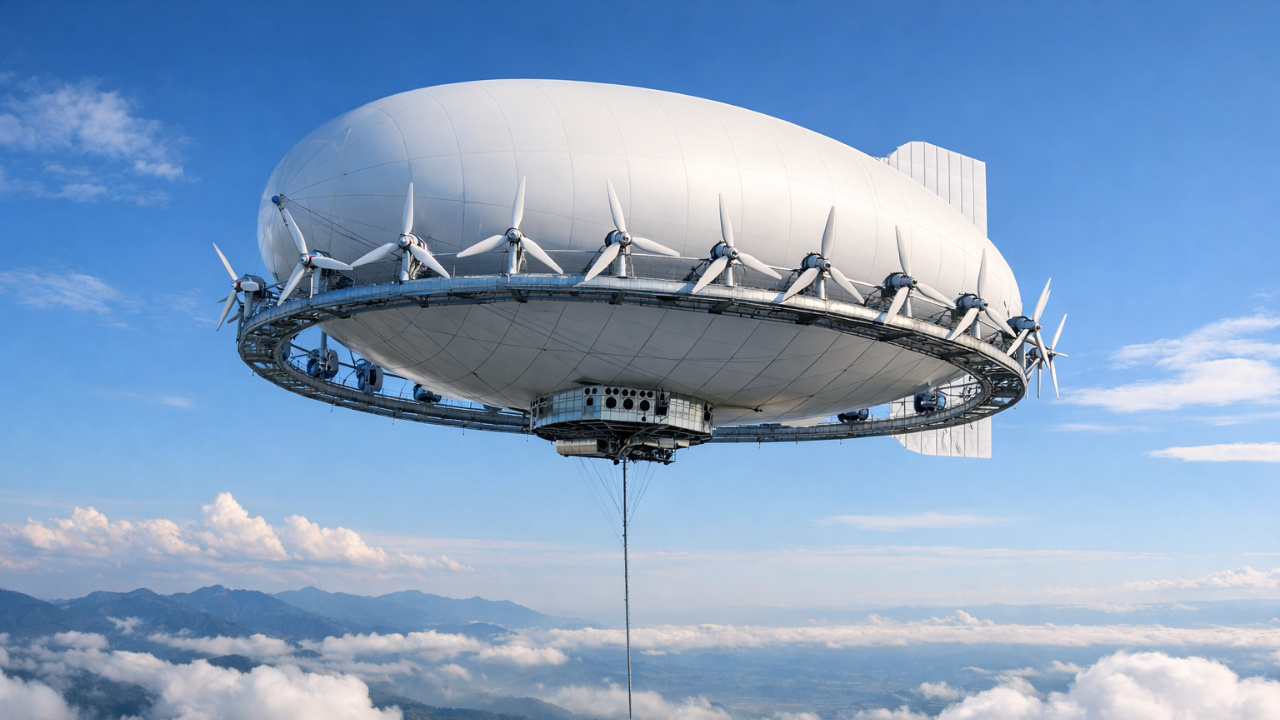
Chinese Airship Transforms Wind Energy Concept by Operating at 2,000 Meters Altitude, Generating Up to 3 MW Without Giant Towers, Urban Noise, or Traditional Visual Impact.
Wind energy may be about to enter a new phase. Instead of giant towers anchored to the ground, with blades visible for miles, China has tested an airship capable of generating electricity while floating at 2,000 meters high. The proposal catches attention. And sparks debate.
The project was developed by the Chinese company Linyi Yunchuan Energy Technology in partnership with Tsinghua University. The system is named S2000 and marks the revival of the economic use of airships, but this time not for transport. Now, the focus is on renewable energy generation.
The model integrates the so-called stratospheric airborne wind energy system (SAWES). In practice, it is a large inflatable balloon with 20,000 cubic meters of helium that has turned from an aircraft into an “air power plant.”
-
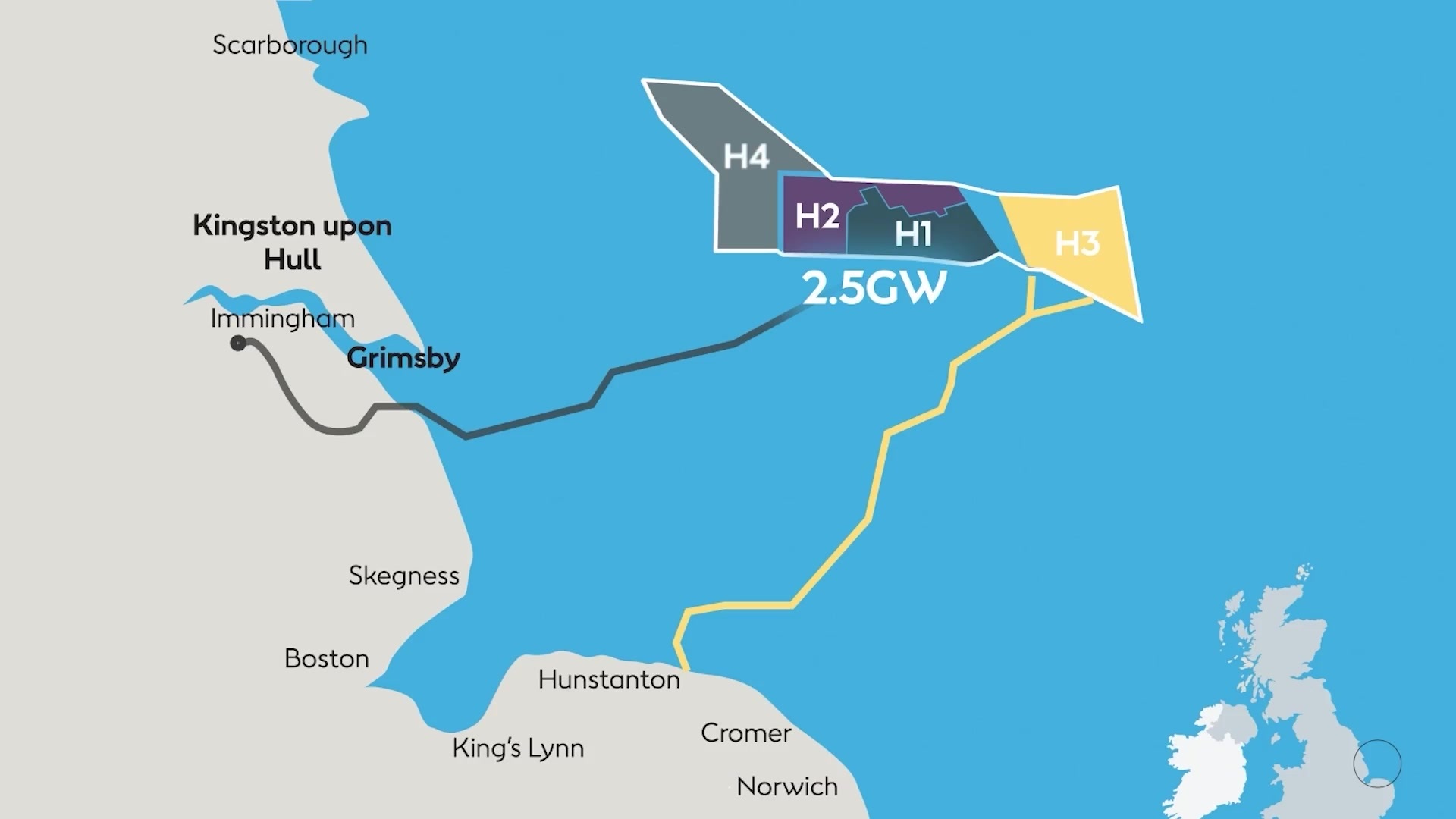
231 turbines of 260 meters at 160 km from the coast, monopiles weighing as much as nine blue whales embedded in the North Sea, and a crane ship taller than the Eiffel Tower: Hornsea 3 will be the largest offshore wind farm on the planet by 2027, and its first components have already arrived in England.
-
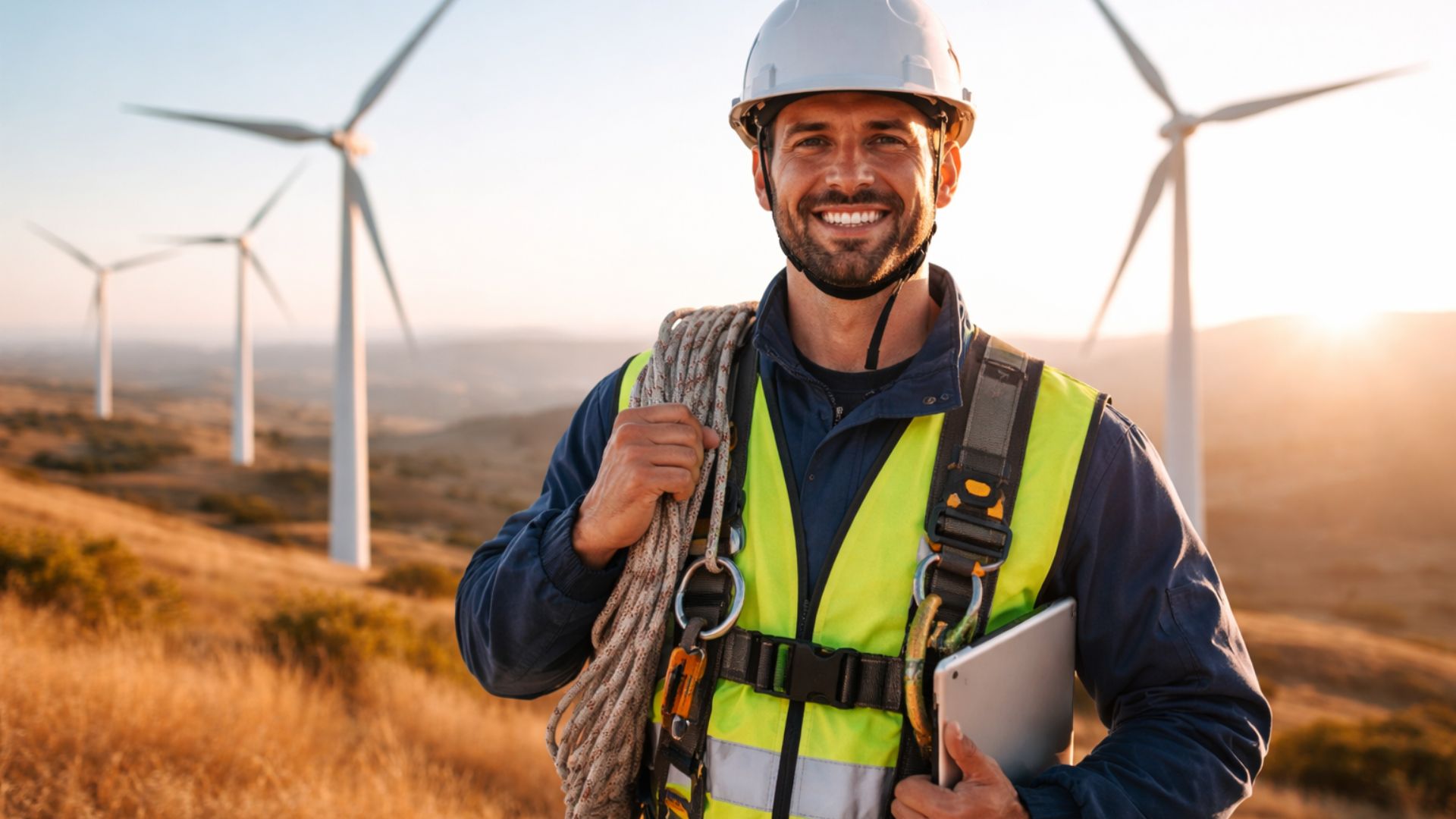
International Certification Puts Senai Norte on the Renewable Energy Map and Expands Access to Essential Training for Qualified Wind Power Professionals
-
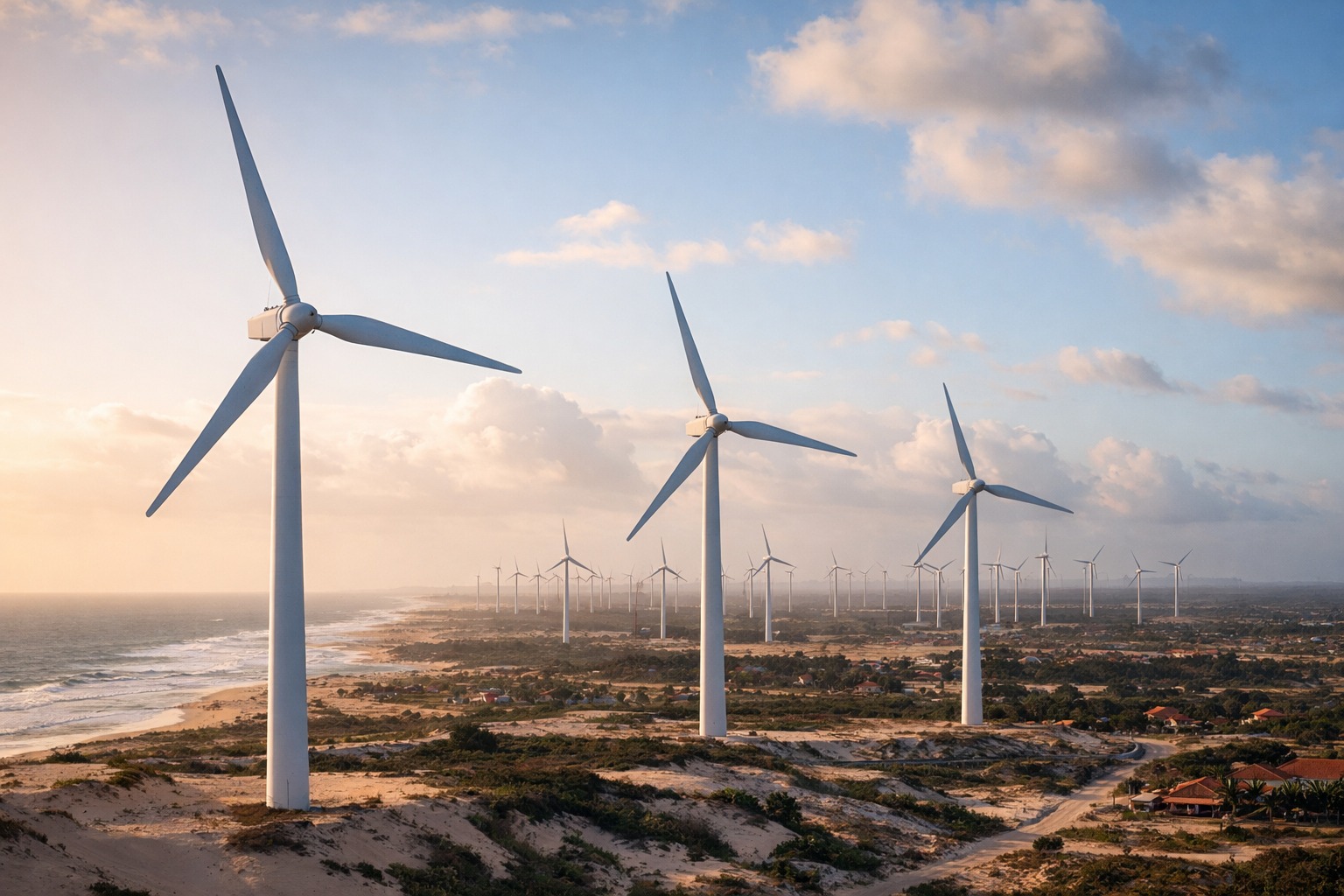
The Winds of the Northeast Are in Foreign Hands: Nearly 70% of the Region’s Wind Farms Are Owned by International Companies, with France, China, and Italy Leading Investments in Wind Energy in Brazil
-
Echoenergia’s Wind Farms Receive Diamond and Platinum Seals and Boost Carbon Credits with Projects that Prevent Large Volumes of Annual Emissions
How the Flying Wind Energy Plant Works
Although the name is complex, the concept is simple. Each cubic meter of helium can lift about 1 kilogram. Thus, with 20,000 m³, the airship has enough lift to raise approximately 20 tons.
This buoyancy supports the structure, equipment, and turbines. However, reducing weight was essential. Therefore, the engineers chose to install 12 smaller turbines of 100 kW each, instead of a single giant propeller.
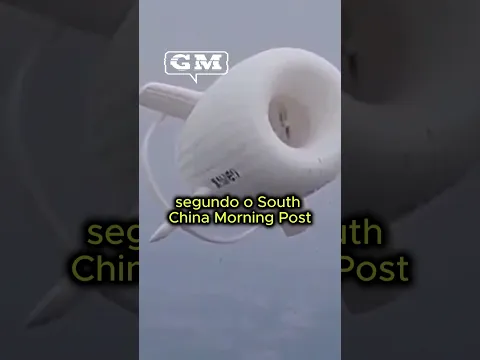

This choice was not only structural. If a single large turbine were used, the torque would cause the airship to spin on itself. With 12 smaller units, six rotating in each direction, the torque is neutralized. The result is stability in the air.
Moreover, the balloon’s shape, combined with a ring structure around it, creates a duct that directs the wind more efficiently. This way, wind energy is captured with greater efficiency.
All the electricity generated is gathered in an internal system and transmitted through a single mooring cable to the ground. There, it goes through a transformer before entering the power grid or being stored in batteries.
Tests, Numbers, and Ambitious Promises
In the test flight conducted in the city of Yibin, the S2000 reached its operational altitude in about 30 minutes. During the initial operation, it generated 385 kilowatt-hours of energy.
The goal, however, is bolder. The project is designed to reach 3 megawatts, a level comparable to that of a modern large-scale land-based wind turbine.
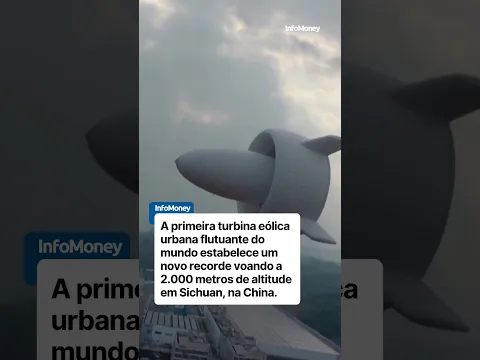
According to the company’s CEO, Dun Tianrui, “at its current level of production, one hour of operation can generate enough electricity to fully charge about 30 high-spec electric vehicles from zero.”
The choice of 2,000 meters altitude was not random. At higher altitudes, winds are more consistent and intense. Additionally, there is less interference from buildings, trees, and terrain. This increases the efficiency of the wind energy captured.
Another strategic point is the installation. Unlike conventional towers, which can exceed 100 meters in height and require heavy structures, the airship can be transported in standard containers and be ready to operate in about eight to nine hours.
Challenges That May Hinder Expansion
Despite the progress, there are clear obstacles. Helium is expensive and not a renewable resource. Furthermore, the initial test generated much less energy than the projected potential.
Another challenge involves air safety. A cable extending 2 kilometers requires free space. This could create conflicts with drones, air taxis, and commercial routes in the future.
Still, the proposal stirs the sector. Wind energy, traditionally associated with giant towers in rural areas, may gain a new setting: the open sky.








Seja o primeiro a reagir!