





 English
  Francês
  Alemão
  Italiano
  Japonês
  Norueguês
  Portuguese
  Spanish
  3 min of reading
  0 comments


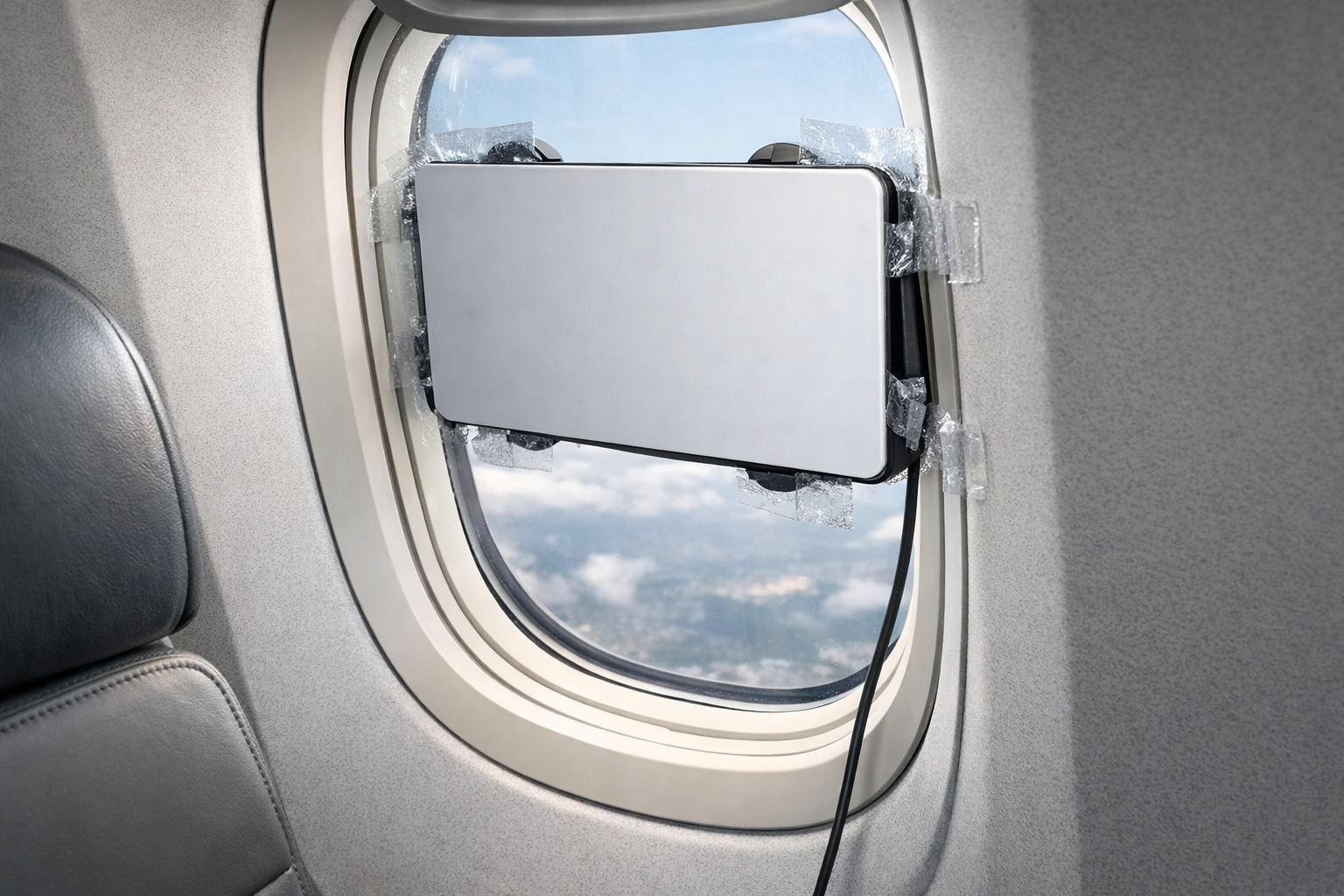
Use of Satellite Internet Inside the Cabin, Along with Battery Above the Limit Permitted by ANAC, Raises Technical, Operational, and Aviation Safety Alerts in an Episode That Went Viral on Social Media
An unusual incident that occurred during a recent commercial flight caught the attention of aviation and onboard security experts. After boarding, a passenger filmed himself using a Starlink Mini antenna attached to the aircraft window, powered by a high-capacity portable battery, while in flight. The case gained traction on social media and reignited the debate on improper use of electronic devices, prohibited power banks, and fire risks in a pressurized cabin.
The information was disclosed by the website AEROIN, which closely monitors occurrences involving commercial aviation, operational safety, and aviation regulation. According to the published material, the incident occurred aboard an Embraer E195-E2, an aircraft widely used on domestic routes in Brazil and equipped with its own passenger Wi-Fi connectivity system.
Despite this available infrastructure, the passenger chose to activate an independent satellite internet system, connecting the Starlink Mini antenna to the aircraft window and powering the device with a 60,000 mAh power bank, carried onboard irregularly.
-
Chaos On Airplane Could Be Expensive: Proposal Aims To Prevent Disruptive Passengers From Flying For Up To 1 Year In Brazil And Face Fines Of Up To R$17,500

-
Man Arrested After Halting Takeoff of Fire Department Helicopter During Child Rescue in Guaratuba

-
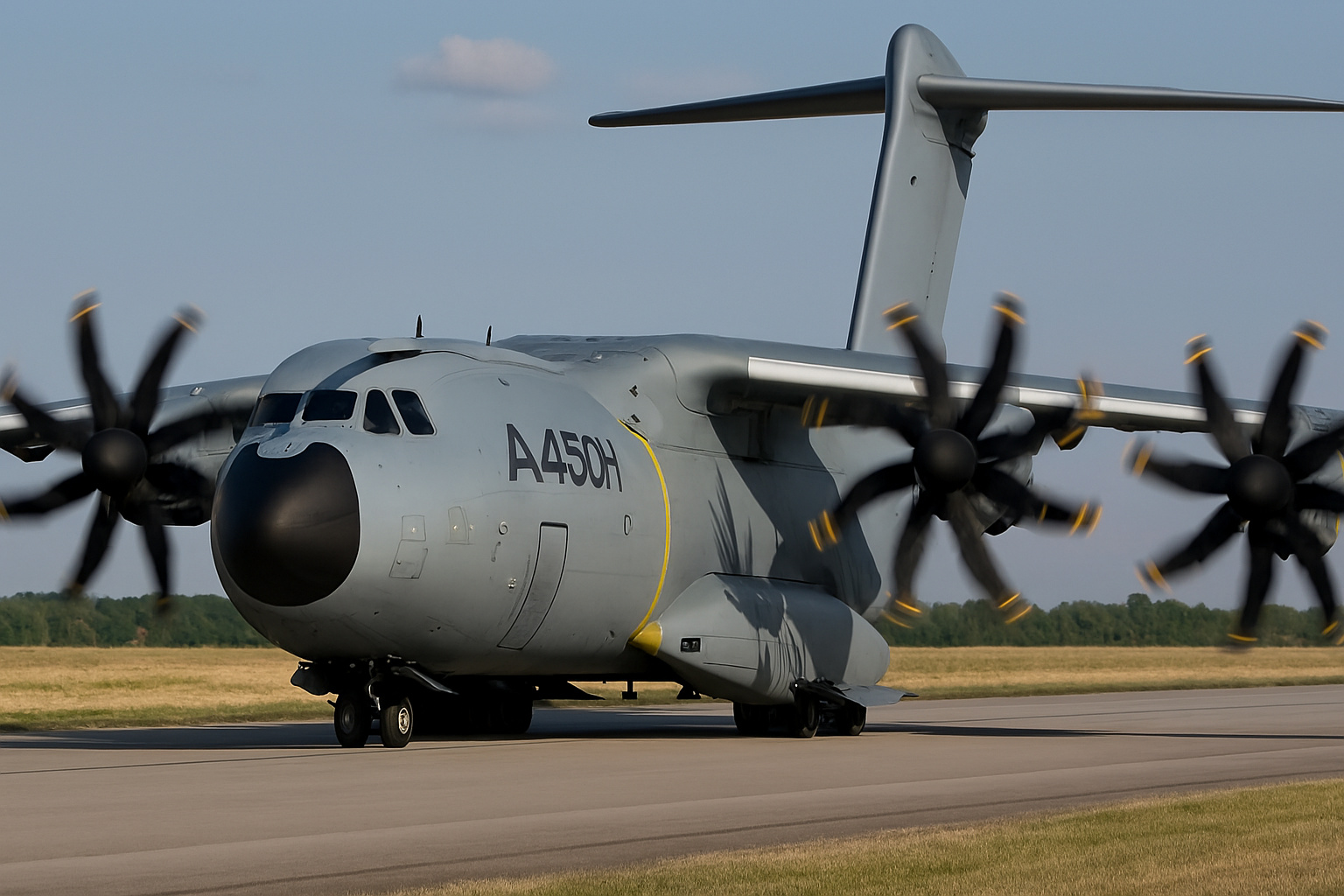
With 37 Tons of Cargo, Over 8,000 km Range, and Ability to Land on Unpaved Runways, the Airbus A400M Demonstrates How Europe Created a Military Giant That Transports Armored Vehicles, Aerially Refuels Fighters, and Operates in Conflict Zones and Humanitarian Missions Worldwide
-
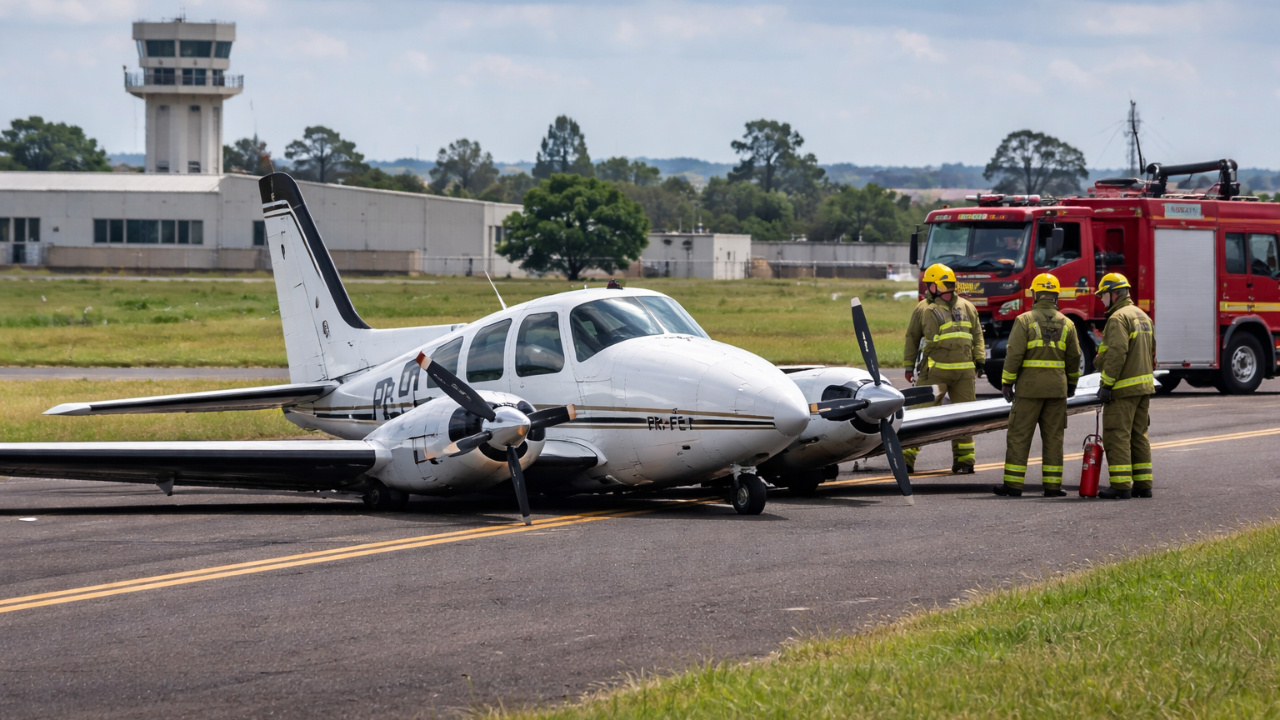
Emergency Landing in Campos Amarais After Bird Strike on Small Plane

Power Bank Exceeding the Permitted Limit and Unauthorized Equipment Raise Technical Alerts
Although the use of personal electronic devices is allowed during certain phases of the flight, this case draws attention for involving a portable battery that exceeds the regulatory limits established by ANAC. According to Brazilian regulations, the maximum allowable limit for transporting lithium-ion batteries in carry-on luggage is 100 Wh (watt-hours).
However, the equipment used by the passenger has 200 Wh of power, double the permitted amount, classifying it as a prohibited power bank for regular air transport. Additionally, the device was connected to a non-authorized electronic device for use onboard, further aggravating the situation from an operational standpoint.
Although, in Brazil, there is no absolute prohibition on connecting portable batteries during the flight, experts warn that the active use of these devices significantly increases the risk of overheating and fire, especially in pressurized environments with restricted space, such as the cabin of a commercial aircraft.
Recent Incidents Reinforce Why the Use of Batteries in Flight Is Becoming More Restricted
In recent years, several countries have begun to tighten rules not only regarding the capacity of power banks but also concerning their effective use during flight. In some jurisdictions, activating portable batteries onboard is considered extremely prohibited, precisely due to the sequence of incidents recorded globally.
According to data from the aviation sector, there have been cases of fire starts caused by lithium batteries even within the permitted power levels and without being actively used. The most recent incident mentioned by experts occurred on a LATAM flight, in which a powered-off power bank within specifications ended up creating a risk situation.
For this reason, international aviation authorities have been reinforcing guidelines for passengers to avoid unnecessary use of external batteries during the flight, especially when the aircraft already offers certified power and connectivity systems for aviation operation.
From a safety perspective, any additional source of uncontrolled energy not managed by the crew represents a potential operational risk, especially when associated with makeshift or non-approved equipment for aviation use.








-

Uma pessoa reagiu a isso.